
A practical diet plan for type 2 diabetes starts with balance, not banning every favorite food. The CDC plate method uses half the plate for nonstarchy vegetables, one quarter for lean protein, and one quarter for carbohydrate foods. That gives you a clear starting point for meals, while leaving room to consider how sweets and alcohol fit your needs.
It’s understandable to wonder whether enjoying a treat means you’ve gone off track. Usually, the more useful question is how to make choices and portions work within a steady eating pattern. This guide explains ways to manage carbohydrates and blood sugar, build portable meals and snacks, count carbohydrates, and approach sweets and alcohol thoughtfully.
You’ll also find practical steps for planning meals and knowing when personalized guidance could help. A diabetes care team can adapt nutrition choices to your health goals, preferences, and daily routine, helping you build an approach that feels manageable over time.
Key Takeaways
- Use the plate method to build balanced meals, then notice how carbohydrate choices affect your blood sugar.
- Pack snacks that pair fiber with protein or healthy fats to make busy days easier to manage.
- Learn to estimate carbohydrate portions and use food labels to make informed choices at meals and restaurants.
- Enjoy sweets thoughtfully and consider how alcohol may fit with your meal plan and health needs.
- Work with your care team to tailor nutrition guidance to your preferences, goals, and daily routine.
1. Blood sugar and carbohydrate management
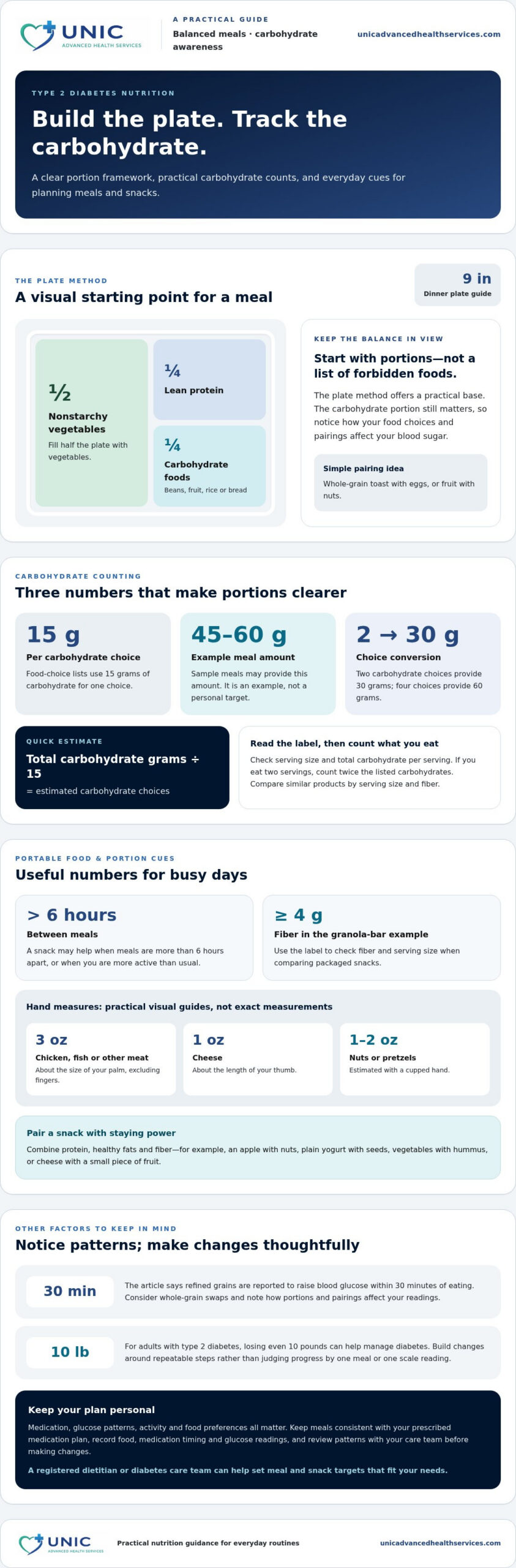
Start with a practical plate, not a list of forbidden foods. According to the Centers for Disease Control and Prevention, the plate method places nonstarchy vegetables on half the plate and lean protein on one quarter. Reserve the remaining quarter for carbohydrate foods, such as beans, fruit, rice, or bread. A 9-inch dinner plate can help make those portions easier to picture.
Carbohydrates affect blood sugar, but what you eat with them matters too. Pair a carbohydrate with protein, fat, or fiber to slow how quickly blood sugar rises. For example, serve whole-grain toast with eggs, or have fruit with nuts. Choose water or unsweetened iced tea with meals instead of a sugary drink.
Build meals around minimally processed, recognizable foods such as vegetables, beans, fruit, nuts, and whole grains. Choose higher-fiber foods more often, including lentils, seeds, and split peas. If you have a packaged or ultra-processed food, measure the portion and pair it with vegetables, such as salad or sautéed greens.
Grain type can change the pace of a blood sugar response. Refined grains are said to raise blood glucose within 30 minutes of eating. Try swapping white bread or refined cereal for a whole-grain option, then note how the portion and pairing affect your readings. Whole fruit is another useful choice: juice raises blood sugar faster than eating fruit whole.
A Mediterranean-style meal plan can feature vegetables, beans, whole grains, fruit, nuts, and small amounts of unsaturated fats, such as olive oil. For example, combine lentils and vegetables with a modest serving of whole-grain bread. The carbohydrate portion still matters, so use the plate method and observe your blood sugar response rather than assuming a named eating pattern sets one portion for everyone.
Weight goals can be part of diabetes management. For adults with type 2 diabetes, losing even 10 pounds can help manage diabetes. Build changes around repeatable steps, such as replacing a refined-grain side with vegetables or planning balanced meals regularly. Avoid treating one meal or one scale reading as a measure of success.
Medication needs and blood sugar levels should guide meal timing and carbohydrate choices. Keep meals consistent with your prescribed medication plan, record food, medication timing, and glucose readings, then review patterns with your care team before changing either. Regular, balanced meals can help avoid high or low blood sugar levels. Ask your clinician how your specific medicines affect your plan.
2. Portable food choices for type 2 diabetes
Portable choices work best when they combine protein, healthy fats, and fiber. Pack a small apple with nuts, plain yogurt with seeds, or vegetables with hummus. These combinations can be filling and help slow the rise in blood sugar when snacks contain carbohydrates. Water and unsweetened iced tea are practical drinks to carry. Choose them instead of sweetened beverages.
For food labels, begin with serving size, then check total carbohydrate grams per serving. If you eat two servings, count twice the listed carbohydrates. Compare similar products by serving size and fiber, and use the package’s serving measure to guide your portion. A granola bar snack example in the guidance contains at least 4 grams of fiber.
Carbohydrate counting can make packaged snacks easier to fit into a meal plan. In food-choice lists, one carbohydrate choice contains 15 grams of carbohydrates. For example, check a label, note the portion you’ll eat, and divide its total carbohydrates by 15 to estimate choices. A registered dietitian can help set a useful target for your meals and snacks.
Use simple hand measures when you don’t have measuring tools. A 3-ounce serving of chicken, fish, or other meat is about the size of your palm, excluding fingers. One ounce of cheese is about the length of your thumb. A cupped hand estimates 1-2 ounces of nuts or pretzels. These are practical visual guides, not exact measurements.
Plan food around your schedule and activity. If meals are more than 6 hours apart, a snack may help prevent low blood sugar. Snacks may also help when you’re more active than usual. Try packing a boiled egg with whole-grain crackers, or cheese with a small piece of fruit. Keep the carbohydrate portion visible so it’s easier to account for.
Meal planning doesn’t need to start with a full week of cooking. Prepare one recipe that lasts for two or three meals, such as chicken, vegetables, and beans in separate containers. A four-to-seven-day plan and grocery list can make portable options easier to assemble. When packing a full meal, follow the plate method and use separate containers to keep portions clear.
Choose protein foods that travel well, including hard-boiled eggs, unsalted nuts, tuna, or cooked chicken kept safely chilled. For support matching food choices with your goals and routine, explore individualized diabetes care.
3. Carbohydrate counting
Carbohydrate counting means tracking the grams of carbohydrate in a meal. If you use insulin, those totals can help match food intake to your prescribed insulin dose. Read the nutrition label, note the serving size, and count the portion you actually eat. For unpackaged foods, use a reliable portion guide or meal-planning tool to estimate the amount.
How many carbohydrates should people with type 2 diabetes eat per meal? Sample meals provide about 45-60 grams of carbohydrate per meal, but that is an example, not a personal target. Your meal plan should account for glucose patterns, medication, activity, and food preferences.
Carbohydrate choices offer another way to compare portions. In food-choice lists, each choice contains 15 grams of carbohydrates. A meal with two such choices provides 30 grams; four choices provide 60 grams. These exchanges can help you compare foods, but check the actual serving and label because portions differ.
Count foods that may be easy to overlook. A cup of milk counts as a carbohydrate food in CDC meal-planning guidance. Fruit also contributes carbohydrates: the CDC portion guide estimates 1 cup or 1 medium fruit as about the size of a fist. A restaurant entrée can equal 3 or 4 servings, so consider sharing or saving part for later.
Separate nonstarchy vegetables, lean protein, and carbohydrate foods when planning a plate. Starchy vegetables, beans, grains, fruit, milk, and bread can contribute carbohydrates. Nonstarchy vegetables add variety and fiber. The CDC meal-planning guidance counts a cup of milk as a carbohydrate food.
Portion examples make daily choices easier to picture. Guidance gives 2½ to 3 cups of vegetables a day and 1½ to 2 cups of fruit a day. It also gives 5 to 6½ ounces of protein foods a day. For grains, the stated amount is 3 to 4 ounces a day, with half of the grains each day whole grains.
Favor higher-fiber carbohydrate choices, including beans, lentils, vegetables, fruit, seeds, and whole grains. Pairing carbohydrates with protein, fat, or fiber can slow how quickly blood sugar rises. For example, combine fruit with nuts or add beans to a grain-and-vegetable bowl. Track portions and blood sugar responses to identify patterns worth discussing with your care team.
4. WHAT ABOUT ALCOHOL AND SWEETS?
Choose vegetables, beans, whole grains, lean proteins, and unsaturated fats often. Limit sweet foods and foods with added sugar and salt. For heart health, check serving sizes and notice how packaged foods contribute saturated fat and sodium. A balanced approach makes room for practical choices without treating one food as the whole nutrition plan.
Alcohol deserves attention in your eating routine, especially alongside glucose tracking. Record what you drink, what you eat, and your glucose readings to learn about your own patterns. If a drink includes a sweet mixer, count its carbohydrates as part of the meal or snack rather than overlooking them.
Check labels for saturated fat, then compare similar foods by serving size. Guidance advises getting less than 10% of calories from saturated fat. For someone eating a 2,000-calorie diet, about 20 grams or less per day is given as an example limit. This example is not a universal calorie target; your overall eating needs shape your plan.
Small amounts of unsaturated fats can add flavor and help replace saturated fats. Try olive or canola oil, avocado, nuts, or seeds in meals. Measure oils instead of pouring freely: the guidance recommends using no more than 7 teaspoons a day. For example, add a measured drizzle of olive oil to roasted vegetables.
Heart-healthy fish can be part of a balanced eating pattern. Guidance advises people with diabetes to eat fish at least twice a week. Try baked salmon with vegetables, or tuna with beans and greens. Pregnant people, those planning pregnancy, and breastfeeding people should avoid fish typically high in mercury, including shark, swordfish, king mackerel, and tilefish.
Salt can hide in sauces, canned foods, deli meats, and packaged snacks. The stated goal is no more than 2,300 milligrams of sodium per day. Compare labels, choose lower-sodium versions, and flavor meals with herbs, citrus, garlic, or pepper. A squeeze of lemon can brighten fish or vegetables without adding salty seasoning.
For sweets, use the serving size on the package and include the carbohydrates in your meal planning. Pairing a small dessert with a balanced meal can make portions easier to manage than eating sweets by themselves. Choose fruit, plain yogurt with berries, or a small piece of chocolate when you want something sweet. Track your choice and glucose response, then look for patterns over time.
5. Support from a dietitian or diabetes care team
A dietitian can turn nutrition guidance into a plan that fits real life. A registered dietitian can tailor recommendations to your goals, preferences, food dislikes, allergies, and intolerances. Bring examples of meals you eat often, such as an American-style breakfast or a takeout lunch. Specific examples help make advice practical, from serving sizes and ingredient swaps to options that suit your routine.
Useful support goes beyond choosing foods. Ask your care team to review how meal timing, medication, activity, and glucose readings relate. Bring a short food and glucose record, including serving sizes and medication timing. For example, note whether a breakfast of cereal and milk leaves you hungry or changes your readings. The team can help identify patterns and discuss realistic adjustments.
Set a clear goal for each conversation. You might ask how to plan a satisfying lunch, estimate carbohydrates in a favorite meal, or choose snacks for a busy workday. If calorie needs or weight goals are part of your plan, ask how they fit your overall health. A dietitian can adapt suggestions to food traditions, budget preferences, and cooking skills.
Share barriers directly. Tell your care team if shift work changes meal times, cooking feels difficult, or food allergies limit choices. A practical plan could include portable options, simple recipes, or substitutions for ingredients you avoid. If a recommendation feels hard to follow, explain why and ask about another approach. The best next step is one you can repeat in your daily routine.
Use follow-up to learn from what happens between visits. Bring questions about a new food, a restaurant meal, or a change in appetite. If you track glucose, share readings alongside meals and activity. Those details can help your team distinguish a one-time result from a recurring pattern. Together, you can revise the plan as your preferences, health goals, or treatment needs change.
Diabetes is a long-term disease, so support should address more than a single meal. A care team can coordinate nutrition discussions with broader chronic condition management. Ask for guidance that considers your medications, glucose patterns, food preferences, and health priorities together. This makes your plan more specific than following a generic calorie target or copying another person’s meal routine.
Prepare for your next discussion by writing down one food challenge and one goal. For example, bring a label from a snack you buy often and ask how its serving fits your eating pattern. To discuss ongoing diabetes care and practical next steps, connect with the care team.
Unic Advanced Health Services: DOT Physical Examination
Unic Advanced Health Services provides Chronic Condition Management for people managing diabetes and other ongoing health needs. Use this support to discuss how food choices, glucose patterns, and treatment fit into your broader care. Telehealth Services offer another way to access care when a remote visit suits your needs.
The clinic also provides a DOT Physical Examination for Driver for commercial drivers who need that examination. It’s separate from diabetes nutrition guidance, but drivers managing a chronic condition can discuss ongoing care alongside their physical exam needs. The U.S. Coast Guard (USCG) Boat Captain Physical is also available for eligible captains.
For support with ongoing condition management or an occupational physical, contact Unic Advanced Health Services or visit its website.
Make your next step manageable
A lasting nutrition routine doesn’t need to be perfect from the start. Choose one change that fits your week, such as planning a meal you can repeat or noting questions about foods that feel difficult to manage. Bring those questions to your care conversation and use your routines, preferences, and health goals to shape the discussion.
A diet plan for type 2 diabetes works best as a practical approach you can revisit and adjust with support. If you’re ready to discuss ongoing care, Unic Advanced Health Services can help you explore the next step. Contact Unic Advanced Health Services today to start the conversation.
Small, thoughtful steps can make it easier to build a sustainable routine. Keep moving forward at a pace that works for you.
Frequently Asked Questions
What about alcohol and sweets?
Sweets can fit as planned choices, with attention to portions and added sugar. Discuss alcohol with your care team in relation to medicines, meals, and glucose monitoring. If you choose a sweetened mixer or dessert, include it in your meal planning. A brief food and glucose record can help you discuss specific choices and identify patterns that matter to your routine.
Are there any risks?
Changing meal timing or sharply reducing carbohydrates can affect established eating and medication routines. Regular, balanced meals can help avoid high or low blood sugar levels. Keep your care team informed about major changes, especially if you use medication related to meals. Share glucose readings and meal notes so they can help identify patterns and tailor guidance to your health needs.
What are the results of this kind of diet?
A structured eating plan gives you a consistent way to make food choices and observe glucose patterns. It can also support conversations about personal health goals, food preferences, and medication timing. Consider progress in relation to your own health measures, not another person’s menu. Note which choices feel practical and satisfying, then discuss how to build on those habits with your care team.
What does a diet for people with diabetes involve?
It involves planning meals around portions, carbohydrate foods, and nourishing options that suit your routine. For example, combine vegetables, a protein food, and a measured serving of grains or beans. Include food preferences, allergies, and cooking habits in the plan. A flexible approach should account for meals at home, workdays, and restaurant visits, rather than relying on one rigid menu.
What eating-out swaps keep net carbs under 15 g per meal?
To stay below 15 g net carbs, choose meals with nutrition information that supports the target. Consider grilled protein with nonstarchy vegetables instead of a bun, fries, or rice. Request sauces separately because dressings and glazes can add sugar or carbohydrates. Use the restaurant’s nutrition details for the complete portion, and account for toppings or sides that come with the dish.
Why do you need to develop a healthy-eating plan?
A plan makes daily choices more manageable and helps you notice how meals relate to glucose readings. A diet plan for type 2 diabetes can reflect work schedules, favorite foods, allergies, and cooking routines. For instance, planning a packed lunch may reduce last-minute decisions during a busy day. Include the grocery stores and restaurants you actually use in Fort Lauderdale so the plan fits your life.
What does a balanced diabetes meal plan look like for a day?
One example is eggs with vegetables and whole-grain toast at breakfast, a bean-and-chicken salad at lunch, and fish with vegetables and a grain at dinner. A diet plan for type 2 diabetes should adapt portions to your individual carbohydrate needs. Consider packing a snack if your schedule or activity makes one useful. Treat this sample as a flexible pattern, not a fixed menu.
How can the plate method help plan meals for type 2 diabetes?
The Centers for Disease Control and Prevention plate method offers a visual structure: half the plate holds nonstarchy vegetables, with the remaining space divided between lean protein and carbohydrate foods. For example, pair leafy greens with chicken and a serving of beans. This approach can help you assemble a balanced meal at home or make sense of restaurant portions without needing a detailed recipe.