
If you’re wondering what to do when you can’t get a doctor’s appointment, start by matching your symptoms to the right level of care rather than simply waiting longer. It can be difficult to know whether a concern can wait or needs attention sooner, especially when your usual clinic has no openings.
First, assess urgency. Call 911 or go to an emergency department for a potentially life-threatening emergency, including severe chest pain, difficulty breathing, or signs of a stroke. For concerns that need timely attention but aren’t emergencies, other care options may be appropriate. This guide can help you compare those options and make a plan while you wait.
You’ll learn when to seek emergency care, when urgent care or telehealth may be suitable, and how primary care can support follow-up and ongoing needs. In Fort Lauderdale, primary care can also help manage chronic conditions over time. We’ll cover practical ways to describe your concern, track symptoms, prepare for an appointment, and recognize when to seek help sooner.
Key Takeaways
- When deciding what to do when you can’t get a doctor’s appointment, assess how urgent your symptoms are before focusing on scheduling.
- For a life-threatening emergency, call 911. For non-emergency concerns, contact a clinic to ask about cancellations or whether a phone or telehealth visit may be appropriate.
- Whether it’s safe to wait depends on your symptoms, how they change, and clinical advice. Seek a more urgent assessment if your condition worsens.
- Keep a simple record of symptoms, timing, changes, medications, allergies, and health conditions to make your next conversation with a healthcare professional more useful.
- Primary care can support follow-up, preventive visits, and ongoing chronic condition management in Fort Lauderdale.
No Doctor Appointment? Check Urgency First
It’s stressful to need medical care and find no appointment, but you don’t have to solve the scheduling problem before checking for immediate danger. If you’re deciding what to do when you can’t get a doctor’s appointment, focus first on how severe your symptoms are and whether they’re getting worse. Life-threatening symptoms or an immediate medical emergency require a call to 911.
This video discusses the limits of searching symptoms online and some alternatives for getting guidance:
Online searches and general information about access to health care can offer context, but they can’t assess your individual symptoms. Online guidance cannot diagnose a condition or replace individualized medical care. If you’re uncertain about urgency, contact a qualified healthcare professional rather than relying on a search result to decide that it’s safe to wait.
When to call 911 or go to an emergency department
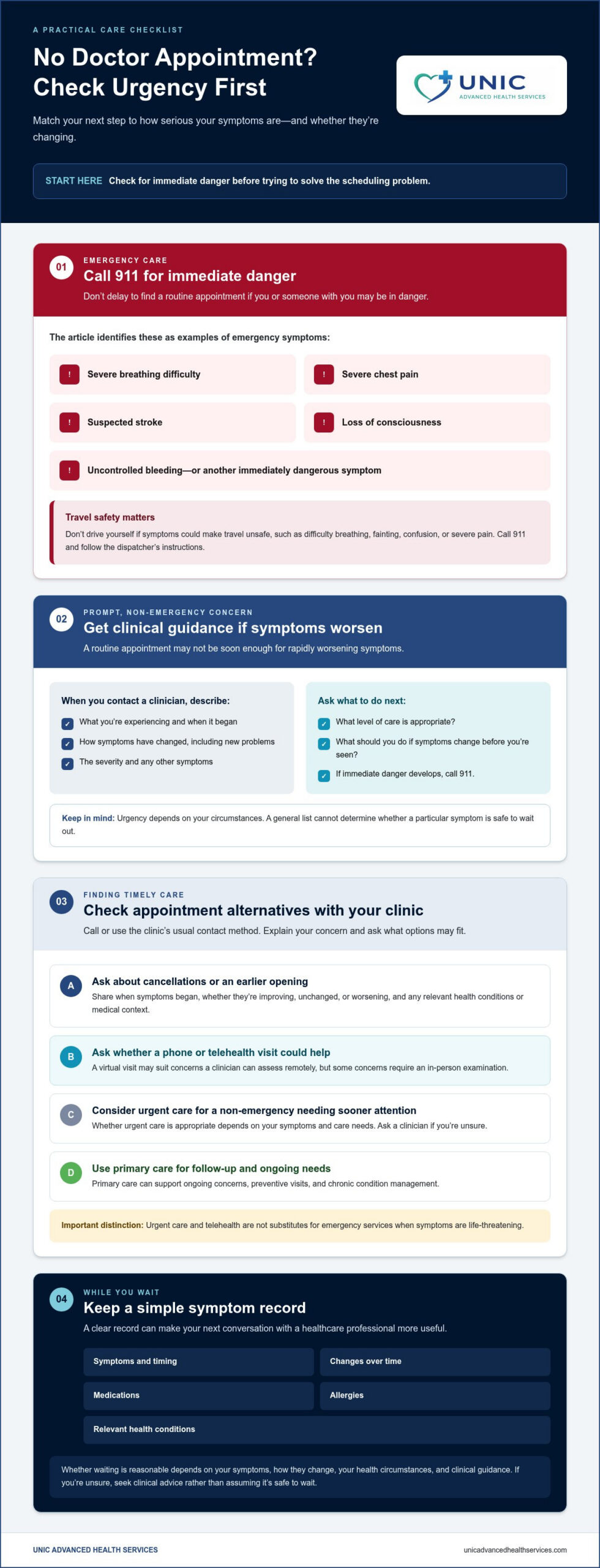
Call 911 for life-threatening symptoms or an immediate medical emergency. Don’t delay to find a routine appointment if you or someone with you may be in immediate danger.
- Call 911 now for severe breathing difficulty, severe chest pain, suspected stroke, loss of consciousness, uncontrolled bleeding, or another immediately dangerous symptom.
- Don’t drive yourself if symptoms could make travel unsafe, such as difficulty breathing, fainting, confusion, or severe pain. Call 911 and follow the dispatcher’s instructions.
When symptoms may need prompt, non-emergency attention
Symptoms that are rapidly worsening need prompt contact with a clinician, even if they don’t seem life-threatening. A routine appointment may not be soon enough, so seek clinical guidance about the next step. The urgency depends on your circumstances, and no general list can determine whether a particular symptom is safe to wait out.
When you call, describe what you’re experiencing, when it began, how it has changed, and any other symptoms. Be specific about worsening or new problems, and ask what level of care is appropriate. If you can’t reach your usual clinician and the concern needs prompt assessment, consider another suitable local care option. If symptoms become severe or an immediate danger develops, call 911.
How to Find Timely Care When Your Usual Doctor Has No Openings
Once you’ve assessed urgency, take a practical approach to finding the right appointment. Start with your usual clinic and explain what you need help with, when the concern began, and whether symptoms have changed. If you’re deciding what to do when you can’t get a doctor’s appointment, these details can help the clinic understand your request and advise you on next steps.
Ask your clinic about cancellations and appointment alternatives
Call or use the clinic’s usual contact method. Briefly explain your main concern and ask whether there’s a cancellation list, an earlier opening, or another appointment format that might suit your situation. If symptoms have worsened or new problems have appeared, say so clearly rather than describing only the original concern.
- Say when the symptoms began and whether they’re improving, staying the same, or worsening.
- Describe their severity and mention relevant health conditions or other important medical context.
- Ask whether a phone or telehealth appointment could address your concern, and what to do if symptoms change before you’re seen.
These questions can help you make a plan instead of waiting without guidance. Follow the clinician’s advice about timing and the appropriate type of assessment.
Compare telehealth, urgent care, and primary care
Each option serves a different need. Telehealth may be suitable for concerns a clinician can assess remotely. A virtual visit lets you describe your symptoms and discuss next steps, but some concerns require an in-person examination. Explore telehealth in Fort Lauderdale if a virtual primary-care visit may fit your situation.
Urgent care may be an option for a non-emergency problem that needs attention sooner than a routine appointment. Whether it’s appropriate depends on your symptoms and care needs. For a general comparison of care settings, see the NC Medical Board’s Urgent Care vs. Emergency Room guide.
Primary care can help with ongoing concerns, follow-up, preventive visits, and chronic condition management. If your usual clinician can’t see you promptly, ask what alternative care is appropriate for your specific concern. Urgent care and telehealth aren’t substitutes for emergency services when symptoms are life-threatening. For ongoing, non-emergency care, Fort Lauderdale primary care can support follow-up and continuity over time.
Is It Safe to Wait for a Doctor’s Appointment?
There isn’t one answer for every situation. Whether waiting is reasonable depends on your symptoms, how they change, your health circumstances, and guidance from a clinician. An appointment date alone can’t determine whether it’s safe to wait, and this article can’t diagnose symptoms or replace individualized medical advice.
Use the table as a guide to the level of care to consider, not as a diagnosis. If you’re unsure, seek clinical advice rather than assuming a problem can wait.
| Care level | When it may apply | Next step |
|---|---|---|
| Emergency care | Symptoms suggest an immediate, life-threatening emergency, such as severe breathing difficulty, severe chest pain, suspected stroke, loss of consciousness, or uncontrolled bleeding. | Call 911 or seek emergency care. Don’t wait for a routine appointment. |
| Prompt non-emergency assessment | A concern needs timely clinical attention, or symptoms are worsening or changing substantially, but there’s no known immediate danger. | Contact a clinician promptly for guidance on the appropriate care setting and timing. |
| Routine follow-up | You need planned care, such as preventive care or follow-up for an ongoing health concern, and a clinician’s advice supports a routine appointment. | Keep the appointment and ask what changes should prompt earlier reassessment. |
Signs that the care plan may need to change
Don’t stick with a wait-and-see plan if symptoms become severe, worsen rapidly, or change substantially. New symptoms can also affect what kind of assessment is appropriate. Contact a clinician promptly and explain what has changed. If emergency warning signs appear, call 911 or seek emergency care rather than waiting for a scheduled visit.
What to do if you are unsure about urgency
It’s reasonable to ask for help deciding what to do when you can’t get a doctor’s appointment. Contact your clinician or an appropriate medical advice line and give a concise account: what you’re experiencing, when it began, how severe it is, whether it has changed, and any relevant health conditions. Ask how soon you should be assessed and what to do if symptoms worsen.
Once an immediate concern has been addressed, routine preventive care can help you plan ahead. For background on this type of follow-up, read the guide to annual physical exams in Fort Lauderdale.
What to Do While Waiting for an Appointment
Waiting for care can feel uncertain, but a few simple steps can help you stay organized and make your appointment more useful. Track what you’re experiencing, follow the guidance you’ve already received, and watch for changes that may call for earlier assessment. These steps can support care while you wait, but they can’t replace medical advice or emergency care when it’s needed.
Prepare useful information for your visit
A written record can make it easier to explain your concern clearly, especially if symptoms come and go or change over time. Note when they began, how often they occur, how severe they feel, and what has changed. Include relevant details, such as whether symptoms affect daily activities or are accompanied by something new.
Keep this information together with an up-to-date medication list. Include prescription medicines, over-the-counter products, and supplements, along with any known allergies and relevant health conditions. Write down your main questions before the visit so you can focus on the issues that matter most to you.
- When did the symptoms start, and how have they changed?
- What medicines and supplements do you take, and what allergies or health conditions should the clinician know about?
- What do you most want guidance or help with during the appointment?
Confirm the appointment details and ask the clinic what symptoms or changes should prompt you to seek care sooner. A clear plan is more useful than relying on guesswork.
Manage the wait without delaying necessary care
Follow your clinician’s existing instructions while you wait. Don’t stop, start, or change a prescribed treatment without medical advice. If you’re unsure what an instruction means or whether it still applies, contact a clinician for clarification rather than making a change on your own.
Keep reassessing how you feel. If symptoms worsen quickly, become severe, or new warning signs appear, seek prompt medical guidance instead of waiting for the scheduled visit. Call 911 for a life-threatening emergency. Home measures may offer comfort in some situations, but they aren’t a substitute for professional assessment when symptoms need medical attention.
A practical plan is an important part of what to do when you can’t get a doctor’s appointment: record symptoms, keep your health information current, follow professional instructions, and know when to seek help sooner. For ongoing non-emergency needs, including chronic condition management and follow-up, explore primary care and telehealth in Fort Lauderdale.
Plan Your Next Step With Accessible Primary Care in Fort Lauderdale
Once an urgent concern has been assessed, a primary-care visit can help address ongoing or non-emergency health needs and plan follow-up. Primary care supports more than a single appointment. It can help organize preventive visits, review health concerns over time, and manage chronic conditions as part of continuing care.
When ongoing primary care can help
Conditions such as diabetes or hypertension often require follow-up over time. A primary-care clinician can help review how your health is changing, discuss your care plan, and coordinate appropriate next steps. Preventive visits also provide an opportunity to discuss health questions and plan care.
At Unic Advanced Health Services, primary care in Fort Lauderdale includes preventive visits and chronic condition management. Telehealth is also available for appropriate concerns based on the clinician’s assessment. If you need an occupational certification exam for commercial driving, see the DOT physical exam guide for related information.
How to take the next step
For a non-emergency concern that needs evaluation, arrange a primary-care visit and bring the notes you’ve gathered about symptoms, medications, and questions. Telehealth can provide another way to discuss appropriate concerns with a clinician. The right format depends on what you’re experiencing and what can be assessed remotely.
If you’re still weighing what to do when you can’t get a doctor’s appointment, keep urgency at the center of your plan. A routine primary-care visit is for ongoing or non-emergency needs, not potentially life-threatening symptoms. Call 911 for an emergency, and seek emergency care rather than waiting for a scheduled appointment.
For ongoing or non-emergency primary-care needs in Fort Lauderdale, contact Unic Advanced Health Services for primary care and telehealth. A clear follow-up plan can help you move forward with greater confidence.
Choose a Clear, Safe Next Step
When deciding what to do when you can’t get a doctor’s appointment, let urgency guide your next step. Call 911 for a life-threatening emergency. For concerns that aren’t emergencies, contact a clinician, ask about appointment alternatives, and seek further guidance if symptoms change or worsen.
While you wait, keep a simple record of symptoms and relevant health information, follow existing clinical instructions, and confirm what changes should prompt earlier care. These steps can help you prepare for an appointment without assuming that a symptom is safe to ignore.
For ongoing, non-emergency needs, primary care can support preventive health visits and chronic condition management over time. Unic Advanced Health Services provides primary care and telehealth in Fort Lauderdale and surrounding communities, with options suited to different care needs and clinical assessments.
Explore primary care and telehealth with Unic Advanced Health Services to take a considered next step. With a clear plan and appropriate support, you can move forward with greater confidence.
Frequently Asked Questions
What should I do if I can’t get a doctor’s appointment?
First, assess whether your symptoms could be an emergency. Call 911 for life-threatening symptoms or immediate danger. For non-emergency concerns, contact your clinic, explain why you need care, and ask about cancellations, another appointment format, or advice on next steps. Telehealth or urgent care may suit some needs. If symptoms worsen while you wait, seek prompt medical advice rather than assuming your scheduled appointment is soon enough.
When should I go to the emergency room instead of waiting for an appointment?
Seek emergency help for symptoms that may be life-threatening, including severe trouble breathing, suspected stroke, loss of consciousness, severe chest pain, or uncontrolled bleeding. Call 911 if there’s immediate danger or traveling would be unsafe. This list isn’t exhaustive, and an article can’t assess your individual situation. If you’re unsure, contact emergency services or a clinician for guidance. Don’t wait for a routine appointment when emergency symptoms are present.
Can telehealth help if I can’t get an in-person doctor’s appointment?
Telehealth can provide a way to discuss some health concerns with a clinician when an in-person appointment isn’t immediately available. Its suitability depends on your symptoms and the assessment needed; some concerns require an in-person examination or emergency care. Unic Advanced Health Services provides primary care and telehealth in Fort Lauderdale and surrounding communities. Telehealth is an option for appropriate concerns, but use emergency services for life-threatening symptoms.
Is urgent care a good alternative when my doctor has no appointments?
Urgent care may be appropriate for some non-emergency problems that need attention sooner than a routine visit. It isn’t a substitute for emergency services when symptoms are life-threatening, and it may not provide the ongoing follow-up needed for chronic conditions. Consider the urgency and type of care you need. If you’re unsure which setting is appropriate, contact a clinician for individualized guidance rather than relying on an article to assess your symptoms.
What should I do if my symptoms get worse while waiting for an appointment?
Contact a clinician promptly if your symptoms worsen or your condition changes. Explain what has changed, when it happened, and whether you have new symptoms. The original appointment plan may no longer be appropriate, so ask what level of care you need now. Seek emergency care or call 911 for severe or life-threatening symptoms. Keep your scheduled appointment if it remains appropriate, but don’t wait for it when you need urgent assessment.
What information should I have ready when asking for an appointment?
Be ready to explain your main concern, when it began, how severe it feels, and whether it’s changing. Mention new symptoms, relevant medical conditions, medications, and allergies. If you’re requesting an earlier appointment, describe why you’re concerned and ask what to do if your symptoms change before the visit. Clear, specific details can help the clinic understand your request and provide guidance on an appropriate next step.