
What if your next medical appointment felt less like a transaction and more like a genuine partnership? Many people today feel like just another number in a massive, impersonal system. You might worry about whether a doctor truly understands your struggle with a chronic condition like diabetes, or if you will ever be able to secure a Saturday appointment when your work schedule is packed. It’s exhausting to navigate a healthcare landscape where your time and specific needs feel like afterthoughts.
Finding a steady hand to guide your health journey is possible when you have the right strategy. Learning exactly what to ask a new primary care provider before you sit down for that first consultation ensures you find a reliable partner who values your long-term wellness. Whether you need streamlined care for work certifications like a USCG physical or simple access to telehealth for quick follow-ups, the right questions make all the difference. This guide offers a comprehensive 2026 checklist to help you evaluate a provider’s expertise, accessibility, and commitment to individualized care so you can move forward with confidence.
Key Takeaways
- Evaluate accessibility beyond the standard work week by inquiring about Saturday hours and the seamless integration of telehealth for routine follow-ups.
- Master your initial consultation by knowing exactly what to ask a new primary care provider to ensure their clinical philosophy aligns with your long-term health goals.
- Verify that your provider can handle complex requirements in-house, from chronic hypertension management to specialized occupational exams like DOT and USCG physicals.
- Streamline your healthcare experience by understanding how on-site lab services and digital patient portals can reduce wait times and improve communication.
- Prepare for your first appointment with a targeted checklist of health numbers and goals to transform a routine checkup into a proactive, long-term health strategy.
Logistics and Accessibility: Can You Get Care When You Need It?
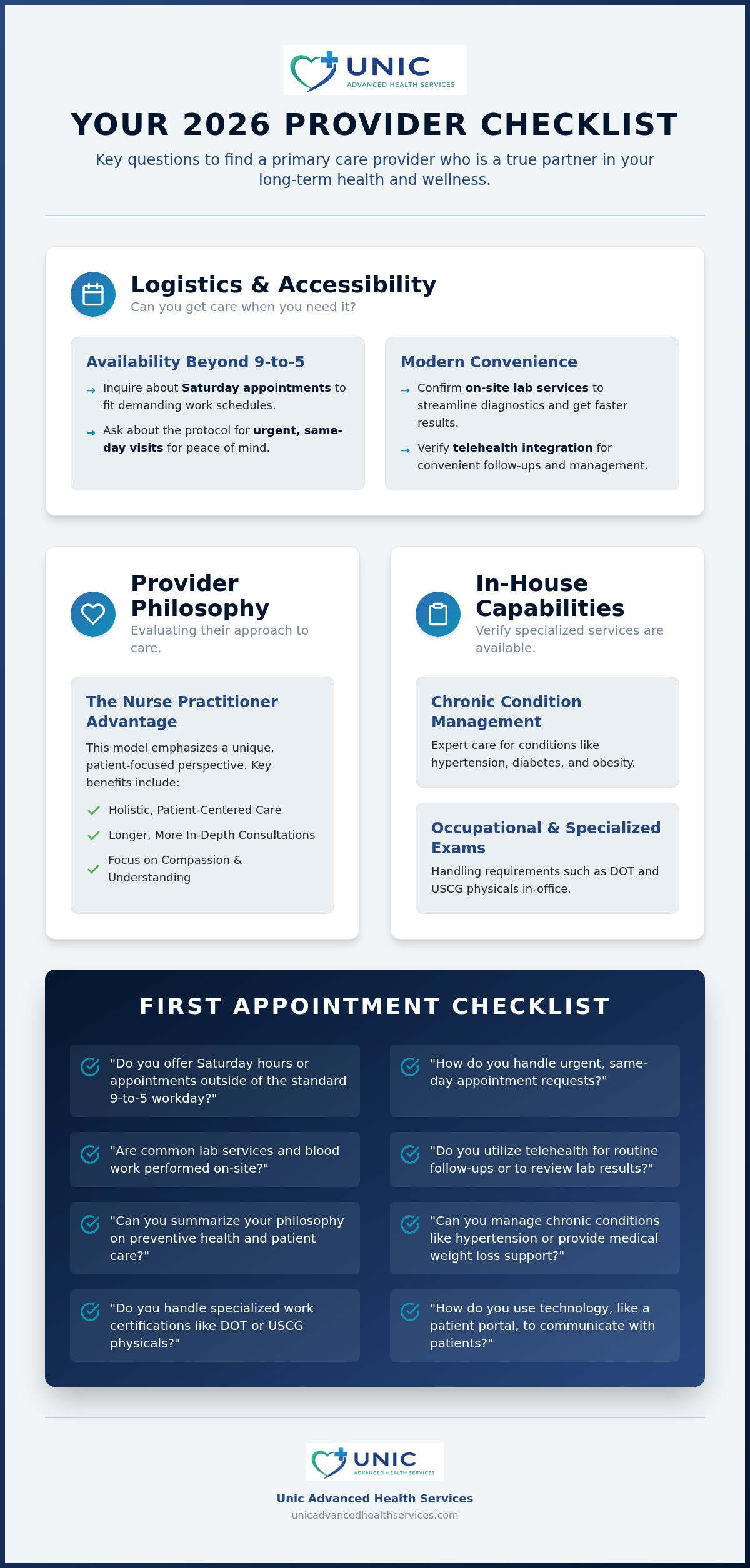
Finding a healthcare home starts with understanding what primary care is and how it fits into your daily life. It isn’t just about clinical expertise; it’s about whether you can actually access that expertise without disrupting your entire week. When you are determining what to ask a new primary care provider, logistics should be at the top of your list. A provider who is technically brilliant but only available during your busiest work hours isn’t a true partner in your health. You need a practice that respects your time as much as your physical well-being.
Availability Beyond the 9-to-5
Professionals in Fort Lauderdale often struggle to find time for health checkups between 9:00 AM and 5:00 PM. You should explicitly ask if Saturday doctor appointments in Fort Lauderdale are part of the regular schedule. Weekend availability isn’t just a luxury; it’s a necessity for those managing demanding careers or family obligations. Beyond standard hours, inquire about the protocol for urgent, same-day visit requests. Knowing you can see your provider quickly when an unexpected issue arises provides a level of peace of mind that a large, bureaucratic system often lacks. Clear communication about wait times for non-emergency appointments will also help you gauge if the practice is a good fit for your schedule.
The Convenience of On-Site Diagnostics
Efficiency is a hallmark of a modern healthcare practice. One of the most important things to consider when deciding what to ask a new primary care provider is whether they offer on-site lab services. Traditional models often require you to visit a separate diagnostic center, which adds another layer of scheduling stress and travel. Having blood work and screenings performed in-office streamlines the entire process. It also typically leads to faster communication of results, as the internal team manages the data directly. This convenience significantly reduces the friction often associated with annual physical exams, making it easier to stay consistent with your preventive care.
Telehealth has evolved into a vital tool for routine follow-ups and chronic care management. Ask if the practice utilizes virtual visits for managing conditions like hypertension or reviewing lab results. This technology allows you to receive expert guidance from your home or office, saving hours of commute time. A practice that integrates these modern tools demonstrates a commitment to patient-centered care and long-term reliability. By prioritizing these logistical questions, you ensure your healthcare remains a supportive part of your life rather than a source of stress.
Provider Expertise: Evaluating the Healthcare Philosophy
When you are determining what to ask a new primary care provider, don’t overlook their underlying clinical philosophy. A provider’s approach to medicine dictates how they’ll handle your concerns over the next decade. You need to know if they view health simply as the absence of disease or as a proactive state of vitality. This distinction matters because it influences every recommendation they make, from routine screenings to complex chronic care. Asking for a one-sentence summary of their approach to preventive health can quickly reveal if their values align with yours.
The Nurse Practitioner Advantage
The autonomous nurse practitioner model of care offers a unique perspective that prioritizes the patient-provider relationship. Ask how their background as a nurse practitioner influences their bedside manner and diagnostic process. This model typically emphasizes holistic, patient-centered care, which often results in longer consultation times and a more compassionate environment. You don’t want to feel rushed during your visit. Instead, you want a dedicated guide who takes the time to understand your lifestyle and health history. For instance, understanding how an obesity management nurse practitioner integrates metabolic health into a broader wellness plan can provide a window into their level of specialized support. It’s about finding a steady hand who listens as much as they prescribe.
Preventive Care and Wellness Focus
Another vital component of what to ask a new primary care provider involves their strategy for long-term wellness. Choosing a primary care provider requires looking at their specific protocol for annual screenings and how they stay updated on 2026 medical guidelines. Inquire about whether they take a proactive or reactive approach to your health. A proactive provider identifies risk factors early, using modern data and regular checkups to prevent issues before they require intensive intervention. Ask how they involve you in the decision-making process. True health partnership means you are an active participant in your care plan, not just a recipient of instructions. If you value a relationship built on transparency and thoroughness, you might find our Fort Lauderdale primary care team offers the steady, reliable partnership you need. By ensuring your provider values education and collaboration, you set the stage for a more effective and reassuring healthcare experience.
Specialized Care: Managing Chronic Conditions and Work Requirements
A primary care provider should serve as the central hub for all your medical needs, including long-term disease management and professional certifications. When you are considering what to ask a new primary care provider, it’s vital to determine if they can handle specialized requirements in-house. Relying on a provider who understands your full medical history while performing a work-related physical ensures a higher level of accuracy and continuity. This integration is especially beneficial for professionals in the maritime or transportation industries who must balance rigid regulatory standards with personal health goals.
Chronic Disease Management Strategies
Managing conditions like diabetes or hypertension requires more than just a prescription. You need a partner who offers comprehensive monitoring and lifestyle education. Inquire about their experience with long-term blood pressure oversight and how they utilize telehealth for chronic care management. Virtual visits allow for more frequent check-ins, which is essential for stabilizing chronic issues. A strong Impact of the Doctor-Patient Relationship is often the deciding factor in successful long-term outcomes. Ask if they provide nutritional coaching or integrated obesity management to support your physical health from every angle.
Integrating Occupational Health
For many Fort Lauderdale residents, healthcare isn’t just personal; it’s a professional requirement. One of the most strategic things to include in your list of what to ask a new primary care provider is whether they are certified to perform occupational exams. Having your regular PCP handle these requirements streamlines your administrative burden. Consider asking the following questions:
- Are you a certified FMCSA medical examiner qualified to perform DOT physicals?
- What is your specific process for documenting USCG mariner certifications?
- How do you coordinate with specialists if a complex health issue threatens my work clearance?
A provider who understands both your chronic health status and your job requirements can offer more nuanced advice. They can help you manage a condition like hypertension so that it doesn’t interfere with your commercial driving or boat captain certification. This dual focus makes your healthcare experience more efficient and less stressful. By choosing a provider who manages these certifications alongside your daily health, you ensure that your professional life and personal wellness remain in harmony.
Communication and Technology: Staying Connected
Technology in 2026 should enhance the relationship between you and your healthcare team, not create a barrier. When you are determining what to ask a new primary care provider, focus on how they use digital tools to stay accessible. A practice that prioritizes modern connectivity ensures you are never left wondering about a test result or waiting days for a simple prescription refill. You deserve a healthcare partner who uses technology to provide a steady hand of support throughout your wellness journey.
The Virtual Care Experience
Telehealth has moved far beyond a temporary solution; it is now a cornerstone of efficient, patient-centered care. You should ask what specific concerns can be addressed via virtual doctor visits. While chronic care management and routine follow-ups are ideal for this format, you need to know the provider’s threshold for when an in-person visit is required. Inquire about the platform’s user-friendliness and any specific technology requirements for a successful visit. A high-quality virtual consultation should feel as thorough and personal as an office visit, allowing for meaningful dialogue without the stress of a commute.
Clear and Transparent Communication
Digital tools like patient portals are only as effective as the human beings monitoring them. When evaluating what to ask a new primary care provider, ask about typical response times for secure messages sent through the portal. You should also confirm who handles your clinical questions when you call the office. Is it a dedicated nurse, the provider themselves, or an administrative assistant? Knowing the chain of communication helps manage expectations and reduces the anxiety often associated with medical inquiries. Consider asking these specific questions to gauge their transparency:
- How are test results communicated, and will I have access to the raw data through a portal?
- What is the process for requesting electronic prescription refills between appointments?
- If I have a follow-up question after a visit, what is the best way to reach the clinical team?
The ultimate goal of these communication systems is to ensure every patient feels heard and supported. Clear pathways for information eliminate the feeling of being just another number in a database. If you are looking for a practice that balances clinical excellence with modern accessibility, schedule a consultation with our Fort Lauderdale team today. By choosing a provider who values clear and modern communication, you ensure your health remains a collaborative and well-managed priority.
The First Appointment Checklist: Questions to Ask in the Room
Your first consultation is more than a clinical evaluation; it is a critical opportunity to establish mutual expectations. When you are deciding what to ask a new primary care provider during this initial meeting, focus on the data that drives your daily health decisions. Ask which specific health numbers, such as your A1c or blood pressure readings, you should be tracking most closely this year. This discussion transforms your visit from a passive screening into an active strategy for longevity. It is also the ideal time to conduct a thorough review of your current medications and supplements to identify any potential interactions. A provider who acts as a steady hand will prioritize this safety check before recommending new interventions.
Setting the Foundation for Care
Establishing a proactive health plan requires a two-way dialogue about your history and future needs. Discuss any family history concerns, such as early-onset heart disease or specific cancers, that might necessitate advanced screenings earlier than standard guidelines suggest. You should also clarify what the provider expects from you as a patient to ensure the relationship remains productive. If your career requires specific certifications, use this time to map out the next steps for any occupational health exams you may need. Coordination is much simpler when your primary care home is already prepared for these regulatory requirements. This level of preparation ensures that your professional life and personal wellness are managed with equal thoroughness.
Evaluating the Personal Connection
The technical expertise of a provider is only half of the equation. You must also evaluate the personal connection to determine if they are the right long-term partner for you. When considering what to ask a new primary care provider, pay close attention to how they respond to your inquiries. Observe their communication style. Do they maintain eye contact and listen without interrupting? Are their explanations clear and free of dense medical jargon? Ask yourself if you feel comfortable discussing sensitive health issues with this person. A reliable advocate will make you feel heard and respected, ensuring you never feel like just another number in a large system.
Finally, confirm their preferred method of follow-up after the visit. Whether it is a secure portal message, a phone call, or a telehealth check-in, knowing the next steps reduces the anxiety of waiting for results. A practice that provides clear pathways for communication demonstrates a commitment to transparency and patient peace of mind. By the end of this first appointment, you should feel confident that you have found a steady, capable guide for your health journey.
Securing Your Health Partnership for 2026
Choosing a healthcare home is one of the most significant decisions you’ll make for your long-term wellness. By prioritizing accessibility and specialized expertise, you ensure your provider is a reliable resource rather than a hurdle. You now have a clear framework for what to ask a new primary care provider to verify they can manage complex chronic issues while handling professional requirements like maritime certifications. This proactive approach eliminates the anxiety of the unknown and places you back in control of your medical journey.
At Unic Advanced Health Services, we provide the steady hand you need to navigate these requirements with ease. Our practice offers Saturday office hours for busy professionals and expert chronic disease management for conditions like diabetes. We also feature a certified DOT and USCG medical examiner on-site to streamline your professional physicals. Schedule your first consultation with Unic Advanced Health Services today to experience a more personalized, compassionate approach to care. You deserve a health partner who values your time and understands your unique goals. Taking this step today sets the foundation for a healthier, more confident future.
Frequently Asked Questions
What is the difference between a physician and an autonomous nurse practitioner for primary care?
Autonomous nurse practitioners provide the same scope of primary care services as physicians, including the ability to diagnose conditions, treat illnesses, and prescribe medications. In Florida, autonomous NPs manage their practices independently without a supervision requirement. The primary difference often lies in the nursing model, which emphasizes a holistic, patient-centered approach and education. This model frequently allows for more personalized attention and longer consultation times during your visits.
Do primary care providers in Fort Lauderdale usually accept all insurance plans?
Most primary care providers in Fort Lauderdale accept a wide range of private insurance, but coverage varies significantly between individual practices. It’s essential to verify that your specific plan is in-network before your appointment. When you are determining what to ask a new primary care provider, always confirm their participation in your insurance network and ask about their policies for uninsured patients to avoid unexpected out-of-pocket costs.
How do I transfer my medical records to a new primary care office?
You can transfer your medical records by signing a medical release form at your new provider’s office. Your new practice will then contact your previous doctor to request your history directly. This process typically takes seven to fourteen days to complete. Providing a summary of your current medications and copies of recent lab results during your first visit can help your new provider bridge the gap while waiting for full records.
Can my primary care provider also perform my DOT physical exam?
Your primary care provider can perform a DOT physical if they are a certified medical examiner listed on the FMCSA National Registry. Combining your occupational exam with your regular primary care home ensures your provider understands how your full health history affects your work clearance. This integrated approach provides a more thorough and efficient evaluation for commercial drivers and boat captains who need to maintain strict regulatory compliance.
What should I bring to my first appointment with a new doctor?
You should bring your current health insurance card, a valid photo ID, and a comprehensive list of all medications and supplements you currently take. It’s also helpful to have a written summary of your family medical history and any recent lab results from other facilities. Having these documents ready allows your provider to focus more time on your specific health goals and clinical concerns during the consultation.
How often should I see my primary care provider if I am generally healthy?
Healthy adults should generally schedule an annual physical exam once every year to monitor preventive health markers and screenings. These yearly checkups are vital for the early detection of issues like hypertension or high cholesterol that may not have obvious symptoms. If you are managing a specific wellness goal, such as medical weight loss, your provider might suggest more frequent follow-ups to track your progress effectively.
What happens if I need care after the office is closed?
If you require non-emergency care after the office is closed, check if your practice offers an on-call service or secure messaging through a patient portal. Many modern practices use digital portals where you can leave a message for the clinical team to review the next business day. For life-threatening emergencies, you must always call 911 or visit the nearest emergency department immediately for urgent intervention.
Are telehealth visits covered by insurance the same way as in-person visits?
Most insurance plans in 2026 cover telehealth visits at the same rate as traditional in-person consultations for primary care services. Coverage for virtual visits has become standardized for routine follow-ups and chronic care management. However, it’s wise to include this in your list of what to ask a new primary care provider to ensure your specific plan doesn’t have unique restrictions or higher co-pays for virtual care.