
The nearest clinic isn’t always the right first stop. If you’re weighing urgent care vs primary care clinic options, the choice depends on how quickly you need attention and whether your concern needs follow-up over time. It’s understandable to want prompt care without making an unnecessary visit, especially when symptoms are worrying but don’t seem life-threatening.
Urgent care generally addresses immediate, non-emergency concerns. Primary care offers preventive support, evaluation of new concerns, and continuing follow-up that can take your health history into account. This guide explains what each setting is suited for, which symptoms call for emergency help, and how to choose a sensible next step in Fort Lauderdale. You’ll also learn how primary care and telehealth may fit into your care when clinically appropriate.
Key Takeaways
- The choice between urgent care and primary care depends on how serious the concern is, how quickly it needs attention, and whether ongoing follow-up matters.
- Understanding the different roles of urgent care and a primary care clinic can help you choose a suitable next step for a new health concern.
- Your medical history, medications, and existing conditions can provide important context when a primary care provider evaluates new symptoms.
- Severe breathing difficulty, possible stroke, severe chest pain, or uncontrolled bleeding warrants calling 911.
- Fort Lauderdale residents can use primary care for preventive visits, new concerns, and continuing health management.
Urgent Care vs. Primary Care: What Is the Difference?
Choosing between an urgent care vs primary care clinic can feel unclear when a health concern needs attention. Consider how severe the problem is, how quickly you need an assessment, and whether you may need follow-up. The clinic’s name alone won’t tell you which setting is right. Think about the kind of care the concern may require.
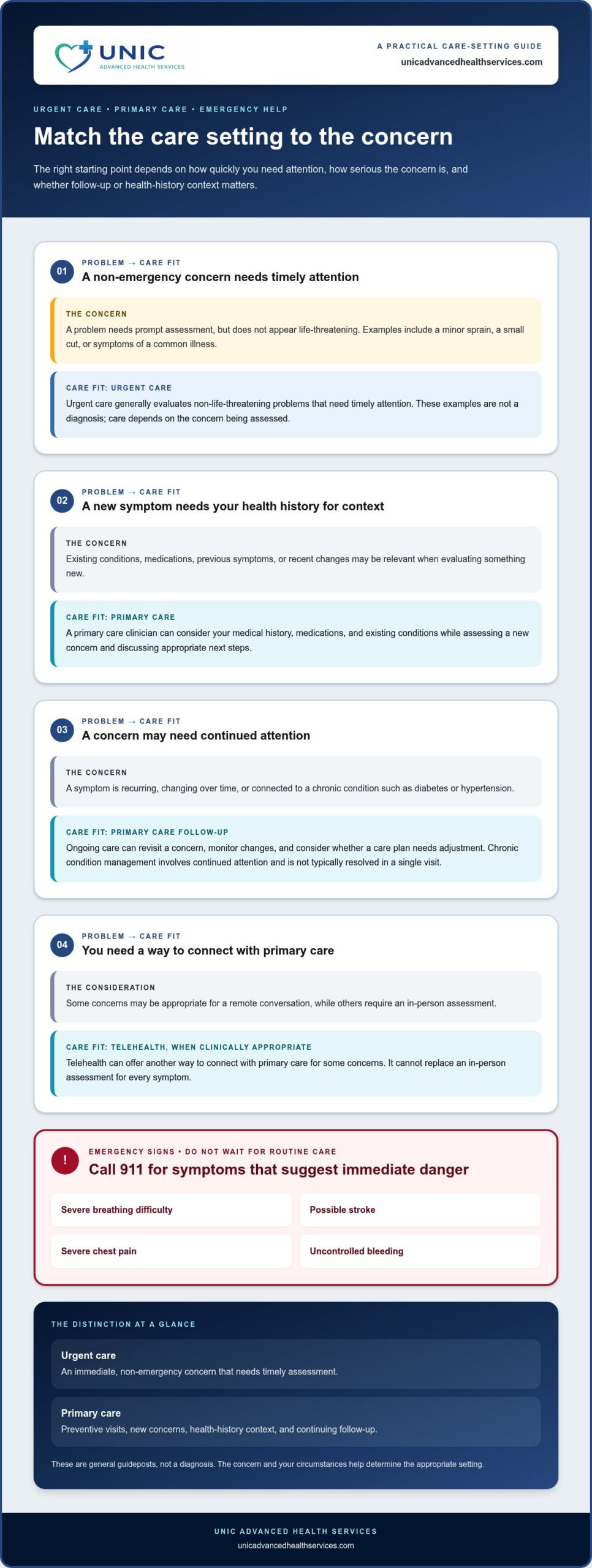
Urgent care generally evaluates non-life-threatening problems that need timely attention. Primary care provides ongoing, personalized care, including preventive visits, assessment of new concerns, and attention to your health history. The settings serve different purposes, even though both can help address health needs.
To see how these care settings compare with emergency care, watch this overview:
Urgent care addresses an immediate episode; primary care connects a concern to your broader health and ongoing care. That distinction can help you choose where to start, while your symptoms and circumstances determine which setting is appropriate.
What does urgent care typically address?
Urgent care centers assess many non-life-threatening problems that need prompt attention. General examples include a minor sprain, a small cut, or symptoms of a common illness. These examples aren’t a diagnosis, and care depends on the concern being assessed. The Urgent care center overview describes this setting’s role in the broader healthcare system.
Urgent care is intended for concerns that need timely assessment but aren’t emergencies. It isn’t a substitute for emergency services when symptoms suggest immediate danger.
What does a primary care clinic provide?
Primary care supports health over time through preventive visits, health assessments, and discussion of new concerns. A clinician may consider your medical history, medications, and existing conditions when evaluating a symptom. That context can help inform next steps rather than treating each visit as an isolated event.
Follow-up is another important part of primary care. A clinician can revisit a concern, monitor changes, and help determine whether the care plan needs adjustment. Chronic condition management, including support for diabetes or hypertension, involves continued attention and isn’t typically resolved in a single visit.
For some concerns, telehealth may offer another way to connect with primary care when clinically appropriate. It can’t replace an in-person assessment for every symptom. Consider whether you need timely evaluation for a single problem, ongoing care informed by your health history, or emergency help.
How Primary Care Adds Context to New Symptoms and Long-Term Health
A new symptom can be easier to assess when considered alongside your health history. A clinician may take into account existing conditions, medications, previous symptoms, and recent changes. That context doesn’t determine the cause on its own, but it can help guide questions, assessment, and appropriate next steps.
This is one reason the urgent care vs primary care clinic decision involves more than how quickly you want to be seen. An isolated concern may call for focused evaluation, while a symptom connected to a chronic condition or a pattern of changes may benefit from a broader review and follow-up. Neither setting is automatically right for every situation.
When a new concern belongs in a broader health picture
Consider someone with hypertension who notices recurring headaches. The symptom can have different explanations, so it shouldn’t be self-diagnosed. A clinician may ask when it began, how often it occurs, whether it has changed, and what medications the person takes. Accurate details support an individual evaluation but don’t guarantee a particular finding or outcome.
Before a visit, note when the symptom started, what makes it better or worse, and any related changes. Bring an up-to-date medication list and mention relevant health history, including conditions being treated by another clinician. These details can make the conversation clearer. HealthCare.gov describes a Primary Care Provider as a central source of care, which can include helping patients manage health needs over time.
How continuing care supports chronic conditions
Managing diabetes or hypertension often involves more than addressing how a person feels on a particular day. Ongoing care may include reviewing health changes, discussing treatment plans, and arranging appropriate monitoring. Follow-up gives the clinician and patient an opportunity to revisit progress and consider next steps. Decisions depend on individual assessment and clinical judgment.
Continuity helps a clinician interpret today’s changes against what’s typical for you. Familiarity with your health history can give follow-up conversations useful context, though it doesn’t replace an assessment of a new or worsening symptom. Timely evaluation may still be needed, and urgent or emergency symptoms shouldn’t wait for a routine follow-up.
Preventive care also creates opportunities to review health concerns before they become part of a larger problem. An annual physical exam can support a broader discussion of health, preventive needs, and questions to bring to a clinician. In Fort Lauderdale, Unic Advanced Health Services provides personalized primary care, preventive visits, and ongoing condition management.
Urgent Care vs. Primary Care: Choosing the Right Setting
No single setting fits every new health concern. Use this comparison as general guidance, not a diagnosis. Urgent care is generally intended for non-emergency concerns needing timely attention, while primary care can address new concerns, particularly when your history or need for follow-up matters. A clinician’s assessment helps determine appropriate care.
| Consideration | Urgent care | Primary care |
|---|---|---|
| Purpose | Assessment of a non-emergency concern needing timely attention | Preventive care, new concerns, and continuing health management |
| Typical concerns | Examples may include a minor injury or an uncomplicated illness | Routine health reviews, new symptoms, and ongoing conditions |
| Continuity | Often focused on the concern being assessed at that visit | Can support follow-up informed by your health history |
| Access considerations | Hours, services, and appointment policies vary by clinic | Appointment access and visit options vary by practice |
Choose the care setting that matches the concern’s urgency and your need for follow-up. This is a useful principle when weighing urgent care vs primary care clinic options, while recognizing that symptoms and clinical assessment guide the decision.
Which setting fits a new but non-emergency concern?
A minor injury or new illness that needs timely assessment may make urgent care a reasonable option. A mild, stable concern that can be discussed during a planned visit may fit primary care, particularly if you want the clinician to consider your medical history. Primary care can assess new symptoms; it isn’t only for checkups.
Pay attention to changes. If symptoms are worsening, severe, or unusual for you, seek prompt clinical assessment instead of relying on a routine appointment or general examples in a guide. The appropriate response depends on a clinician’s evaluation.
Which setting fits prevention or ongoing health management?
For prevention, routine health reviews, or a condition that needs ongoing attention, primary care offers a way to return to the concern over time. Follow-up visits can help a clinician review what has changed, discuss how a plan is working, and consider next steps. Repeated visits don’t guarantee a particular outcome, but they provide opportunities to track changes.
Some discussions may be suitable for remote care, while others require an in-person assessment. Unic Advanced Health Services provides primary care in Fort Lauderdale and surrounding communities, with telehealth when clinically appropriate. Learn how telehealth primary care in Fort Lauderdale may fit a care conversation, or explore primary care options for preventive visits and ongoing health management.
How to Decide Where to Seek Care and Emergency Needs
When symptoms appear, a simple decision sequence can help you focus on the next step. First, consider whether there may be immediate danger. Then think about the type and pace of the concern, and whether you’ll need follow-up or help managing a known condition. If symptoms seem serious, don’t delay emergency help while comparing clinic options.
Questions to consider before choosing a care setting
- Could this be an emergency? Severe breathing difficulty, possible stroke, severe chest pain, or uncontrolled bleeding warrants calling 911. Don’t drive yourself if you may be experiencing a life-threatening emergency, and don’t wait for a clinic appointment.
- Is the concern worsening or time-sensitive? A new symptom that is severe, rapidly worsening, or unusual for you needs prompt clinical assessment. If you’re uncertain whether symptoms could be serious, seek prompt medical help rather than relying on a comparison guide to rule out danger.
- Does the concern connect to ongoing health needs? For a non-emergency issue, consider whether it relates to a known condition, medication, or a pattern that may need follow-up. That context can help you decide whether primary care is a suitable next step.
Consider immediate safety before choosing between urgent care vs primary care clinic options. General guidance can help you frame the decision, but it can’t assess symptoms or replace clinical judgment. If a situation feels potentially life-threatening, call 911. When you’re unsure whether symptoms are serious, err on the side of getting prompt help.
What information can help during a visit?
A concise account of what’s happening can make a clinical conversation clearer. If practical, prepare a brief timeline and gather relevant details before you go. Don’t delay emergency care to collect records or organize notes.
- Note when the symptom began, whether it has changed, and what seems to make it better or worse.
- Describe any symptoms that occurred along with the main concern.
- Bring a current medication list, including how you take each medicine, and share known allergies.
- Mention significant medical history, existing conditions, and relevant records that are readily available.
Clear information gives a clinician useful context, but it doesn’t replace an examination or determine a diagnosis by itself. Answer questions as accurately as you can, and mention if you’re unsure about a detail. If someone is too unwell to explain their symptoms, a companion may be able to share what they observed.
For non-emergency preventive care, new concerns, or ongoing health management in Fort Lauderdale and surrounding communities, connect with Unic Advanced Health Services to explore primary care and telehealth when clinically appropriate.
Primary Care in Fort Lauderdale: A Steady Next Step for Ongoing Health
After comparing urgent and primary care, consider what kind of support you need next. If you’re looking for preventive care, an assessment of a non-emergency concern, or continued help managing a health condition, primary care provides a place to discuss your needs and plan follow-up. For people weighing urgent care vs primary care clinic options, this longer-term relationship is an important distinction.
Unic Advanced Health Services provides primary care in Fort Lauderdale and surrounding communities. Care is led by an experienced autonomous nurse practitioner and tailored to each patient’s concerns. Recommendations and follow-up depend on individual needs and clinical assessment, rather than a one-size-fits-all plan.
What patients can expect from an ongoing primary care relationship
Primary care can bring several parts of health support together. Preventive screenings and annual physicals create time to review your health, discuss preventive needs, and raise questions. If a new concern comes up, a clinician can evaluate it in context and recommend appropriate next steps. A visit doesn’t guarantee a diagnosis or a particular outcome, but it can start a focused conversation about your health.
For a continuing condition such as diabetes, hypertension, or obesity, care may involve ongoing management rather than a single appointment. Follow-up provides opportunities to review changes and revisit the care plan. On-site lab services are also part of the clinic’s care. Whether a concern calls for an in-office visit or can be discussed through telehealth depends on the issue and clinical judgment. Remote care isn’t suitable for every symptom.
How to take a practical next step in Fort Lauderdale
If you’re seeking continuing care, start by considering what you want to address: a preventive visit, a new non-emergency concern, or ongoing condition management. Make a short list of questions and note any medications or relevant health history you’d like to discuss. This can help you focus appointment time on your priorities and understand the recommended next steps.
Unic’s office hours are Monday through Saturday. Telehealth can be convenient when clinically appropriate, while some issues need an in-person assessment. If symptoms are severe or may be life-threatening, seek emergency help instead of waiting for a primary care visit.
Choosing primary care doesn’t mean every health concern belongs in a routine appointment. It gives you a place to build a continuing care relationship for prevention, new concerns, and health needs that benefit from follow-up. If that’s the support you’re looking for in Fort Lauderdale or a surrounding community, explore primary care and telehealth with Unic.
Make Your Next Care Decision With Confidence
The question of urgent care vs primary care clinic isn’t only about where to go today. It can also help you think about how you want to manage your health between visits. Consider the questions you’d like to discuss, the health goals you want to work toward, and what would help you feel informed when making care decisions. An ongoing care relationship gives those conversations a place to continue.
You don’t need to have every answer before taking the next step. Start with the kind of support you’re seeking and choose an option that fits your current needs. If you’re considering a continuing primary care relationship, Unic Advanced Health Services provides care in Fort Lauderdale and surrounding communities.
Explore primary care and telehealth with Unic Advanced Health Services and take a thoughtful next step toward care that fits your needs.
Frequently Asked Questions
Can a primary care clinic treat a new illness or minor injury?
Yes. A primary care clinic can assess a new illness or minor injury, but whether it can address a specific concern depends on your symptoms and clinical assessment. For example, you might discuss a mild sore throat or small skin concern if symptoms are stable. If pain is intense, movement is limited, or symptoms worsen quickly, seek prompt evaluation rather than waiting for a routine appointment. The urgent care vs primary care clinic choice depends on your situation.
Is urgent care appropriate for a chronic condition flare-up?
It can be an option for a flare-up that needs timely assessment and isn’t life-threatening, particularly if you can’t promptly reach your regular clinician. Share your diagnosis, medication list, and any recent treatment changes so the evaluating clinician has relevant context. If the problem is worsening, feels unusual, or may be serious, seek prompt medical guidance. Severe symptoms may require emergency services rather than an urgent care visit.
How do I know whether my symptoms need urgent care or the emergency room?
Choose emergency help for symptoms that may signal immediate danger. Severe breathing difficulty, possible stroke, severe chest pain, or uncontrolled bleeding warrants calling 911. Don’t delay emergency help to compare clinics or arrange a routine appointment. For other new or worsening symptoms, consider how quickly they’re changing and seek prompt clinical assessment if you’re concerned. A written symptom timeline can help explain what’s happening, but it can’t determine whether a situation is an emergency.
Can telehealth replace an in-person urgent care visit?
Not in every situation. Telehealth may suit some conversations, such as discussing a stable concern or reviewing next steps, but a remote clinician can’t perform a hands-on examination. Symptoms that may require a physical assessment or testing could need in-person care. Don’t use telehealth as a reason to delay emergency help for potentially life-threatening symptoms.
What should I bring to a primary care appointment for a new concern?
Bring a current medication list, including supplements, and note any medication allergies or past reactions. Write down when the concern began, how it has changed, and any related symptoms. If you have relevant records or recent test results readily available, bring them too. These details can help the clinician understand the context and guide questions. You don’t need to prepare a perfect account; share what you know and mention anything you’re unsure about.
Does urgent care provide follow-up after a visit?
Follow-up practices vary by urgent care clinic and by the concern being evaluated. You may receive care instructions or guidance about what to do if symptoms continue or change, but ongoing monitoring isn’t the same at every location. Before leaving, make sure you understand the instructions, any recommended next steps, and when to seek further evaluation. If a concern persists, your primary care clinician can help review what has changed and consider continued care.
Can I use primary care for preventive screenings and annual physicals?
Yes. Primary care can be a setting for annual physicals and preventive screenings, with recommendations based on your health history and individual needs. Use the visit to mention changes since your last checkup, ask which preventive topics are relevant to you, and discuss questions about medications or daily health habits. Unic Advanced Health Services provides preventive care in Fort Lauderdale, helping local patients make time for routine health reviews as part of ongoing care.