
The right time to test can matter as much as the blood draw itself. If you’re looking for a thyroid function test near me in Fort Lauderdale, testing often starts with a TSH blood test. Other thyroid tests may be added when needed.
It’s reasonable to find out what a thyroid test involves before scheduling. A thyroid panel requires a blood sample, and the draw usually takes a few minutes. Preparation can vary, so follow the instructions for your test and tell the healthcare professional about any medicines and supplements you take.
This guide explains how thyroid blood testing works, what can affect payment, and how to protect your privacy. It also covers symptoms that may prompt testing, when follow-up may be needed, and how results fit into your overall health. Knowing when testing may be useful can help you discuss your next steps with a healthcare professional.
Key Takeaways
- Learn what a thyroid blood test can measure and how the test process is shaped by your clinical needs.
- See how result delivery, privacy, insurance, and HSA or FSA payment can affect the experience.
- Understand why thyroid test costs vary and which factors can influence the final amount.
- Identify symptoms, risk factors, and treatment changes that may make thyroid testing worth discussing with a healthcare professional.
What is the process of getting a thyroid blood test?
A thyroid blood test uses a laboratory sample to assess thyroid function. The process usually starts with a review of your symptoms and medical history, followed by choosing appropriate tests.
Thyroid Function Laboratory Testing
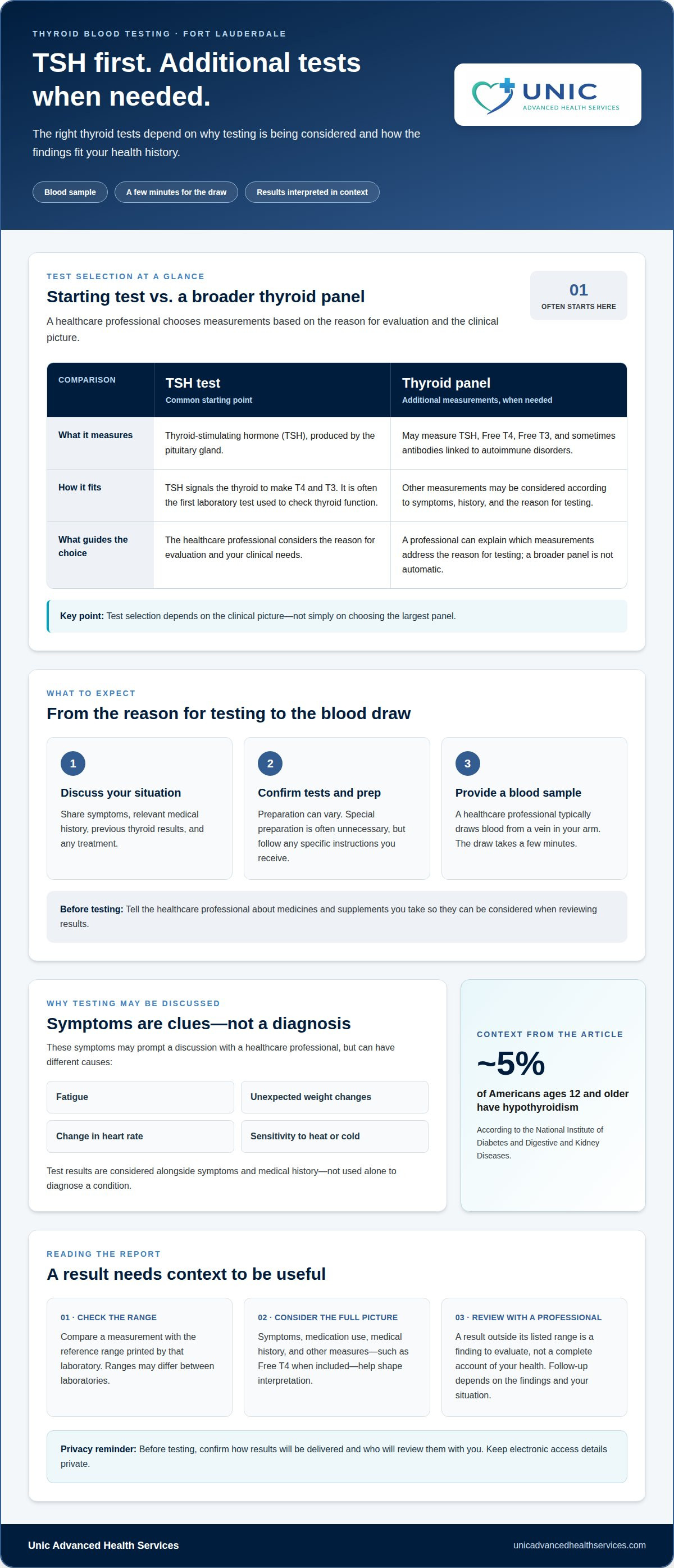
A TSH test is often the first laboratory test used to check thyroid function. The pituitary gland produces thyroid-stimulating hormone, which signals the thyroid to make T4 and T3. A thyroid panel may measure TSH, Free T4, Free T3, and sometimes antibodies linked to autoimmune disorders.
A healthcare professional typically draws blood from a vein in your arm. The draw takes a few minutes. Special preparation is often unnecessary, but you may receive specific instructions, such as whether to avoid food or drink beforehand. Share your medicines and supplements before testing so they can be considered when reviewing your results.
Symptoms can help explain why testing is being considered. Fatigue, unexpected weight changes, a change in heart rate, or sensitivity to heat or cold may prompt a discussion with a healthcare professional. These symptoms can have different causes, so test results are considered alongside your symptoms and medical history, not used alone to diagnose a condition.
About 5 percent of Americans ages 12 and older have hypothyroidism, according to the National Institute of Diabetes and Digestive and Kidney Diseases. Hashimoto’s thyroiditis is an autoimmune disorder associated with thyroid problems. Hyperthyroidism involves different thyroid activity, so the appropriate tests depend on the reason for evaluation.
Finding a Provider for Nearby Testing
For thyroid testing in Fort Lauderdale, consider whether the provider can connect laboratory testing with medical evaluation. A nearby location can make a blood draw more convenient, while professional guidance helps put results in context. Ask how testing is arranged, what sample is collected, and how the findings will be reviewed as part of your care.
Convenience matters, but test selection matters too. TSH may be the starting point, while Free T4, Free T3, or antibody testing may be considered based on the clinical picture. A professional can explain which measurements address the reason for testing.
Booking a Thyroid Test with a Provider
When arranging an evaluation, describe your symptoms or reason for testing and share relevant medical history. Include your medicines and supplements, along with any previous thyroid results or treatment. This information helps the healthcare professional decide which tests may be appropriate and whether you need preparation instructions.
At your appointment, a professional collects the blood sample and explains how results will be reviewed. A test alone cannot establish the full meaning of an abnormal result. A healthcare professional considers hormone measurements alongside your symptoms and history, then discusses whether follow-up or ongoing care is appropriate.
Are my test results private and confidential?
Thyroid test results are personal medical information, including hormone measurements and laboratory interpretations. Protecting them involves more than collecting a blood sample: it also means confirming your identity, controlling who receives results, and explaining how they’ll be delivered. Before testing, ask how you’ll receive results and how a healthcare professional will review them with you.
Result turnaround time depends on laboratory processing and the tests ordered. A TSH measurement and a panel that includes Free T4, Free T3, or thyroid antibodies can involve different laboratory work. The blood draw itself takes only a few minutes, but that does not determine when a completed report is ready. The provider’s result-review process also affects when you receive a useful explanation.
Electronic access can make a report easier to view, but seeing a number and understanding it are different things. A result usually lists the measurement alongside a reference range. Compare it with the range printed by that laboratory, not one from another source. Testing methods can vary, so reference ranges may differ between laboratories.
A result outside its listed range is a finding to evaluate, not a complete account of your health. For example, a TSH result is interpreted alongside other measures, such as Free T4, when those tests are part of the panel. Symptoms, medication use, and medical history also help shape the discussion. This context matters when assessing hypothyroidism, an underactive thyroid, or another thyroid disease.
For electronic results, keep your access details private and use the intended account or portal. Avoid forwarding a report through a shared email account or displaying it on a public screen. If a family member helps manage your medical information, agree on what they may receive and how. These steps reduce accidental disclosure without changing the laboratory’s findings.
When results are ready, the next step is a professional review. A clinician can explain what each measure evaluates, whether the results fit your symptoms, and whether follow-up testing or care is appropriate. Even results that appear normal need to be considered in context if symptoms continue. The goal is to understand the findings, not just access a report.
Before your blood draw, identify the preferred result-delivery method and the person responsible for discussing the report. After testing, review the complete report, including its laboratory reference ranges, rather than focusing on one number. If you need help connecting test findings with ongoing medical care, discussing thyroid results with a healthcare professional is a practical next step.
Privacy, insurance, and HSA/FSA payment
Payment arrangements affect what you may owe and which records are created. Before testing, clarify how insurance is processed, what self-pay involves, and how billing information is handled.
Insurance Coverage
Coverage for a thyroid blood test depends on your plan, the tests ordered, and whether the laboratory is in network. A TSH test measures thyroid-stimulating hormone; a broader panel may include other measurements. These details can affect how your insurer processes a claim. Review your plan’s rules for laboratory services, including deductibles, copayments, and coinsurance.
For a useful coverage discussion, identify the test names and the ordering clinician. Ask your insurer whether the laboratory is in network and whether your plan requires prior authorization or a referral. This helps clarify the terms that apply to your plan, since coverage can differ between thyroid tests.
Insurance and Self-Pay Options
Insurance and self-pay are different ways to handle payment. With insurance, your plan processes a claim according to its coverage terms. With self-pay, you pay directly instead of submitting an insurance claim. The right option depends on your coverage, the test ordered, and the laboratory’s payment arrangements.
Before choosing, compare your estimated responsibility under the plan with the self-pay terms for the specific laboratory service. Testing for possible overactive thyroid or Graves’ disease may involve different tests from a basic TSH measurement. Ask how the requested tests are identified for billing, and keep the information with your appointment details.
Out-of-Pocket Costs
Your out-of-pocket responsibility may include a deductible, copayment, or coinsurance under your plan. It can also depend on whether the laboratory is in network and which tests are ordered. For self-pay, the amount depends on the tests and payment terms. There is no single cost for every patient or combination of tests.
A health savings account (HSA) or flexible spending account (FSA) may also affect how you pay. These accounts have plan-specific rules. Ask your account administrator whether the thyroid testing expense qualifies and what documentation is required. Don’t assume eligibility based on the test name alone.
Privacy matters during payment as well as when results are delivered. Billing documents may contain service or claim details, while laboratory reports contain test findings. Ask how each type of record is delivered and who can access it through your account. For sensitive communications, use a private email address rather than a shared inbox.
To prepare, gather your insurance card, plan details, and any HSA or FSA payment information. Confirm which tests are being ordered, how the laboratory will bill them, and which payment method applies. If a claim is processed, review your insurer’s explanation of benefits alongside the provider’s bill. They serve different purposes and can help explain the balance.
Thyroid test prices
Thyroid test costs depend on which tests are included, the laboratory, and how you pay. Key factors include the requested tests, insurance terms, and whether you’re paying directly. A single TSH blood test and a broader thyroid panel are different orders, so their costs are not interchangeable.
A thyroid panel may measure TSH, Free T4, Free T3, and sometimes antibodies associated with autoimmune thyroid disorders. Each measure has a clinical purpose, and the provider selects tests based on the reason for evaluation. For example, an initial assessment may begin with TSH, while symptoms or previous findings may lead to additional measurements. The exact order affects the laboratory work included in the price.
Before an appointment, identify the proposed test names and ask how the quote applies to that order. A quote for a TSH blood test may not cover a panel that adds Free T4, Free T3, or antibody testing. The thyroid gland’s function is assessed through these specific measurements, so a broader order can involve a different cost. Clear test names help make the estimate easier to understand.
Insurance can affect how much you pay directly. The amount depends on your plan, the laboratory’s network status, and how the test is processed. Your plan’s deductible, copayment, or coinsurance may apply. If you’re comparing insurance with self-pay, compare the same test order and confirm whether the quoted amount includes the laboratory service. Different orders do not provide a fair price comparison.
For self-pay, ask about the amount for the exact test or panel before the blood draw. The cost depends on the laboratory service and the number and type of tests ordered. If a healthcare professional considers testing for an overactive thyroid, the measurements may differ from those in a basic TSH order. An estimate should specify the tests it covers, not just say “thyroid testing.”
Keep the test order, estimate, and payment details together. If the order changes after a clinical review, the tests may change too, affecting the final amount. Review the revised test list before payment to see whether it still matches the original estimate. This helps distinguish a change related to a different order from one caused by insurance processing.
When to test thyroid function
Thyroid testing may be considered when symptoms, risk factors, or treatment changes raise questions about hormone levels. Thyroid hormones help regulate metabolism, but symptoms alone cannot show whether someone has an overactive or underactive thyroid. A professional assessment connects symptoms and health history with appropriate laboratory tests.
Fatigue, weight changes, changes in heart rate, and sensitivity to temperature can prompt a discussion about thyroid health. These symptoms can have other causes, so test results are considered alongside your broader medical history. Mention when symptoms began, whether they’re changing, and any relevant medicines or supplements. This information helps a healthcare professional decide whether testing may help assess thyroid function.
Age and personal circumstances can also influence whether testing is discussed. The American Thyroid Association recommends starting thyroid screening at age 35, with follow-up screening every five years. Adults aged 50 and older are also identified as a group at risk for thyroid problems. These recommendations and risk factors provide context, not a substitute for an individual assessment.
Other circumstances may make a timely discussion useful. These include taking lithium for six months or more, or having been pregnant within the past six months. Women over age 60 may benefit from regular thyroid testing. Share these details during a medical review, since they can help determine whether testing is appropriate and which results need follow-up.
Testing timing also matters after treatment begins or changes. After starting thyroid treatment or changing its dose, TSH and Free T4 testing is recommended six weeks later. Once a steady state is achieved, annual TSH monitoring is recommended. These follow-up checks help assess hormone levels during treatment, rather than relying only on how someone feels.
No single symptom or age answers every question about testing. The decision may depend on symptoms, risk factors, pregnancy history, medicines, and thyroid treatment. For example, someone with new symptoms may need a different evaluation from someone monitoring an established underactive thyroid. A professional can weigh these details and explain the purpose of any recommended tests.
If you’re experiencing symptoms or need follow-up after a treatment change, discuss thyroid testing and timing with a healthcare professional. Bringing your medication list and prior thyroid results can help make that conversation focused. The next step is a clear plan for whether testing is useful and how results will guide ongoing thyroid health care.
Unic Advanced Health Services
Unic Advanced Health Services in Fort Lauderdale can address thyroid concerns through primary care and chronic condition management. A healthcare professional can consider your symptoms, previous results, or thyroid treatment alongside your broader health needs. On-site lab services support testing, and telehealth is another option for discussing care. The next step depends on whether you need an initial evaluation, follow-up, or ongoing condition management. Bring your medication list and previous thyroid results to help focus the discussion. Contact Unic Advanced Health Services to schedule an appointment.
Take the Next Step With a Clear Care Plan
Deciding to test is only one part of caring for your thyroid health. The next step is connecting the reason for testing with a plan to interpret results and address any ongoing concerns. A thyroid function test near me can be a practical starting point for local medical guidance in Fort Lauderdale, but its value comes from understanding how the findings relate to your health.
Bring your questions, medication information, and relevant history to a conversation with a healthcare professional. This can clarify what you hope to learn from testing and how the results may shape future care. If your thyroid concerns are part of a broader health issue, ongoing care can help keep those needs in view.
For a professional conversation about your next step, contact Unic Advanced Health Services. You can move forward with a clearer understanding of your options and a thoughtful plan for your care.
Frequently Asked Questions
At what age should I check my thyroid, and how often should I monitor my thyroid levels?
Thyroid screening recommendations include starting at age 35 and repeating every five years, according to the American Thyroid Association. Monitoring can become more frequent when treatment changes: TSH and Free T4 testing is recommended six weeks after starting treatment or changing its dose. Once a steady state is achieved, annual TSH monitoring is recommended. Your symptoms and treatment history help shape the timing of follow-up.
Can I book a Thyroid Panel near me?
Schedule a medical appointment in Fort Lauderdale to discuss thyroid concerns and whether testing fits your needs. Unic Advanced Health Services provides on-site lab services as part of medical care. Bring a brief note about what prompted your request, such as a new symptom or treatment follow-up, so a healthcare professional can consider the reason for testing and an appropriate next step.
Can I make an appointment for Thyroid Panel online?
You can use the secure online booking option to schedule an appointment. Include thyroid testing as the reason for your visit so the appointment can focus on that concern. The healthcare professional can consider your history and determine the appropriate evaluation. If online booking isn’t suitable, scheduling by phone is also available through the office at (954) 767-0228.
Can I talk to someone about my results?
Yes. A healthcare professional can discuss your results and explain how they relate to your health history and reason for testing. Bring the complete report, including the laboratory’s reference ranges, and note questions about specific findings. If you have earlier results from another laboratory, sharing them can help show how your results have changed over time.
Where can I get a thyroid function test near me?
For local medical care in Fort Lauderdale, Unic Advanced Health Services offers on-site lab services and telehealth. A medical appointment can connect your thyroid concerns with an appropriate evaluation and follow-up discussion. Choose the appointment format that suits your concern, and bring relevant health information to support the conversation.
Which nearby labs and clinics offer thyroid blood tests?
In Fort Lauderdale, Unic Advanced Health Services provides primary care and on-site laboratory services. The clinic’s on-site lab work includes blood tests and diagnostic testing as part of medical visits. Connecting laboratory work with a broader health discussion can be useful when testing is being considered because of symptoms, previous findings, or ongoing care.
What thyroid tests are included in a thyroid function test (TSH, T3, and T4)?
The tests included depend on the clinical reason for evaluation. A thyroid panel may include TSH, Free T4, and Free T3; some panels also include antibodies related to autoimmune thyroid disorders. TSH is a common starting measure, while other tests add information about thyroid hormone levels. The requested test names determine what appears on the laboratory report.
Do I need a doctor’s order for a thyroid test at a nearby lab?
The process depends on how testing is arranged. In a medical-care setting, a healthcare professional can assess why testing is being considered and determine which tests suit the situation. A thyroid test may be part of a visit that includes discussion of symptoms, previous results, or ongoing treatment. The professional can also explain how the laboratory order and follow-up fit into your care.