
An annual check-in does not always require a comprehensive physical. Wellness visits focus on prevention, while the need for a more extensive exam depends on your health and care needs. In Fort Lauderdale, routine health check-up cost also depends on what the visit includes and how your insurance classifies each service.
It is understandable to expect a preventive appointment to be fully covered, but the visit and any added tests may be billed differently. Most health plans cover eligible preventive services without cost sharing when plan requirements are met, while diagnostic care may involve a copay, coinsurance, or deductible.
This guide explains how preventive coverage, cash-pay pricing, insurance cost sharing, and diagnostic billing shape what you may owe. You will also learn why discussing symptoms or adding tests during a check-up can affect the bill, and how to distinguish an annual wellness visit from a comprehensive physical.
Key Takeaways
- Look beyond the visit fee: lab work, imaging, and follow-up care may be billed separately and can change the total.
- Compare cash estimates by what they include, such as the exam, sample collection, and individual lab tests.
- Understand how your plan applies copays, coinsurance, and deductibles to services billed as diagnostic care.
- Keep your Good Faith Estimate and final bill; according to the Centers for Medicare & Medicaid Services, you may be eligible to dispute a provider bill that is at least $400 more than the estimate.
- Ask for an itemized explanation of charges so you can see which services contributed to your final cost.
Preventive care coverage and out-of-pocket costs
Preventive care may be covered without cost sharing, but diagnostic services can add charges. Your total depends on the services performed, how they are billed, and your plan’s rules.
Preventive and Diagnostic Service Costs
Preventive care aims to prevent illness or detect it early; diagnostic care evaluates or treats a health concern. That distinction matters because a visit intended to be preventive can include diagnostic services with separate cost sharing.
For example, reporting a new symptom during a physical may lead to an evaluation or follow-up billed as diagnostic care. A lab test or imaging ordered to investigate that symptom may also involve a copay, coinsurance, or deductible. Follow-up appointments are commonly billed separately from the initial visit, so the final amount may include more than the exam.
Most health plans cover eligible preventive services at no cost when plan requirements are met, including using an in-network provider. Coverage can depend on the service and why it was ordered. A colorectal cancer screening typically starts at age 45 for people without other risk factors; a screening test may be treated differently from testing prompted by symptoms. Its out-of-pocket cost depends on coverage and billing classification.
Can an annual physical lead to extra charges for diagnosing or treating a health problem? Yes. Discussing a symptom or treating an existing condition can make part of the visit diagnostic, with separate cost sharing for evaluation, tests, or follow-up.
Factors That Shape Check-Up Prices
Check-up pricing reflects the provider, location, and clinic type, as well as the services included. This matters because an exam-only price may not include lab work, imaging, or a separately billed follow-up.
In Fort Lauderdale, an office visit and an urgent care visit may have different pricing structures. A self-pay estimate can also differ from the amount billed through insurance. Your exact price depends on the visit, provider, clinic type, and any added services; Unic Advanced Health Services provides pricing after a quote request.
Primary care and emergency care serve different needs. Emergency services are not a substitute for preventive check-ups, and urgent symptoms require attention suited to their severity.
For diagnostic services, the reason for testing affects how a plan processes the claim. Lab work, imaging, or follow-up to investigate a concern may create additional out-of-pocket costs. The same test can be classified differently depending on whether it is preventive screening or part of diagnosing a health problem.
Finding Low-Cost Check-Ups
When searching for a low-cost check-up, focus on the expected total bill, not just the exam fee. Separate lab charges or follow-up costs can change what you pay.
Compare whether a posted cash price includes the clinician’s visit, sample collection, and any listed tests. Look for clear sliding-scale terms and eligibility details, and distinguish an exam price from costs for diagnostic care. If you’re uninsured or self-pay, Centers for Medicare & Medicaid Services says you may be eligible to dispute a provider bill through the patient-provider dispute resolution process when the final bill is at least $400 more than that provider’s Good Faith Estimate.
Average cash price for an annual physical
Cash estimates for an annual physical vary because clinics define the visit differently. Routine health check-up cost depends on the services included, so compare what each quote covers.
Typical Cash Prices
A cash price is the amount charged directly to a patient paying without insurance. It matters because an exam-only quote may describe a narrower service than a comprehensive physical.
One clinic’s quote may cover a clinician’s assessment, while another may include additional evaluation. A standard physical can involve blood pressure, heart rate, weight, and temperature checks, along with an examination of the eyes, ears, nose, and throat. Clarify what the price covers, including whether tests or sample collection are separate.
For a fair comparison, identify the visit components before comparing estimates. A routine exam, added blood work, and an EKG are distinct services that may affect the final bill. To estimate your routine health check-up cost, consider the exam’s scope, clinic type, and any tests recommended for your care. One advertised figure may not reflect those differences.
Annual Wellness Exams
An annual wellness exam focuses on reviewing health and planning preventive care, while a physical exam includes an examination of the body. The distinction matters because the names can refer to different appointments and inclusions.
A Medicare Annual Wellness Visit discusses a person’s health plan but does not include a physical exam. By contrast, a standard physical may check vital signs and include a physical assessment. Before comparing cash estimates, identify the appointment you need and whether its purpose is wellness planning, a physical examination, or both.
Time and scope also help clarify what a quote represents. A physical exam may take 30 minutes to an hour, depending on the visit and discussion. That duration describes the appointment, not every service that may be added. Ask for an itemized estimate that distinguishes the clinician’s visit from tests.
For example, a healthy patient attending a wellness-focused appointment may need different services from someone seeking evaluation of a specific concern. A provider may recommend screening or lab work based on health history and observations. Those additions can change the total and may be billed separately from the exam.
In Fort Lauderdale, compare estimates by appointment type and included services rather than by the word “annual” alone. A quote should make clear whether it covers a wellness discussion, physical examination, and any planned tests. This helps you understand the expected care before the appointment and distinguish the visit fee from additional services.
If you’re arranging preventive care, annual physical and preventive care can provide a focused starting point for discussing the appointment’s scope.
Insurance copays, coinsurance, and deductibles
Your health plan determines how much you pay directly and how much insurance covers. For an accurate estimate, separate the physical exam from tests or services addressing a health concern.
A copay is a set amount you pay for a covered service. Coinsurance is your share of the allowed cost, usually calculated as a percentage. A deductible is the amount you pay for eligible care before your plan begins sharing costs. Your plan documents explain which terms apply to each service.
Most health plans are legally required to cover eligible preventive care at 100%, subject to requirements such as using an in-network doctor. That doesn’t mean every service during a physical exam is free. If the appointment also evaluates a symptom or manages a chronic condition, those services may be billed as diagnostic care and subject to the plan’s cost sharing.
How much does a routine check-up cost with Medicaid? There is no single amount that applies to every enrollee. Costs depend on the state, eligibility category, plan, provider network, and whether the service is covered as preventive or billed as diagnostic.
Medicaid coverage can also differ between a routine examination and care for a specific problem. For example, a preventive screening and a test ordered to investigate symptoms can be processed differently. The plan’s rules and the reason for the service shape the patient’s share, so a single national estimate would not describe every Medicaid appointment.
A provider can help estimate your costs by identifying the planned services and reviewing the insurance information you provide. Bring your insurance card and describe whether the appointment is preventive or includes a concern, such as ongoing chronic symptoms. Unic Advanced Health Services accepts most major insurance plans, and pricing is provided after a quote request.
Before scheduling, ask for an estimate that separates the exam, laboratory work, and any planned follow-up. Then compare those items with your health plan’s benefits, including network status, deductible progress, copay, and coinsurance. If a clinician adds a diagnostic service during the physical, that service may change the estimate.
For example, a plan may cover an eligible preventive screening at 100% when its network requirements are met, while applying cost sharing to diagnostic testing. Your current deductible and the service’s billing classification can affect what you owe. An estimate is most useful when it lists each planned service, rather than presenting one total for the appointment.
Keep the estimate and the final explanation of benefits together. If the claim shows a different patient responsibility, compare each service line with the estimate and your plan’s terms. This makes it easier to understand whether the difference came from a new service, network status, or cost sharing.
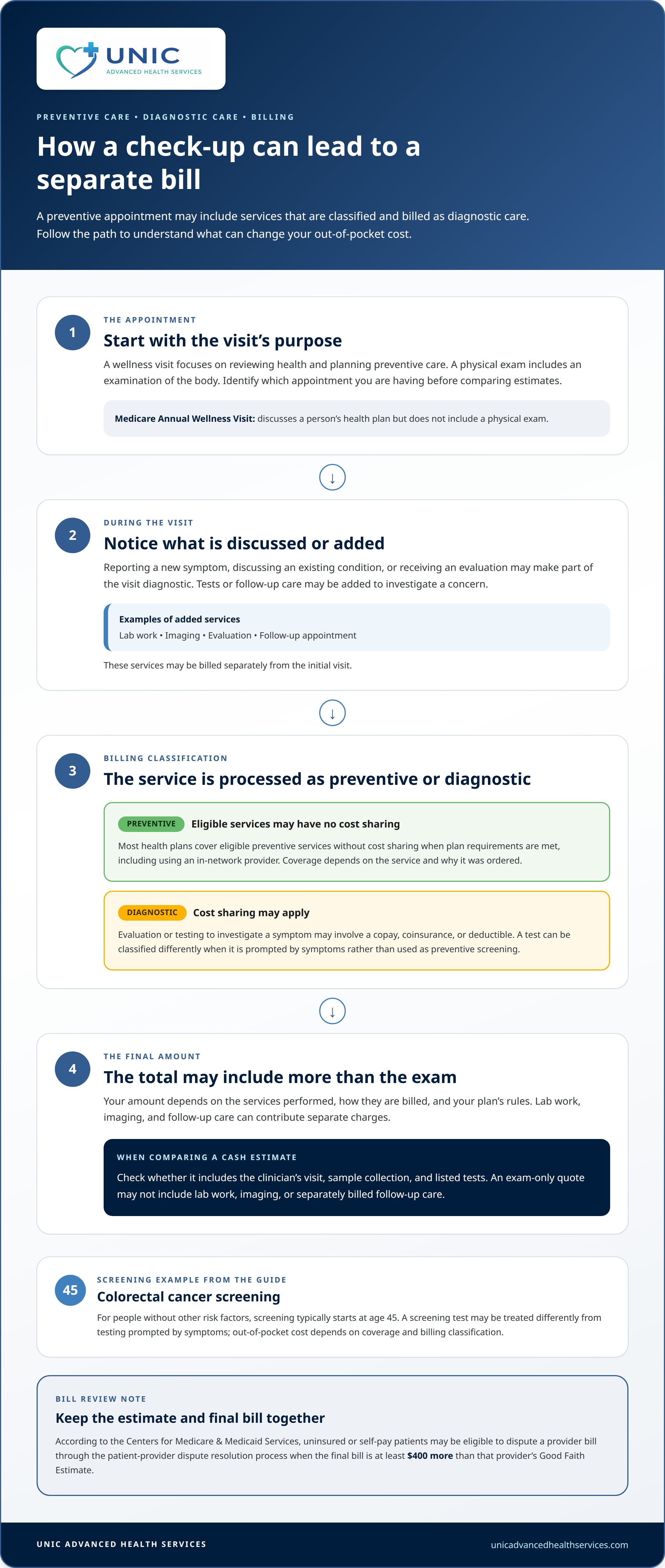
Preventive versus diagnostic billing
Preventive care aims to prevent illness or detect it early, while diagnostic care investigates or treats a concern. The distinction affects whether your health plan covers a service without cost sharing or applies your deductible, copay, or coinsurance.
The Public Health Service Act section 2713 requires non-grandfathered group and individual health plans to cover specified preventive health services without cost sharing. Most plans also cover eligible preventive services when plan requirements are met, such as using an in-network provider. Coverage depends on the service and its purpose, not simply the appointment’s name.
A physical scheduled for prevention can include both preventive and diagnostic care. For example, if you mention ongoing pain, the provider may evaluate that concern during the same visit. The preventive exam and separate evaluation may be billed differently, so your plan could apply cost sharing to the diagnostic portion.
Tests can also be classified according to why they are ordered. A screening intended to find disease before symptoms appear may qualify as preventive care. A similar test used to investigate fatigue, an abnormal finding, or another concern may be diagnostic. For example, a cancer screening and a test ordered after symptoms arise can receive different coverage treatment.
Laboratory work, imaging, and follow-up visits may each generate a distinct claim. If an exam leads to blood work to investigate a health issue, the lab service may be processed separately from the preventive appointment. A follow-up visit to discuss results or treatment can also be billed separately rather than included in the original exam.
The claim’s details help explain the difference. The service performed, the reason documented, and the provider’s billing classification all contribute to how a health plan processes care. A preventive visit that includes an assessment of a new symptom may therefore produce more than one billing category, even though it happened during one appointment.
Before a scheduled physical, describe whether you are seeking preventive screening or an evaluation of a specific concern. If a concern comes up during the visit, ask which services are preventive and which address diagnosis or treatment. That distinction can clarify how the provider expects to bill the exam, tests, or follow-up.
When reviewing an explanation of benefits, compare each service line with the care received. Separate entries for the exam, diagnostic testing, and a later visit may reflect different services rather than duplicate charges. Your plan’s coverage rules and network requirements determine the patient share for each category.
Understanding the billing purpose helps explain why a preventive appointment may not result in a fully covered claim. A service can be medically appropriate and still carry cost sharing when it evaluates or treats a health concern. The key detail is whether each service was preventive or diagnostic.
Questions to ask about cash-pay pricing
A clear cash-pay estimate should explain what the visit includes and which services cost extra. Before scheduling, ask for the scope in writing so you can understand the expected out-of-pocket amount.
- Does the quoted amount cover the doctor’s examination, or only the appointment?
- Are sample collection, laboratory tests, or imaging billed separately?
- Which preventive services are included, and what could be considered diagnostic?
- Could discussing a health concern add evaluation or follow-up charges?
- Does the clinic offer a reduced rate for payment at the time of service?
- Can the clinic provide a Good Faith Estimate for the planned services?
These questions help distinguish an exam-only quote from a broader estimate. For example, a physical may include a clinician’s evaluation, while a blood test is billed separately. Ask whether sample collection and laboratory analysis appear as separate charges, too. That detail helps explain what the estimate covers before the visit.
Clarify the reason for any planned test. A screening intended to prevent or detect illness early may be treated differently from a test ordered to investigate symptoms. If you raise a new concern during the physical, ask whether evaluating it could lead to diagnostic billing or a separate follow-up visit.
Ask how the clinic handles services that become necessary during the appointment. For example, a provider may recommend laboratory work after discussing a health concern. Knowing how added services are priced can help you understand whether the initial estimate changes and which items may be billed independently.
Some U.S. clinics offer reduced rates when patients pay at the time of service. Ask whether that option applies to the full visit or only selected charges. Also clarify when payment is due and whether the estimate separates the clinician’s service from tests, sample collection, or follow-up care.
Your cash price depends on the appointment’s scope, provider, clinic type, and any included tests or follow-up. Unic Advanced Health Services provides pricing after a quote request. Use an estimate that lists each planned service rather than relying on a general exam description.
For an uninsured or self-pay appointment, keep the estimate and compare it with the final bill. According to the Centers for Medicare & Medicaid Services, you may be eligible to dispute a provider bill through the patient-provider dispute resolution process when the final bill is at least $400 more than that provider’s Good Faith Estimate.
Clear answers should identify what is included, what may be added, and how preventive services differ from diagnostic care. That breakdown offers a more useful basis for planning out-of-pocket spending than a single unexplained total.
Unic Advanced Health Services
Unic Advanced Health Services in Fort Lauderdale provides chronic condition management for patients managing concerns such as diabetes, hypertension, and obesity. Its telehealth services offer another way to discuss care and ongoing health needs.
For a routine check-up, understanding whether a service is preventive or diagnostic can help you interpret potential insurance costs. Bring your coverage details and questions about planned care to your appointment discussion. This can clarify what care is being considered and how it relates to an existing health concern.
If you’d like to discuss your care needs, contact Unic Advanced Health Services.
Plan your next step with confidence
Your routine health check-up cost depends on the care involved and how each service is billed. Before your appointment, decide what you want addressed: preventive care, an ongoing health concern, or a required occupational examination. That clear starting point can help shape a useful conversation about the visit and your coverage.
Unic Advanced Health Services provides care for different needs, including chronic condition management, DOT Physical Examination, and U.S. Coast Guard (USCG) Boat Captain Physical. If your next step involves ongoing health support or one of these specialized physicals, consider how it fits your current needs and care plan.
Insurance terms can be difficult to interpret, especially when a visit includes more than one type of service. A discussion about your goals and coverage can help you approach the next appointment with greater clarity. For support with your care needs, contact Unic Advanced Health Services.
Taking that next step can make preventive and ongoing care easier to plan.
Frequently Asked Questions
Do you need to get a comprehensive physical exam every year?
No, a comprehensive physical is not necessarily needed every year for a generally healthy person. Guidance described in this article suggests comprehensive exams every three to five years, while wellness visits are generally yearly. A person’s health history, chronic conditions, risk factors, and screening needs can change the appropriate schedule. People at higher risk of certain diseases may need more frequent comprehensive exams based on their individual health needs.
How Much Is a Primary Care Visit Without Insurance?
There is no single cash price for an uninsured primary care visit. The amount depends on the clinic, location, visit purpose, and whether the appointment includes only an evaluation or also tests and follow-up. A focused visit to discuss one concern may involve different services from a broader physical. For a useful estimate, distinguish the clinician’s visit from lab work or other services that may be billed separately.
What is the average cost of a routine annual physical in the United States without insurance?
The total varies depending on what the clinic counts as an annual physical. An exam-only charge and a package that includes tests are different services, so their prices are not directly comparable. The visit’s scope, provider, and included tests all affect the total. Before comparing estimates, identify whether the physical includes a clinician’s assessment, lab work, sample collection, or an EKG.
Are routine annual check-ups free under ACA-compliant health insurance?
Eligible preventive services are generally covered without cost sharing under most ACA-compliant plans when plan requirements are met, including applicable network rules. That does not necessarily make every part of an annual appointment free. For example, a service to evaluate a symptom may be billed as diagnostic rather than preventive. The reason for a test and how the appointment is billed can affect your out-of-pocket responsibility.
How much do common screening tests and lab work cost during a check-up?
There’s no single total for screening tests and lab work because the tests ordered and their billing arrangements vary. A complete blood count, lipid panel, and hemoglobin A1c are distinct tests, and sample collection may appear as another charge. Ask for an estimate that names each planned test and separates it from the office visit. Whether a test is preventive screening or diagnostic evaluation can also affect insurance coverage.
Does Medicare cover annual wellness visits, and what out-of-pocket costs apply?
A Medicare Annual Wellness Visit focuses on discussing a health plan and doesn’t include a physical exam. Medicare doesn’t cover a routine physical exam, so beneficiaries pay its full cost out of pocket. These are different appointment types, even if both are described as yearly check-ins. If an appointment includes diagnostic testing or treatment beyond its wellness purpose, those services may have separate coverage and cost-sharing rules.