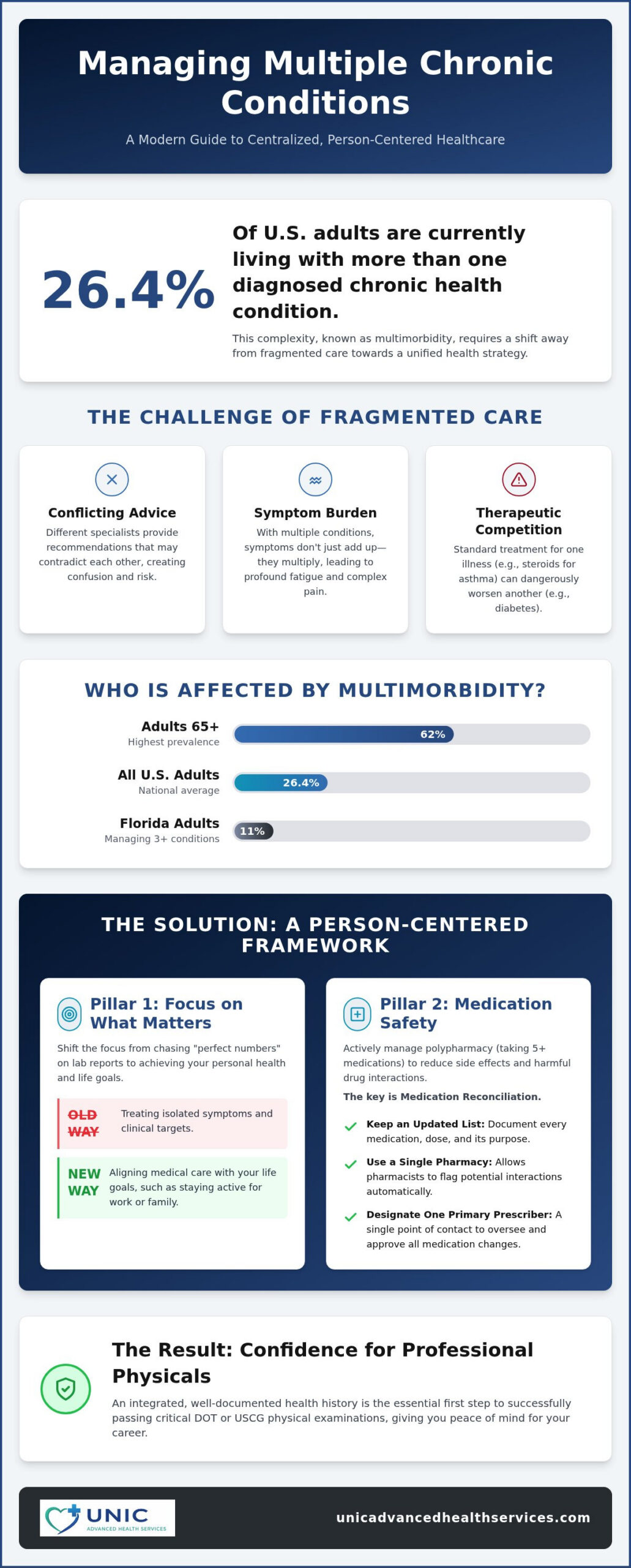
Did you know that 26.4% of U.S. adults are currently living with more than one diagnosed health issue? If you feel like your life is a revolving door of specialist appointments and conflicting medical advice, you’re not alone. The challenge of managing multiple chronic conditions often feels like a full-time job where the departments never communicate. You might worry about how your blood pressure medication interacts with your diabetes treatment, or perhaps you’re anxious about maintaining your DOT or USCG medical certification while balancing several prescriptions.
We understand that you want to feel like a person again, not just a list of symptoms. This 2026 guide will show you how a centralized, person-centered approach can simplify your healthcare and prioritize your actual quality of life. We will explore how modern strategies, such as continuous health monitoring and on-site diagnostic labs, can streamline your medication list and provide a single point of contact for every health decision. You’ll gain the confidence to pass your professional physicals and the peace of mind that comes from having a steady hand guiding your long-term wellness.
Key Takeaways
- Discover how a centralized primary care hub prevents care fragmentation and ensures all your specialists are on the same page.
- Learn a person-centered framework for managing multiple chronic conditions that prioritizes your personal goals over a mere list of symptoms.
- Understand the critical process of medication reconciliation to eliminate conflicting prescriptions and reduce the risk of side effects.
- Master practical daily strategies like the “Traffic Light” system to identify when health changes require immediate clinical attention.
- Find out how integrated management of your health history is the essential first step toward successfully passing DOT or USCG physical examinations.
Understanding the Complexity of Managing Multiple Chronic Conditions
Living with a single health diagnosis is difficult, but the reality for many is far more layered. Multimorbidity, the clinical term for living with two or more long-term health issues simultaneously, creates a compounding effect known as the symptom burden. When you are managing multiple chronic conditions like diabetes and heart disease, the symptoms don’t just add up; they multiply. Fatigue becomes more profound, and pain becomes harder to localize. The traditional medical model often fails these patients because it views the body as a collection of isolated systems. A cardiologist treats the heart, and an endocrinologist treats the blood sugar, but rarely do they consider how the treatments for one might disrupt the other. Multimorbidity represents a fundamental shift from disease-centered to person-centered care.
The Rise of Multimorbidity in 2026
Data from the American Journal of Public Health published in May 2026 indicates that 26.4% of U.S. adults now live with multiple chronic conditions. This prevalence is even higher among seniors, with 62.0% of adults aged 65 and older balancing at least two diagnoses. In Florida, 11% of the adult population manages three or more conditions at once. This trend is frequently driven by the prevalence of obesity, which often triggers secondary issues like hypertension and sleep apnea. Utilizing a proactive approach through obesity management nurse practitioner Fort Lauderdale medical weight loss in 2026 programs can help halt this progression before the clinical picture becomes too complex.
The Danger of Therapeutic Competition
One of the most overlooked risks in complex care is therapeutic competition. This occurs when the standard treatment for one condition directly contradicts the needs of another. For instance, a provider might prescribe steroids to manage an severe asthma flare-up, but those same steroids can cause a dangerous spike in blood sugar for a patient with diabetes. Following the standard of care for a single disease can be hazardous when you have three. You need a provider who views the total clinical picture to ensure that every intervention is harmonized rather than competitive. This oversight ensures that managing multiple chronic conditions doesn’t lead to accidental harm through conflicting medical advice.
The Person-Centered Framework for Effective Management
Effective care for managing multiple chronic conditions requires more than just following clinical guidelines for each individual disease. It involves a holistic framework that prioritizes four critical pillars: What Matters, Medication, Mentation, and Mobility. By focusing on these areas, you move away from being a passive recipient of care to an active partner in your health journey. This approach ensures that treatment doesn’t just manage numbers on a lab report but actually improves how you feel day-to-day.
Setting Realistic Health Goals
Traditional medicine often focuses on “perfect numbers,” such as an exact blood pressure reading or an ideal A1c level. However, for many patients, functional health is the higher priority. This means aligning your medical treatment with what you actually want to do, whether that’s staying active for work or enjoying time with family. You can use a preventive care checkup Fort Lauderdale to establish a clear baseline and discuss these goals with your provider. Shared decision-making ensures your values drive the care plan, creating a sustainable path forward.
Tackling Polypharmacy and Medication Safety
Polypharmacy, defined as taking five or more medications daily, is a common reality for those managing multiple chronic conditions. It carries significant risks, including adverse drug interactions and increased side effects. Medication reconciliation is the essential process of reviewing every pill, supplement, and over-the-counter drug you take. The goal is to eliminate unnecessary or conflicting substances that may be causing more harm than good.
To stay safe and organized, consider these practical steps:
- Keep an updated list of all medications, including dosages and the reason you take them.
- Use a single pharmacy to ensure their system can flag potential drug-to-drug interactions.
- Designate one primary prescriber to oversee your entire regimen and act as the final word on changes.
Mental health and physical function are equally vital components of this framework. Chronic illness often brings depression or anxiety, which can make it harder to stick to a complex treatment plan. Simultaneously, maintaining mobility prevents a “cascade of decline” where inactivity leads to further health complications. Addressing these factors proactively helps you maintain independence and a higher quality of life. If you need a dedicated partner to help coordinate these complex layers, our team provides comprehensive chronic condition management tailored to your unique requirements.
The Primary Care Hub: Solving Care Fragmentation
When you see three or four specialists, you often become the messenger between them. This fragmentation is the primary barrier to successfully managing multiple chronic conditions. One doctor might prescribe a medication that another would advise against, leading to dangerous interactions or duplicate testing. A centralized primary care hub serves as the “quarterback” for your health, ensuring every specialist’s recommendation aligns with your total clinical picture. This oversight reduces the mental burden on the patient and creates a streamlined path toward stability.
Nurse Practitioners are uniquely positioned to solve this fragmentation. They are trained to look at the whole person rather than just one organ or system. This holistic approach bridges the gap between different specialties, transforming a collection of separate treatments into a cohesive plan. At Unic Advanced Health Services, on-site diagnostics and laboratory services speed up this coordination by providing immediate data for clinical decision-making within a single visit.
Centralizing Your Medical Data
A single, comprehensive electronic health record (EHR) is the foundation of safe, integrated care. It prevents the frustration of repeating your medical history at every appointment and ensures no detail is lost in transition. By utilizing on-site lab work Fort Lauderdale, you can consolidate your diagnostic requirements into one location. If your results require a quick follow-up, telehealth services allow you to review data across all your conditions from the comfort of your home, ensuring your care remains consistent and organized.
Chronic Management and Occupational Compliance
For many professionals, health management is directly tied to their livelihood. Effectively managing multiple chronic conditions like hypertension, diabetes, or sleep apnea is essential for commercial drivers and mariners who must meet strict federal safety standards. A primary provider who understands these complex requirements is invaluable when preparing for a DOT physical exam Fort Lauderdale. Similarly, mariners benefit from specialized knowledge in USCG boat captain physical Florida requirements. Your provider ensures that your health management is robust enough to satisfy regulatory standards, allowing you to focus on your career with confidence.
Practical Daily Strategies for Navigating Complex Health
The logistical weight of managing multiple chronic conditions can lead to medical burnout if not handled with a structured plan. Organization is a clinical necessity, not just a lifestyle choice. By implementing a “Health Calendar,” you can stagger your lab work, specialist visits, and prescription refills to ensure your healthcare doesn’t overwhelm your daily life. This methodical approach allows you to regain a sense of control and predictability over your schedule. To streamline this process, many patients utilize telehealth Fort Lauderdale services for routine follow-ups, reducing the need for frequent travel.
One of the most effective tools for daily safety is the “Traffic Light” system. This simple framework helps you categorize symptoms and decide on the appropriate action:
- Green: Symptoms are under control and within your normal range. Continue your current plan.
- Yellow: You notice a new symptom or a change in a chronic one. This is your cue to call your Nurse Practitioner for a consultation.
- Red: You experience chest pain, severe shortness of breath, or a sudden change in speech. Seek emergency care immediately.
Additionally, creating a “Patient Passport” is invaluable. This is a physical or digital document containing your current medication list, recent lab results, and your primary provider’s contact information. Carrying this to every specialist appointment ensures that every member of your care team has the same data, preventing the fragmentation discussed earlier in this guide.
Diet and Lifestyle as Foundation
A foundation of anti-inflammatory eating can benefit several conditions at once, from heart disease to diabetes. Focus on whole foods that stabilize blood sugar and reduce systemic stress. When it comes to exercise, the goal is “safe movement” rather than high intensity. If you manage both respiratory and cardiovascular issues, your provider can help you set heart-rate targets that improve stamina without causing distress. Finally, prioritize sleep hygiene. Consistent rest is essential for regulating the hormones that control your blood pressure and glucose levels.
Monitoring Your Numbers at Home
Home monitoring tools like blood pressure cuffs, glucometers, and pulse oximeters provide the data your provider needs to make informed adjustments. However, it’s important to look for trends rather than reacting to a single “bad reading.” A single high blood sugar or blood pressure spike might be a temporary reaction to stress or a meal. By keeping a simple log of your readings over time, you help your provider see the bigger picture. If you are ready to simplify your healthcare journey, contact us today to begin your personalized chronic condition management plan.
Integrated Chronic Care at Unic Advanced Health Services
At Unic Advanced Health Services, we recognize that managing multiple chronic conditions requires a level of oversight that goes beyond traditional, episodic care. Our practice, led by Marc Joseph, an autonomous Nurse Practitioner, is designed to serve as your dedicated primary care hub in Fort Lauderdale. We provide a steady hand to help you navigate the complexities of your health journey, ensuring that every treatment, medication, and lifestyle adjustment is part of a unified, safe strategy. By centralizing your care, we eliminate the confusion of conflicting medical advice and the stress of fragmented specialist visits. It’s our mission to transform a complex medical history into a manageable, clear path forward.
Personalized Care Plans That Work
We believe that effective chronic care begins with a thorough understanding of the individual. Our consultations move beyond the standard 15-minute appointment model to ensure we have the time to listen to your full medical history and personal goals. This deep dive allows us to create a management plan that prioritizes your functional health and long-term stability. We actively coordinate with your existing specialists, acting as the central point of contact to reconcile different treatment paths into one cohesive narrative. This integrated approach is particularly vital for those who need to maintain professional certifications, as it ensures your health management is robust enough to meet rigorous occupational standards without compromising your wellness.
Accessibility for Fort Lauderdale Residents
Providing high-quality care also means making that care accessible to those managing multiple chronic conditions while balancing busy professional lives. We offer several features designed to respect your time and reduce the logistical burden of healthcare:
- Saturday Availability: We provide weekend hours for patients who cannot take time off during the work week for routine appointments.
- Telehealth Options: Many routine follow-ups and medication reviews can be conducted from the comfort of your home, saving you unnecessary travel.
- On-Site Diagnostics: Our on-site laboratory services provide immediate data, allowing for quicker adjustments to your treatment plan and fewer trips to separate testing facilities.
Our commitment is to provide compassionate, affordable care that respects your time and your personal health goals. We invite you to experience a healthcare model where you’re a partner in the process, not just a patient on a chart. Whether you’re focused on personal longevity or preparing for a professional physical exam, we’re here to provide the specialized oversight you deserve. Schedule your comprehensive chronic care consultation at Unic Advanced Health Services today to take the first step toward a more streamlined and confident health future.
Empowering Your Health Journey Through Integrated Care
Navigating a complex medical landscape doesn’t have to be a source of constant anxiety. By shifting toward a person-centered framework and utilizing a centralized primary care hub, you can move from merely surviving to truly thriving. You’ve learned that managing multiple chronic conditions is most effective when care is coordinated under a single, expert guide who understands how your various treatments interact. This approach reduces care fragmentation, simplifies your medication list, and ensures your personal goals remain the priority at every stage of your treatment.
At Unic Advanced Health Services, we provide the autonomous Nurse Practitioner expertise and on-site diagnostic labs necessary to offer this high level of clinical oversight. Our Saturday appointments and telehealth options ensure that your healthcare fits into your life, rather than your life revolving around your healthcare. You deserve a partner who provides a steady hand and a clear path forward for your long-term wellness and professional stability.
Schedule your chronic care consultation with Marc Joseph, NP, at Unic Advanced Health Services today. Your journey toward a more organized and healthier future starts with a single, proactive step.
Frequently Asked Questions
What is the most important thing when managing multiple chronic conditions?
Centralizing your care under a single “quarterback” is the most critical step for long-term health stability. This ensures that every treatment plan is viewed through a total clinical lens, preventing conflicting advice from different specialists. By having one primary provider oversee your health journey, you reduce the risk of medical errors and ensure that your personal wellness goals always remain the focal point of your care strategy.
How can I prevent my medications from interacting with each other?
You can prevent interactions by maintaining a comprehensive medication list and utilizing a single pharmacy for all your prescriptions. This allows both your provider and your pharmacist to flag potential drug-to-drug conflicts before they occur. Regular medication reconciliation sessions with your primary care provider are essential to identify and eliminate any overlapping or unnecessary drugs that could lead to adverse side effects or a diminished quality of life.
Is it better to see a specialist or a primary care provider for chronic diseases?
It’s best to utilize both in a collaborative model where the primary care provider acts as the central hub. While specialists offer deep expertise in specific organs or systems, a primary care provider offers the holistic oversight necessary for managing multiple chronic conditions effectively. This structure ensures that specialist recommendations are integrated into a cohesive, safe plan that considers your entire body rather than just isolated symptoms.
Can I still pass a DOT physical if I have multiple chronic conditions?
Yes, you can often pass a DOT physical provided your conditions are well-managed and meet federal safety standards. Success depends on having documented stability and a provider who understands the specific regulatory requirements for commercial drivers. While we cannot guarantee a passing result, proactive management of issues like hypertension and diabetes is the most effective way to demonstrate that you are safe to operate a commercial vehicle on the road.
How often should I have blood work done if I have diabetes and hypertension?
Most patients require diagnostic blood work every three to six months to monitor their A1c, kidney function, and electrolyte levels. However, the exact frequency depends on the stability of your readings and any recent medication changes. Routine monitoring allows your provider to make data-driven adjustments to your treatment plan, preventing minor fluctuations from becoming major health crises that could impact your daily function or professional certifications.
What is polypharmacy and why is it dangerous for seniors?
Polypharmacy is the concurrent use of five or more medications, a situation that significantly increases the risk of adverse drug reactions in seniors. As the body ages, it processes medications differently, making older adults more susceptible to side effects like dizziness, confusion, or falls. Integrated oversight is necessary to ensure that each prescription provides a clear benefit that outweighs the potential risks of a complex, multi-drug regimen.
How does telehealth help in managing chronic health issues?
Telehealth improves care consistency by making it easier to attend routine follow-up appointments without the stress of travel. It’s an ideal tool for reviewing lab results, adjusting medication dosages, and discussing non-emergency symptoms in real-time. This increased accessibility helps prevent gaps in care, ensuring that your management plan stays on track even when you have a busy schedule or limited mobility in your daily life.
What should I bring to my first chronic care management appointment?
Bring all your current prescription bottles, over-the-counter supplements, and any recent lab results or specialist reports. Having these items allows your provider to conduct an accurate medication reconciliation and establish a clear clinical baseline. Providing a complete picture of your health history during the first visit ensures that your new integrated care plan is built on a foundation of accurate and thorough data for long-term success.