Imagine waking up to a day where your body no longer follows your instructions, yet the demands of your career and family remain unchanged. For many professionals in 2026, a diagnosis isn’t just a medical event; it’s a fundamental shift in how they view their future. It’s completely normal to feel isolated when you’re balancing complex symptoms with the search for reliable living with a chronic illness support. The weight of managing multiple medications while worrying about professional certifications, such as a USCG or DOT physical, can feel like a full-time job in itself. You deserve a healthcare partner who understands that your life shouldn’t stop because of a health condition.
This guide provides the clarity you need by exploring comprehensive systems designed to help you regain control of your health. We’ll examine modern medical management strategies, local community resources, and the telehealth tools that make long-term care sustainable for even the busiest schedules. By the end of this article, you’ll have a roadmap for navigating the emotional and physical challenges of your condition with confidence. We’ll show you how a combination of clinical oversight and self-advocacy can lead to a more stable, predictable lifestyle.
Key Takeaways
- Understand why a multi-layered ecosystem of medical, emotional, and social pillars is essential for long-term stability.
- Explore how clinical chronic care management provides a professional foundation for living with a chronic illness support while maintaining your lifestyle.
- Learn to implement the ‘Self-Management Model’ using modern tools to track vital data and make informed daily health decisions.
- Discover local resources in Fort Lauderdale, including the benefits of Saturday availability and on-site lab services for working professionals.
- Identify the specific steps needed to transition from a new diagnosis to a structured, empowered management plan.
Understanding the Ecosystem of Chronic Illness Support
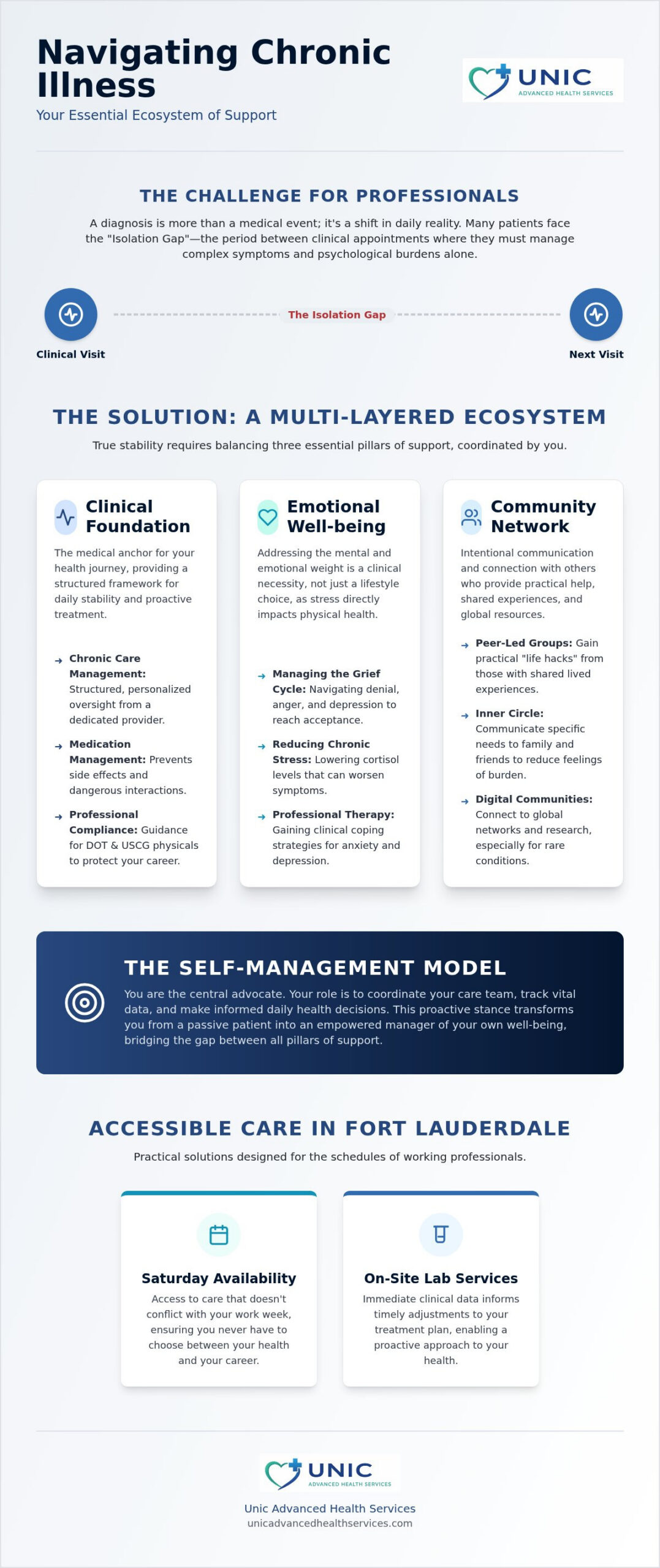
A Chronic condition is more than a medical diagnosis; it’s a fundamental shift in your daily reality. True stability requires a multi-layered ecosystem that balances medical, emotional, and social pillars. Many patients struggle because they rely on a single source of help. A doctor provides the prescription, but they aren’t there at 2:00 AM when anxiety peaks. A friend offers a listening ear, but they cannot interpret your fluctuating glucose levels. This fragmentation creates the “Isolation Gap,” the period between clinical appointments where you must manage complex symptoms and psychological burdens alone. Bridging this gap requires you to step into your role as the central advocate, coordinating the various parts of your care team to ensure no detail is overlooked.
The Emotional Impact of Long-Term Diagnosis
Receiving a life-altering diagnosis often triggers a cycle of grief similar to losing a loved one. You may move through denial, anger, and depression before reaching a state of functional acceptance. This emotional weight isn’t just a mental hurdle; it has tangible physical consequences. Chronic stress triggers the release of cortisol, which can cause blood sugar spikes in patients with diabetes or worsen hypertension. Medical trauma refers to the psychological distress resulting from painful medical experiences or the threat of serious health complications, which often leads to a subconscious avoidance of necessary follow-up care. Addressing these feelings is a clinical necessity, not just a lifestyle choice.
Identifying Your Personal Support Network
Finding the right living with a chronic illness support involves more than just having people around you. It requires intentional communication with those in your inner circle. You can reduce the feeling of being a “burden” by being specific about your needs, such as asking for help with grocery shopping on high-pain days or requesting a quiet environment during flare-ups. It’s also vital to distinguish between different types of groups:
- Peer-led support groups: These offer shared lived experience and practical “life hacks” from people who truly understand your daily struggle.
- Professionally facilitated therapy: These sessions provide clinical coping strategies to manage the anxiety and depression that often accompany long-term illness.
- Digital communities: These tools are invaluable for those with rare conditions, connecting you to global networks and the latest research regardless of your physical location.
At Unic Advanced Health Services, we believe that effective management is a partnership. We provide the clinical foundation, but we also help you identify the social and emotional resources necessary to maintain your quality of life in Fort Lauderdale.
Clinical Support: The Role of Chronic Care Management
Effective chronic care management serves as the clinical anchor for your health journey. It moves beyond episodic care, offering a structured framework that prioritizes daily stability over reactive treatment. Working with an autonomous nurse practitioner ensures that your oversight is both highly skilled and deeply personalized. This model allows for a steady hand in your care, where your provider acts as an expert guide through the complexities of your condition. By utilizing on-site lab services, we obtain immediate clinical data that informs timely adjustments to your treatment plan. This proactive approach, combined with comprehensive medication therapy management, prevents the acute complications that often lead to hospital visits.
Managing medications is a delicate balance. It’s not just about taking pills; it’s about understanding how they interact with your body and your lifestyle. A significant part of living with a chronic illness support involves dealing with feelings of overwhelm when managing multiple prescriptions. Professional oversight ensures that your regimen remains effective without causing unnecessary side effects or dangerous drug interactions.
Managing Professional Compliance and Health
For many in the workforce, a health condition feels like a threat to their livelihood. If you are a commercial driver, passing a DOT physical exam in Fort Lauderdale while managing hypertension requires a precise, documented strategy. Similarly, mariners must meet strict standards for their USCG boat captain physical. Proactive clinical management allows you to maintain these certifications by demonstrating that your condition is well-controlled. We help you stay compliant with regulatory requirements so you can focus on your career with peace of mind.
Telehealth: Support When You Can’t Leave Home
Modern care should be accessible, regardless of your physical location or current energy levels. Utilizing telehealth in Fort Lauderdale significantly reduces the “burden of care” by removing the need for frequent travel. Virtual visits are ideal for routine check-ins, symptom monitoring, and adjusting treatment plans in real time. This convenience improves long-term adherence because it integrates health management into your life rather than forcing your life to revolve around medical appointments. If you’re looking for a more streamlined approach to your health, you can explore our management services to see how we partner with you for long-term success.
Practical Self-Management and Lifestyle Resources
The ‘Self-Management Model’ empowers you to take the lead in your daily health decisions. It shifts the focus from being a passive recipient of care to an active participant in your own wellness. This proactive stance is a vital part of living with a chronic illness support, as it allows you to identify trends and patterns before they become clinical emergencies. When you understand the daily nuances of your condition, you become a more effective partner to your healthcare team.
To succeed in this model, you need reliable tools to gather objective data. Monitoring your health at home provides a clearer picture of your status than a single office visit ever could. Essential tools for your toolkit include:
- Digital blood pressure monitors: Choose models with memory storage to track fluctuations over weeks, not just days.
- Continuous glucose monitors (CGMs): These devices offer real-time sugar tracking, which is essential for managing Type 2 diabetes effectively.
- Smart scales: These measure body composition and fluid retention, providing early warnings for heart or kidney issues.
Using these tools consistently provides the clinical data needed during your annual physical exam. This comprehensive visit allows you to recalibrate your self-management goals and adjust your treatment plan based on real-world evidence.
Medical Nutrition and Weight Oversight
Weight is a clinical marker of systemic health, not just a matter of aesthetics. There is a direct link between a high BMI and the severity of conditions like hypertension and Type 2 diabetes. Working with an obesity management nurse practitioner allows for a medically supervised approach to weight loss that focuses on reducing systemic inflammation. For busy professionals in South Florida, meal prepping is the most effective way to maintain nutritional consistency. Focus on high-protein, low-glycemic meals that stabilize your energy levels throughout the workday and prevent the blood sugar crashes that exacerbate chronic symptoms.
Digital Health Tracking in 2026
Wearable technology has evolved to become a cornerstone of modern health oversight. Current devices monitor heart rate variability (HRV) and activity levels with high precision, offering insights into your body’s stress response. AI-driven health coaching apps provide immediate feedback on lifestyle choices, though they should complement, not replace, professional guidance. The real value lies in the “Data Bridge.” By sharing your wearable data with your provider, you turn raw numbers into actionable clinical insights. This collaborative approach ensures your living with a chronic illness support system is always informed by your actual health status outside the clinic walls.
Local Resources: Finding Support in Fort Lauderdale
Local access is the backbone of consistent care. In a city as active as Fort Lauderdale, your medical team must be reachable without disrupting your professional life. Finding reliable living with a chronic illness support often starts with choosing a provider who offers flexible scheduling. For many local workers, Saturday office hours are a necessity rather than a luxury. This availability ensures that preventive care and lab work don’t fall by the wayside because of a standard work week. When your healthcare provider is integrated into your local community, they better understand the environmental factors, such as the South Florida climate, that may impact your daily health.
Beyond the clinic, local pharmacies play a vital role in your care coordination. They act as a final safety check, ensuring your medication therapy remains streamlined and free of conflicts. Community centers and hospitals throughout Broward County frequently host health education seminars. These events provide a space to learn about the latest management techniques while connecting with others who share your experiences. This local connection helps bridge the gap between clinical appointments and your daily life at home or work.
Broward County Health Initiatives
Our region offers several public health initiatives designed to improve outcomes for those with long-term conditions. You can find local resources including:
- Public health screenings at Broward County community centers for blood pressure and glucose monitoring.
- Wellness programs and walking groups at local regional parks tailored for those with limited mobility.
- Patient education workshops hosted by major Florida hospital networks focusing on nutrition and disease management.
These programs provide social interaction while encouraging the consistent movement necessary for cardiovascular health. For advanced diagnostic testing, Fort Lauderdale has a dense network of specialized imaging centers. This ensures that your primary care provider has the data needed to make informed decisions quickly.
Navigating the Florida Healthcare System
Managing insurance claims and prior authorizations in Florida can be complex. It’s helpful to have a primary care home that understands the nuances of local provider networks and state-specific regulations. A localized care home maintains your long-term health history, which is essential for accurate diagnosis and treatment over time. For those without comprehensive coverage, community clinics offer affordable options to ensure no one is left without a basic management plan. Establishing a steady partnership with a local expert is the most effective way to protect your future. You can schedule a consultation for chronic condition management to begin building your local support network today.
Partnering for Long-Term Success: Your Next Steps
Transitioning from the initial shock of a diagnosis to a state of empowered management is a significant achievement. It marks the moment you stop being a passenger in your health journey and start becoming the driver. Living with a chronic condition doesn’t mean accepting a diminished quality of life. Instead, it requires a commitment to adaptation and the right living with a chronic illness support system. By integrating clinical oversight with personal advocacy, you can maintain your career, your hobbies, and your overall sense of well-being. The goal is to create a lifestyle where your health is managed so effectively that it no longer feels like a constant obstacle.
Before you begin a new regimen, use this checklist to ensure you have a solid foundation:
- Identify a primary care provider who specializes in long-term condition management.
- Set up your digital tracking tools for blood pressure or glucose monitoring.
- Communicate your specific boundaries and needs to your social support circle.
- Schedule a comprehensive evaluation to review your current treatment plan.
Preparing for Your Consultation
A productive visit begins long before you enter the clinic. Start by organizing your medical history and a complete list of all current medications, including supplements. This clarity allows your provider to make informed decisions without guesswork. During your visit, don’t hesitate to ask specific questions about your prognosis and treatment options. Ask how your medications interact with each other and what lifestyle changes will yield the most immediate benefits. Finally, work with your nurse practitioner to set realistic health goals for the next 90 days. Focus on small, measurable wins like stabilizing your morning glucose readings or increasing your daily step count.
Establishing a Consistent Care Schedule
Consistency is the most effective tool for preventing long-term hospitalizations. A structured care schedule allows for early detection of minor shifts in your health before they escalate into crises. Integrating on-site lab work into your quarterly routine ensures that your clinical data is always current and actionable. This methodical approach provides the peace of mind that comes from having a dedicated “steady hand” overseeing your care. When you have a reliable healthcare partner, you can navigate the complexities of your condition with confidence. Proactive management isn’t just about treating symptoms; it’s about securing your future and maintaining your professional standards in Fort Lauderdale.
Securing Your Health and Professional Future
Success in managing a long-term condition depends on a shift from reactive treatment to proactive partnership. We’ve explored how clinical oversight, digital monitoring, and local community engagement form a comprehensive ecosystem for health. You don’t have to navigate these complexities alone. Finding reliable living with a chronic illness support is the first step toward regaining your independence and maintaining your career standards in Fort Lauderdale. By combining expert medical guidance with consistent self-management, you can achieve a level of stability that protects your quality of life.
Marc Joseph, NP, provides the personalized care and steady hand you need to navigate these requirements. Our clinic offers on-site lab services for immediate results and Saturday office hours to accommodate your professional schedule. It’s time to move beyond managing symptoms and start building a sustainable health strategy. Schedule your Chronic Care Management consultation with Unic Advanced Health Services today. You have the power to transform your diagnosis into a well-managed part of a full, active life.
Frequently Asked Questions
What is the most effective type of support for chronic illness?
The most effective approach is a multi-layered ecosystem that integrates medical oversight, emotional counseling, and social connection. This comprehensive strategy ensures you have access to living with a chronic illness support that addresses both physical symptoms and mental health. Relying on a single source of help often leaves gaps in care. A holistic plan provides the best foundation for long-term stability and a high quality of life.
Can a nurse practitioner manage my chronic condition as well as a specialist?
Yes, an autonomous nurse practitioner can provide expert oversight for chronic conditions while acting as your primary care partner. NPs focus on the whole person, combining advanced clinical skills with a patient-first perspective. They coordinate your treatment plan, manage medications, and collaborate with specialists when necessary. This model ensures you receive individualized attention and a steady hand in your long-term health journey.
Are virtual support groups as effective as in-person meetings?
Virtual support groups are highly effective, especially for individuals with limited mobility or rare conditions that require global connections. They provide immediate access to shared lived experiences without the stress of travel. While in-person meetings offer a different level of social intimacy, digital platforms ensure that living with a chronic illness support is always available. Many patients find that a combination of both formats works best.
How do I maintain my CDL license if I have high blood pressure?
You can maintain your CDL license by working closely with a provider to ensure your blood pressure remains within regulatory limits. Consistent medication adherence and lifestyle modifications are essential for passing your DOT physical. We help you document your progress and provide the clinical data needed to prove your condition is well-controlled. Proactive management allows you to protect your career while prioritizing your health.
What should I do if my chronic illness makes me feel depressed?
If your condition leads to feelings of depression, you should immediately discuss these symptoms with your primary care provider. Mental health is a clinical component of chronic care, not a separate issue. We can help you integrate professional therapy into your management plan or connect you with specialized resources. Addressing the emotional impact of your illness is vital for maintaining your physical treatment regimen and overall well-being.
Is telehealth covered for chronic care management in Florida?
Telehealth is widely available for chronic care management in Florida and is often covered by many insurance providers. It provides a convenient way to conduct routine check-ins, adjust medications, and monitor symptoms from the comfort of your home. Virtual visits reduce the burden of travel and help you stay consistent with your care schedule. You should verify your specific coverage with your insurance carrier to understand your benefits.
How often should I have lab work done for diabetes management?
Lab work for diabetes management is typically performed every three to six months to monitor your A1c levels and overall metabolic health. Frequent testing provides the immediate clinical data needed to adjust your nutrition or medication plan. On-site lab services make this process more efficient by providing results quickly. Regular monitoring is the most effective way to prevent long-term complications and ensure your management strategy remains effective.
Can lifestyle changes actually reverse chronic conditions?
While not all conditions are reversible, significant lifestyle changes can lead to clinical remission for conditions like Type 2 diabetes or hypertension. Weight loss, nutritional adjustments, and consistent activity can reduce systemic inflammation and improve your body’s functional capacity. Even if a condition cannot be fully reversed, these changes dramatically improve your quality of life. We partner with you to create a sustainable plan that targets your specific health goals.