Your CDL is more than just a license; it’s your livelihood, and a single high blood pressure reading shouldn’t be the reason you’re forced off the road. It’s completely normal to feel a spike of anxiety when the blood pressure cuff tightens, especially if you’re worried about “white coat syndrome” or how a recent stressful haul might affect your numbers. You aren’t alone in this concern. Many drivers feel the weight of their career resting on a single measurement, but understanding the 2026 DOT physical high blood pressure requirements can turn that stress into a clear plan of action.
In this guide, you’ll learn the exact FMCSA blood pressure limits and discover how to secure your medical card even with a hypertension diagnosis. We’ll explain the difference between a full two-year certification and temporary cards, ensuring you know exactly where you stand. By breaking down the tiers of Stage 1, 2, and 3 hypertension, we’ll provide the roadmap you need to manage your health and keep your career moving forward with stability and peace of mind.
Key Takeaways
- Understand why 140/90 is the critical threshold for securing your medical card and keeping your career moving forward.
- Discover how different stages of hypertension determine whether you receive a standard two-year certification or a shorter temporary card.
- Learn practical strategies to manage DOT physical high blood pressure requirements, including tips to mitigate “white coat syndrome” on the day of your exam.
- Identify the immediate steps to take if your blood pressure reading is high, ensuring you maintain a clear path back to compliance.
- Explore the advantages of partnering with a medical examiner who specializes in both regulatory physicals and long-term hypertension management.
Understanding the 2026 DOT Blood Pressure Standards
The Federal Motor Carrier Safety Administration (FMCSA) prioritizes public safety by ensuring that every commercial driver is physically capable of handling the rigors of the road. When you undergo an exam, the primary objective is to confirm that you aren’t at risk for a sudden medical emergency while operating a heavy vehicle. High blood pressure is a significant focus because it’s often a “silent” condition that can lead to acute incidents if left unmanaged. By following the DOT physical high blood pressure requirements, the FMCSA creates a safety net for both you and the public.
Your Certified Medical Examiner (CME) acts as a specialized evaluator during this process. They don’t just record numbers; they interpret how your cardiovascular health aligns with federal regulations. In 2026, there’s a heightened emphasis on the stability of your health over time rather than just a single snapshot on exam day. The CME looks for patterns of control, medication compliance, and overall risk factors to determine your fitness for duty.
The 140/90 Threshold Explained
Blood pressure is measured using two numbers: systolic and diastolic. Your systolic pressure, the top number, represents the force against your artery walls when your heart beats. The diastolic pressure, the bottom number, represents that force when your heart rests between beats. To the FMCSA, these numbers are critical indicators of vascular health. If even one of these numbers exceeds the limit, it triggers a change in your certification status. For example, a reading of 142/88 is still considered outside the preferred range because the systolic value passed the threshold.
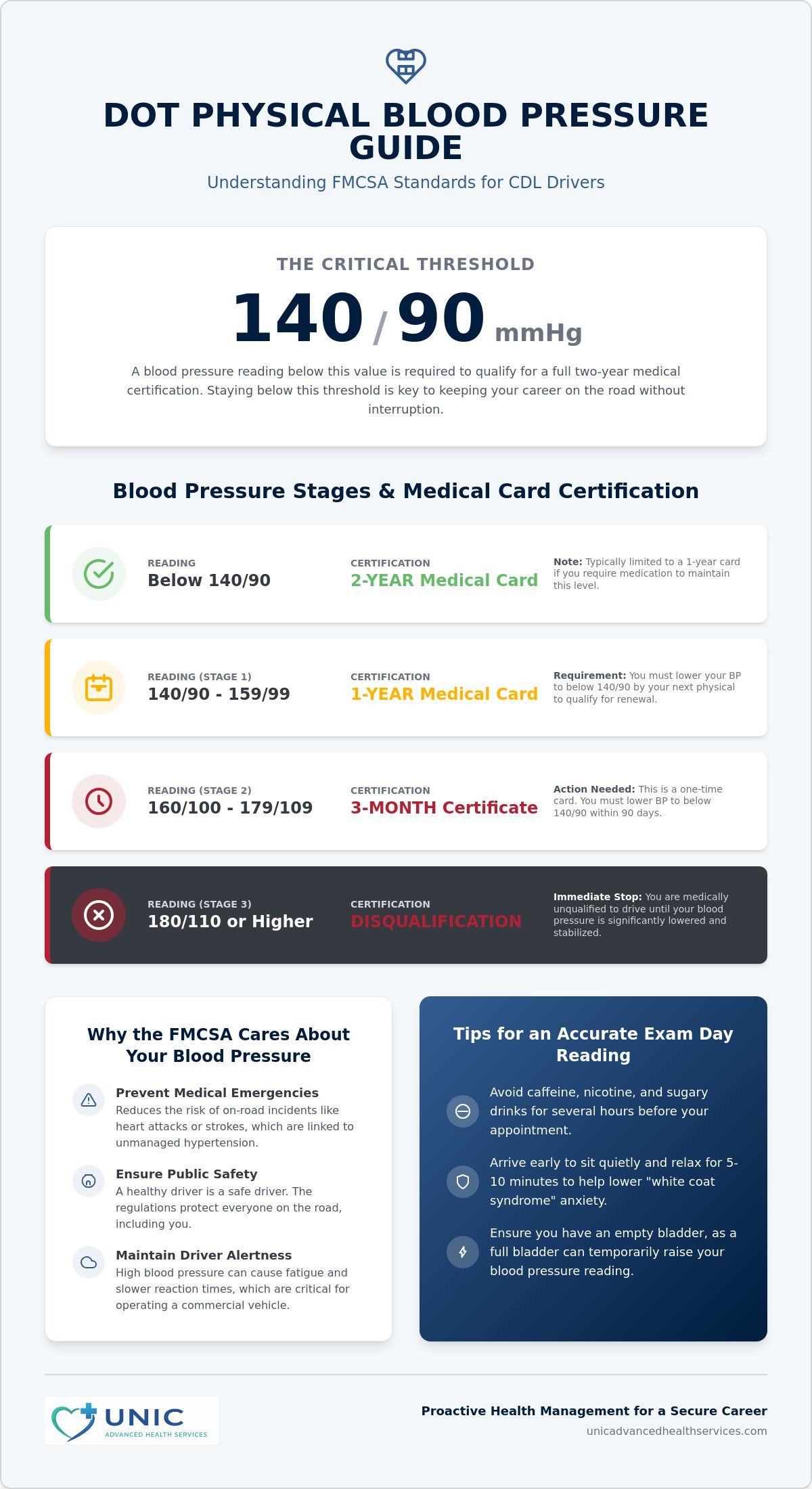
A blood pressure reading below 140/90 is the established 2026 standard required to qualify for a full two-year medical certification. If your numbers climb higher, you’ll move into the “Stage” system. Stage 1 hypertension ranges from 140/90 to 159/99, typically resulting in a one-year card. Stage 2 reaches up to 179/109, which often leads to a one-time, three-month certificate to allow for immediate medical intervention. Anything at or above 180/110 is classified as Stage 3, which results in immediate disqualification until the pressure is lowered and stabilized.
Why the DOT Cares About Your Blood Pressure
The link between untreated Hypertension and severe health crises like strokes or heart attacks is well-documented. For a commercial driver, these risks are amplified by the long hours and high-stress environments common in the industry. High blood pressure can also contribute to chronic fatigue and slower reaction times, both of which are dangerous when navigating heavy traffic or inclement weather. The FMCSA’s goal is to prevent these complications before they happen.
Current 2026 policies reflect a shift toward documented stability. Examiners are now looking for proof that your blood pressure remains consistent throughout your certification period. This modern methodology ensures that you aren’t just “passing the test” for one day, but are maintaining a level of health that supports a long and safe career on the road. This proactive approach helps you stay in the driver’s seat while protecting your long-term well-being.
The outcome of your medical exam is determined by where your readings fall within specific risk categories. It’s helpful to view these tiers as a safety assessment rather than a simple judgment of your health. Understanding the DOT physical high blood pressure requirements allows you to anticipate your certification length and prepare for your appointment with confidence.
If your blood pressure is below 140/90, you qualify for the standard two-year certification. However, there’s a specific nuance to this rule in 2026: if you require medication to maintain these numbers, the FMCSA typically limits your card to one year. This ensures that a healthcare provider monitors your condition and medication efficacy annually. Drivers often find that staying proactive with high blood pressure symptoms and causes helps them maintain these preferred numbers and avoid surprises during their exam.
Stage 1 and Stage 2 Hypertension Rules
When your readings fall between 140/90 and 159/99, you’re classified as having Stage 1 hypertension. In this range, you’ll receive a one-year medical certificate. To renew this certificate the following year, your blood pressure must be 140/90 or better. If you haven’t reached that target by your next exam, you won’t qualify for another full year until the numbers drop.
Stage 2 hypertension (160/100 to 179/109) triggers a one-time, three-month certificate. This is often called a “once-in-a-lifetime” card because you cannot receive consecutive three-month certificates for the same condition. To move from a three-month card back to a one-year status, you must demonstrate that your blood pressure has dropped to 140/90 or less within that 90-day window. If you’re struggling to hit these targets, scheduling a DOT physical examination with a provider who understands driver health can help you navigate the requirements.
Managing Stage 3 and Immediate Disqualification
Preparing for the Exam: How to Manage Your Blood Pressure
Preparing for your appointment starts long before you sit in the exam chair. To align with DOT physical high blood pressure requirements, your body needs to be in a rested and stable state. Start by following a “day-of” checklist to ensure your numbers reflect your true health. Avoid caffeine, energy drinks, and high-sugar sodas for at least 24 hours before your physical. These stimulants can cause temporary spikes that don’t represent your baseline cardiovascular state. Similarly, avoid nicotine and heavy, salty meals the night before. Arrive at the clinic early so you aren’t rushing; physical exertion and the stress of being late can artificially inflate your readings.
Many drivers experience “white coat syndrome,” where the clinical setting itself causes a spike in blood pressure. If you feel your heart racing or your palms sweating, it’s helpful to communicate this to your examiner. Most providers will allow you to sit quietly for a few minutes before taking a second reading. It’s also vital to be transparent about your medications. Bring a complete list of your prescriptions, including dosages and the names of your prescribing doctors. Trying to hide a hypertension diagnosis or using last-minute “hacks” like drinking vinegar or taking unprescribed diuretics is dangerous. In 2026, examiners are trained to look for documented stability, and these temporary fixes often fail under professional scrutiny.
Road-Friendly Lifestyle Adjustments
Maintaining heart health while on long-haul routes requires a practical strategy that fits your schedule. Instead of reaching for high-sodium chips or processed deli meats at the truck stop, opt for unsalted nuts, seeds, or fresh fruit. These low-sodium alternatives help prevent fluid retention that drives up blood pressure. Hydration is equally important. Dehydration can cause your blood to thicken, making your heart work harder to pump it through your system. Sip water consistently throughout your shift rather than drinking large amounts at once. To manage stress while in the driver’s seat, try simple box-breathing techniques. Inhale for four seconds, hold for four, and exhale for four. These small habits build a foundation of health that lasts beyond your exam day.
Working with Your Primary Care Provider
The best way to pass your physical is to manage your health year-round rather than waiting until the last minute. Seeking hypertension treatment in Fort Lauderdale before your current medical card expires gives you ample time to adjust treatments if necessary. Partnering with an autonomous nurse practitioner allows you to combine your DOT exam with primary care, ensuring your numbers are stable before the formal evaluation begins. On-site lab services provide immediate diagnostic checks, which help in monitoring how well your treatment plan is working. Documenting this ongoing care shows the DOT examiner that you’re a responsible professional who prioritizes safety and regulatory compliance.
What to Do if You Fail the Blood Pressure Portion
Receiving a high blood pressure reading during your exam is stressful, but it’s a hurdle rather than a dead end for your career. If your numbers exceed the DOT physical high blood pressure requirements, the first step is to remain calm. Anxiety naturally elevates your heart rate and pressure, which can make a follow-up reading even higher. Take a moment to discuss the specific “Stage” of your reading with the examiner. Understanding whether you’ve fallen into Stage 1, 2, or 3 dictates your next immediate steps and the duration of the medical certificate you might still be eligible to receive.
Once you have your results, you must prioritize an immediate follow-up with a primary care provider or an autonomous nurse practitioner. This professional will evaluate your cardiovascular health and determine if medication or lifestyle interventions are necessary to stabilize your numbers. After starting a treatment plan, you’ll need to document your progress and return for a re-check. Depending on your initial reading and how quickly your body responds to treatment, you can then obtain your three-month or one-year medical card to get back behind the wheel.
The 3-Month Temporary Certificate
The three-month certificate is often described as a “once-in-a-lifetime” opportunity. The FMCSA grants this short-term card to drivers with Stage 2 hypertension (160/100 to 179/109) to allow time for medical intervention without immediate job loss. You must use these 90 days to lower your blood pressure to 140/90 or less. It’s critical to understand that you cannot receive consecutive three-month certificates for blood pressure issues. If you fail to reach the target within that window, you’ll face disqualification until the numbers are controlled. Common pitfalls include waiting too long to see a doctor or failing to adhere to a new medication schedule, which leads to permanent disqualification once the 90 days expire.
Appeals and Second Opinions
If you believe an error occurred during your exam, such as faulty equipment or extreme “white coat syndrome” that wasn’t accommodated, you have the right to seek a second opinion. However, the FMCSA tracks medical exams electronically, so “doctor shopping” to find a lenient examiner is not a viable strategy. Instead, seek a DOT physical exam Fort Lauderdale specialist who can provide a thorough, compliant evaluation. Presenting new medical evidence, such as a log of stable readings from your primary care provider or results from on-site lab work, can help a Certified Medical Examiner make a more informed decision about your fitness for duty.
If you’ve received a high reading and need a clear path back to compliance, schedule a follow-up evaluation to discuss your options and begin a management plan today.
Expert DOT Physicals and Hypertension Care in Fort Lauderdale
Driving through the busy corridors of South Florida requires focus, and your health shouldn’t be a distraction. For drivers in Fort Lauderdale and the surrounding areas, Unic Advanced Health Services offers a specialized approach to medical certification. Meeting the DOT physical high blood pressure requirements is more than just a checkbox; it’s a commitment to your long-term career. Our clinic is led by an autonomous nurse practitioner who specializes in both chronic care management and regulatory exams. This unique expertise allows us to provide a comprehensive evaluation that a standard clinic might overlook.
We recognize that your time is valuable. This is why we offer Saturday appointments to accommodate busy hauling schedules and keep your fleet moving. By combining your occupational health exam with personalized health coaching, we help you address the root causes of hypertension before they become a threat to your CDL. Our goal is to be a steady hand in your professional journey, providing the clinical expertise you need to stay compliant and healthy.
Comprehensive Care Under One Roof
Managing complex health issues like hypertension, diabetes, and obesity requires a unified strategy. At Unic Advanced Health Services, we offer chronic condition management alongside our DOT services to ensure you remain in the driver’s seat. Our on-site lab services provide immediate diagnostic results, which is essential for drivers who need fast, reliable answers about their health status. We focus on building a long-term partnership with you. Rather than just seeing you once every two years, we act as a proactive advocate for your well-being, helping you navigate the DOT physical high blood pressure requirements with a clear, documented plan of action.
Book Your 2026 DOT Physical Today
Scheduling your appointment is simple and designed to fit the reality of life on the road. We serve drivers from across Fort Lauderdale, ensuring that professional and empathetic care is always within reach. When you arrive for your appointment, please bring your valid driver’s license, a complete list of your current medications, and any recent medical records related to your blood pressure or other chronic conditions. Being prepared helps us complete your exam efficiently so you can get back to your route with confidence. We’re here to solve problems, not just record numbers.
Don’t let health concerns put your livelihood on hold. Schedule your DOT Physical at Unic Advanced Health Services today!
Secure Your Career with Proactive Health Management
Maintaining your CDL requires more than just expert driving skills; it demands a dedicated approach to your cardiovascular health. By understanding the 140/90 threshold and the various certification tiers, you can approach your next exam with a clear strategy rather than uncertainty. Remember that preparation is your best tool. Small adjustments to your daily routine and consistent medication compliance ensure you meet the DOT physical high blood pressure requirements without the stress of “white coat syndrome.”
At Unic Advanced Health Services, we’re committed to keeping you on the road safely. Our clinic offers the expertise of an autonomous nurse practitioner who understands the unique challenges of life on the road. With Saturday appointments available for busy drivers and on-site lab diagnostics for immediate results, we provide the steady hand you need for long-term compliance. Don’t leave your livelihood to chance. Book your DOT physical in Fort Lauderdale today and take control of your professional future. You have the tools to pass, and we’re here to help you use them.
Frequently Asked Questions
Can I pass a DOT physical if I am taking blood pressure medication?
Yes, you can pass while taking blood pressure medication, provided your readings are below the 140/90 threshold. However, the FMCSA typically limits your medical certification to one year instead of two. This requirement ensures that a healthcare professional monitors your condition and medication effectiveness annually. Drivers who maintain their health through prescribed treatment demonstrate a commitment to safety and long-term stability on the road.
What happens if my blood pressure is 150/95 during the exam?
A reading of 150/95 is classified as Stage 1 hypertension, which results in a one-year medical certification. To renew this certificate at your next exam, your blood pressure must drop to 140/90 or less. If you don’t meet that target by the following year, the examiner cannot issue another full-year card. Understanding these DOT physical high blood pressure requirements helps you plan for necessary lifestyle or medical adjustments well in advance.
Is there a ‘white coat syndrome’ allowance for the DOT physical?
There is no official regulatory allowance for white coat syndrome, but most examiners understand that clinical settings cause anxiety. If your initial reading is high due to stress, your examiner will likely let you rest for several minutes in a quiet room before trying again. It’s helpful to practice deep breathing and arrive early to ensure your body is in a relaxed state before the cuff is applied.
How many times will the examiner check my blood pressure if it’s high?
Most examiners will check your blood pressure two or three times during the appointment if the first reading is elevated. They’ll typically wait between five and ten minutes between checks to allow your heart rate to stabilize. If the numbers remain consistently high across all attempts, the examiner must use the lowest recorded reading to determine your certification tier and duration according to federal guidelines.
Can I get a 2-year medical card if I have a history of hypertension?
You can only receive a two-year medical card if your blood pressure is below 140/90 and you don’t require medication to maintain those levels. If you have a history of hypertension but have successfully managed it through diet and exercise alone, you remain eligible for the full duration. Once medication is introduced into your treatment plan, the FMCSA requires annual recertification to ensure your DOT physical high blood pressure requirements are consistently met.
What is the highest blood pressure allowed for a 3-month DOT certificate?
The highest blood pressure allowed for a three-month temporary certificate is 179/109, which is the upper limit of Stage 2 hypertension. If your reading hits 180/110 or higher, you’re in Stage 3 and face immediate disqualification. The three-month card is a one-time bridge intended to give you enough time to consult a primary care provider and begin an effective treatment plan to lower your numbers.
Do I need a letter from my doctor if I’m on BP meds?
While not strictly mandatory by the FMCSA, bringing a status letter from your treating physician is highly recommended. This letter should state that your hypertension is being managed, that your current medications are well-tolerated, and that you have no side effects that interfere with driving. Having this documentation ready streamlines the exam process and provides the examiner with concrete evidence of your medical stability.
Will caffeine or nicotine right before the test affect my results?
Yes, consuming caffeine or nicotine within two hours of your exam can significantly inflate your blood pressure readings. These substances are stimulants that cause temporary spikes in heart rate and vascular tension. To ensure your results accurately reflect your baseline health, it’s best to avoid coffee, energy drinks, and tobacco products on the morning of your physical. Instead, focus on staying hydrated with water.