
Your blood pressure reading on the day of your exam is no longer the only factor determining the fate of your CDL. For many drivers in Fort Lauderdale, the walk from the waiting room to the exam table triggers a spike in heart rate known as White Coat Syndrome, often leading to a shorter certification than they deserve. We understand that navigating the DOT physical blood pressure requirements Florida enforces can feel like a high-stakes gamble where your livelihood is on the line. It’s frustrating to face the confusion of whether you’ll walk out with a three-month, one-year, or the coveted two-year medical examiner certificate.
You don’t have to leave your career to chance. This 2026 guide will help you master the current FMCSA standards and provide a clear roadmap for protecting both your health and your commercial license. We’ll break down the specific thresholds for Stage 1 and Stage 2 hypertension, explain how the 2026 focus on long-term stability affects your results, and show you how a proactive approach to management can secure your future on the road.
Key Takeaways
- Identify the 140/90 mm Hg threshold required to secure a full two-year medical certificate.
- Navigate the certification tiers to understand how different hypertension stages impact your CDL duration.
- Master a 24-hour preparation checklist to meet the DOT physical blood pressure requirements Florida mandates while reducing exam-day anxiety.
- Learn the exact steps for retrieving a lost medical card or managing a failed exam to stay compliant with FMCSA regulations.
- Discover how integrating chronic care management with your physical exam can protect your long-term career and cardiovascular health.
FMCSA Blood Pressure Standards: The 140/90 Threshold
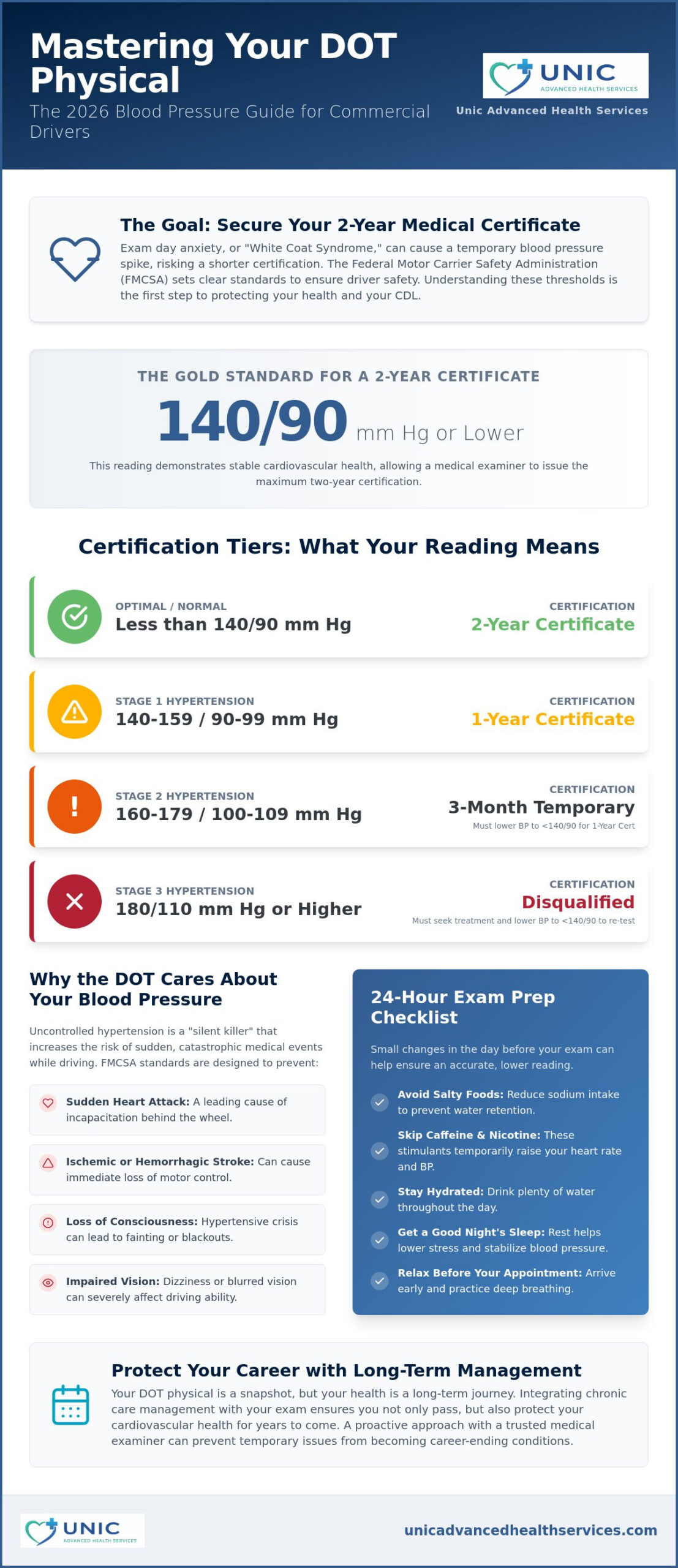
The Federal Motor Carrier Safety Administration (FMCSA) establishes the baseline for safety on the road. For drivers in the Sunshine State, the DOT physical blood pressure requirements Florida enforces are identical to federal standards. A reading of 140/90 mm Hg or lower serves as the gold standard. Achieving this measurement allows a healthy driver to secure a full two-year medical certificate. Your blood pressure consists of two numbers: systolic (the pressure when your heart beats) and diastolic (the pressure when your heart rests). Both must fall within acceptable ranges to ensure you’re safe to operate a heavy vehicle.
To better understand how these regulations impact your career, watch this helpful video:
While the numbers provide a clear framework, the medical examiner maintains the final authority. They evaluate whether your blood pressure represents a “clinical diagnosis” of hypertension or a temporary fluctuation. Their primary goal is to determine if your cardiovascular health poses a risk to public safety. This clinical judgment ensures that drivers who are otherwise healthy but had a minor spike aren’t unfairly penalized, provided they can demonstrate long-term stability.
Why the DOT Cares About Your Blood Pressure
High blood pressure, or Hypertension, is often called a silent killer because it can lead to sudden medical emergencies without warning. The FMCSA prioritizes these standards to prevent catastrophic events while a driver is behind the wheel. These risks include:
- Sudden cardiac arrest or heart attack.
- Ischemic or hemorrhagic stroke.
- Loss of consciousness due to hypertensive crisis.
- Dizziness or blurred vision that impairs driving ability.
A single high reading doesn’t always lead to disqualification, but it does prompt a deeper look into your health patterns. Examiners look for stability to ensure you won’t face a sudden health crisis during a long haul. If your pressure is consistently high, it suggests your heart is working too hard, which increases the likelihood of a medical event during transit.
The Role of the National Registry (NRCME)
To receive a valid medical card, you must visit an examiner listed on the National Registry of Certified Medical Examiners. At Unic Advanced Health Services, our providers are specifically trained to understand the intersection of DOT regulations and patient care. If you’re preparing for your DOT physical exam Fort Lauderdale drivers can trust, it’s vital to choose a clinic that stays current with the 2026 verification process.
Electronic submission of results is now standard for 2026. This transition makes it even more important to work with a certified professional who ensures your data is transmitted accurately and immediately to the FMCSA. Working with an experienced examiner helps streamline the process and ensures that your medical history and current readings are evaluated fairly under the most recent federal guidelines.
Certification Tiers: What Your Reading Means for Your CDL
Your blood pressure reading isn’t just a number. It’s the primary factor that determines the expiration date on your medical card. The FMCSA uses a tiered system to categorize cardiovascular risk, and understanding these levels helps you prepare for your exam with confidence. While a reading of 140/90 mm Hg or lower is the goal for a standard two-year certificate, many drivers find themselves in the intermediate categories. Meeting the DOT physical blood pressure requirements Florida drivers face means knowing exactly where you stand within the FMCSA hypertension stages.
The certification process is designed to be fair but firm. It balances your need to work with the public’s need for safety. If your numbers are outside the ideal range, the duration of your medical certificate will be shortened to ensure you receive the medical attention necessary to manage your condition. This structured approach helps prevent long-term health complications that could eventually end your career prematurely.
Stage 1 Hypertension (140-159 / 90-99)
If your blood pressure falls between 140/90 and 159/99, you’re classified as having Stage 1 hypertension. In this scenario, the medical examiner may issue a one-year certificate. This shorter duration allows for closer monitoring of your health trends. It’s a proactive measure to ensure your blood pressure doesn’t climb into more dangerous territory. You’ll need to return annually for recertification to demonstrate that your condition is stable. If your pressure hasn’t dropped or is not being successfully managed by the time of your next annual exam, you may face stricter certification limits or be required to start a formal treatment plan.
Stage 2 and 3: Temporary vs. Disqualified
Stage 2 hypertension covers readings from 160/100 to 179/109. If you fall into this range, the examiner may grant a one-time, three-month certificate. This is a grace period. It gives you 90 days to work with a healthcare provider to bring your numbers down to an acceptable level. There’s a strict “one-time” rule here. You cannot receive a second consecutive three-month certificate for the same issue. You must show significant clinical improvement, typically reaching 140/90 or lower, to regain a one-year certification after that initial three-month window.
A reading of 180/110 or higher is Stage 3 hypertension and results in immediate disqualification. You’re not permitted to operate a commercial vehicle until your blood pressure is brought under control. Returning to service requires a follow-up exam and documentation of successful management. Because these tiers are so specific, it’s helpful to partner with an expert provider who can help you develop a stabilization plan before your physical. Taking these steps early ensures you don’t face unexpected downtime or the stress of a disqualified status.
How to Prepare for Your DOT Physical Blood Pressure Reading
Success during your exam often begins long before the blood pressure cuff is placed on your arm. Preparing your body and mind ensures that the reading reflects your true health status rather than temporary stress or external triggers. Understanding the DOT physical blood pressure requirements Florida mandates allows you to take control of the variables that influence your results. Small adjustments in the 24 hours leading up to your appointment can make the difference between a full two-year certificate and a shorter, temporary card.
Consistency is your greatest ally when managing hypertension. If you are currently prescribed blood pressure medication, you must take your dose exactly as directed by your physician. Skipping a dose before the exam to see how your body handles it “naturally” is a common mistake that often leads to disqualification. According to the American Heart Association, early prevention and consistent treatment are the most effective ways to reduce cardiovascular risk; for a commercial driver, this consistency is the foundation of career longevity.
The 24-Hour Prep Checklist
Your lifestyle choices in the day preceding your physical can significantly sway your numbers. Follow these guidelines to ensure an accurate and favorable reading:
- Limit Stimulants: Avoid caffeine and nicotine for at least four hours before your exam. These substances constrict blood vessels and can cause temporary, artificial spikes in pressure.
- Prioritize Rest: Aim for a full night of sleep. Exhaustion triggers the release of stress hormones like cortisol, which can elevate your baseline heart rate and pressure.
- Focus on Hydration: Drink plenty of water. Proper hydration helps maintain optimal blood volume. Dehydration can cause your heart to work harder, potentially leading to higher readings.
- Watch Sodium Intake: Avoid high-sodium meals the night before your test. Excess salt causes the body to retain fluid, which increases the pressure on your arterial walls.
During the Exam: Tips for a Better Reading
Many drivers suffer from White Coat Syndrome, a condition where blood pressure rises simply because they are in a clinical environment. If you feel your heart racing as you enter the clinic, communicate this to your examiner. A professional provider understands this anxiety and can help you settle before taking the measurement. During the test, ensure you sit with both feet flat on the floor and your back supported. Your arm should be resting at heart level to ensure the most accurate data.
If your first reading is higher than expected, don’t panic. You have the right to ask for a re-test after a few minutes of quiet rest. Most examiners are happy to perform a second check once you have had a moment to breathe and relax. Being open about recent stressors or a difficult morning on the road helps the examiner view your numbers through a more compassionate, clinical lens.
Lost Cards and Failed Exams: Navigating Compliance Issues
Losing your medical card or failing the blood pressure segment of your exam can feel like hitting a sudden roadblock in your career. It is a stressful situation that requires immediate attention, but it’s entirely manageable with a clear plan of action. The 2026 transition to electronic records has simplified some parts of this process, yet you must still act quickly to remain compliant with the DOT physical blood pressure requirements Florida enforces. Whether you’ve misplaced your paperwork or received a shorter certification than expected, there are established paths to restore your status.
Recovering a Lost Medical Certificate
If Unic Advanced Health Services performed your exam, your first step is simple: contact our office directly. We maintain secure, detailed records of all certified examinations and can quickly issue a replacement. While the FMCSA now utilizes electronic submission, having a physical or digital copy on hand is vital for your own peace of mind and for employer records. If you’re unsure of your status, you can also check the FMCSA’s driver portal for digital verification.
It’s important to recognize the difference between your physical card and the digital record held by the Florida Department of Highway Safety and Motor Vehicles (FLHSMV). In 2026, the digital record is the primary source of truth for law enforcement. However, if you’ve lost your card, you should verify that your medical data has successfully synced with the Florida CDL system to avoid an automatic downgrade of your license. We help our drivers navigate this verification to ensure their driving privileges remain active and uninterrupted.
What if You Fail the BP Portion?
Failing the blood pressure portion doesn’t mean your driving days are over. Usually, a “fail” occurs if your reading reaches Stage 3 (180/110 or higher) or if you haven’t successfully lowered your pressure during a 3-month grace period. If this happens, you’ll enter a waiting period focused on immediate treatment. You’ll need to work closely with a primary care provider to begin or adjust a management plan. Once your pressure is stable, you’ll require an “under control” letter from your treating clinician to present to the medical examiner.
This letter must confirm that your hypertension is managed and that your medication does not cause side effects that interfere with safe driving. For drivers in this position, our Occupational Health Exam Fort Lauderdale services offer a supportive environment for re-testing once your health is back on track. We specialize in helping drivers transition from a disqualified status back to full compliance through careful clinical oversight. If you’re struggling with a lost card or a recent downgrade, schedule a consultation with our certified examiners today to resolve your compliance issues and get back on the road.
Managing Hypertension in Fort Lauderdale: Beyond the Exam
Clearing the clinical hurdles of an exam is a vital short-term goal, but maintaining your health is what keeps you in the driver’s seat for decades. Many clinics treat the DOT physical as a simple transaction where they check boxes and move to the next patient. At Unic Advanced Health Services, we view the DOT physical blood pressure requirements Florida enforces as a baseline for a long-term partnership. Led by Marc Joseph, an autonomous nurse practitioner, our clinic provides the dual advantage of being certified medical examiners and specialists in hypertension management.
This expertise allows us to bridge the gap between regulatory compliance and primary care. Instead of just identifying a high reading and issuing a shortened certificate, we offer chronic care management in Fort Lauderdale to help you address the root cause of your hypertension. This integrated approach ensures that if your blood pressure is elevated, you aren’t left with a three-month card and a list of worries. You leave with a clinical plan designed to stabilize your health and protect your career.
The Unic Approach to Driver Health
We understand the unique challenges of a driver’s life, from long hours behind the wheel to the limited healthy food options available on the road. Our care model is built around your schedule and your specific physiological needs. We provide several key advantages for commercial drivers:
- On-site Lab Services: We provide immediate clinical data to monitor how hypertension might be affecting your heart and kidney health, allowing for faster adjustments to your care.
- Personalized Treatment: We develop management plans that are realistic for life on the road, focusing on medications and lifestyle changes that won’t cause side effects like drowsiness.
- Saturday Availability: You don’t have to sacrifice a day of work to stay compliant. We offer Saturday appointments to accommodate busy freight schedules and local haulers.
Scheduling Your Exam and Consultation
Booking your appointment is a straightforward step toward securing your livelihood. We recommend scheduling your physical at least two weeks before your current medical card expires. This window allows us to address any blood pressure fluctuations or documentation needs without the stress of an immediate deadline. Our goal is to see you succeed on the first try, walking out with the longest certification period possible based on your health status.
When you arrive for your appointment, please bring your valid driver’s license, a complete list of current medications with dosages, and any records from your primary care provider if you’re currently being treated for chronic conditions. Being prepared helps our team move through the verification process efficiently. Don’t wait until the last minute to address your compliance. Secure your career today with a DOT Physical at Unic Advanced Health Services and experience a higher standard of driver-focused care.
Protect Your Livelihood and Health on the Road
Mastering the DOT physical blood pressure requirements Florida enforces is the most effective way to ensure your career remains on track. By understanding the 140/90 mm Hg threshold and following a disciplined preparation checklist, you can approach your exam with confidence rather than anxiety. Your medical card duration depends on cardiovascular stability; whether you’re aiming for a full two-year certificate or managing a one-year renewal, proactive health management is your best tool for success.
At Unic Advanced Health Services, we offer more than just a checkbox evaluation. Our NRCME certified medical examiners specialize in hypertension management, providing a supportive environment where your long-term well-being is the priority. We offer convenient Saturday appointments to fit your busy driving schedule and on-site lab services for immediate clinical insights. Don’t let exam-day stress or high blood pressure stall your progress.
Schedule Your DOT Physical in Fort Lauderdale Today and partner with a team dedicated to keeping you safe, compliant, and healthy for every mile ahead. Your journey is important to us, and we’re here to support you at every turn.
Frequently Asked Questions
Can I pass a DOT physical if I am taking blood pressure medication?
Yes, you can pass while taking blood pressure medication as long as your readings are controlled to 140/90 or lower. You must bring a complete list of your prescriptions to the appointment. The examiner will verify that your treatment effectively manages your condition without causing side effects like dizziness that could impair your safety on the road.
What happens if my blood pressure is high during the DOT exam but normal at home?
This is often called White Coat Syndrome, and examiners are trained to handle these temporary spikes. If your initial reading is high, the medical examiner will typically allow you to rest before performing a second or third reading. They may also consider your documented history of home readings or treatment patterns when determining your final certification duration.
How long is a DOT medical card valid if I have Stage 1 hypertension?
A DOT medical card is typically valid for one year if you are diagnosed with Stage 1 hypertension, which covers readings between 140/90 and 159/99. This shorter certification period ensures that your health is monitored annually to prevent your pressure from reaching dangerous levels. Meeting the DOT physical blood pressure requirements Florida drivers face requires this annual check-in to confirm stability.
Is there a specific blood pressure requirement for Florida CDL drivers compared to other states?
Florida follows federal FMCSA guidelines, so there are no state-specific blood pressure variations for CDL drivers. The 140/90 threshold is the standard across the entire United States. While Florida manages the issuance of your commercial license, the medical standards you must meet are governed by federal safety regulations to ensure national consistency and public safety.
I lost my DOT medical card; do I need to retake the entire physical?
You don’t need to retake the entire physical if your medical certificate is still valid and hasn’t expired. You should contact the medical examiner who performed your original exam to request a replacement copy. They can provide a duplicate of your medical examiner certificate (MEC) because they’re required to maintain your records for at least three years.
Can a nurse practitioner perform a DOT physical in Fort Lauderdale?
Yes, an autonomous nurse practitioner can perform your DOT physical in Fort Lauderdale as long as they’re listed on the National Registry of Certified Medical Examiners. At Unic Advanced Health Services, our certified providers combine regulatory expertise with a compassionate approach. This allows us to handle both the physical exam and the long-term management of conditions like hypertension in one convenient location.
What is the ‘White Coat Syndrome’ and how does the DOT examiner handle it?
White Coat Syndrome is a temporary spike in blood pressure caused by the stress of being in a medical setting. To handle this, examiners often wait until the end of the exam to take a final reading or use a manual cuff for better accuracy. Communicating your anxiety clearly to the provider helps them distinguish a stress spike from chronic hypertension.
Will Stage 3 hypertension permanently disqualify me from driving?
Stage 3 hypertension, defined as 180/110 or higher, isn’t a permanent disqualification, but it does require an immediate stop to driving. You’re disqualified until your blood pressure is lowered to 140/90 or below and you can show that the condition is managed. Once your health is stabilized with the help of a primary care provider, you can undergo a new physical for recertification.