Imagine finishing your annual physical and receiving your blood work results before you even leave the building. For many patients, the traditional routine involves driving to a separate lab, waiting in a second line, and then spending days anxiously checking a portal for updates. This fragmented process isn’t just inconvenient; it creates unnecessary gaps in your care. By prioritizing diagnostic testing primary care clinic services, you can bypass these hurdles and consolidate your health management into a single, supportive environment.
We understand that your time is valuable and your health concerns deserve immediate attention. You’re likely looking for a process that’s both thorough and efficient, especially when managing chronic conditions or specific requirements like a USCG boat captain physical. This 2026 guide explores how modern on-site lab services and point-of-care technology provide a reliable foundation for your wellness journey. You’ll learn about the benefits of faster results, the clarity of integrated health markers, and how a streamlined approach simplifies the path to professional certifications and proactive health management.
Key Takeaways
- Learn how integrated diagnostic testing primary care clinic services eliminate the need for external lab visits, saving you time and reducing medical anxiety.
- Identify the critical tests required for federal compliance, specifically for professionals seeking DOT or U.S. Coast Guard (USCG) certifications.
- Discover how on-site lab work facilitates faster chronic disease tracking, allowing for immediate adjustments to your personalized treatment plan.
- Master the preparation process for diagnostic screenings, including how to handle fasting requirements and medication documentation for the most accurate results.
- Gain insight into how an autonomous nurse practitioner’s holistic approach transforms raw data into a comprehensive strategy for your long-term health.
What is Diagnostic Testing in a Primary Care Clinic?
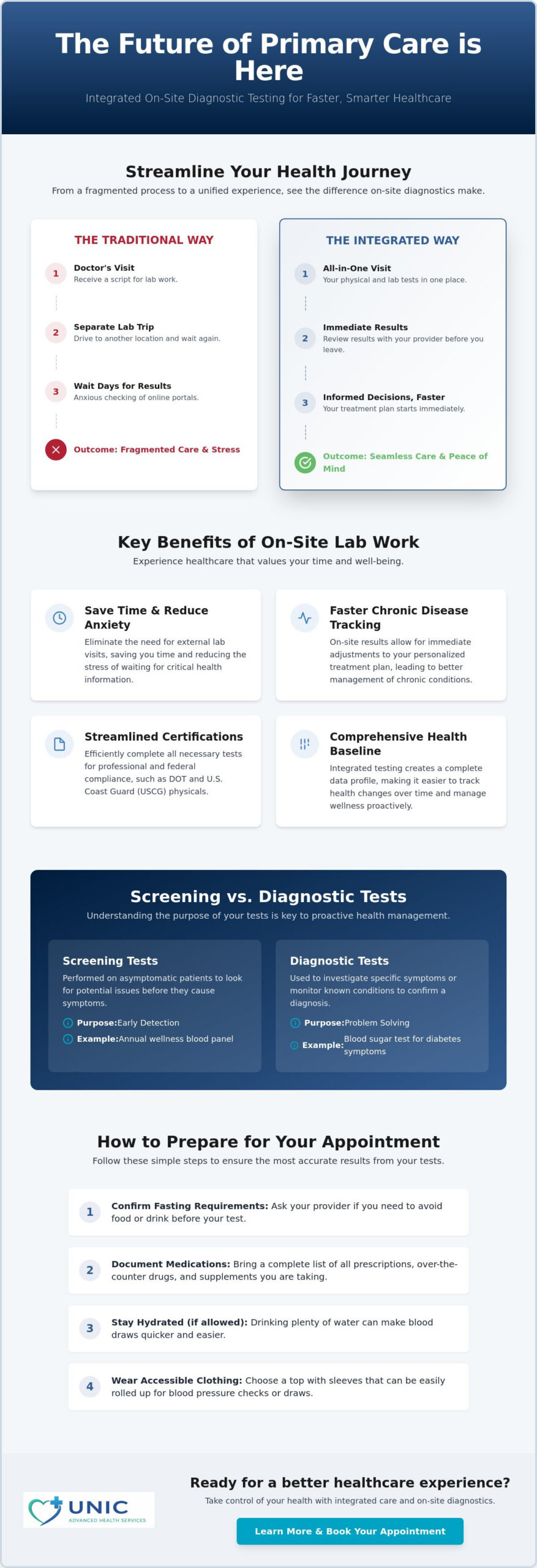
In the context of modern medicine, diagnostic testing encompasses the various tools and laboratory procedures used to identify, confirm, or monitor medical conditions during a patient visit. Traditionally, patients often faced a fragmented experience where their provider would write a script for labs, requiring a separate trip to an external facility. However, the modern diagnostic testing primary care clinic has evolved into an integrated hub where these services are performed on-site. This shift ensures that your healthcare provider has immediate access to the data they need to make informed decisions about your treatment plan.
A Medical test serves as a critical bridge between a physical symptom and a clinical solution. By incorporating these tests directly into the primary care setting, we establish a “first line of defense” against silent health issues that might otherwise go unnoticed. This proactive approach allows for the early detection of conditions like high cholesterol or blood sugar imbalances before they escalate into more serious complications.
To gain a deeper perspective on how these services function within a clinical setting, watch this detailed explanation:
Beyond identifying active illness, diagnostic data plays a vital role in creating a comprehensive baseline for your annual wellness journey. These initial markers provide a point of comparison for future visits, making it easier to track changes in your health over time. When your provider understands your “normal” range, they can more accurately identify subtle shifts that require attention during your annual physicals and preventive care.
Common Categories of In-Office Testing
Most clinics offer a variety of essential screenings to provide a holistic view of your health. Laboratory screenings typically include blood work, urinalysis, and comprehensive metabolic panels. Biometric assessments focus on physical markers such as blood pressure monitoring and BMI calculations to assess cardiovascular risk. Additionally, specialized screenings are often required for professional compliance, such as the specific laboratory requirements for a DOT physical examination or a U.S. Coast Guard (USCG) boat captain physical.
The Difference Between Screening and Diagnostic Tests
It’s helpful to distinguish between screening and diagnostic paths. Screening tests are performed on asymptomatic patients, often during routine check-ups, to look for potential issues before they cause symptoms. In contrast, diagnostic tests are used to investigate specific symptoms or to monitor known conditions, such as during chronic condition management. Your provider evaluates your medical history, current symptoms, and risk factors to determine which specific tests are necessary to ensure a thorough evaluation during your visit.
Essential Tests for Preventive and Occupational Health
Comprehensive health management relies on precise data. For residents in the Sunshine State, these preventive health screenings in Florida act as a backbone for long-term wellness. When you utilize diagnostic testing primary care clinic services, you bridge the gap between simple check-ups and rigorous federal compliance. This is especially true for commercial professionals who need a federal medical certificate in Florida. The intersection of routine wellness and occupational standards ensures that you aren’t just cleared for work but are genuinely healthy enough to handle high-stress environments.
Research indicates that diagnostic testing in primary care serves as a core clinical skill that helps practitioners catch asymptomatic issues early. For boat captains and commercial drivers, regular monitoring isn’t just a regulatory hurdle; it’s a safety measure. High-stress roles in the maritime or transportation sectors place unique demands on the body. Continuous oversight through a diagnostic testing primary care clinic helps prevent sudden medical emergencies on the job. This level of scrutiny is more relevant than ever in 2026, as insurance payers have implemented “Hard Stop” denial systems for laboratory claims that lack valid compliance data. Professionals navigating these demands should also review the latest commercial driver health requirements to understand how updated federal medical standards may affect their certification and career. Commercial drivers in particular should work with a qualified FMCSA medical examiner in Fort Lauderdale who understands the 2026 National Registry II electronic system and can serve as a long-term health partner rather than just a one-time certification stop.
Routine Wellness and Preventive Labs
Preventive labs provide a real-time snapshot of your internal systems. A Complete Blood Count (CBC) and Comprehensive Metabolic Panel (CMP) are fundamental tools for assessing organ function and blood health. We also prioritize lipid panels to manage cardiovascular risks and cholesterol levels effectively. Additionally, thyroid function tests and vitamin deficiency screenings are essential for addressing fatigue or metabolic shifts that might otherwise be overlooked during a standard physical. In cases where deficiencies are found, clinics like Ready Health offer specialized B12 injections to restore balance. These tests allow us to build a biological map of your health markers before symptoms even appear.
Occupational-Specific Diagnostics
Professional certifications require a specific set of diagnostic evaluations to ensure public safety. For DOT and USCG physicals, vision and hearing screenings are mandatory. We also perform specialized urinalysis to check kidney function and detect glucose, which is a vital indicator for drivers managing diabetes risk. Physical stamina and reflex testing ensure that individuals in maritime roles can meet the physical demands of their safety-sensitive positions. If you’re preparing for a specialized exam, choosing a provider that offers on-site lab services can significantly reduce your stress and wait times.
By centralizing these various tests, your care team can interpret your results through the lens of your entire medical history. This holistic perspective ensures that occupational requirements don’t exist in a vacuum but are integrated into your broader health strategy. Whether you’re tracking a chronic condition or renewing a captain’s license, having all your data in one place leads to clearer insights and more reliable outcomes.
The Benefits of On-Site Lab Work for Chronic Disease Management
Effective chronic condition management requires a continuous stream of reliable data. In a traditional healthcare setting, patients often experience a “referral loop,” where they’re sent to a third-party laboratory and then wait weeks for a follow-up appointment to discuss the findings. Integrating diagnostic testing primary care clinic services directly into your care plan changes this dynamic. When labs are performed on-site, the turnaround time is significantly reduced from weeks to just hours or days. This speed isn’t just about convenience; it’s about clinical accuracy and the ability to make real-time adjustments to your treatment.
When the provider who orders your tests is the same professional who interprets them, care coordination reaches a higher standard of excellence. This synergy ensures that every result from your Essential Preventive Health Tests is viewed through the lens of your specific medical history. It eliminates the risk of miscommunication between external labs and your primary care team, providing a more stable and predictable healthcare experience. If your markers show a sudden shift, your provider can act immediately rather than waiting for a faxed report from a separate facility.
Managing Diabetes and Hypertension with Data
For patients living with diabetes, the Hemoglobin A1c test is a vital indicator of long-term blood sugar control. Having this test performed on-site allows your provider to review your three-month average and discuss dietary or medication changes during the same visit. Similarly, patients on long-term hypertension medication require consistent kidney function monitoring to ensure their treatment remains safe and effective. This “steady hand” approach to chronic care relies on these frequent, accessible data points to prevent complications before they arise. Regular monitoring ensures your dosages stay optimized for your body’s changing needs.
Reducing Patient Anxiety Through Efficiency
Medical anxiety often stems from the unknown and the time spent waiting for answers. By removing the need to navigate an external lab site, we simplify the patient experience and improve compliance. Patients are far more likely to complete their required screenings when the process is integrated into their existing appointment. The comfort of having blood drawn by a familiar clinical team in a supportive environment further alleviates stress. Once results are finalized, follow-up scheduling happens immediately, ensuring you’re never left wondering about the next steps in your care journey. This streamlined process respects your time and prioritizes your peace of mind.
How to Prepare for Your Diagnostic Appointment
Preparing for your visit to a diagnostic testing primary care clinic involves a few simple yet critical steps to ensure the data collected is as precise as possible. Accurate results rely on more than just advanced technology; they require your body to be in a baseline state that reflects your true health markers. By following your provider’s pre-visit instructions, you help eliminate variables that could lead to a misinterpretation of your labs. This preparation is the first step toward a successful partnership in your healthcare journey.
Hydration is perhaps the most overlooked aspect of lab preparation. Drinking plenty of water is essential for successful blood draws because it increases blood volume and makes your veins more accessible for phlebotomy. Dehydration can lead to difficult draws and may even skew certain kidney function results. Additionally, choosing the right attire is a practical way to reduce stress during your visit. Wear loose-fitting clothing that allows easy access for blood pressure cuffs and provides comfortable access to your arms for any required testing.
Understanding Fasting Requirements
Many common tests require you to fast for 8 to 12 hours before your blood is drawn. Metabolic panels, lipid profiles, and glucose screenings are particularly sensitive to recent caloric intake. During a fast, you must avoid all food and beverages except for plain water. Coffee, even if black, can interfere with certain metabolic markers and should be avoided. If you take daily morning medications, ask your provider if you should take them as scheduled or wait until after your lab work is complete. Consistency in these details ensures your results are reliable and actionable.
Communicating with Your Provider
Open dialogue is essential for accurate clinical interpretation. Be sure to share information about any recent illnesses, lifestyle changes, or new supplements you have started, as these can impact your biological markers. It is also helpful to document all current medications to help your provider understand the full context of your results. Don’t hesitate to ask questions like “Why is this specific test being ordered?” to better understand your care plan. Given that 2026 insurance standards often include “Hard Stop” denials for laboratory claims lacking valid compliance data, discussing coverage and flat-fee options for diagnostics is a proactive way to manage your healthcare costs. If you’re ready to schedule your next screening, you can book your appointment online to get started.
Personalized Care at Unic Advanced Health Services
Choosing a diagnostic testing primary care clinic involves more than just selecting a location for blood work. It’s about finding a healthcare partner who understands the nuances of your medical history and the demands of your professional life. At Unic Advanced Health Services, we provide NP-led care that prioritizes a holistic perspective. This approach allows Marc Joseph and our clinical team to look beyond isolated data points, ensuring that every screening contributes to a comprehensive understanding of your long-term wellness. Our goal is to provide clinical seriousness with a compassionate touch that alleviates the stress often associated with medical evaluations.
Our comprehensive suite of services is designed to meet the diverse needs of our patients. We offer everything from annual physical exams in Fort Lauderdale to highly specialized laboratory tests. We recognize that your schedule is busy, which is why we offer Saturday appointments and on-site phlebotomy. By performing these services in-office, we maintain high standards of accuracy while providing the convenience you deserve. You don’t have to navigate multiple facilities to get the answers you need for your health or your career.
Your Local Fort Lauderdale Health Partner
We’re dedicated to serving our community with healthcare solutions that are both personalized and affordable. Our practice focuses on building long-term partnerships rather than conducting transactional visits. We believe that stability and thoroughness are the foundations of excellent care. This philosophy is evident in how we integrate occupational health exams in Fort Lauderdale with your primary wellness strategy. Whether you’re a maritime professional or a local resident, your health data is managed with the same level of expertise and individualized attention.
Next Steps: Booking Your Diagnostic Visit
Taking control of your health shouldn’t be a complicated process. We’ve streamlined our operations to ensure you feel fully informed at every step of your journey. You can utilize our easy online scheduling system or request a telehealth consultation for an initial evaluation. These options ensure that your care begins on your terms, with clear, actionable next steps provided by a team you can trust. Preparing for your first visit with Marc Joseph is simple, and our staff is always available to answer your questions regarding preparation or insurance compliance. Schedule your diagnostic screening at Unic Advanced Health Services today.
Take Control of Your Health with Integrated Diagnostics
Accessing a diagnostic testing primary care clinic is more than a matter of convenience; it’s a fundamental shift toward proactive health management. By centralizing your lab work and physical evaluations, you eliminate the fragmented delays of third-party facilities. This integration ensures your results are interpreted by a provider who understands your unique medical history. Whether you’re managing a chronic condition or fulfilling federal requirements for a maritime career, having immediate clinical data allows for faster, more accurate treatment decisions.
This focus on data synergy is part of a larger movement toward transparency and efficiency, where platforms like trialport.com help facilitate real-time connectivity within the clinical research ecosystem.
Led by Marc Joseph, an experienced autonomous nurse practitioner, Unic Advanced Health Services provides a steady hand in navigating complex health markers. We offer on-site lab services for immediate clinical data and Saturday appointments to accommodate your professional schedule. You don’t have to choose between your career and your well-being. This streamlined approach ensures that your medical data works for you, not against your calendar.
Book Your On-Site Diagnostic Testing in Fort Lauderdale
Your wellness journey deserves a partner who values both your time and your long-term peace of mind. We’re here to help you move forward with confidence and clarity.
Frequently Asked Questions
Do I need a separate appointment for lab work at your clinic?
You don’t need a separate appointment for most lab work. We coordinate your screenings with your scheduled visit to ensure your time is used efficiently. This integration allows our clinical team to gather necessary data during your physical or chronic care check-up, eliminating the need for a second trip to a different facility. It’s part of our commitment to providing a one-stop shop for your health.
How long does it typically take to get results from on-site diagnostic testing?
Results from our on-site diagnostic testing primary care clinic services typically return within hours or a few days, depending on the complexity of the test. By processing many samples in-house, we avoid the lengthy delays often associated with external laboratories. This rapid turnaround allows your provider to make immediate adjustments to your treatment plan or provide reassurance regarding your health markers without unnecessary waiting.
Are diagnostic tests covered by insurance, or are there flat-fee options?
We accept most major insurance plans and also provide transparent flat-fee options for patients without coverage or those with high deductibles. Our team helps you understand your benefits before your visit starts. Since 2026 insurance regulations require strict compliance data, we ensure all laboratory billing is handled with the necessary accuracy to avoid unexpected denials or “Hard Stop” rejections that can occur with expired certifications.
Can I get my DOT physical and routine blood work done at the same time?
You can complete your DOT physical examination and routine blood work during a single visit. Combining these services ensures that you meet federal safety standards while also monitoring your overall wellness. This approach is particularly beneficial for commercial drivers who need to maintain their medical certificates while managing long-term health goals like cholesterol or glucose control. It simplifies your compliance and your healthcare at once.
What should I do if my diagnostic test results come back abnormal?
If your results are outside the normal range, our team will contact you directly to discuss the findings and schedule a follow-up consultation. An abnormal result isn’t always a cause for alarm; it often serves as a guide for further investigation or lifestyle adjustments. We’ll walk you through the data and create a clear, actionable plan to address any concerns with a steady, professional hand.
Is fasting always required for blood work in a primary care setting?
Fasting isn’t required for every test, but it’s essential for accurate readings of glucose and lipid panels. Your provider will give you specific instructions based on the tests ordered for your visit. If you’re unsure whether to fast, it’s best to call our office before your appointment to ensure your samples are collected under the correct biological conditions for an accurate and reliable interpretation.
Do you offer diagnostic testing via telehealth appointments?
You can use telehealth services for initial consultations and result reviews, but the physical collection of samples must happen on-site. You can discuss your symptoms with your provider virtually, and they’ll order the necessary diagnostics. Afterward, you’ll visit the clinic briefly for phlebotomy. This ensures your data is collected in a controlled environment while still offering the convenience of virtual follow-up discussions.
Can a nurse practitioner order and interpret all types of diagnostic tests?
As an autonomous nurse practitioner, Marc Joseph is fully qualified to order and interpret a wide range of diagnostic tests. This includes everything from routine screenings to specialized occupational labs required for USCG physicals. Our NP-led model ensures you receive a holistic interpretation of your data, focusing on how your results impact your overall health and lifestyle rather than just treating a single isolated number.