
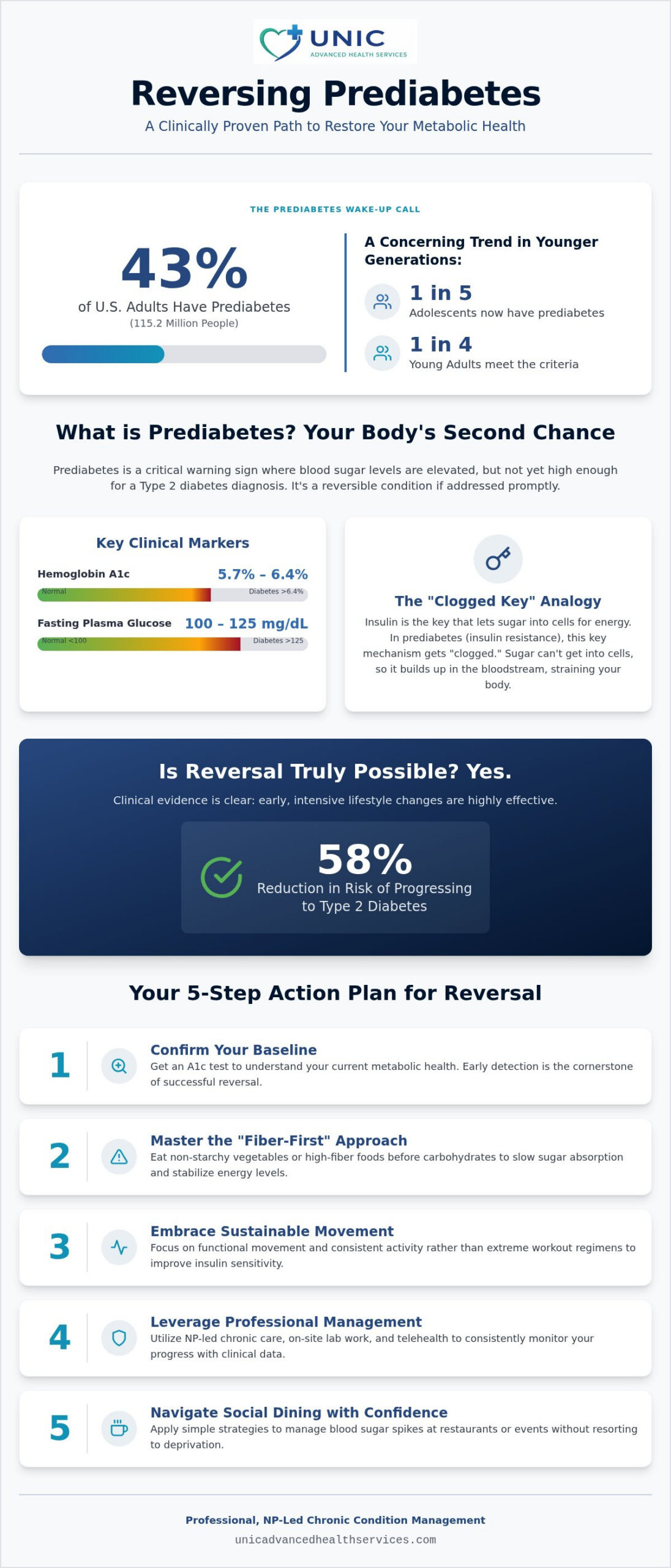
Did you know that 115.2 million Americans, or approximately 43% of the adult population, are currently living with prediabetes? It’s a staggering figure that often brings a sense of immediate dread. If you’ve recently received a diagnosis, you likely feel overwhelmed by conflicting diet advice and the looming fear of progressing to Type 2 diabetes. However, this diagnosis isn’t a permanent sentence; it’s a critical window of opportunity. Learning how to reverse pre-diabetes is entirely possible through a structured, clinical approach that prioritizes your long-term well-being.
We understand the anxiety that comes with managing chronic health conditions, and we’re here to provide a steady, expert hand. You deserve a clear path forward rather than a list of confusing restrictions. This guide outlines the clinically proven steps to lower your blood sugar and restore your natural energy levels. We’ll preview how personalized lifestyle changes, paired with professional primary care and on-site diagnostic monitoring, can shift your health trajectory toward a more confident and stable future.
Key Takeaways
- Recognize that an A1c level between 5.7% and 6.4% serves as a critical “second chance” to proactively adjust your metabolic health.
- Master the “Fiber-First” nutritional approach to naturally slow sugar absorption and stabilize your energy levels throughout the day.
- Discover the specific, clinically proven steps for how to reverse pre-diabetes using a personalized action plan that focuses on sustainable lifestyle shifts.
- Leverage the benefits of NP-led chronic condition management, including on-site lab work and telehealth, to maintain consistent oversight of your clinical data.
- Learn to navigate social dining with confidence by applying strategies that manage blood sugar spikes without the need for extreme dietary deprivation.
Understanding Pre-Diabetes: Why It Is Your Body’s Ultimate Second Chance
Prediabetes is often misunderstood as a minor health concern, yet it serves as a critical biological warning. Clinically, it’s defined by blood sugar levels that are higher than normal but not yet high enough for a Type 2 diabetes diagnosis. Professionals measure this using a Hemoglobin A1c test, where a range of 5.7% to 6.4% indicates prediabetes. Additionally, a Fasting Plasma Glucose level between 100 and 125 mg/dL signals that your body is struggling to process glucose efficiently. Understanding Pre-Diabetes involves recognizing insulin resistance, which we often describe as a “clogged key” mechanism. In a healthy system, insulin acts as a key that unlocks your cells to let sugar in for energy. When resistance occurs, the lock becomes jammed. Sugar remains in the bloodstream, placing immense strain on your cardiovascular system and organs.
The “pre” in this diagnosis is actually its most vital component because it denotes a state of transition rather than a permanent destination. It’s a window where the metabolic damage is not yet fixed. Ignoring this signal carries heavy consequences; chronic high blood sugar progressively damages blood vessels. This increases the risk of heart disease, stroke, and long-term kidney issues. However, because the condition is caught early, you have the opportunity to take action. Learning how to reverse pre-diabetes starts with viewing this diagnosis as a second chance to reset your metabolic health before permanent damage occurs.
The 2026 Statistics: A Wake-up Call
As of January 2026, an estimated 115.2 million adults in the U.S. live with prediabetes, representing 43% of the adult population. This trend is particularly visible here in Florida, where lifestyle factors and an aging population contribute to rising numbers. Perhaps most concerning is the shift toward younger demographics. Recent data shows that 1 in 5 adolescents and 1 in 4 young adults now meet the criteria for prediabetes. We define pre-diabetes as a metabolic “yellow light” that requires immediate attention to prevent a full stop in your health journey.
Is Reversal Truly Possible?
The clinical evidence is clear: lifestyle intervention works. Research indicates that intensive lifestyle changes can reduce the risk of progressing to Type 2 diabetes by as much as 58%. In a clinical context, “remission” refers to maintaining normal blood sugar levels while managing a chronic condition, whereas “reversal” focuses on returning the body to a state where it processes glucose naturally again. Early detection is the cornerstone of this process. Scheduling an annual physical exam Fort Lauderdale allows us to catch these shifts early through on-site lab work. When you identify the issue at the “yellow light” stage, the path to how to reverse pre-diabetes becomes much clearer and more achievable.
The Pillars of Reversal: Nutrition and Movement Strategies
Achieving metabolic health requires more than just willpower; it requires a structured approach to how you fuel and move your body. When considering how to reverse pre-diabetes, two primary pillars stand out: strategic nutrition and functional movement. These aren’t temporary diets or grueling gym regimens. Instead, they represent a shift toward sustainable habits that directly address the root cause of insulin resistance.
One of the most effective tools in your arsenal is the “Fiber-First” approach. By consuming non-starchy vegetables or high-fiber foods before carbohydrates, you create a physical buffer in your digestive tract. This slows the absorption of sugar into your bloodstream and supports a healthy gut microbiome. Whether you choose a Mediterranean path rich in healthy fats or a Low-Glycemic diet that prioritizes slow-burning carbohydrates, the goal remains the same: stabilizing your blood glucose levels to prevent the “rollercoaster” effect that exhausts your pancreas.
Strategic Nutrition: Beyond Just “Cutting Sugar”
Managing your blood sugar involves more than just removing sweets from your pantry. Protein-pacing, which involves consuming adequate protein at every meal, helps blunt the glucose response of other foods and preserves lean muscle mass. It’s also vital to scrutinize food labels with modern precision. By 2026, manufacturers have become more adept at hiding sugars under technical names in supposedly “healthy” snacks, making vigilance essential. Additionally, don’t overlook the impact of hydration; even mild dehydration leads to higher blood sugar concentration. Following a 5-Step Action Plan to Reverse Pre-Diabetes often starts with these simple, daily nutritional adjustments that favor consistency over perfection.
Exercise as Medicine
Physical activity acts as a direct treatment for insulin resistance by making your cells more sensitive to insulin. While the 150-minute weekly rule for moderate activity remains the clinical standard, the type of movement you choose matters significantly. Aerobic exercise improves your cardiovascular health, but resistance training is what builds your “glucose sink.” Muscle tissue is highly metabolically active; it pulls sugar out of your blood to use as fuel even when you aren’t actively moving.
You can also incorporate “NEAT,” or Non-Exercise Activity Thermogenesis, by making small choices like taking the stairs or standing during meetings. A powerful “hack” for metabolic health is the ten-minute post-meal walk. This small burst of activity helps your muscles immediately absorb the glucose from your meal, effectively blunting the post-meal spike. If you’re feeling overwhelmed by these changes, our team at Unic Advanced Health Services can help you design a movement plan tailored to your current lifestyle and fitness level.
Your 5-Step Action Plan to Reverse Pre-Diabetes Naturally
Reversing pre-diabetes isn’t about achieving an overnight transformation; it’s about a sequential series of deliberate, clinical actions. This plan provides a clear roadmap for how to reverse pre-diabetes by integrating precise diagnostic data with sustainable daily lifestyle shifts. By following these steps, you can move from a state of metabolic uncertainty to one of stability and health.
The process begins with a commitment to understanding your body’s current state and ends with consistent monitoring. Each step is designed to reduce the workload on your pancreas and improve your cells’ sensitivity to insulin. We focus on progress over perfection, ensuring that the changes you make today remain manageable for years to come.
Step 1: Know Your Baseline Numbers
While fasting glucose provides a snapshot of your sugar levels at a single moment, it isn’t enough to capture the full picture of your metabolic health. The A1c test measures your average blood sugar over the past three months, offering a more reliable metric for clinical success. Utilizing on-site lab work Fort Lauderdale ensures you receive quick and accurate data to inform your treatment. Once we have these baseline numbers, we can set realistic health goals for the next three to six months, giving you a clear target to aim for.
Step 2: Implement a “Crowding Out” Strategy. Instead of focusing solely on what you must avoid, prioritize adding nutrient-dense foods like leafy greens, healthy fats, and lean proteins to your plate. By filling up on these essentials first, you naturally leave less room for the processed sugars that drive insulin resistance.
Step 3: Build a 20-Minute Daily Movement Habit. Consistency is far more important than intensity when you’re starting your journey. A brisk walk or light resistance training helps your body use insulin more effectively every single day, preventing glucose from lingering in your bloodstream.
Step 4: The Sleep-Blood Sugar Connection
Sleep is a pillar of metabolic health that many patients overlook. Research shows that just one night of poor sleep can cause your body to mimic insulin resistance, leading to higher glucose levels the following day. We recommend prioritizing seven to nine hours of rest to regulate cortisol and insulin production. Improving your sleep hygiene and implementing effective Nutrition and Movement Strategies can significantly reduce the physical stress on your body. Managing daily stress is equally important; chronic high cortisol levels often lead to stress-induced hyperglycemia, making reversal more difficult.
Step 5: Schedule Regular Follow-Ups. Metabolic health isn’t static. Regular monitoring allows us to adjust your plan based on your latest clinical data. This ensures you stay on the right path and provides the confidence you need to maintain your progress long-term.
Overcoming Common Roadblocks to Metabolic Health
Reversing pre-diabetes often feels like a daunting task, especially when you’re faced with the misconception that you must eliminate all carbohydrates forever. This is one of the most persistent myths in metabolic health. While refined sugars and processed flours contribute to insulin resistance, complex carbohydrates like legumes, root vegetables, and berries provide essential nutrients and fiber. Learning how to reverse pre-diabetes involves understanding how to balance these foods with proteins and healthy fats rather than removing them entirely.
Social dynamics in South Florida can also present unique challenges. Whether you’re dining out in Fort Lauderdale or attending a family gathering, the pressure to indulge is real. We recommend a “buffer” strategy: eat a small, fiber-rich snack before you arrive or prioritize the protein and vegetable options on the menu first. This simple sequencing prevents the sharp glucose spikes that often follow a high-carb restaurant meal. When weight loss plateaus occur, remember that your body is adjusting to a new metabolic set point. These phases are normal and don’t mean your efforts have failed.
Mental Hurdles and Habit Formation
The “All or Nothing” trap is one of the biggest obstacles to long-term success. Many patients feel that a single indulgent meal ruins their entire week. In reality, consistency beats perfection every time. Building a robust support system of friends, family, and your healthcare provider helps you stay accountable when your initial motivation wanes. Practicing self-compassion allows you to acknowledge setbacks without derailing your long-term health trajectory. Shift your focus toward non-scale victories, such as improved energy levels or better sleep, to maintain your momentum.
When Lifestyle Needs Support
Sometimes, lifestyle changes alone aren’t enough to break through a significant metabolic plateau. If your progress stalls despite your best efforts, it may be time to discuss clinical interventions that provide an extra boost. Our obesity management nurse practitioner Fort Lauderdale services provide a more intensive level of support for those struggling with weight-related insulin resistance. During your consultation, your NP may discuss options like Metformin or other modern medications that help stabilize blood sugar while you continue your lifestyle adjustments.
Every patient’s biology is unique, which is why we avoid “one-size-fits-all” advice. An individualized care plan, developed in partnership with an experienced provider like Marc Joseph, NP, ensures that your specific roadblocks are addressed with clinical precision. If you’re ready to move past these hurdles and learn exactly how to reverse pre-diabetes for your specific body, we invite you to partner with Unic Advanced Health Services for a comprehensive evaluation.
The Advantage of NP-Led Chronic Care in Fort Lauderdale
While lifestyle changes form the foundation of metabolic health, the guidance of a dedicated healthcare partner is often the deciding factor in your success. An autonomous nurse practitioner offers a more holistic and time-intensive approach to chronic condition management than many traditional clinical settings. This model allows for deeper conversations about your specific lifestyle hurdles and more frequent adjustments to your treatment plan. When you’re learning how to reverse pre-diabetes, having a provider who views you as a whole person rather than a set of lab results is essential for long-term adherence.
Unic Advanced Health Services integrates comprehensive primary care with specialized metabolic oversight. We don’t just treat symptoms; we partner with you to manage the underlying mechanisms of insulin resistance. Our practice is designed for the modern professional, offering the convenience of Saturday office hours and on-site lab services to ensure your clinical data is always current. This proactive methodology prevents the “wait and see” approach that often leads to disease progression.
Personalized Primary Care with Marc Joseph, NP
Marc Joseph, NP, provides a “steady hand” for patients navigating the complexities of a new diagnosis. This empathetic, expert guidance is centered on a supportive partnership that prioritizes your peace of mind. We use real-time diagnostic data to pivot your treatment plan as your body responds to changes. For busy residents who need regular monitoring without the commute, accessing telehealth Fort Lauderdale for quick check-ins ensures you never lose momentum. These virtual visits allow us to review your glucose trends and adjust nutritional strategies from the comfort of your home or office.
Your Local Partner in Fort Lauderdale
Our clinic is a local, accessible resource for the Fort Lauderdale community. We believe that physical proximity to your care team fosters a stronger sense of accountability and trust. Transitioning from a “pre-diabetes diagnosis” to a “health success story” requires a clear, actionable strategy and a provider who is a reliable advocate for your well-being. By combining modern efficiency with traditional values of thoroughness, we help you close the window on pre-diabetes for good.
The first step toward a more confident health trajectory is a thorough evaluation of your current metabolic state. We invite you to move beyond the confusion of conflicting advice and embrace a clear strategy for how to reverse pre-diabetes. Contact us at Unic Advanced Health Services to schedule your comprehensive metabolic screening and start your reversal journey today.
Take Control of Your Metabolic Future Today
A pre-diabetes diagnosis is not a final destination; it’s a strategic starting point for a healthier life. By focusing on the “Fiber-First” approach, prioritizing restorative sleep, and building a consistent movement habit, you’ve already discovered the foundational steps for how to reverse pre-diabetes. These lifestyle shifts are most effective when supported by clinical precision and regular diagnostic monitoring rather than guesswork.
At Unic Advanced Health Services, we provide the expert guidance you need to navigate this journey with confidence. Led by Marc Joseph, an experienced autonomous nurse practitioner, our clinic offers personalized chronic care management tailored to your unique lifestyle. We utilize comprehensive on-site lab work and diagnostic testing to ensure your treatment plan is always based on immediate, reliable clinical data.
Schedule your pre-diabetes screening at Unic Advanced Health Services today. You have the power to shift your health trajectory and close the window on metabolic disease. We’re here to provide the steady hand and professional advocacy you deserve as you work toward a more vibrant, stable future.
Frequently Asked Questions
Can I really reverse pre-diabetes without taking medication?
Yes, many patients successfully return their blood sugar to normal levels through lifestyle modifications alone. These changes focus on weight management, increased physical activity, and targeted nutritional adjustments. Clinical research shows that intensive lifestyle interventions can reduce the risk of progression to Type 2 diabetes by 58%. While some high-risk individuals may require pharmacological support, a dedicated lifestyle plan is often the primary and most effective strategy for long-term health restoration.
How long does it typically take to see a drop in A1c levels?
You will typically see a measurable change in your Hemoglobin A1c levels after three months of consistent lifestyle changes. This delay occurs because the A1c test measures the average amount of sugar attached to your red blood cells over their 90 to 120 day lifespan. While daily glucose readings may improve within days, the clinical data required to confirm a downward trend in your long-term average requires a full cell turnover cycle to be accurate.
What are the best fruits to eat if I am trying to reverse pre-diabetes?
The best fruits for metabolic health are those with a low glycemic index and high fiber content, such as berries, cherries, and green apples. Raspberries and blackberries are particularly beneficial because their high fiber counts slow sugar absorption. When learning how to reverse pre-diabetes, it’s important to consume whole fruit rather than juice. This ensures you benefit from the natural fiber that prevents the sharp insulin spikes associated with liquid sugars.
Is a keto diet necessary for reversing insulin resistance?
No, a strict ketogenic diet is not a requirement for improving insulin sensitivity or reversing prediabetes. While low carbohydrate approaches can be effective, many patients find success with the Mediterranean diet or a low glycemic eating plan. The most important factor is sustainability. You should focus on high quality proteins, healthy fats, and fiber rich carbohydrates that you can maintain long-term without feeling restricted or experiencing diet fatigue.
How often should I have my blood sugar tested once I start making changes?
Most healthcare providers recommend re-testing your A1c every three to six months while you are actively working on reversal. Frequent testing allows us to monitor your progress and adjust your personalized care plan in real-time. If you use a continuous glucose monitor or a home kit, you might check daily to understand how specific foods affect you. However, clinical decisions are usually based on the quarterly data from our on-site lab services.
What happens if I don’t reverse my pre-diabetes in time?
If blood sugar levels remain elevated, the condition typically progresses to Type 2 diabetes, which requires more intensive medical management. Chronic hyperglycemia can lead to long-term complications such as nerve damage, vision loss, and cardiovascular disease. Understanding how to reverse pre-diabetes is critical because it allows you to intervene before these permanent changes occur. Early action significantly reduces the physical and financial burden of managing a lifelong chronic illness.
Can stress alone cause my blood sugar to stay in the pre-diabetic range?
High stress levels can prevent your blood sugar from returning to a healthy range due to the constant production of cortisol. This hormone triggers the liver to release extra glucose into the bloodstream for energy, a process known as the fight or flight response. If your stress is chronic, your blood sugar remains consistently elevated. Managing your mental well-being is just as vital as nutrition when aiming for complete metabolic recovery.
Are there specific supplements that help with blood sugar management?
Some clinical studies suggest that supplements like magnesium, cinnamon, or alpha-lipoic acid may support glucose metabolism, but they’re not a substitute for medical care. You should always consult with your nurse practitioner before starting any new supplement regimen to avoid potential interactions with other medications. We prioritize a food-first philosophy, using supplements only as a secondary support for the primary pillars of nutrition, movement, and professional chronic care management.