
The most prestigious hospital name on a business card doesn’t guarantee you’ll receive the personalized attention you deserve. Finding a true health partner requires looking beyond a simple directory. Understanding how to choose a primary care doctor in 2026 involves evaluating how a provider fits into your actual life, from their office hours to their approach to chronic disease. It’s exhausting to feel like just another number in a crowded system, especially when you need consistent management for conditions like hypertension or diabetes. You deserve a provider who offers steady, reliable guidance without the frustration of long wait times or confusing clinical jargon.
We understand that managing your health can feel overwhelming, particularly with the significant shifts in insurance premiums and telehealth regulations this year. This guide provides the exact criteria for selecting a primary care partner who aligns with your health goals and lifestyle needs. We will examine the differences between MDs and autonomous nurse practitioners, explain how to maximize your 2026 insurance benefits, and detail the modern conveniences, such as on-site labs and Saturday availability, that define a high-quality medical home.
Key Takeaways
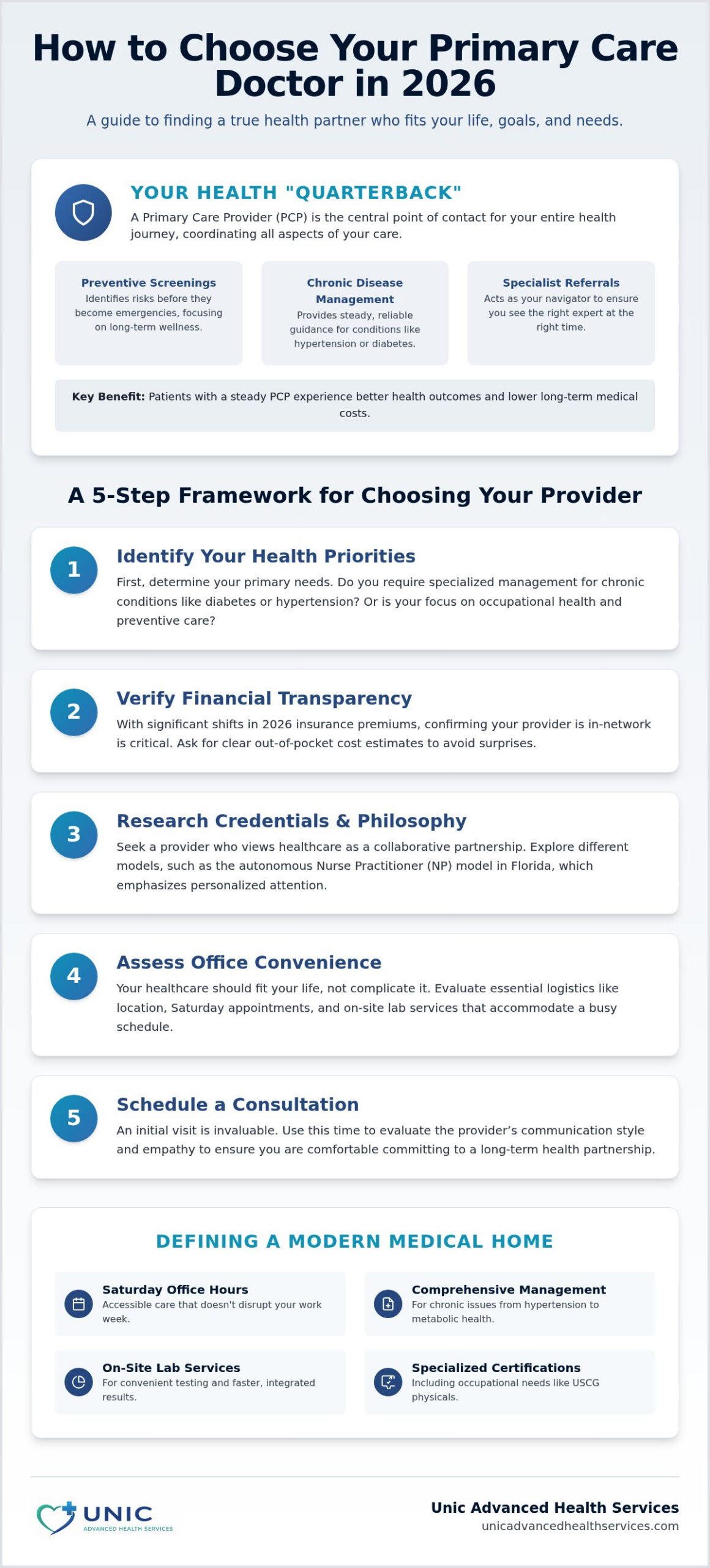
- Understand why a primary care provider acts as your health ‘quarterback,’ managing preventive screenings and coordinating specialist referrals to improve your long-term wellness.
- Follow a clear, five-step framework on how to choose a primary care doctor who matches your insurance network and long-term health goals.
- Explore the advantages of the autonomous nurse practitioner model in Florida, which emphasizes personalized attention and steady, reliable clinical oversight.
- Evaluate essential logistics like Saturday office hours and on-site lab services to ensure your healthcare remains convenient and accessible around your work schedule.
- Discover how to find a partner capable of managing comprehensive needs, from chronic disease management to specialized occupational certifications like USCG physicals.
Understanding the Role of a Primary Care Provider (PCP)
A primary care provider (PCP) functions as the central point of contact for your health journey. Think of them as a clinical quarterback. They coordinate your preventive screenings, manage minor illnesses, and provide referrals to specialists when complex issues arise. Research consistently shows that patients with a steady PCP experience better health outcomes and lower long-term medical costs. This is because a provider who knows your history can spot subtle changes before they become emergencies. A consistent partnership ensures that your care is not fragmented across different clinics and urgent care centers.
In 2026, the medical community has shifted its focus toward comprehensive wellness. Instead of merely reacting to symptoms, modern primary care emphasizes longevity and proactive risk management. This approach is vital for those dealing with chronic conditions like hypertension or obesity. A dedicated provider doesn’t just prescribe medication; they oversee a holistic strategy to improve your quality of life. Understanding these roles is the first step in learning how to choose a primary care doctor who fits your specific needs and long-term goals.
Preventive Care vs. Acute Treatment
Preventive care is the practice of identifying health risks before they develop into serious conditions. While acute treatment addresses immediate problems like a sinus infection or a minor injury, preventive care focuses on your future. An annual physical exam Fort Lauderdale serves as your clinical baseline. During these visits, your provider reviews your vitals, orders blood work, and discusses lifestyle adjustments. These well-visits are the true foundation of modern longevity. They allow for early intervention in silent conditions like high cholesterol or pre-diabetes, which often show no outward symptoms.
The Gatekeeper of Specialized Care
Your PCP acts as a navigator within a complex medical system. When you face a specialized issue, such as a cardiovascular concern or an orthopedic injury, your provider ensures you see the right expert at the right time. By Understanding Family Medicine and its broad scope, you can appreciate how a PCP centralizes your medical records. This hub of information prevents redundant testing and ensures that different specialists aren’t prescribing conflicting treatments. As you determine how to choose a primary care doctor, prioritize a provider who values this level of coordination. They are essential for navigating the 2026 healthcare landscape with confidence and peace of mind.
5 Steps to Choose the Right Doctor for Your Needs
Selecting the right medical partner is a process that requires more than a simple search of your insurance directory. To effectively understand how to choose a primary care doctor, you should follow a methodical strategy that balances clinical expertise with your personal lifestyle. This ensures that the provider you select can offer the steady, reliable oversight necessary for long-term health stability. Your health is a long-term investment; your choice of provider should reflect that level of seriousness.
- Step 1: Identify your health priorities. Determine if you need specialized management for chronic issues like diabetes or if your focus is primarily on occupational health.
- Step 2: Verify financial transparency. With 2026 health insurance premiums seeing significant shifts and the return of the “subsidy cliff,” it’s vital to confirm that your provider is in-network and offers clear out-of-pocket cost estimates.
- Step 3: Research credentials and philosophy. Look for a provider who views healthcare as a collaborative partnership rather than a series of transactions.
- Step 4: Assess office convenience. Consider location and availability. A provider who offers Saturday appointments can be a game-changer for busy professionals and commercial drivers.
- Step 5: Schedule a consultation. Use this time to evaluate the provider’s communication style and empathy before committing to a long-term relationship.
Evaluating Clinical Focus and Specialties
If you are managing a chronic condition, your choice of provider should reflect that specific need. A practitioner with a focus on hypertension or metabolic health will be better equipped to manage your long-term care plan than a generalist who lacks that specific interest. For those in specialized industries, finding a provider who offers a DOT physical exam Fort Lauderdale or USCG certification is essential for maintaining your livelihood. These Tips for Choosing a Doctor emphasize that a provider’s specific interests often matter more than their general title. If you need specialized occupational physicals, consider reaching out to Unic Advanced Health Services to discuss your specific requirements and ensure your certifications are handled with precision.
Verifying Modern Communication and Access
In 2026, healthcare must be as mobile and flexible as you are. Ask potential offices if they offer telehealth Fort Lauderdale services for routine follow-ups or prescription management. A robust patient portal is also a non-negotiable tool; it should allow you to message your provider, view lab results, and schedule appointments without picking up the phone. Quick response times and digital access are the hallmarks of a modern practice that values your time and peace of mind. Don’t settle for a system that leaves you waiting for days for a simple answer.
MD vs. NP: Understanding Your Provider Options
Traditionally, the search for a primary care provider focused solely on finding a Medical Doctor (MD). While MDs and Doctors of Osteopathic Medicine (DOs) remain vital pillars of the healthcare system, the landscape in 2026 has expanded to include highly skilled Autonomous Nurse Practitioners (NPs). MDs follow an allopathic model focused on diagnosing and treating specific ailments through traditional medical interventions. DOs receive similar training but often incorporate a more holistic philosophy. However, as you research How to Find a Primary Care Doctor, you’ll find that NPs are increasingly leading the way in primary care delivery. They bring a unique blend of clinical expertise and nursing-based compassion to the exam room.
The nursing model is fundamentally patient-centered. It prioritizes the individual’s lifestyle and environment alongside their clinical symptoms. Because of this background, many patients find that NPs offer more time-intensive consultations. They tend to focus on collaborative goal-setting rather than just providing a list of instructions. This is a critical factor when deciding how to choose a primary care doctor. You want a provider who listens as much as they speak. Board certification and state-specific practice authority ensure that regardless of the initials after their name, your provider has met rigorous standards for safety and expertise.
The NP Advantage in Chronic Care
NPs are specifically trained to manage long-term wellness and complex health journeys. At Unic Advanced Health Services, Marc Joseph utilizes this empathetic approach to help patients navigate chronic conditions with confidence. This expertise is particularly evident in specialized areas like obesity management nurse practitioner Fort Lauderdale. By focusing on metabolic health and sustainable lifestyle changes, NPs provide the steady hand needed for chronic disease management. They don’t just treat the numbers on a lab report; they treat the person behind them. This collaborative method often leads to higher patient satisfaction and better adherence to treatment plans.
Choosing Based on Autonomy and Expertise
Florida law allows experienced NPs to practice autonomously, which means they can manage your care without physician supervision. An autonomous NP can order diagnostics, interpret lab results, and manage your prescriptions independently. This status is granted only after the practitioner meets rigorous clinical hour requirements and maintains advanced board certification. When evaluating your options, consider your personal comfort level and the type of relationship you want. If you value a provider who is deeply involved in every facet of your care and offers a supportive, welcoming atmosphere, an autonomous NP offers a modern and efficient solution. They provide the stability and thoroughness required for a contemporary healthcare partnership.
Logistics and Convenience: The ‘Hidden’ Selection Criteria
While clinical credentials and provider philosophy are essential, the logistical framework of a medical practice often determines your long-term success as a patient. A provider with an impressive resume is of little use if their office hours conflict with your professional responsibilities or if their location is inaccessible. When you evaluate how to choose a primary care doctor, you must consider the “hidden” factors that facilitate consistent care. These include the availability of weekend appointments, the proximity of the clinic to major Fort Lauderdale hubs, and the efficiency of their diagnostic capabilities. A practice that prioritizes your time demonstrates a genuine commitment to your peace of mind.
Location and accessibility are particularly critical for commercial drivers and busy professionals who cannot afford to spend hours navigating traffic or searching for parking. A clinic situated near primary transit routes or business centers reduces the friction of attending regular check-ups. Additionally, the integration of telehealth services provides a vital safety net for chronic care continuity. If you’re managing a condition like hypertension but can’t leave your desk for a routine follow-up, a virtual visit ensures your treatment plan remains on track without interruption.
On-Site Labs and Immediate Results
One of the most significant advantages a modern practice can offer is on-site laboratory services. Traditionally, patients are forced to visit a secondary facility for blood work, which delays diagnosis and creates unnecessary stress. Having immediate access to clinical data during your consultation allows your provider to make real-time treatment adjustments. This integrated approach is especially beneficial for meeting occupational health exam Fort Lauderdale requirements. When your livelihood depends on a swift and accurate medical clearance, skipping the trip to an external lab improves both your health outcomes and your professional efficiency.
Weekend and Virtual Availability
Rigid weekday schedules often lead to deferred care, which can cause minor health issues to escalate into emergencies. Saturday appointments are a necessity for many, providing a dedicated window for wellness without the pressure of a work calendar. This flexibility is a hallmark of a patient-first culture. Furthermore, virtual care has become a permanent fixture of the 2026 healthcare landscape. The DEA has extended telehealth flexibilities through the end of 2026, allowing for the management of various prescriptions without an in-person visit. This modern methodology ensures that routine check-ins and refills are handled with efficiency and care. If you value a provider who respects your schedule, book your appointment at Unic Advanced Health Services to experience a higher standard of convenient, individualized care.
Why Unic Advanced Health Services is Fort Lauderdale’s Choice
Selecting a medical home is one of the most significant decisions you’ll make for your long-term well-being. At Unic Advanced Health Services, we’ve designed our practice to meet the exact standards discussed throughout this guide. Led by Marc Joseph, an experienced autonomous nurse practitioner, our clinic offers a personalized alternative to the often impersonal nature of large hospital systems. When you evaluate how to choose a primary care doctor, you’re looking for a partner who prioritizes thoroughness and individualized care. We provide that stability by combining clinical expertise with a supportive, patient-first atmosphere that respects your time and health goals.
Our comprehensive service list ensures that we can manage your health from every angle. Whether you need routine preventive care or a specialized USCG boat captain physical Florida, our team possesses the specialized knowledge to handle complex certification requirements. We understand the unique needs of the Fort Lauderdale community, from maritime professionals to local families. By maintaining on-site laboratory services and offering Saturday appointments, we eliminate the logistical hurdles that often prevent people from seeking the care they need. Our commitment is to provide affordable, high-quality medical oversight that remains accessible to everyone we serve.
A Steady Hand in Chronic Disease Management
We specialize in the long-term management of chronic conditions such as diabetes, hypertension, and obesity. Our “steady hand” philosophy means your care is predictable, thorough, and empathetic. We don’t just treat symptoms; we build a collaborative partnership to improve your metabolic health and overall longevity. This approach is vital in 2026, as rising insurance premiums and shifting healthcare regulations make consistent, proactive management more important than ever. We focus on specialized evaluation and modern methodology to ensure your treatment plan is both effective and sustainable.
Getting Started with Unic Advanced Health
We’ve streamlined our booking process to ensure you can access care without unnecessary delays. New patients can easily schedule an initial consultation or a telehealth visit through our secure system. To make your first appointment as productive as possible, please bring your current insurance information, a list of any medications you’re taking, and your previous medical records. This allows Marc Joseph to conduct a comprehensive evaluation and establish a precise baseline for your future care. If you’ve been wondering how to choose a primary care doctor who truly listens, we invite you to experience our dedicated approach firsthand. Schedule your primary care consultation with Unic Advanced Health Services today.
Secure Your Health Partnership for 2026
Deciding how to choose a primary care doctor is a pivotal step toward achieving long-term wellness and medical stability. You now understand that a true health partner does more than simply treat symptoms; they manage your comprehensive wellness while respecting your professional and personal schedule. By prioritizing clinical expertise, verifying logistics like weekend availability, and considering the personalized care of an autonomous nurse practitioner, you can navigate the 2026 healthcare landscape with confidence. A well-chosen provider acts as a steady hand, guiding you through complex requirements and long-term health strategies with clarity and compassion.
Unic Advanced Health Services is ready to serve as your dedicated health guide in Fort Lauderdale. We offer the modern conveniences you require for consistent care, including Saturday appointments and on-site laboratory services. Our clinic also provides specialized expertise as a DOT and USCG certified examiner, ensuring your occupational requirements are met with precision and thoroughness. We focus on building a reliable, long-term partnership that supports your unique health goals at every stage of your journey.
Book Your 2026 Primary Care Appointment in Fort Lauderdale today. We look forward to providing the individualized attention and expert oversight you deserve to maintain your peace of mind.
Frequently Asked Questions
What is the difference between a family practitioner and an internist?
Family practitioners treat patients of all ages, from newborns to seniors, while internists focus exclusively on adult medicine. If you are researching how to choose a primary care doctor for your entire household, a family medicine provider offers the broadest scope. Both roles provide expert oversight for chronic conditions and preventive wellness, but family practitioners are specifically trained to manage multi-generational health needs within a single practice.
Can a nurse practitioner be my primary care provider in Florida?
Yes, Florida law allows autonomous nurse practitioners to serve as independent primary care providers. These practitioners can diagnose illnesses, order diagnostic tests, and manage prescriptions without physician supervision. This model often provides a more personalized, patient-centered experience. Choosing an autonomous NP ensures you receive steady, reliable care from a provider who focuses on long-term partnership and thorough clinical evaluation.
How do I know if a doctor is in my insurance network?
You should verify in-network status by using your insurance carrier’s online directory or by calling the clinic administrative office directly. With 2026 Silver-tier ACA premiums increasing by an average of 21%, confirming your provider’s status is essential to avoid high out-of-pocket costs. Always ask for a clear explanation of potential fees for services like on-site labs to ensure financial transparency before your visit.
What should I ask during my first appointment with a new doctor?
Inquire about their approach to chronic disease management and their preferred methods of communication. Ask if they offer modern conveniences like telehealth or Saturday appointments to accommodate your work schedule. Understanding their clinical philosophy helps you determine if they will be a proactive advocate for your well-being. It’s also helpful to ask how they handle urgent concerns that arise between scheduled wellness visits.
Why is it important for a primary care clinic to have on-site labs?
On-site labs allow your provider to review blood work and diagnostic data during your actual consultation. This immediate access to clinical information leads to faster treatment adjustments and improved health outcomes. It also eliminates the need for you to travel to a secondary facility. This level of efficiency is a significant factor when evaluating how to choose a primary care doctor who values your time.
Does primary care include specialized exams like DOT or USCG physicals?
Specialized physicals are not available at every clinic, so you must confirm that the practice has a certified examiner. Some primary care offices, such as Unic Advanced Health Services, specialize in these occupational evaluations for commercial drivers and mariners. These exams ensure you meet federal health standards while receiving the same high level of care provided during a standard wellness check-up.
What happens if I need a specialist referral?
Your primary care provider acts as a health quarterback, coordinating with specialists to manage complex medical issues. They ensure your medical records remain centralized in one hub, which prevents redundant testing and conflicting treatments. This methodical oversight ensures that every specialist you see aligns with your broader health strategy. Your provider remains your primary advocate, guiding you through every step of the referral process.
How often should I see my primary care doctor if I am healthy?
Healthy adults should schedule at least one annual physical to establish a clinical baseline and receive preventive screenings. These visits allow your provider to identify “silent” health risks, such as hypertension or high cholesterol, before they become serious emergencies. Regular check-ins foster a long-term partnership with your provider, ensuring they are well-acquainted with your health history if an acute issue ever develops.