What if the key to stabilizing your blood sugar and preventing complications isn’t hidden behind a six-month wait for an endocrinologist? For the 29.1 million Americans currently diagnosed with diabetes, the stress of navigating complex referral networks often adds unnecessary anxiety to an already challenging condition. You might wonder if managing diabetes without specialist intervention is truly safe or effective in 2026. The reality is that a steady, professional primary care partnership often provides more consistent oversight than a distant specialist ever could.
We understand that daily glucose management and the fear of heart disease can feel like a heavy burden to carry alone. It’s common to feel overwhelmed by shifting A1C targets or the technical demands of new monitoring tools. This article outlines how personalized primary care and nurse practitioner-led strategies offer a comprehensive path to wellness. You will learn about the latest 2026 diagnostic standards, practical lifestyle tips for daily control, and how modern technology can be integrated into your routine. By focusing on a collaborative relationship with your local provider, you can gain a clear sense of authority over your health and your future.
Key Takeaways
- Understand how a centralized primary care approach provides a more accessible and cohesive alternative to fragmented specialist networks.
- Learn why the “ABCs” of A1C, blood pressure, and cholesterol serve as the vital metrics for preventing long-term complications.
- Discover practical methods for managing diabetes without specialist intervention by creating a supportive home environment and consistent daily habits.
- Identify the specific clinical markers that indicate when primary care is sufficient and when a referral to an endocrinologist is necessary.
- Explore how personalized chronic condition management from an autonomous nurse practitioner can streamline your health journey.
The Role of Primary Care in Managing Diabetes Without a Specialist
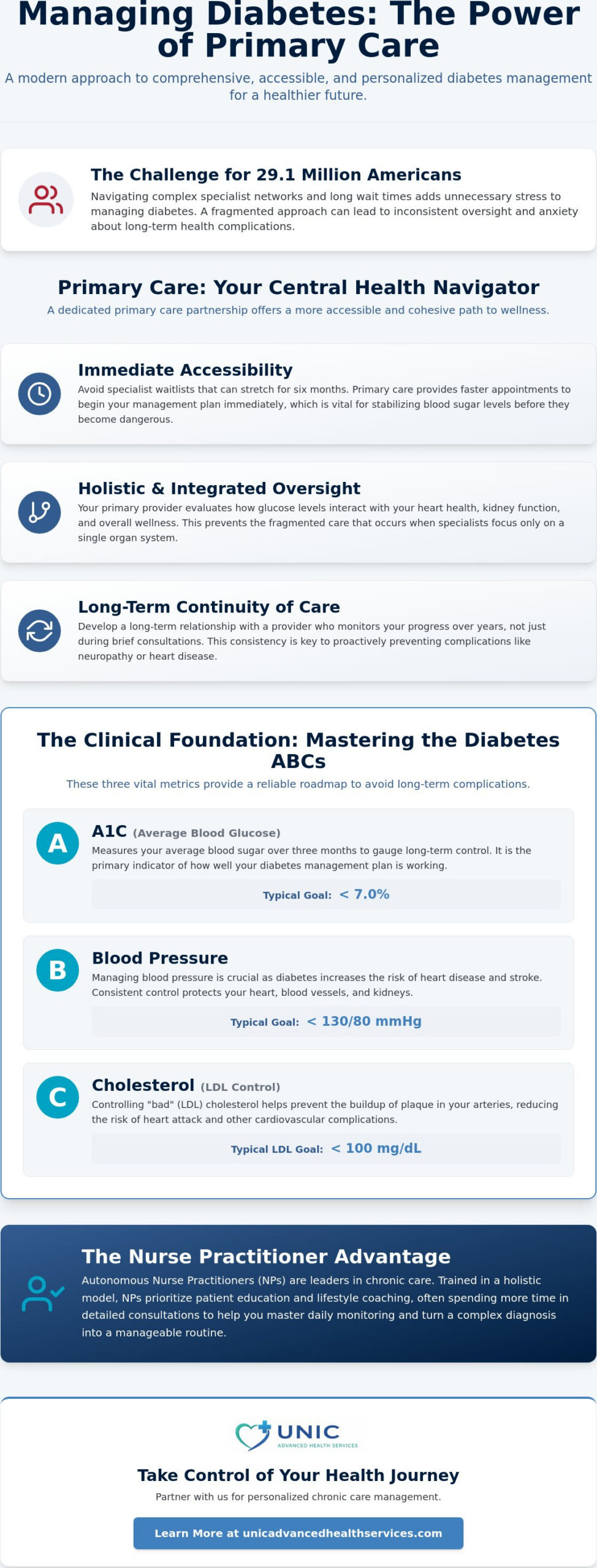
Many patients believe that a diagnosis of Type 2 diabetes requires an immediate and permanent referral to an endocrinologist. While specialists have their place in complex cases, the majority of comprehensive diabetes management in 2026 actually happens within the primary care setting. This approach centralizes your care, turning your primary provider into a dedicated navigator for your health journey. Instead of managing your blood sugar in a vacuum, a primary care provider evaluates how your glucose levels interact with your heart health, kidney function, and overall wellness. This integrated oversight is essential for the 40.1 million Americans living with diabetes today.
Choosing a path of managing diabetes without specialist intervention often reduces the fragmentation that frustrates many patients. Specialist-led care can sometimes feel detached, as different doctors may focus only on specific organs without communicating effectively with one another. In contrast, a primary care partnership ensures that every treatment decision is made with a full understanding of your medical history. This continuity is a proactive way to prevent the complications that many fear, such as neuropathy or cardiovascular disease.
To better understand how specific dietary choices support your health journey, watch this helpful video:
Why Primary Care is Often the Best First Step
Accessibility is the most immediate benefit of a primary care approach. In 2026, specialist waitlists can stretch for six months or longer, leaving patients in a state of limbo during a critical time for intervention. Primary care offices generally offer faster appointment times, allowing you to start your management plan immediately. This speed is vital for stabilizing blood sugar before it reaches dangerous levels. Additionally, your provider monitors your progress over years, not just during brief consultations. This long-term relationship allows for better coordination of care, especially when you are also navigating high blood pressure management primary care alongside your diabetes.
The Nurse Practitioner Advantage in Chronic Care
The 2026 healthcare landscape has shifted toward the use of autonomous nurse practitioners as primary chronic care managers. In Florida, this model offers a distinct advantage for those managing diabetes without specialist referrals. Nurse practitioners (NPs) are trained in a holistic model that prioritizes patient education and lifestyle coaching. They often have more time for detailed consultations than traditional specialists, which is necessary when you’re learning to master daily glucose monitoring or adjusting to new medications. This steady hand provides the reassurance and clinical expertise needed to turn a complex diagnosis into a manageable daily routine.
The Clinical Foundation: Mastering the Diabetes ABCs
When you focus on managing diabetes without specialist intervention, your success depends on a clear clinical framework known as the “ABCs.” These three metrics serve as the North Star for your health journey, providing a reliable roadmap to avoid long-term complications like kidney disease or vision loss. By monitoring these numbers through a primary care lens, you ensure that every aspect of your metabolic health is addressed simultaneously. This integrated approach is essential because blood sugar does not exist in isolation; it directly influences your cardiovascular and vascular systems. Using managing your diabetes ABCs as a guide allows you and your provider to make data-driven adjustments to your care plan in real-time.
The A1C test is a three-month average of blood glucose levels used to gauge long-term control. Primary care providers utilize on-site lab services to track these metrics, ensuring that you receive immediate feedback during your visit. This efficiency eliminates the anxiety of waiting days for results from an outside facility. It also allows your provider to see the “big picture” of your health, rather than just a single snapshot in time.
A is for A1C: Tracking Your Long-Term Glucose
Understanding your A1C numbers is the first step toward clinical stability. A result between 5.7% and 6.4% indicates prediabetes, while a level of 6.5% or higher is the diagnostic threshold for Type 2 diabetes. In 2026, the American Association of Clinical Endocrinology recommends a target of 6.5% or lower for most adults, though this goal is often personalized. Your provider will adjust this target based on your age, health status, and risk of hypoglycemia. Regular screenings every three months are vital. These frequent check-ins allow for the fine-tuning of medications or lifestyle strategies before small fluctuations become significant problems. For readers who want to see how metabolic health is monitored through specialized packages in other markets, you can visit Bewell to learn more about their comprehensive metabolic screening options.
B is for Blood Pressure and C is for Cholesterol
Diabetes naturally makes your heart work harder, which is why managing blood pressure and cholesterol is just as important as glucose control. High blood sugar can damage the lining of your arteries, making it easier for plaque to build up. This creates a dangerous link between diabetes and hypertension treatment Fort Lauderdale. By keeping your blood pressure below 130/80 mmHg, you significantly reduce the strain on your heart and kidneys.
Simultaneously, managing LDL cholesterol is necessary to prevent vascular damage. High levels of “bad” cholesterol combined with elevated glucose can lead to rapid arterial narrowing. A primary care approach ensures these three metrics are managed in tandem, providing a level of comprehensive oversight that single-focus clinics may overlook. If you are ready to take control of these vital numbers, consider scheduling a comprehensive evaluation for chronic condition management to establish your baseline.
Beyond the Clinic: Daily Strategies for Successful Home Management
The clinical visits you attend represent only a small fraction of your health journey. In reality, 99% of your care happens in the kitchen, at the gym, and in your living room. Successfully managing diabetes without specialist intervention requires a commitment to creating a “Diabetes-Friendly” environment at home. This involves more than just removing sugary snacks; it means establishing a structured routine that supports metabolic stability, and you can find out more about natural supplements that may help maintain this balance. When your daily environment is designed for success, the clinical metrics discussed in previous sections naturally begin to improve.
A central part of this daily strategy is shifting from rigid “Carbon Counting” to a more sustainable “Carb Awareness.” While tracking every gram of carbohydrate can feel restrictive, developing an awareness of how different foods affect your specific glucose levels is empowering. Research regarding the Role of Primary Care in Diabetes Management emphasizes that patient education is the most effective tool for long-term glycemic control. By prioritizing complex fibers and healthy fats, you can stabilize your energy levels and prevent the sharp glucose spikes that lead to vascular damage.
Physical activity is another pillar of home care that functions as a natural form of medicine. Regular movement increases your body’s insulin sensitivity, allowing your cells to use glucose more efficiently. You don’t need to spend hours in a gym to see results. A simple 15-minute walk after your largest meal of the day can significantly blunt post-meal glucose rises. These small, consistent habits are the foundation of a proactive health strategy.
Nutrition and Weight Management
Weight management is perhaps the most powerful lever you can pull to change the course of Type 2 diabetes. In many cases, achieving a healthier weight can lead to diabetes remission, where blood sugar levels return to a non-diabetic range without the need for intensive medication. This journey is often easier with professional guidance. For residents in South Florida, partnering with an obesity management nurse practitioner Fort Lauderdale provides the medical oversight and lifestyle coaching necessary to achieve these results safely and sustainably. Those seeking a broader clinical framework for addressing excess weight alongside diabetes may also benefit from exploring obesity management Fort Lauderdale programs that integrate medically supervised weight loss with metabolic health strategies.
Monitoring and Technology in 2026
Technology has revolutionized how patients monitor their health at home. Continuous Glucose Monitors (CGMs) have become a standard tool for many patients managing their condition through primary care. These devices provide real-time data, helping you identify patterns that a single finger-stick test might miss. It’s also vital to recognize the clinical signs of fluctuations. Hyperglycemia often presents as excessive thirst or fatigue, while hypoglycemia can cause shakiness and confusion. Using a simple app or logbook to track these patterns allows your provider to make precise adjustments to your care plan during your next visit.
When to Choose Primary Care vs. an Endocrinologist
A common concern for many patients is whether primary care is truly sufficient for their condition. You might worry that by managing diabetes without specialist intervention, you’re missing out on advanced treatments or deeper expertise. However, for the vast majority of the 29.1 million Americans diagnosed with Type 2 diabetes, primary care is not just an alternative; it’s often the most effective way to maintain long-term health. Because Type 2 diabetes accounts for 90% to 95% of all cases, primary care providers have extensive experience in the standard protocols required for successful stabilization.
Your primary provider acts as the “quarterback” of your medical team. They see the entire field of your health, ensuring that every treatment decision is coordinated. This centralized oversight is particularly cost-effective. Managing chronic conditions in a primary care setting reduces the logistical and financial burden of visiting multiple offices, paying various co-pays, and repeating lab work. By keeping your care under one roof, you ensure that your provider understands how your glucose levels interact with your heart, lungs, and kidneys.
Scenarios Best Handled by Primary Care
Most new diagnoses of Type 2 diabetes or prediabetes are perfectly suited for a primary care setting. If your glucose levels are relatively stable and you’re seeking routine maintenance, there is rarely a clinical reason to seek a specialist. This environment is also ideal for patients who need to balance multiple health priorities. For example, your provider can simultaneously handle your diabetes and asthma management Fort Lauderdale. This prevents the risk of conflicting medications and ensures that your respiratory health and metabolic health are both progressing toward your wellness goals.
When a Specialist Referral is Necessary
There are specific clinical thresholds where a specialist’s involvement becomes essential for your safety. Type 1 diabetes, which requires complex insulin pump therapy and automated delivery systems, typically needs the oversight of an endocrinologist due to the technical nature of the equipment. Similarly, if you develop severe complications such as advanced kidney disease or proliferative retinopathy, specialized intervention is required to preserve organ function. If your blood sugar exhibits unexplained, drastic swings that don’t respond to standard treatment protocols, a specialist can help troubleshoot the underlying metabolic causes.
If you’re unsure where your condition falls on this spectrum, our team can provide a thorough evaluation through our chronic condition management services to determine the best path forward for your specific needs.
Personalized Chronic Care Management at Unic Advanced Health Services
Unic Advanced Health Services serves as your dedicated partner for comprehensive diabetes management in Fort Lauderdale. We recognize that chronic conditions require steady oversight and a compassionate, patient-first perspective. Under the leadership of Marc Joseph, an autonomous nurse practitioner specializing in chronic care, our practice provides the professional authority needed to stabilize your metabolic health. By choosing our primary care model, you can focus on managing diabetes without specialist delays or the fragmented communication that often occurs between multiple offices. Our clinic is designed for your modern life, offering on-site lab services for immediate clinical feedback and Saturday appointments to accommodate your busy schedule.
Our commitment to affordable and personalized healthcare means that you are never just a number in a database. We prioritize a collaborative relationship where your concerns are heard and your health journey is respected. This steady, expert guidance acts as a reliable advocate for your well-being, helping you navigate the complexities of Type 2 diabetes with confidence. Whether you are newly diagnosed or seeking better control of a long-term condition, we provide the stability and thoroughness required for lasting health.
Our Approach to Diabetes in Fort Lauderdale
We don’t believe in one-size-fits-all treatment plans. Instead, our team creates a customized “Diabetes Road Map” for every patient that aligns with your specific lifestyle, age, and health goals. This plan integrates modern methodology with traditional values of individualized care. To ensure your management remains consistent, we offer telehealth Fort Lauderdale services for easy follow-ups. These virtual visits allow you to discuss your glucose patterns or medication adjustments without the need for a commute. Our primary focus remains on proactive preventive care, identifying subtle shifts in your health before they escalate into the complications many patients fear.
Starting Your Journey with Us
Your first chronic care consultation is a thorough evaluation of your current health status and long-term objectives. We review your full medical history, perform necessary screenings, and establish a clear baseline for your A1C, blood pressure, and cholesterol. For commercial drivers, we also understand the unique regulatory requirements of your profession. We handle the DOT physical exam Fort Lauderdale, ensuring that diabetic drivers meet all federal safety standards while maintaining optimal health. Our goal is to provide a seamless experience that values your time and peace of mind. If you’re ready to take a proactive step toward a healthier future, Schedule your consultation at Unic Advanced Health Services today.
Take Control of Your Diabetes Journey Today
Successfully managing diabetes without specialist intervention is a practical and effective path for many adults in 2026. By focusing on the clinical ABCs and implementing consistent daily habits at home, you can achieve stable blood sugar levels and protect your long-term cardiovascular health. A primary care partnership provides the centralized oversight necessary to treat the whole person, ensuring your metabolic goals align with your overall wellness. This approach reduces medical fragmentation and places you firmly in the driver’s seat of your health journey.
Unic Advanced Health Services offers the expert guidance you need to navigate this process with confidence. Led by Marc Joseph, an autonomous nurse practitioner, our Fort Lauderdale practice provides a “steady hand” through comprehensive chronic care management. We offer on-site lab services for immediate diagnostics and maintain Saturday hours to ensure your care is as convenient as it is thorough. It’s time to replace anxiety with a clear, actionable plan for your future. Book Your Chronic Care Consultation at Unic Advanced Health Services to begin your personalized wellness strategy. You don’t have to manage this condition alone; we’re here to support your long-term success.
Frequently Asked Questions
Can a nurse practitioner manage my diabetes as well as a doctor?
Yes, autonomous nurse practitioners are highly trained to provide comprehensive chronic condition management. They specialize in a holistic model of care that emphasizes both clinical stability and patient education. In Florida, nurse practitioners like Marc Joseph provide the same level of diagnostic oversight for Type 2 diabetes as a primary care physician, often with a stronger focus on personalized lifestyle coaching and long-term partnership.
Is it cheaper to manage diabetes through primary care than a specialist?
Managing diabetes without specialist visits is typically more cost-effective for the average patient. Primary care clinics generally have lower co-pays than specialty offices, and consolidating your care prevents duplicate lab work. This centralized model ensures your healthcare budget is used efficiently. By keeping all diagnostics and consultations under one roof, you reduce the logistical and financial burdens associated with visiting multiple providers.
What are the main signs that my diabetes is not being managed correctly?
Persistent hyperglycemia, frequent episodes of hypoglycemia, and unexplained fatigue are primary indicators of suboptimal control. You should also watch for slow-healing wounds, recurring infections, or blurred vision. If your A1C remains above your personalized target despite lifestyle changes, it suggests your current management plan requires professional adjustment. Regular monitoring helps identify these clinical markers before they lead to severe complications like neuropathy.
Do I need a referral to see a chronic care management nurse practitioner in Fort Lauderdale?
No, you do not typically need a formal referral to establish care with an autonomous nurse practitioner for chronic condition management. Patients in Fort Lauderdale can schedule appointments directly with our office to begin their wellness journey. This direct access removes the administrative barriers often found in complex specialist networks, allowing you to stabilize your glucose levels and receive professional guidance without unnecessary delays.
How often should I have my A1C checked if I am managing diabetes through primary care?
Most patients should have their A1C checked every three to six months to ensure their treatment plan remains effective. If your glucose levels are stable and within your target range, twice a year is often sufficient for routine maintenance. However, if you’ve recently adjusted your medication or diet, quarterly testing provides the data needed to ensure your metabolic health is progressing. This frequency allows for precise, timely adjustments.
Can I still pass a DOT physical if I am managing diabetes without a specialist?
Yes, you can pass a DOT physical while managing diabetes without specialist intervention, provided your condition is well-controlled and documented. Commercial drivers must demonstrate that their blood sugar is stable and that they don’t experience severe hypoglycemic episodes that could impair safety. Our team evaluates your clinical history and lab results to ensure you meet all federal requirements while maintaining your professional driving credentials.
What on-site lab tests are necessary for routine diabetes monitoring?
Routine monitoring requires an A1C test, a lipid panel for cholesterol, and a comprehensive metabolic panel to check kidney and liver function. We also perform microalbuminuria tests to monitor for early signs of kidney stress. Providing these on-site lab services ensures that we have immediate diagnostics to guide your treatment plan during your appointment. This saves you time and provides peace of mind through rapid, accurate results.
Will insurance cover diabetes management at a primary care clinic?
Most insurance plans, including Medicare and private carriers, cover diabetes management within a primary care setting. Chronic condition management is a core component of preventive care, which is a high priority for insurance providers. While we recommend verifying your specific benefits with your carrier, primary care services are generally the most widely covered and accessible option for long-term metabolic health oversight and routine clinical monitoring.