Imagine sitting in the examination room while the blood pressure cuff tightens around your arm, knowing that your entire career depends on the next sixty seconds. For many drivers, the fear of a disqualifying reading or a shortened certificate is a constant source of stress. Learning how to pass DOT physical exam requirements isn’t just about showing up on the right day. It’s about understanding the specific medical standards that the FMCSA expects you to meet. We know how much is at stake when you walk into that clinic, and we believe that your health should be a source of confidence rather than a barrier to your livelihood.
You likely feel that the rules for blood pressure, vision, and chronic conditions like diabetes are becoming more complex every year. You’re right to feel that way, especially with the 2026 transition to electronic submissions through the National Registry II system. This guide provides a clear roadmap to help you master these medical requirements and organize your records for a stress-free appointment. We will walk you through the latest 2026 regulations, explain how to manage chronic conditions for the exam, and give you the preparation strategies needed to secure your medical certificate with ease.
Key Takeaways
- Understand the updated 2026 FMCSA standards for physical and mental fitness to ensure your certification remains valid under the new electronic filing systems.
- Learn the specific management strategies for hypertension and diabetes so you know exactly how to pass DOT physical exam requirements even with chronic conditions.
- Identify the essential medical records and documentation you’ll need to gather at least two weeks early to avoid common administrative delays.
- Master simple day-of tactics, including dietary adjustments and relaxation techniques, to prevent “White Coat Syndrome” from artificially inflating your blood pressure.
- Explore how proactive chronic care management and long-term wellness planning can protect your health and your career longevity.
Decoding the DOT Physical: What Passing Really Means in 2026
The DOT physical isn’t a standard doctor’s visit; it’s a specialized medical evaluation designed to ensure you can perform the demanding tasks of a commercial driver safely. Federal law requires this assessment to protect both you and the public. In 2026, the FMCSA standards have evolved to look beyond simple physical measurements. They now place a greater emphasis on your mental and emotional fitness to handle the rigors of the road. For professionals needing detailed evaluations for thought disorders or support with intensive mental health rehabilitation, Pand Health provides the specialized expertise necessary to navigate these complex health requirements. Understanding these shifting requirements is the first step in learning how to pass DOT physical exam protocols without unnecessary stress.
Your examiner isn’t an adversary looking for reasons to pull you off the road. Instead, think of the Certified Medical Examiner (CME) as a partner in your career longevity. Their role is to verify that you meet the Commercial Driver’s License (CDL) requirements while helping you manage health conditions that could become risks later. By being proactive, you can address potential issues before they lead to a disqualification. It’s a collaborative process focused on stability and safety.
To better understand this concept, watch this helpful video:
The CME Framework and Regulatory Compliance
FMCSA-certified providers undergo rigorous training to understand the specific stresses of the trucking industry. This specialized expertise is why only these providers can legally complete the Medical Examination Report Form (MCSA-5875). As of 2026, the process is more streamlined than ever. Results are now submitted electronically through the National Registry II system directly to the FMCSA and your state licensing agency. This digital integration ensures your records are accurate, making how to pass DOT physical exam requirements a matter of clear, verifiable health data.
Safety-Sensitive Designations and Your Career
Being a “safety-sensitive” employee means your health directly impacts public safety. Because of this high-stakes environment, certification isn’t always a standard two-year period. Depending on your health metrics, a CME might issue a certificate for one year, six months, or even a one-time three-month period to allow for medical intervention. A medical disqualification can pause your career; however, it’s often a manageable hurdle. Most drivers find that with consistent condition management, they can return to the road quickly and confidently.
Managing the “Big Three” Disqualifiers: Blood Pressure, Diabetes, and Vision
Understanding how to pass DOT physical exam requirements starts with knowing the “Big Three” triggers: hypertension, diabetes, and vision impairment. While these conditions are the most common hurdles for drivers, they don’t have to be career-enders. Most medical issues identified during an evaluation are manageable with the right approach. Success is often a matter of preparation and consistency. If you’re managing a chronic condition, staying strictly adherent to your medication schedule in the weeks before your appointment is vital. This stability demonstrates to the examiner that your health is under control and that you are safe to operate a commercial vehicle.
According to the official DOT medical exam standards, examiners must look for specific health benchmarks to ensure public safety. We focus on these metrics to help you stay road-ready and confident in your medical status.
Stabilizing Blood Pressure for the Exam
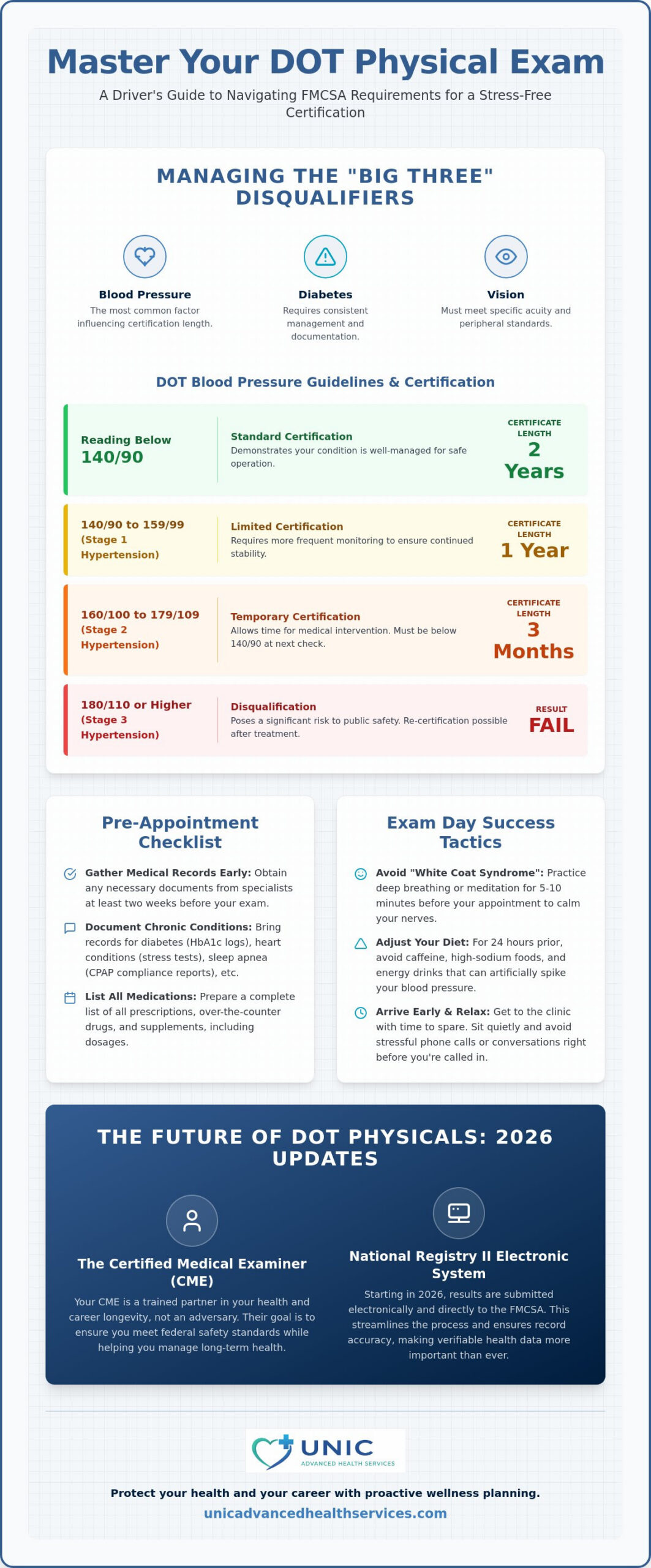
Blood pressure is frequently the deciding factor for your certification length. If your reading is below 140/90 mmHg, you may qualify for a full two-year card. However, DOT physical blood pressure requirements are tiered. Readings between 140-159/90-99 mmHg (Stage 1) usually result in a one-year certificate. Stage 2 readings (160-179/100-109 mmHg) might grant a one-time, three-month certificate to allow for medical intervention. It’s vital to avoid a Stage 3 reading of 180/110 mmHg or higher, as this is automatically disqualifying. We recommend monitoring your pressure at home for seven days before your visit to ensure your numbers are stable.
Diabetes Management and Federal Waivers
Drivers with insulin-treated diabetes mellitus (ITDM) can maintain their careers under the 2026 standards. You’ll need to provide a completed Insulin-Treated Diabetes Mellitus Assessment Form (MCSA-5870) from your treating clinician. This form must be signed within 45 days of your exam. While the examiner reviews your overall stability, your A1C levels serve as a critical indicator of long-term control. Maintaining steady glucose levels is a primary component of how to pass DOT physical exam hurdles when living with diabetes.
Vision and Hearing Standards
The physical also includes specific sensory checks. You must have at least 20/40 vision in each eye and both eyes combined, whether you use corrective lenses or not. Additionally, a peripheral field of vision of at least 70 degrees in each eye is required. For hearing, you must pass a “forced whisper test” from a distance of five feet. If you use a hearing aid or glasses, make sure they’re in good working order before you arrive. If you have concerns about your current health status, our team at Unic Advanced Health Services can help you navigate these requirements through proactive care.
The Essential Documentation Checklist for a Seamless Appointment
Administrative delays are the single most common reason drivers experience friction during their certification process. In Fort Lauderdale, missing paperwork often leads to “pending” statuses that can keep you off the road for days or even weeks. Understanding how to pass DOT physical exam requirements involves more than just physical readiness; it requires administrative precision. We recommend that you begin gathering your medical records at least two weeks before your current certificate expires. This lead time allows you to contact specialists or pharmacy portals if a specific document is missing.
Organizing your occupational health records in a dedicated physical binder or a secure digital folder on your phone can save you significant stress on the day of your visit. Having everything in one place ensures that your examiner can review your history efficiently. For a convenient, printable version of these requirements, you can refer to our how to prepare for DOT physical guide, which serves as a comprehensive roadmap for your preparation.
Medication Lists and Medical History
You must provide the exact names, precise dosages, and contact information for your prescribing physicians. Disclosing your full medical history isn’t just helpful; it’s a legal requirement under federal law. If you’re using a medication for an “off-label” purpose, such as a blood pressure drug prescribed for anxiety, be prepared to explain this to your examiner. Clear communication about your prescriptions prevents red flags and demonstrates that you’re managing your health responsibly and transparently.
Specialist Clearances and CPAP Reports
Drivers with a history of complex conditions, such as a heart attack or the placement of a stent, must bring specific clearance letters from their specialists. These letters should explicitly state that you are “stable and fit for duty” in a commercial driving capacity. If you’ve been diagnosed with Obstructive Sleep Apnea (OSA), you’re required to provide a CPAP compliance report covering the previous 90 days of use. This data proves to the examiner that your condition is well-managed and doesn’t pose a risk of sudden fatigue. Following the Official DOT Medical Exam Requirements ensures that your documentation aligns with federal safety standards, allowing for a smooth and successful appointment.
Day-of Tactics: How to Avoid “White Coat Syndrome” and Spiked Numbers
Many drivers experience a temporary spike in blood pressure simply from being in a clinical setting. This phenomenon, known as “White Coat Syndrome,” is often triggered by the high stakes of a commercial driving evaluation where your livelihood is on the line. If you’re nervous about your numbers, remember that preparation is your best defense against anxiety. Reviewing what to expect at DOT physical appointments can significantly reduce fear of the unknown. When you understand the flow of the exam, your body is less likely to respond with a “fight or flight” reaction that artificially inflates your readings.
The 24-Hour Preparation Protocol
The 24 hours leading up to your appointment are critical for your physiological metrics. We recommend that you avoid excessive caffeine and nicotine, as both are potent stimulants that constrict blood vessels and raise your heart rate. High-sodium foods should also be avoided because they cause fluid retention, which can negatively impact your blood pressure readings. Focus on hydration instead. Drinking plenty of water helps ensure a clean protein and sugar screen during your urinalysis. Aim for 7-8 hours of quality sleep the night before your visit. A well-rested body maintains better autonomic control, which is essential for how to pass DOT physical exam requirements on your first attempt.
Mindset and Arrival Strategy
Your arrival strategy can determine the success of your initial readings. We instruct drivers to arrive at least 15 minutes early to prevent the stress of rushing, which almost always leads to an elevated heart rate. While you’re in the waiting room, practice the 4-7-8 breathing technique. Inhale quietly through your nose for four seconds, hold your breath for seven seconds, and exhale forcefully through your mouth for eight seconds. This simple exercise calms the nervous system and lowers your pulse. If your first blood pressure reading is higher than expected, don’t panic. Most Certified Medical Examiners (CMEs) understand the stress involved and will allow you to rest quietly for several minutes before performing a re-test. This patient-first approach ensures that your certificate reflects your true health status rather than a moment of nerves.
If you’re ready for an evaluation that prioritizes your comfort and career, book your DOT physical examination with our supportive medical team today.
Beyond the Certificate: Long-Term Wellness at Unic Advanced Health Services
While obtaining your medical certificate is the immediate goal, viewing this evaluation as a component of your long-term health strategy is the most effective way to ensure career longevity. Integrating your mandatory check-up into a broader annual physical exam Fort Lauderdale plan allows you to address underlying issues before they threaten your livelihood. At Unic Advanced Health Services, we don’t just check boxes; we partner with you to maintain your health year-round. This proactive approach transforms a stressful requirement into a valuable opportunity for professional and personal stability.
We understand that the life of a commercial driver is demanding, often leaving little time for traditional medical appointments. To support your busy schedule, we offer the convenience of Saturday appointments and on-site lab services. These features ensure that you can complete your requirements efficiently without sacrificing your time on the road. Marc Joseph and our dedicated team prioritize an empathetic, patient-first atmosphere where you feel heard and supported rather than processed through a system.
Proactive Chronic Care for CDL Holders
Managing chronic conditions like diabetes and obesity today is the most reliable strategy for how to pass DOT physical exam hurdles in the future. Our chronic condition management services provide the clinical oversight needed to keep your health metrics within federal limits. By having a primary care provider who deeply understands FMCSA regulations, you gain an advocate who knows exactly what is required for your certification. We also offer telehealth options for follow-up consultations and medication refills, making it easier than ever to stay compliant with your treatment plan while you’re traveling across state lines.
The Advantage of an Autonomous Nurse Practitioner
Our clinic operates with a “steady hand” approach, combining expert clinical skill with the attentive, individualized care that only a personalized environment can provide. Unlike large, corporate clinics that often feel like an assembly line, we take the time to understand your unique health history and career goals. This specialized focus reduces the anxiety often associated with medical exams and fosters a long-term partnership built on trust and reliability. We believe that a healthy driver is a safe driver, and our goal is to keep you behind the wheel for as long as you choose to be there.
If you’re looking for a medical partner who values your time and your career, we’re here to help. Schedule your DOT physical exam Fort Lauderdale with Unic Advanced Health Services today and experience a professional, stress-free path to your next medical certificate.
Just as you fine-tune your health to meet federal standards, your vehicle often requires professional adjustments to operate at its best. If you drive an American truck or performance vehicle, N2 Speed provides the specialized tuning and calibration needed to ensure your engine is as reliable as your medical certificate.
Secure Your Future on the Road
Your medical certificate is the foundation of your career; maintaining it shouldn’t be a source of constant anxiety. By organizing your documentation early and adhering to a consistent wellness routine, you’ve already mastered the most difficult parts of how to pass DOT physical exam requirements. The goal of this evaluation is to ensure your safety and the safety of everyone on the road. With the right preparation and a supportive medical partner, you can walk into your appointment with total confidence.
Our practice is led by Marc Joseph, an experienced Autonomous Nurse Practitioner who provides a steady hand and individualized attention for every driver. We offer on-site lab services for immediate results and provide convenient Saturday appointments to accommodate your busy hauling schedule. Don’t let paperwork or nerves stand in the way of your livelihood. Book Your Stress-Free DOT Physical in Fort Lauderdale at Unic Advanced Health Services today. We’re dedicated to your long-term success and look forward to keeping you on the road.
Frequently Asked Questions
Can I pass a DOT physical with high blood pressure?
You can pass with high blood pressure, but the reading determines your certificate’s duration. A reading below 140/90 mmHg qualifies you for two years. If your pressure is between 140-159/90-99 mmHg, you’ll receive a one-year card. Higher readings may result in a three-month temporary certificate. Managing your condition is key to understanding how to pass DOT physical exam requirements while maintaining your long-term career.
What happens if I fail my DOT physical exam?
If you fail the exam, you’ll be disqualified from driving until the underlying medical issue is addressed. The examiner will explain the specific reason for the failure and provide guidance on next steps. Many issues, such as vision deficits or high blood pressure, are correctable with new lenses or medication. Once your health meets the federal standards, you can return for a re-evaluation to regain your medical status.
How long does a DOT physical exam take?
A standard DOT physical typically takes about 30 to 45 minutes to complete. This timeframe includes the review of your medical history, vision and hearing screenings, a urinalysis, and the physical examination itself. You can streamline this process by arriving 15 minutes early and having your specialist clearances and medication lists ready. Being organized ensures the examiner can process your certification efficiently without administrative delays.
Do I need to fast before my DOT physical?
Fasting is not a requirement for the DOT physical exam. The urinalysis performed during the visit is a screening for protein, blood, and sugar, which helps identify potential kidney issues or undiagnosed diabetes. However, we recommend avoiding sugary energy drinks or heavy, high-sodium meals immediately before your appointment. These can cause temporary spikes in your glucose or blood pressure levels, potentially leading to additional testing or a shorter certification period.
Can I take my DOT physical with a common cold or flu?
While you can technically take the exam with a cold, it’s often better to reschedule until you feel healthy. Common illnesses can cause temporary elevations in blood pressure and heart rate, which might complicate your results. Additionally, severe congestion can interfere with the whisper test used to evaluate your hearing. Waiting until you’re back to your baseline health ensures that your certificate accurately reflects your normal physiological state.
What medications are disqualifying for a DOT physical in 2026?
Disqualifying medications generally include habit-forming drugs like methadone or certain anti-seizure medications that can impair alertness. The FMCSA focuses on any substance that causes drowsiness or affects your ability to safely operate a commercial vehicle. Many prescriptions for chronic conditions are perfectly acceptable if they’re well-managed. Bringing a complete list of your medications helps the examiner verify that your treatment plan aligns with federal safety standards.
How often do I need to renew my DOT medical certificate?
Most healthy drivers must renew their medical certificate every two years. However, if you’re managing a chronic condition like hypertension or heart disease, you may be required to renew it annually or even every six months. This allows the medical examiner to monitor your health more closely. Consistent condition management is the most effective way to understand how to pass DOT physical exam renewals and maintain your driving privileges over the long term.
Is a hernia a disqualifying condition for a CDL?
A hernia is not an automatic disqualification, but it must be evaluated for clinical significance. The examiner will check if the hernia is painful or if it might interfere with your ability to perform safety-sensitive duties, such as lifting or securing cargo. If the condition poses a risk of sudden incapacitation or significant pain while driving, you may need to undergo surgical repair before receiving your medical certificate.