Did you know that recent studies show nearly 34% of professional drivers are currently managing hypertension? Staying informed about the DOT physical blood pressure requirements is about more than just passing a test; it’s about ensuring your career remains secure in a high-stakes environment. We understand that the pressure of the exam room can be overwhelming. It’s frustrating when “white coat syndrome” causes your numbers to spike just as you’re trying to maintain your medical certification.
You deserve an expert guide to help you manage these clinical standards with professional clarity and ease. This guide details the exact FMCSA blood pressure tiers for 2026 so you can walk into your appointment with complete confidence. We’ll explain the differences between Stage 1 and Stage 2 hypertension, how to remain compliant while using heart medications, and practical methods to stabilize your readings before your evaluation begins.
Key Takeaways
- Learn the specific 2026 FMCSA blood pressure tiers and how your reading directly determines the length of your medical certification.
- Discover effective strategies to manage “white coat syndrome” and anxiety to ensure you meet the DOT physical blood pressure requirements during your exam.
- Understand the regulations regarding blood pressure medication and how you can stay compliant while prioritizing your long-term cardiovascular health.
- Get practical, expert advice on lifestyle adjustments and immediate preparation steps to take in the days leading up to your physical.
- Find out how a holistic approach to chronic condition management can provide the stability needed for a successful, long-term driving career.
Why Blood Pressure Matters for Your CDL Medical Certification
Blood pressure serves as a primary window into your overall cardiovascular health. For commercial drivers, maintaining stable readings is vital because high blood pressure is a significant risk factor for stroke and heart disease. When you’re behind the wheel of a heavy vehicle for long hours, your body’s ability to handle stress and physical demands is under constant scrutiny. A foundational step in your career longevity is understanding hypertension and how it impacts your ability to operate safely on the road.
The Federal Motor Carrier Safety Administration (FMCSA) prioritizes these metrics to prevent sudden medical emergencies while you’re in transit. In the trucking industry, uncontrolled hypertension remains a leading cause of medical disqualification. The DOT physical blood pressure requirements function as a regulatory safety threshold designed to confirm that every commercial operator is physically capable of managing the rigors of the job without risking a cardiac event.
To better understand the specifics of these clinical measurements, watch this detailed breakdown:
The Link Between Hypertension and Road Safety
High blood pressure does more than just strain your heart; it can subtly impair your reaction times and cognitive clarity. Over time, the vascular strain associated with hypertension may lead to decreased mental sharpness, which is essential for making split-second decisions in heavy traffic. The most immediate concern for safety officials is the risk of sudden incapacitation. A heart attack or stroke during a long haul doesn’t just affect the driver; it poses a severe threat to everyone on the highway. This is why medical examiners distinguish between “controlled” and “uncontrolled” numbers. If your blood pressure is managed through lifestyle or medication, you’re viewed as a lower risk than someone with fluctuating, high readings.
Who Sets the Standards for 2026?
The FMCSA establishes the medical guidelines that all drivers must follow to keep their licenses active. These standards aren’t arbitrary; they’re based on extensive clinical research regarding driver health and public safety. For 2026, the focus remains on ensuring that DOT physical blood pressure requirements are met consistently to reduce road accidents. Certified Medical Examiners (CMEs) are trained to interpret these rules with both clinical precision and an understanding of the driver’s unique health history. Staying updated with these compliance changes ensures you aren’t surprised during your visit. Your examiner isn’t just checking a box; they’re acting as a partner in your long-term health and career stability.
The 2026 DOT Blood Pressure Categories and Certification Tiers
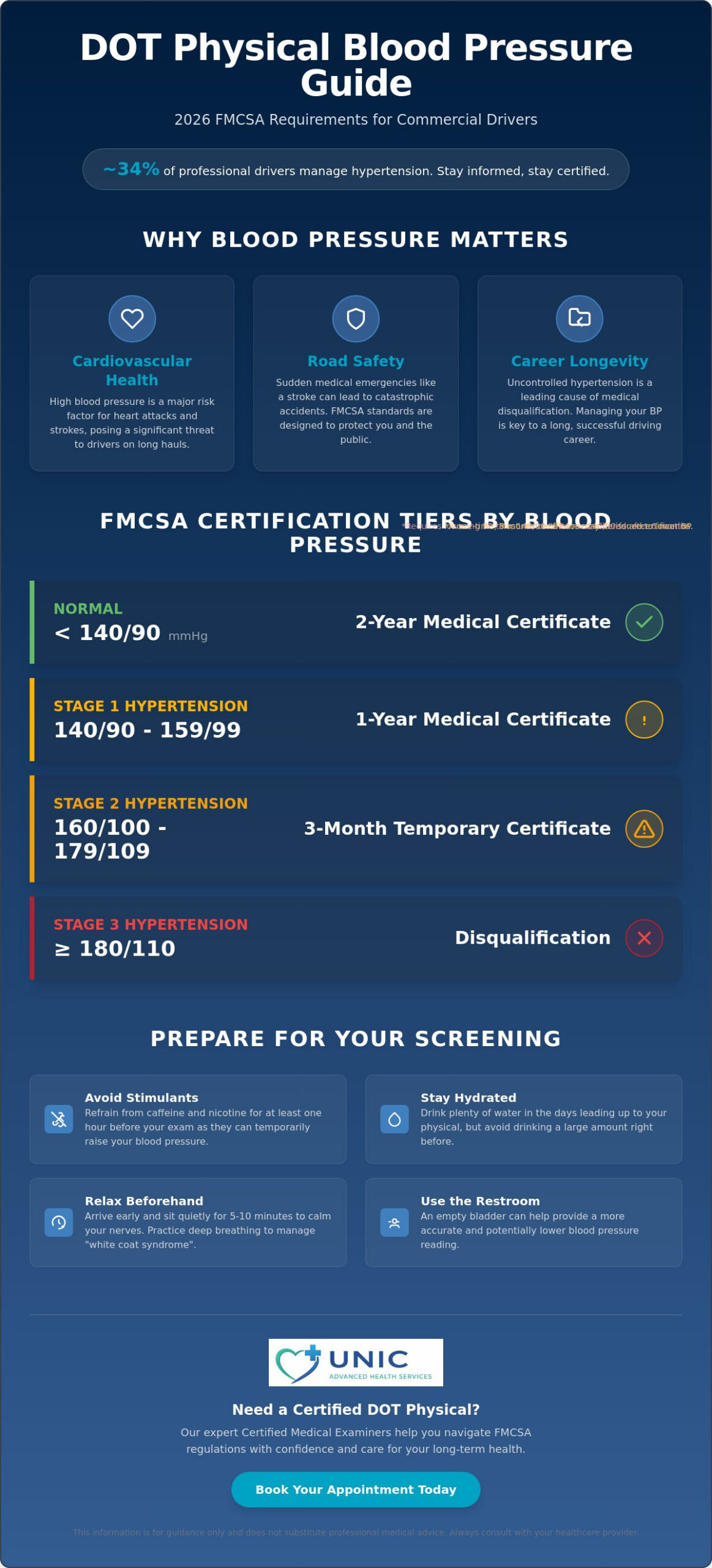
Understanding the 2026 standards requires a clear view of how the FMCSA categorizes your vital signs. Your certification length is directly tied to the severity of your blood pressure reading on the day of your exam. Many drivers assume that as long as they aren’t disqualified, they’ll receive the standard two-year card. However, a “passing” grade doesn’t always mean a two-year medical examiner’s certificate (MEC). The examiner evaluates two primary numbers: the systolic pressure, which measures the force when your heart beats, and the diastolic pressure, which measures the force between beats. Any reading of 140/90 or higher triggers a shortened certification period.
It’s helpful to view these tiers as a roadmap for your health rather than just a hurdle for your career. If you’re currently working on managing high blood pressure, knowing these specific thresholds allows you to prepare effectively. If you’re concerned about where your numbers fall, scheduling a professional DOT physical examination can provide the clarity you need to stay on the road.
Certification Lengths by Blood Pressure Reading
The DOT physical blood pressure requirements for 2026 are divided into clear categories that dictate how long you can drive before your next review:
- Normal (Under 140/90): If your numbers are below this threshold, you’re typically eligible for the standard two-year certification, provided no other medical issues are present.
- Stage 1 Hypertension (140-159 / 90-99): Drivers in this range are usually granted a one-year certification. This allows the medical examiner to monitor your health more closely. To be recertified for another year, you must bring your blood pressure down to 140/90 or less by your next exam.
- Stage 2 Hypertension (160-179 / 100-109): This reading results in a one-time, three-month temporary certification. It’s intended to give you a window to initiate treatment and stabilize your numbers.
Stage 3 Hypertension and Disqualification
Readings of 180/110 or higher are considered Stage 3 hypertension and result in immediate disqualification. This is a safety measure to prevent severe medical events while operating a commercial vehicle. If you’re disqualified, don’t lose hope; it’s a temporary status that can be resolved through medical intervention. You’ll need to work with a healthcare provider to lower your blood pressure to 140/90 or less. Once stabilized, you can be re-tested and may be eligible for a six-month certification. Consistent management is the key to regaining and maintaining your driving status after a Stage 3 reading.
Common Obstacles: White Coat Syndrome and Medication
Many drivers approach their appointment with a sense of dread, often fearing that a single high reading will end their career. This anxiety frequently manifests as “White Coat Syndrome,” a condition where blood pressure levels spike specifically within a clinical setting despite being normal elsewhere. It’s a common hurdle that can complicate meeting the DOT physical blood pressure requirements. Understanding how examiners navigate these situations is essential for your peace of mind.
While the numbers on the screen are important, modern evaluations are becoming more holistic. Examiners often look at your health history and medication consistency rather than relying solely on a single moment of stress. If you’re worried about how other health factors might affect your results, reviewing the 7 common reasons drivers fail their DOT physical can help you prepare for the full scope of the exam.
Overcoming White Coat Syndrome During the Exam
Managing nerves starts with small, intentional actions. Arriving at the clinic 15 to 20 minutes early allows your body to settle after the stress of traffic or parking. Practicing deep, rhythmic breathing can also signal your nervous system to relax. At Unic Advanced Health Services, we provide a supportive, low-stress environment designed to help you feel at ease. If your initial reading is high due to nerves, our policy typically allows for a short rest period followed by a re-test. This approach aligns with the guidance found in the FMCSA Medical Examiner’s Handbook, which encourages examiners to ensure readings are accurate and representative of the driver’s true health.
Driving While on Blood Pressure Medication
There’s a persistent myth that taking prescription medication will automatically disqualify you. In reality, the FMCSA views successful medication management as a positive step toward road safety. However, medicated drivers are generally limited to a one-year certification maximum to ensure consistent oversight. It’s crucial to bring documentation of your current treatment plan and any noted side effects. You should never stop taking your medication in an attempt to “test lower” on the day of the exam. Abruptly halting treatment can lead to dangerous spikes in pressure and is a significant health risk. Your examiner evaluates how well your hypertension is controlled and whether the medication causes symptoms like dizziness or fatigue that could impair your driving. Maintaining a steady partnership with your healthcare provider ensures that your treatment remains effective and your certification stays valid.
Practical Tips to Prepare for Your Blood Pressure Screening
Success during your examination isn’t just about the five minutes you spend with the blood pressure cuff. Real preparation starts days before you walk into the exam room in Fort Lauderdale. By taking intentional steps to stabilize your cardiovascular system, you significantly improve your chances of meeting the DOT physical blood pressure requirements. For a broader look at total exam readiness, reviewing our how to prepare for your DOT physical checklist can provide a structured roadmap for your health.
The 24-Hour Preparation Protocol
The 24 hours leading up to your appointment are critical for achieving an accurate reading. Stimulants like coffee, energy drinks, and tobacco are known to cause temporary spikes in blood pressure. We recommend avoiding these substances for at least two hours before your screening. Diet also plays a major role; a high-salt meal the night before can cause your body to retain fluid, which often leads to an elevated reading. Instead, focus on lean proteins and fresh vegetables. Don’t underestimate the power of a good night’s sleep. Adequate rest allows your body to regulate stress hormones, keeping your cardiovascular system calm and ready for evaluation. If you’re ready to ensure your health is on the right track, you can schedule your DOT physical examination today to secure your medical certification.
What to Expect at the Clinic
When you arrive at the clinic, the environment is designed to help you succeed. One of the most effective techniques we use is the five-minute rest rule. You’ll be asked to sit quietly without distractions before the examiner applies the cuff. This brief period of stillness helps your heart rate settle and provides a more representative measurement of your resting blood pressure. During the consultation, you’ll provide a complete medical history to Marc Joseph, NP. This transparency is vital because it allows the examiner to use clinical judgment and understand the context behind your numbers. Being honest about your health history prevents surprises and helps the provider advocate for your certification. For a more detailed look at the entire process, read our what to expect walkthrough to eliminate any lingering anxiety about your visit.
Expert DOT Physicals and Hypertension Care in Fort Lauderdale
Unic Advanced Health Services specializes in keeping commercial drivers on the road through thorough and expert evaluations. We understand that your medical certificate is the lifeblood of your career, and we take that responsibility seriously. Led by Marc Joseph, an autonomous nurse practitioner with extensive experience in chronic disease management, our clinic bridges the gap between simply “passing the test” and achieving true cardiovascular health. We recognize that your schedule is demanding; therefore, we offer convenient Saturday appointments in Fort Lauderdale to ensure you never have to choose between your paycheck and your medical certification.
Our approach is rooted in stability and thoroughness. We don’t just look at a single reading; we look at the driver as a whole person. By providing a supportive and welcoming atmosphere, we help alleviate the anxiety often associated with clinical exams. This steady hand is exactly what drivers need when navigating the complexities of 2026 health regulations and the specific DOT physical blood pressure requirements that govern their livelihood.
Personalized Chronic Condition Management
We don’t just test your vitals; we help you manage hypertension long-term to protect your CDL. Our on-site lab services provide immediate diagnostics and health tracking, allowing for a comprehensive view of your wellbeing without the need for multiple trips to different facilities. Seeing an NP who understands both strict regulatory requirements and the nuances of primary care gives you a significant advantage. Marc Joseph provides actionable strategies to keep your numbers within the necessary DOT physical blood pressure requirements year after year. This proactive problem-solving approach ensures that chronic conditions become manageable parts of your life rather than roadblocks to your employment. It’s a collaborative relationship designed for longevity and reliability.
Finding a trusted healthcare provider is essential for all aspects of your wellness, whether for DOT exams or general health; for example, if you are looking for oral health specialists, you can check out U-First Dental Care for a guide on selecting the right provider for your needs.
Book Your DOT Physical in Fort Lauderdale
Our clinic provides professional, compassionate medical evaluations with transparent pricing and professional standards. We’re located conveniently for drivers in Fort Lauderdale and the surrounding Florida communities, offering a modern facility that values your time and peace of mind. We believe that every driver deserves a healthcare partner who is a reliable advocate for their well-being. If you’re looking for more details on our specific location, service hours, and what makes our evaluations different, explore our DOT physical exam Fort Lauderdale pillar guide. Don’t let health concerns stall your career. Let us help you maintain your compliance through expert care and dedicated oversight.
Secure Your Career with Proactive Health Management
Navigating the DOT physical blood pressure requirements doesn’t have to be a source of anxiety. By understanding the 2026 FMCSA tiers and implementing a solid preparation protocol, you can approach your exam with complete confidence. Remember that successful blood pressure management is a long-term strategy that protects both your cardiovascular health and your commercial driver’s license. Professional guidance ensures that you aren’t just meeting a regulatory standard but are actively investing in your future on the road.
Our clinic is here to serve as your dedicated healthcare partner. Schedule your DOT physical with Marc Joseph, NP, in Fort Lauderdale today. Led by an autonomous nurse practitioner specialized in chronic disease management, we provide the thorough evaluations and individualized attention you deserve. We offer convenient Saturday appointments to accommodate your demanding schedule, making it easier than ever to prioritize your compliance and peace of mind.
Your commitment to road safety is vital, and we’re here to support you every mile of the way. We look forward to helping you stay healthy and keep your career moving forward.
Frequently Asked Questions
Can I pass a DOT physical if my blood pressure is 150/95?
Yes, you can pass with a reading of 150/95, but your certification will likely be limited to one year. This reading falls into Stage 1 hypertension, which requires more frequent monitoring than a standard two-year card. To qualify for a longer duration in the future, you’ll need to work with your healthcare provider to bring your numbers below 140/90.
What happens if I fail the blood pressure portion of the DOT physical?
The outcome depends on your specific tier if your readings exceed the DOT physical blood pressure requirements for a two-year card. A Stage 2 reading (160-179/100-109) typically results in a one-time, three-month certificate to allow for treatment. However, Stage 3 readings (180/110 or higher) are immediately disqualifying until your levels are stabilized and brought back down to safe limits.
How long does a 1-year DOT medical card last if my BP is high?
A one-year DOT medical card lasts exactly 12 months from the date of your examination. This shortened certification is common for drivers with Stage 1 hypertension or those managing their condition with medication. Once the card expires, you must undergo a new physical and demonstrate that your blood pressure is controlled to maintain your driving status.
Can I take blood pressure medication and still get a 2-year DOT card?
No, drivers who use medication to control hypertension are generally capped at a one-year certification. Even if your reading is below 140/90 while on medication, the FMCSA guidelines prioritize annual monitoring to ensure your treatment remains effective. This oversight helps maintain safety for both you and other motorists on the road by checking for medication side effects.
Is there a “grace period” for Stage 3 hypertension?
There’s no grace period for Stage 3 hypertension during your screening. A reading of 180/110 or higher is considered a medical emergency in a driving context and leads to immediate disqualification. You won’t be able to drive commercially until you’ve sought medical treatment and your blood pressure is documented at 140/90 or lower during a follow-up exam.
Does the DOT examiner check my blood pressure more than once?
Yes, examiners often check your blood pressure multiple times if the initial reading is elevated. We understand that stress or “white coat syndrome” can cause temporary spikes. If your first reading is high, we’ll typically allow you to rest for several minutes in a calm environment before attempting a second measurement to ensure the result is accurate.
Can I use a “waiver” for high blood pressure?
No, the FMCSA doesn’t offer medical waivers or exemptions for high blood pressure. Unlike certain vision or hearing impairments, hypertension must be managed through lifestyle changes or medication to meet the DOT physical blood pressure requirements. Compliance is the only path to certification, as uncontrolled blood pressure is viewed as a significant safety risk for commercial vehicle operation.
What should I avoid eating before my DOT blood pressure test?
You should avoid high-sodium meals, caffeine, energy drinks, and tobacco for at least 24 hours before your test. Salt causes your body to retain fluid, which can artificially inflate your numbers. Similarly, stimulants like nicotine and coffee can cause immediate, temporary spikes that might push a borderline reading into a more restrictive and shorter certification tier. Drivers who want a complete overview of all the medical standards they’ll face can benefit from reviewing a comprehensive guide on how to pass DOT physical exam requirements, covering everything from blood pressure to vision and beyond.