
Imagine pulling into a clinic after a long haul, only to find that a single high blood pressure reading has put your entire career on pause. For many commercial operators, the anxiety of “white coat syndrome” is just as real as the physical symptoms themselves. Understanding the common reasons drivers fail DOT physical is the first step toward securing your livelihood. Whether you’re worried about 2026 FMCSA regulations or the recent shift to the National Registry II electronic filing system, feeling prepared is the best way to lower your stress and your heart rate.
We understand that your medical card is more than just a piece of paper; it’s your ticket to staying on the road. You deserve a healthcare partner who views the exam as a collaborative effort rather than a hurdle. This guide will walk you through the primary medical disqualifiers, from hypertension thresholds to updated vision standards. By learning how to manage chronic conditions proactively, you can aim for that coveted two-year certification. We’ll also show you how to find a supportive medical examiner in Fort Lauderdale who prioritizes your long-term health and professional stability.
- Distinguish between temporary medical holds and permanent disqualifications to reduce exam-day anxiety and protect your professional future.
- Identify how proactively managing hypertension, diabetes, and sleep apnea addresses the most common reasons drivers fail DOT physical evaluations.
- Verify your vision and hearing against the latest 2026 FMCSA standards to ensure you meet all clinical requirements before your appointment.
- Adopt a 24-hour preparation strategy that focuses on hydration and dietary adjustments to support stable vital signs during your medical assessment.
- Learn the benefits of partnering with a dedicated medical examiner in Fort Lauderdale who provides a supportive, patient-first approach to regulatory compliance.
The Truth About Failing Your DOT Physical: Myth vs. Reality
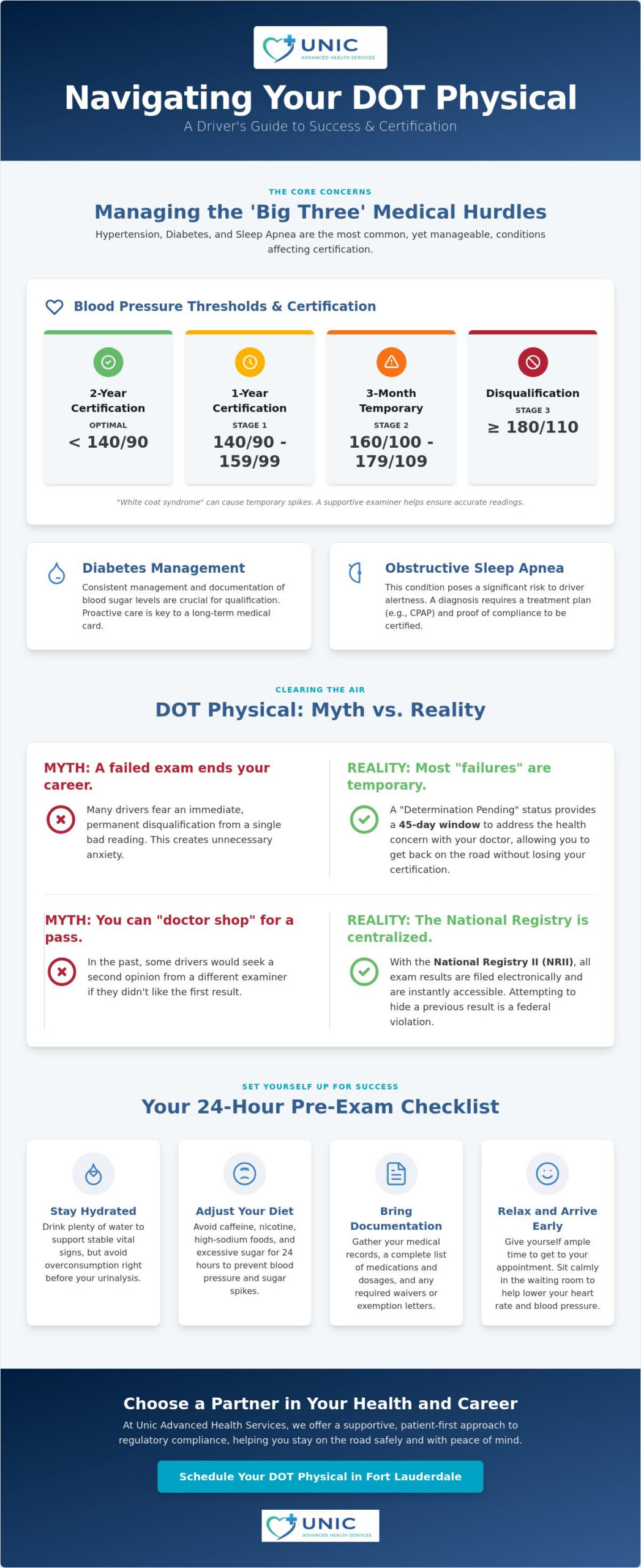
Many drivers approach the medical examiner’s office with a sense of dread, fearing that a single health irregularity will end their career on the spot. This is a common misconception. While there are specific reasons drivers fail DOT physical assessments, the vast majority of “failures” are actually temporary holds. Modern medical examiners view themselves as your health advocate rather than a rigid gatekeeper. Their clinical objective is to ensure you can safely operate a commercial vehicle while helping you manage your long-term well-being.
Under the 2026 FMCSA standards, the DOT physical examination is a structured process designed to identify manageable risks. If an examiner finds an issue, such as elevated blood pressure, they often use a “Determination Pending” status. This isn’t a career-ending move; it’s a clinical pause that allows you to address the condition without losing your certification immediately. It’s a supportive approach that prioritizes driver health and road safety simultaneously.
To better understand this concept, watch this helpful video:
Permanent vs. Temporary Disqualifications
True permanent disqualifications are rare and typically involve conditions that cannot be mitigated by medication or medical devices, such as profound hearing loss that fails audiometric testing or certain vision deficits that don’t qualify for a federal waiver. Most other issues fall under temporary disqualification. If your examiner places you in “Determination Pending” status, you have a 45-day window to resolve the concern. This might involve getting a new prescription for glasses or starting a blood pressure protocol. The 2026 guidelines focus heavily on condition management, meaning that as long as you are proactive, you can usually stay behind the wheel.
The ‘Doctor Shopping’ Myth
Some drivers believe that if one examiner identifies a problem, they can simply visit another doctor for a “second opinion” to get a pass. In 2026, this practice is extremely risky. With the full implementation of the National Registry II (NRII) system, medical examiners must submit results electronically by the next calendar day. This creates a transparent digital record that the FMCSA and state licensing agencies can access instantly. Attempting to hide a previous disqualification is considered a federal violation. Instead of shopping for an easy pass, the best strategy is to partner with a consistent provider who understands your medical history and can help you navigate the specific reasons drivers fail DOT physical exams before they become a problem.
Managing the ‘Big Three’: Hypertension, Diabetes, and Sleep Apnea
Hypertension, diabetes, and obstructive sleep apnea represent the most frequent medical hurdles for commercial drivers. These conditions are not necessarily barriers to employment, but they require consistent oversight to meet the official DOT physical exam standards. Effective chronic care management can transform a stressful three-month temporary certificate into a stable one or two-year card. By addressing these health markers early, you eliminate the primary reasons drivers fail DOT physical evaluations.
Blood Pressure Thresholds for 2026
High blood pressure is the leading cause of medical deferrals and shortened certifications. The DOT physical blood pressure requirements for a standard 2-year medical card set the limit at 140/90 or lower. If your reading falls between 140/90 and 159/99, you are classified as Stage 1 and will likely receive a one-year certification. Stage 2 readings, up to 179/109, result in a one-time, three-month card to allow for medical stabilization. Stage 3 readings of 180/110 or higher lead to immediate disqualification until the condition is brought under control. We recognize that “white coat syndrome” often causes spikes during the exam. Our team at Unic Advanced Health Services uses a calming, patient-first approach to ensure your readings are as accurate and relaxed as possible.
Diabetes and Insulin Regulations
For drivers with insulin-treated diabetes mellitus (ITDM), the regulatory landscape has become more streamlined. You no longer need a complex federal waiver; instead, you must have your treating clinician complete Form MCSA-5870. While a finger-prick test checks your immediate sugar levels, examiners in 2026 place much higher value on your A1C results. A target A1C below 10% demonstrates long-term control and compliance. Utilizing on-site lab services before your official appointment allows you to track these numbers and make necessary adjustments to your treatment plan without the pressure of a deadline.
Sleep Apnea Compliance
Obstructive sleep apnea (OSA) is a growing focus due to its link to driver fatigue and road safety. Examiners typically look at risk factors like a high BMI or a large neck circumference to determine if a sleep study is necessary. If you’ve been diagnosed with OSA, your certification depends on your CPAP compliance data. You must show you’ve used the device for at least four hours per night for 70% of the time. Bringing a printed usage report from the last 30 to 90 days is essential for a smooth pass. This data proves you are managing the condition effectively, which addresses one of the common reasons drivers fail DOT physical requirements when they arrive unprepared.
Vision, Hearing, and Medications: The ‘Hidden’ Reasons for Failure
While hypertension and diabetes often take the spotlight, sensory requirements and pharmaceutical profiles are equally critical. These are frequently the “hidden” common medical reasons for failure that catch drivers off guard. A driver might feel perfectly healthy but discover their vision or hearing has subtly declined since their last renewal. Understanding these nuances helps you avoid a “Determination Pending” status or an outright disqualification during your appointment. We focus on these details to ensure your transition back to the road is as smooth as possible.
To pass the vision portion, you must have at least 20/40 acuity in each eye and both eyes together. This applies whether you use corrective lenses or not. You also need a field of vision of at least 70 degrees in the horizontal meridian in each eye. Hearing is typically assessed via a “forced whisper” test from five feet away. If you can’t hear the whisper in at least one ear, don’t panic. You’ll move to audiometric testing. In this secondary test, your hearing loss cannot be greater than 40 decibels at 500 Hz, 1,000 Hz, and 2,000 Hz.
The assumption that any medication prescribed by a doctor is safe for CDL operation is a dangerous myth. Certain drugs interfere with cognitive function or reaction times, making them incompatible with commercial driving. If you’re taking high-risk medications, you’ll need a detailed letter from your treating physician. This letter must explicitly state that the medication doesn’t impair your ability to operate a commercial vehicle safely. This documentation is one of the most effective ways to address the specific reasons drivers fail DOT physical exams related to pharmacy records.
Disqualifying and High-Risk Medications
Federal regulations remain strict regarding narcotics, certain anti-seizure medications, and high-dose benzodiazepines. Even in 2026, as state laws continue to shift, medical marijuana remains a federal disqualifier for all CDL holders. There’s no exception for “medical” use under current FMCSA rules. To streamline your exam, prepare a comprehensive list of all medications, including dosages and the prescribing doctor’s contact information. This transparency prevents administrative delays and shows your examiner that you’re managing your health responsibly.
Vision and Hearing Waivers
If you have monocular vision or significant hearing loss, you aren’t necessarily barred from the road. The FMCSA provides an alternative vision standard and specific hearing waivers, though the application process requires precise clinical evidence and periodic renewals. In 2026, these pathways are more accessible than in previous years, but they demand careful documentation. It’s often beneficial to schedule an annual physical exam Fort Lauderdale before your DOT date. This allows you to update your prescriptions and identify any sensory changes in a low-pressure environment, ensuring you’re fully prepared for the official test.
Your Pre-Exam Strategy: How to Avoid a Disqualification
Preparation is the most effective tool for overcoming the common reasons drivers fail DOT physical examinations. A successful exam begins long before you step into the clinic. By implementing a focused 24-hour strategy, you can stabilize your vital signs and ensure your documentation is in perfect order. This proactive approach transforms the exam from a source of anxiety into a routine administrative step in your professional career. Our goal is to provide you with a steady hand through this process, ensuring you feel confident and capable.
The 24-hour rule is essential for managing your blood pressure and heart rate. You should avoid caffeine, nicotine, and high-sodium foods for at least a full day before your appointment. These substances are known to cause temporary spikes that might lead to a shortened certification or a “Determination Pending” status. Instead, focus on deep hydration and restorative rest. Drinking plenty of water helps flush your system and supports a healthy urinalysis result. These simple lifestyle adjustments are often the difference between a one-year and a two-year medical card. For a deeper understanding of exactly what readings are acceptable at each stage, review the complete DOT physical blood pressure requirements for 2026 before your appointment.
Gathering your paperwork in advance prevents the most common administrative delays. If you manage a chronic condition, ensure you have recent specialist clearances, CPAP compliance reports, or federal exemption letters ready for review. We often suggest a pre-screening visit with your primary care provider several weeks before your expiration date. This informal checkup allows you to identify potential issues and adjust your management plan before the official FMCSA record is created in the National Registry II system. Drivers who want a comprehensive overview of the entire process can benefit from reviewing a detailed guide on how to pass DOT physical exam requirements well in advance of their certification date.
The Morning of the Exam
Consistency is key on the day of your test. Take your regular blood pressure or maintenance medications exactly as prescribed. Skipping a dose out of nervousness is a frequent mistake that leads to elevated readings during the evaluation. Drink a large glass of water an hour before your appointment to ensure you can provide a sample for the urinalysis, which checks for protein, blood, and sugar. Arriving at the clinic 15 minutes early allows you to settle into the environment, effectively reducing the impact of “white coat” stress spikes that can skew your results.
Using a Checklist for Success
Organization reduces the risk of oversight and keeps your stress levels low. You can refer to our how to prepare for DOT physical guide for a comprehensive list of required documents and clinical expectations. You can also perform simple self-checks at home to gauge your readiness. Test your vision with a standard chart and ask a family member to perform a whisper test from five feet away. These small, practical steps ensure you meet the basic sensory requirements before the official clinical evaluation begins.
Ready to secure your medical card with a supportive team that understands your livelihood? Book your DOT physical examination today to experience our patient-first approach and professional expertise.
Partnering with a Certified Medical Examiner in Fort Lauderdale
Choosing the right medical examiner is a strategic decision for your professional longevity. At Unic Advanced Health Services, we offer a Nurse Practitioner-led environment that balances clinical precision with genuine compassion. We understand that the specific reasons drivers fail DOT physical evaluations are often manageable with the right guidance and professional support. Our “Steady Hand” approach provides a calming atmosphere that helps mitigate the stress of the exam day. We combine this attentive care with modern efficiencies, such as on-site lab work and flexible scheduling, to ensure your certification process is as smooth as possible.
Convenience is a cornerstone of our service for commercial drivers in Broward County. We recognize that your time on the road is valuable. This is why we offer Saturday appointments to accommodate your busy haul schedules. Our facility is equipped with on-site diagnostic tools, which allows us to perform necessary screenings without referring you to outside labs. This integrated approach saves you time and ensures that your medical data is handled with the highest level of oversight. We are here to be your long-term partner in health, helping you navigate the complexities of federal regulations with confidence and peace of mind.
Beyond the Certification
Our clinical focus extends far beyond the moment you receive your medical card. We provide comprehensive chronic care management to help you improve your vital signs and overall wellness year-round. If an issue like elevated glucose or blood pressure is detected, our on-site diagnostics help us resolve the “Determination Pending” status quickly. This proactive management ensures that you aren’t just passing a test; you’re building a healthier foundation for your future. As a local Fort Lauderdale provider, we maintain an intimate knowledge of FMCSA requirements to protect your professional standing and address the common reasons drivers fail DOT physical exams before they arise.
Schedule Your DOT Physical Today
Taking the next step toward your 2026 certification is simple and transparent. We offer an easy online booking process tailored for drivers who need reliable, professional evaluations without the administrative headache. Our clinic is committed to affordable pricing for all occupational exams, ensuring you receive expert care at a fair value. We take pride in supporting the men and women who keep our economy moving by providing a stable and supportive healthcare home. Book your DOT physical exam in Fort Lauderdale today and experience the difference of a patient-first medical partner.
Secure Your Professional Future on the Road
Your medical certification is the foundation of your career. By understanding the common reasons drivers fail DOT physical, you can take control of your health before you ever sit in the exam chair. Most clinical concerns, from blood pressure spikes to medication reviews, are manageable hurdles rather than dead ends. A proactive preparation strategy and organized documentation are your best tools for a successful outcome. You don’t have to face these regulations alone; having a dedicated medical partner makes the entire process predictable and stress-free.
At Unic Advanced Health Services, led by Marc Joseph, an Autonomous Nurse Practitioner, we provide the steady hand you need to stay road-ready. We offer Saturday appointments to fit your haul schedule and provide on-site lab services for immediate results. Our team is committed to your long-term health and professional stability. Schedule Your DOT Physical with Unic Advanced Health Services today. We look forward to supporting your journey and helping you drive with confidence.
Frequently Asked Questions
Can I pass a DOT physical with high blood pressure?
Yes, you can pass with high blood pressure, but the length of your certification depends on your specific readings. A reading below 140/90 allows for a standard two-year medical card. If your pressure falls between 140/90 and 159/99, you’ll likely receive a one-year certification. Higher readings typically result in a one-time three-month card to allow for medical management and stabilization.
What medications will automatically disqualify me from a CDL?
Certain medications that impair cognitive function or reaction times are automatic disqualifiers under federal law. These include methadone, various narcotics, and specific anti-seizure medications used to prevent episodes of loss of consciousness. While many prescriptions are acceptable with a clearance letter from your treating physician, high-dose benzodiazepines are often restricted. It’s essential to provide a complete list of your current prescriptions to avoid delays during your evaluation.
Is a sleep apnea test mandatory for all drivers in 2026?
A sleep apnea test is not mandatory for every driver but is required if you meet specific clinical risk criteria. Examiners evaluate factors such as a Body Mass Index (BMI) over 40 or a large neck circumference during the physical. If these indicators suggest a high risk for obstructive sleep apnea, you’ll be referred for a sleep study to ensure you don’t suffer from excessive fatigue while on the road.
What happens if protein or sugar is found in my urine sample?
Finding protein or sugar in your urine doesn’t mean you automatically fail, but it does require a clinical investigation. These markers can indicate underlying issues like kidney stress or undiagnosed diabetes. Your examiner will likely perform additional screenings or ask for a follow-up with your primary care provider. Resolving these concerns is important because they are common reasons drivers fail DOT physical assessments when left unmanaged.
Can I use medical marijuana if I have a state-issued card?
No, you cannot use medical marijuana as a commercial driver even if you possess a valid state-issued card. Because the DOT physical is governed by federal law, marijuana remains a disqualifying controlled substance. Testing positive for THC during a required screening will lead to disqualification. Federal regulations don’t currently recognize medical exceptions for safety-sensitive transportation roles, regardless of individual state laws.
How long does a ‘Determination Pending’ status last?
A “Determination Pending” status can last for up to 45 days from the date of your initial examination. This window provides you with the necessary time to resolve specific medical concerns, such as obtaining a specialist’s clearance or adjusting a prescription. If the required documentation isn’t submitted within this 45-day period, the examination expires in the National Registry system, and you’ll need to undergo a completely new exam.
Do I need a new physical if I move to Florida from another state?
You don’t need a new physical if your current medical card is still valid and was performed by a certified examiner on the National Registry. However, you must register your current certificate with the Florida Department of Highway Safety and Motor Vehicles when you transfer your CDL. Many drivers find it helpful to schedule a local exam to establish a relationship with a provider who understands Florida’s specific administrative requirements.
What should I bring if I have a history of heart surgery or stents?
You must bring a formal clearance letter from your cardiologist and a copy of your most recent stress test results, typically performed within the last 12 to 24 months. The examiner needs to verify that your heart function meets the specific stroke volume and recovery standards required for commercial operation. Having these documents ready prevents administrative holds and addresses one of the primary reasons drivers fail DOT physical reviews during the cardiac assessment.