
What if the difference between keeping your CDL and a stressful “medical fail” isn’t your overall health, but simply how you managed your morning coffee or organized your paperwork? It’s completely natural to feel a surge of anxiety as your exam date approaches. You’ve worked hard for your career, and the fear of a temporary high blood pressure reading or a missing specialist letter standing in your way is a heavy burden to carry. We understand that your livelihood depends on this certification.
This guide provides a definitive 2026 checklist on how to prepare for DOT physical exams, ensuring you arrive at the clinic with the right documentation and a body that reflects your true health. By following these expert-backed steps, you can manage your health markers effectively and handle the new National Registry II electronic reporting system with ease. We’ll walk through exactly which records to bring, how to stabilize your vitals in the 48 hours before your appointment, and how to ensure a stress-free exam experience.
Key Takeaways
- Understand the safety-sensitive nature of the FMCSA evaluation and why your specific health history is critical for maintaining your commercial driving status.
- Learn how to prepare for DOT physical exams by organizing a comprehensive list of medications and specialty medical records to prevent administrative delays.
- Discover actionable lifestyle adjustments to implement 48 hours before your exam to help stabilize blood pressure and blood sugar readings.
- Master the logistics of your appointment day, including timing strategies to reduce stress and the correct way to prepare for the required urinalysis.
- Gain the advantage of working with a provider who understands the unique challenges of the driver’s lifestyle and prioritizes long-term health partnership.
Understanding the 2026 DOT Physical Requirements
The DOT physical is a safety-sensitive medical evaluation required by the Federal Motor Carrier Safety Administration (FMCSA). It serves a vital purpose: ensuring that commercial drivers possess the physical and mental stability to operate heavy vehicles without medical interference. While many view it as a hurdle, the DOT physical is a comprehensive wellness and safety verification rather than just a test. This examination looks at your long-term health through the lens of public safety, checking for conditions that could lead to sudden incapacitation on the road. If you want a detailed breakdown of each stage of the evaluation, our guide on what to expect at DOT physical appointments provides a thorough 2026 walkthrough of every clinical benchmark you’ll encounter.
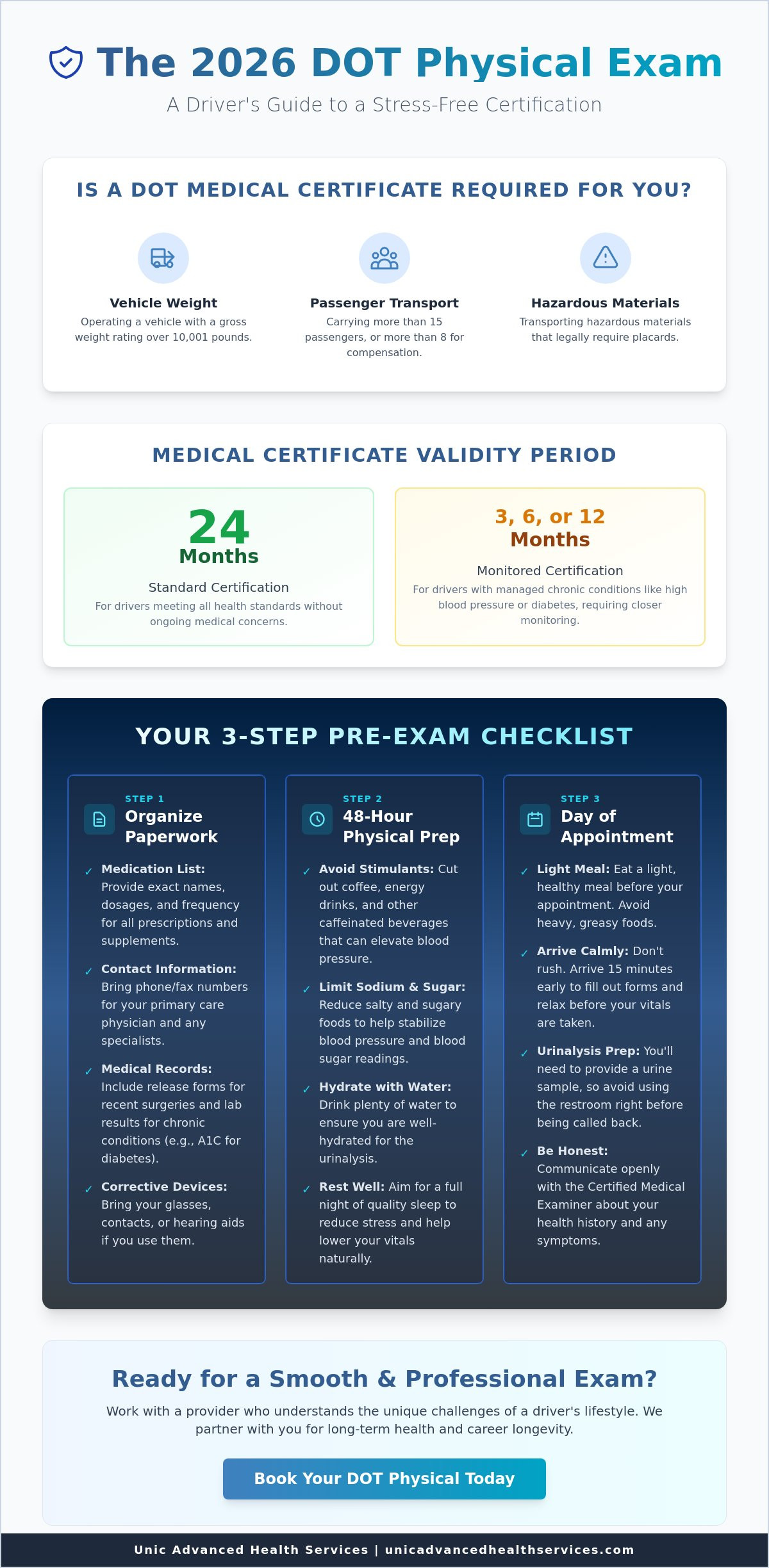
Most drivers receive a medical certificate valid for 24 months. However, if you manage chronic conditions like high blood pressure or diabetes, your certification cycle might be shortened to 12, 6, or even 3 months. This allows your provider to monitor your health markers more closely and ensure your condition remains stable. Understanding these nuances is the first step in learning how to prepare for DOT physical exams effectively. Knowing the most common reasons drivers fail DOT physical evaluations can help you address potential disqualifiers before you ever walk through the clinic door.
To better understand this concept, watch this helpful video:
Who Needs a DOT Medical Certificate?
Commercial drivers must hold a valid medical certificate if they operate vehicles with a gross weight rating over 10,001 pounds or transport hazardous materials requiring placards. This requirement also extends to those carrying more than 15 passengers, or more than 8 passengers for compensation. In Florida, the distinction between interstate and intrastate commerce is vital. Interstate drivers must meet federal standards to maintain their Commercial Driver’s License (CDL), while intrastate drivers follow state-specific guidelines that often mirror federal rules but may have unique exemptions.
The Role of the Certified Medical Examiner (CME)
Your examination must be performed by a provider listed on the National Registry of Certified Medical Examiners. These professionals are specifically trained to understand FMCSA regulations and how medical conditions impact driving safety. Choosing an autonomous nurse practitioner for your exam offers a distinct advantage. This type of provider combines clinical expertise with a personalized, patient-first perspective, helping you navigate complex requirements without the stress of a detached environment. The CME acts as a steady hand, balancing the strict demands of federal safety with a genuine commitment to your individual well-being and career longevity.
Essential Documentation: Your Paperwork Preparation Checklist
Arriving at your appointment without the necessary records is the fastest way to delay your certification. When you are learning how to prepare for DOT physical requirements, organization is your best defense against a “pending” status or temporary disqualification. A pending status occurs when the examiner cannot make a final decision because critical data is missing. This delay can keep you off the road and disrupt your livelihood, so gathering your documents at least a week in advance is a wise strategy.
The most common oversight is a missing medication list. You must provide the exact name, dosage, and frequency of every medication you take. This includes over-the-counter supplements and prescription drugs. You also need the contact information for your primary care physician and any specialists you see regularly. If you’ve had recent surgeries or hospitalizations, bring official medical release forms. These documents should clearly state that you are cleared to return to work without restrictions and that your recovery is complete.
Following the official guidelines for a DOT physical exam ensures that your paperwork matches current federal standards. Being proactive allows you to address potential red flags before they become obstacles. It’s better to have too much documentation than to leave the clinic empty-handed because of a missing specialist letter.
Special Requirements for Chronic Conditions
If you manage a long-term health issue, specific data is required to prove your condition is under control. For diabetes, bring your most recent A1C lab results, ideally from within the last 90 days. Drivers with sleep apnea must provide a 90-day CPAP compliance report to show they are using the device as prescribed for at least four hours per night. If you have a history of heart conditions, bring your latest stress test results or a formal clearance letter from your cardiologist. If you need help gathering these records or managing your health markers, our team provides specialized Chronic Condition Management to help you stay compliant and healthy.
Vision and Hearing Aids
Physical tools are just as important as paperwork. Always bring your glasses or contact lenses, even if you only use them for reading or night driving. You must pass the vision test with at least 20/40 acuity in each eye, with or without correction, to qualify. For the hearing portion, often called the “whisper test,” ensure your hearing aids are fully charged or have fresh batteries. Small technical failures, like a dead battery, can lead to unnecessary stress during the evaluation. Pass these tests with confidence by ensuring your equipment is in peak condition before you walk through the clinic door.
Physical Preparation: Managing Blood Pressure and Blood Sugar
High blood pressure remains the primary reason drivers receive short-term medical certificates instead of the full two-year card. A reading above the threshold often results in a three-month temporary certificate. This adds administrative stress and extra costs to your schedule. Learning how to prepare for DOT physical evaluations involves more than just bringing papers; it requires managing your body’s vitals so they reflect your baseline health rather than a moment of stress.
Many drivers experience “White Coat Syndrome.” This is a condition where anxiety about the medical environment causes a temporary spike in blood pressure. Because of this, your physical preparation should begin at least 48 hours before your appointment. It’s essential to understand that DOT physical blood pressure requirements are strict. They typically require a reading under 140/90 for a standard certification. By stabilizing your routine early, you give your body the best chance to remain calm and compliant. Reviewing the key reasons drivers fail DOT physical screenings, including hypertension thresholds and updated vision standards, can help you target your preparation where it matters most.
The 24-Hour Diet and Lifestyle Protocol
Your choices in the day leading up to the exam have a direct impact on your numbers. Eliminate high-sodium foods like processed meats, canned soups, and fast food. Sodium causes fluid retention. This retention can artificially inflate your blood pressure readings. You should also avoid caffeine, nicotine, and energy drinks for at least 24 hours. These stimulants increase your heart rate and can cause significant BP spikes during the vitals check. Finally, prioritize seven to eight hours of restful sleep. A tired body is often a stressed body. Adequate rest ensures your cardiovascular system is in a stable, restful state.
Medication Compliance
Consistency is vital when managing chronic conditions. Do not skip your blood pressure or diabetes medication on the morning of your exam. Some drivers mistakenly believe they should show their “natural” levels, but the examiner needs to see that your condition is well-controlled. Take your prescriptions at their usual time. Additionally, hydrate exclusively with water. Avoid sugary juices or sodas. These can lead to elevated glucose levels in your urine sample, which may trigger further testing. Drinking plenty of water helps you provide the required sample while keeping your system balanced. This proactive approach is a core part of how to prepare for DOT physical exams successfully.
The Day of Your Appointment: A Step-by-Step Readiness Guide
The morning of your appointment often brings a mix of anticipation and nerves. While you have already done the hard work of managing your diet and gathering paperwork, your actions on the day of the exam are just as critical. Arriving at the clinic at least 15 minutes early is a simple yet effective strategy to reduce stress-induced blood pressure spikes. This extra time allows you to settle into the environment, catch your breath, and complete any remaining forms without feeling rushed. When you know how to prepare for DOT physical logistics, you turn a potentially high-stress event into a routine check-in.
Dress in loose-fitting clothing that allows you to move easily. This is practical for the physical assessment and ensures that the blood pressure cuff can be placed directly on your arm without tight sleeves interfering with the reading. Additionally, you should arrive with a full bladder. Every DOT physical requires a urine “dipstick” test. This isn’t a drug test; rather, it is a screening for protein, blood, and sugar, which helps the examiner detect underlying issues like kidney stress or undiagnosed diabetes. Avoid over-hydrating with sugary sodas or energy drinks before you arrive, as these can lead to false-positive sugar readings.
The Step-by-Step Exam Sequence
Understanding the flow of the appointment helps demystify the process and keeps you calm. For a comprehensive overview of what to expect at DOT physical evaluations from start to finish, including the 2026 FMCSA standards and National Registry II electronic reporting updates, our detailed walkthrough covers every step. Most exams follow a methodical sequence to ensure thoroughness and regulatory compliance:
- Step 1: Health History Review. You’ll complete or review your health history form, discussing any chronic conditions or past surgeries with your provider.
- Step 2: Vitals Assessment. The clinical team will record your blood pressure, pulse, height, and weight.
- Step 3: Vision and Hearing Screenings. You’ll perform a standard eye chart test and a “whisper test” to ensure your senses meet FMCSA safety standards.
- Step 4: Physical Exam and Urinalysis. The examiner performs a head-to-toe evaluation and checks your urine sample for specific health markers.
Fort Lauderdale Driver Logistics
Navigating to your appointment shouldn’t be the hardest part of your day. Our office is conveniently located on US-1/Federal Hwy, offering easy parking that accommodates the busy schedules of commercial drivers. We recognize that your time on the road is valuable, which is why we offer Saturday availability for those who can’t make it during the standard work week. If you have broader health goals, it’s helpful to know that our annual physical exam Fort Lauderdale can sometimes be coordinated with your occupational health needs for a truly comprehensive wellness experience. To ensure your seat behind the wheel remains secure, book your DOT Physical Examination with a team that respects your profession and your peace of mind.
Why Choose Unic Advanced Health Services for Your DOT Physical?
Choosing a provider is about more than just finding the nearest clinic. It’s about finding a dedicated partner who recognizes the unique demands of your profession. At Unic Advanced Health Services, we understand the long hours and nutritional challenges that come with life on the road. Led by Marc Joseph, an autonomous nurse practitioner specializing in chronic care, our practice offers a steady hand to guide you through complex federal regulations. We provide affordable flat-fee pricing for both DOT and USCG Boat Captain Physicals, ensuring you receive high-quality care without financial surprises.
Our approach focuses on your career longevity. While some clinics treat the exam as a hurdle to be cleared, we view it as an opportunity to optimize your health. When you research how to prepare for DOT physical requirements, you’ll find that many drivers worry about being disqualified for manageable issues. We offer compassionate care that prioritizes keeping you on the road safely. We don’t just check boxes; we provide the medical oversight needed to ensure you remain a healthy, reliable professional for years to come.
Beyond the Certificate: Chronic Disease Support
If your exam reveals concerns like hypertension or diabetes, we don’t leave you to navigate those results alone. We offer specialized Chronic Condition Management to help you stabilize these markers long-term. Our on-site lab services provide immediate clinical data, which leads to faster certification and less downtime for you. For your convenience, we also offer telehealth options for follow-up consultations. This ensures that managing your health remains accessible, even when your route takes you far from Fort Lauderdale. We believe that a driver who feels supported is a driver who stays compliant and safe.
Book Your Fort Lauderdale DOT Physical Today
Scheduling your appointment is designed to be as efficient as your own operations. You can book online or by phone to secure a time that fits your route. During your first visit to our Fort Lauderdale clinic, you’ll find a welcoming atmosphere where your time and your livelihood are respected. We’ve streamlined our process to ensure you move through each stage of the exam sequence with clarity and confidence. When you know how to prepare for DOT physical logistics with our team, the process becomes a routine part of your professional maintenance. Take the next step in your career and Schedule your DOT Physical Exam Fort Lauderdale with a team that truly understands the road you travel.
Secure Your Career with Proactive Health Management
Passing your examination is about demonstrating that you’re a safe, capable professional who takes your health seriously. By organizing your documentation early and following a strict 48-hour protocol for your vitals, you remove the guesswork from the process. You’ve learned exactly how to prepare for DOT physical requirements, from gathering A1C reports to managing “White Coat Syndrome” through proper rest and hydration. These steps don’t just help you pass; they foster a long-term commitment to your well-being and career longevity.
At Unic Advanced Health Services, we’re dedicated to being your steady hand throughout this certification journey. Led by Marc Joseph, an autonomous nurse practitioner specializing in chronic care management, our team provides the thoroughness and support you need to stay on the road. We offer Saturday appointments to fit your busy driving schedule and a compassionate environment that respects your livelihood. We prioritize professional transparency and individualized care in every evaluation.
Book Your DOT Physical Exam in Fort Lauderdale Today to experience a streamlined, stress-free certification process. We look forward to supporting your professional journey and your long-term health with expert guidance you can trust.
Frequently Asked Questions
What happens if my blood pressure is too high during the DOT physical?
If your blood pressure exceeds the 140/90 threshold, you may receive a short-term medical certificate lasting between three and twelve months. This allows you time to work with a provider to stabilize your readings. In cases of extremely high blood pressure, the examiner may disqualify you until the condition is under control. Understanding how to prepare for DOT physical vitals through rest and diet can help prevent these temporary setbacks.
Do I need to take a drug test as part of my DOT physical?
A standard DOT physical does not automatically include a drug screen, though it does require a urinalysis. This urine test checks for health markers like protein, blood, and sugar to detect underlying conditions such as kidney stress or diabetes. While many employers require a separate DOT drug screen for pre-employment or random testing, it is a distinct regulatory requirement from the medical fitness evaluation performed during your physical.
Can I pass a DOT physical if I have diabetes?
Yes, you can pass if your diabetes is well-managed and under control. You will need to provide recent A1C lab results, typically from within the last 90 days, to demonstrate stability. Drivers who use insulin must meet specific FMCSA requirements, which usually involve having a treating clinician complete a specialized assessment form. Proactive management of your blood sugar is a vital part of how to prepare for DOT physical success.
How long does a DOT physical exam usually take?
The entire examination process typically takes between 30 and 45 minutes to complete. This timeframe includes the initial health history review, the collection of vitals, vision and hearing screenings, and the physical assessment. Arriving 15 minutes early with all your documentation organized ensures the appointment moves efficiently. Being prepared helps our team provide a thorough evaluation without unnecessary delays, respecting both your time and your professional schedule.
What should I do if I use a CPAP machine for sleep apnea?
You must bring a compliance report covering the last 90 days of use to your appointment. This report should demonstrate that you use the device for at least four hours per night for at least 70% of the days recorded. The examiner needs this data to verify that your sleep apnea is managed effectively and does not pose a safety risk while you are operating a commercial vehicle.
Can I wear my contacts for the vision portion of the exam?
You are permitted to wear contact lenses or glasses during the vision screening. The examiner will test your sight to ensure it meets the 20/40 acuity standard in both eyes. If you require corrective lenses to pass, the examiner will note this requirement on your medical certificate. This means you must wear your contacts or glasses whenever you are performing safety-sensitive duties behind the wheel.
What if I fail my DOT physical, is my career over?
A “fail” is rarely the end of a career; it is often a temporary “pending” status. Most disqualifications occur because of manageable issues like high blood pressure or the need for a new vision prescription. Once you address the underlying medical concern and provide the necessary documentation or clearance from a specialist, you can typically return for a re-evaluation and receive your medical certification to resume driving.
Is a DOT physical the same as a regular annual physical?
No, these examinations serve different purposes. A regular annual physical focuses on your personal wellness and long-term health goals. A DOT physical is a safety-sensitive medical evaluation mandated by federal law. Its primary goal is to ensure that a commercial driver does not have any physical, mental, or organic conditions that could interfere with the safe operation of a heavy vehicle on public roadways.