
Starting a prescription can bring up practical questions: why it was prescribed, how to take it, what effects to watch for, and whether it fits with your other medicines or supplements. If you’re looking for questions to ask about new medication, use your appointment to discuss the plan with your healthcare provider and get instructions that fit your health history.
This checklist can help you understand the medication’s purpose, expected benefits, possible concerns, and what to do if you miss a dose. It also covers details that can be easy to forget during an appointment, such as when to follow up and what to track.
Use the prompts to guide a conversation about your treatment goals and current medicines. Prioritize the questions that matter most to you, and write down the answers and next steps. A clear plan can make it easier to follow the instructions and know when to ask for further guidance.
Key Takeaways
- Ask how the medication supports your treatment goals and what changes to look for.
- Use these questions to clarify potential risks, alternatives, and how the medication fits your care plan.
- Share a current list of medicines and supplements, along with allergies and relevant health conditions.
- Before your first dose, make sure you understand the directions, what to track, and what to do if an instruction is unclear.
- Write down follow-up steps and discuss how the treatment fits your broader health needs with your primary care clinician.
Why Ask Questions Before Starting a New Medication?
It’s normal to have questions when a healthcare provider recommends a medication. Asking them is part of making an informed decision, not a sign that you’re challenging your clinician. A clear conversation helps you understand the plan and consider how it fits your needs, preferences, and daily routine.
Medication counseling covers what a medication is intended to do, how to use it, what effects to expect, and whether follow-up is needed. Those details vary by medication and health history. Don’t assume that instructions or monitoring for one medicine apply to another.
Clear directions can make a treatment plan easier to follow and help you recognize when you need clarification. Medication adherence, or taking medication as agreed with your healthcare provider, can be affected by practical factors such as whether the instructions are understandable. A broad overview of medication adherence can help you think about what may affect your routine. Tell your clinician about barriers, such as a complicated schedule or uncertainty about the medication’s purpose.
What should I understand before saying yes to a prescription?
Start by asking why the medication was prescribed and how it connects to your broader treatment plan. Ask how you and your clinician will assess whether it’s helping. Raise any concerns or preferences before deciding together on next steps.
- What condition or symptom is this meant to address?
- What benefit should I expect, and how will we assess whether it’s working?
- Are there reasonable alternatives, including a non-medication approach?
The answers can clarify what the medication is expected to do and what it is not intended to do. They may also help you understand when the plan will be reviewed or what changes might prompt a review.
How can I prepare for a short appointment?
Prepare a brief list of your main concerns and prioritize the questions that matter most to you. Bring an accurate list of prescription medicines, over-the-counter drugs, vitamins, supplements, and allergies.
Note relevant health conditions, and bring the medication container or prescription details if available. A trusted support person may help you remember the discussion, if that feels useful and appropriate.
During a primary care visit, your clinician can consider a new treatment in the context of your health history and current goals. This can be especially useful when managing an ongoing condition, since treatment needs may change. Before the appointment ends, summarize what you understood and ask about anything that remains unclear. Write down the agreed next steps so you can refer to them later.
Questions About a New Medication’s Purpose, Benefits, and Alternatives
Once you understand why questions matter, focus on the decision: what the medication is meant to change, how it fits your care plan, and what other approaches may be reasonable. These questions can help you and your clinician weigh the options against your health goals and everyday needs.
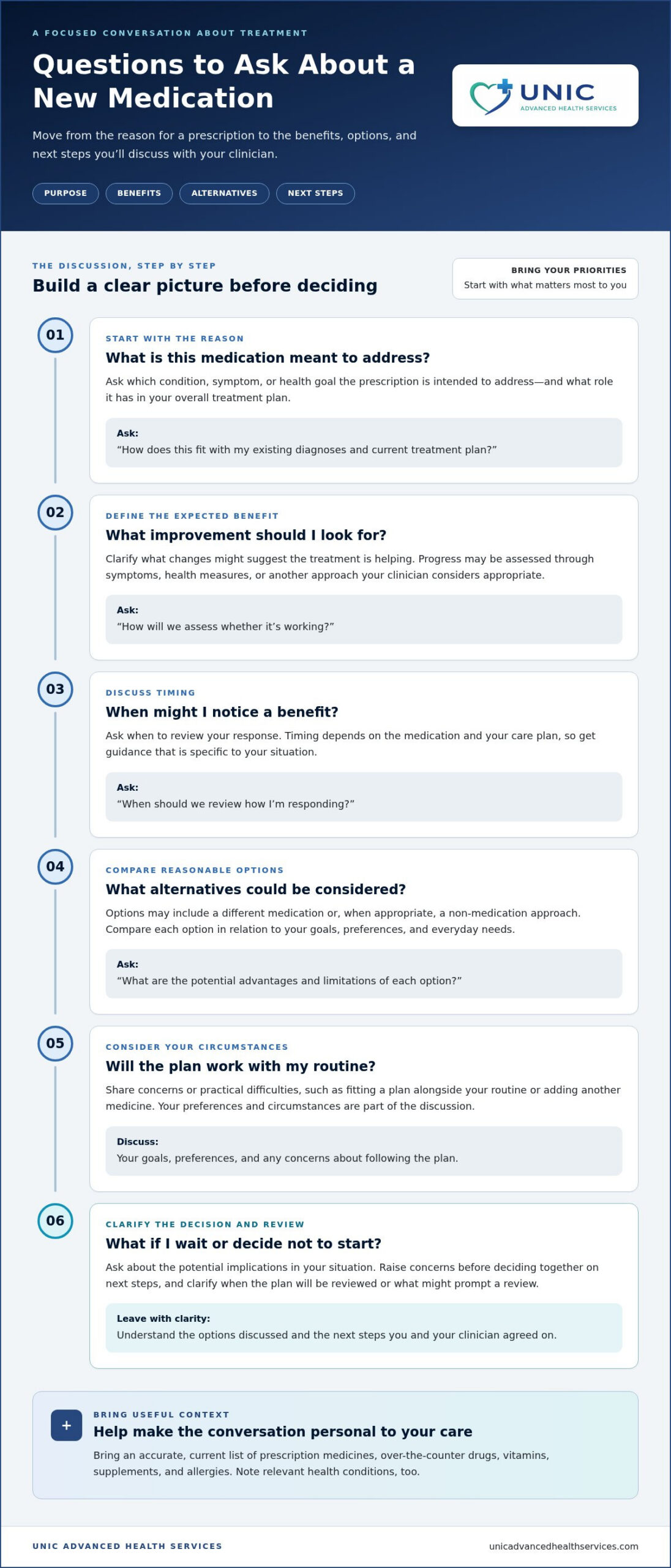
Start with the questions that matter most to your decision. You can take this list to your appointment:
- What condition, symptom, or health goal is this medication intended to address?
- How does it fit with my existing diagnoses and current treatment plan?
- What improvement should I look for, and how will we assess whether it’s helping?
- When might I notice a benefit, and when should we review my response?
- What are the reasonable alternatives, and what are their potential advantages and limitations?
- What might happen if I delay or decide not to start this treatment?
Questions about why the medication was prescribed
Ask your clinician to explain the medication’s role in your overall plan, not just name the condition it treats. For example, if you’re managing diabetes or hypertension, clarify how the prescription relates to your individual goals and other care. If you’re unsure about starting, ask what the potential implications of waiting or declining could be in your situation.
Your clinician can explain the reasoning in the context of your health history. Harvard Health Publishing’s smart questions to ask about a new prescription can also help you prepare for a focused discussion.
Questions about expected benefits and other options
Ask what changes might indicate that the treatment is helping and how progress will be evaluated. The answer may involve symptoms, health measures, or another approach your clinician considers appropriate. Ask when you’ll review your response. Timing depends on the medication and your care plan, so follow guidance specific to you rather than relying on a general expectation.
Alternatives may include a different medication or, when appropriate, a non-medication approach. Ask how each option compares for your goals, preferences, and practical circumstances. Tell your clinician if a plan would be difficult to follow alongside your routine or if you have concerns about adding another medicine. That context can help you discuss a plan that works for your needs.
For patients in Fort Lauderdale, a primary care conversation can connect medication decisions with ongoing health goals. Unic Advanced Health Services provides primary care to discuss treatment goals and consider a new prescription as part of your broader care.
Questions About Side Effects, Interactions, and Medication Safety
Safety questions are most useful when they account for the specific medication and your health history. Potential side effects and interactions can vary, so share a complete, current picture with your clinician. Include prescription medicines, over-the-counter drugs, vitamins, supplements, allergies, and relevant health conditions. If you don’t know a medicine’s name or dose, bring its packaging or make a note to clarify it.
Use this table to record your concerns and the guidance that applies to you. The final column is for your clinician’s personalized instructions, not assumptions that apply to every medication.
| Concern | Question to ask | Clinician’s personalized guidance |
|---|---|---|
| Side effects | Which effects are common, and which need prompt attention? | Record what to watch for and the recommended response. |
| Allergies or health conditions | Could my history affect this medication’s risks? | Note any precautions specific to you. |
| Other medicines or supplements | Could anything I take interact with this medication? | Confirm which items were reviewed and any next steps. |
| Monitoring | Do I need tests or other monitoring? | Write down what is recommended and when to follow up. |
What side effects should I ask about?
Ask your clinician which effects you may be able to monitor and which call for prompt advice. Clarify whom to contact and how quickly if a concerning effect occurs. Also ask what to do if you’re unsure whether a change is related to the medication. Mention allergies and health conditions, since these may affect the safety discussion. MedlinePlus offers medication-specific background through MedlinePlus Drug Information, but use your clinician’s guidance to interpret information for your situation.
Could this medication interact with my other medicines?
Ask your clinician or pharmacist to review your full list, including nonprescription medicines and supplements. Include occasional products and items you take only as needed. Ask whether food, alcohol, or other substances matter for this particular medication, and whether tests or other monitoring are appropriate for you.
Write down the effect to watch for, whom to contact, and any monitoring instructions. Don’t change the dose, stop the medication, or combine it with another product based on guesswork. If questions arise after the appointment, use the agreed contact plan to get medication-specific advice.
Questions About How to Take a New Medication and Track Your Response
Clear directions turn a prescription into a routine you can follow and review. Before the first dose, compare what you heard with the prescription label. If the instructions conflict, use unfamiliar terms, or leave something unclear, pause and ask a healthcare professional to explain them. Don’t guess at a dose or make changes based on someone else’s directions. Follow instructions specific to the medication and your care plan.
Use this sequence to organize your questions and write down the answers that apply to you:
- Confirm the dose. Ask how much to take each time and how the amount is measured, if relevant.
- Clarify the schedule. Ask how often to take it and whether the prescription specifies a particular time of day.
- Check food instructions. Ask whether it should be taken with food, without food, or with other specific directions.
- Understand the duration. Ask how long the treatment is intended to continue and what to do if the plan needs review or changes.
- Discuss refills and missed doses. Ask how refills will be handled and what to do if you miss a dose. The answer can differ by medication, so get instructions for yours.
- Confirm storage. Ask how to store the medication according to its specific instructions, including any handling details that matter.
How do I confirm the directions?
Keep the prescription label as a reference and compare it with your written notes. If the directions seem inconsistent, don’t choose one version on your own. Contact a healthcare professional or pharmacist for clarification before taking it. Ask for plain-language instructions you can repeat back, especially if the schedule has more than one step. This check can help catch misunderstandings early.
How will I know whether it is working?
Ask what changes to track and when your care team plans to evaluate your response. Depending on the treatment, follow-up might involve discussing symptoms, home measurements, an appointment, or laboratory tests. Don’t assume every medication needs the same monitoring. Record the measures your clinician recommends, along with when and how to share them.
Before you leave, write down the follow-up plan and whom to contact if you’re uncertain about the instructions or have a concern. Include the intended review point, any recommended monitoring, and the best way to ask for clarification. A short note on your phone or a printed medication list can make the plan easier to reference. Bring it to future appointments so your clinician can review how the treatment fits your care.
If you’d like to review a medication plan alongside your health goals, schedule a primary care visit with Unic Advanced Health Services.
Bring Your Medication Questions to a Primary Care Visit
A medication decision makes more sense when considered alongside your health history, current treatment goals, and day-to-day needs. A primary care clinician can connect a new prescription to that broader picture and discuss how it fits with ongoing care. This matters when you’re managing a chronic condition, since health needs and treatment plans can change over time.
Before the visit, gather details that will make the conversation specific. You don’t need to have every answer ready. Your notes give your clinician a useful starting point and help you focus on the questions that matter most to you.
What should I bring to a medication discussion?
Bring the medication name and prescription instructions, along with a current list of what you take. Include relevant allergies and health conditions. A written note can help you remember concerns or preferences during the appointment.
- The medication name and its label or written instructions
- A current list of prescription and nonprescription medicines, vitamins, and supplements
- Relevant allergies, health conditions, and previous medication concerns
- Questions about how the plan fits your routines, such as work, meals, or other daily commitments
- The health outcomes you hope to achieve and any concerns you want to address
If you had a problem with a medication in the past, describe what happened and what guidance you received. Rather than relying only on a label such as “didn’t agree with me,” explain the concern and its outcome. Those details can help your clinician understand your experience and discuss how it may inform the current decision.
How can ongoing primary care support medication decisions?
Medication review can be part of ongoing primary care, not just a conversation when a prescription is first discussed. As your health goals or conditions change, your clinician can revisit how treatment fits your needs and whether the plan should be reviewed. For chronic conditions such as diabetes, hypertension, or obesity, the discussion can connect medication decisions with your broader management goals.
Unic Advanced Health Services provides primary care and telehealth in Fort Lauderdale and surrounding communities. Telehealth is one way to access primary care and discuss treatment questions. During a visit, share what has changed in your health or routine since your last review, and bring notes on questions that still need answers. A clear discussion can help you understand the plan and next steps.
Learn more about primary care at Unic Advanced Health Services and how to discuss your care.
Make Your Next Medication Conversation Count
Your medication notes can be useful beyond a single appointment. Keep them with your health records and update them when your treatment plan or health needs change. That gives you a clear starting point for future conversations and helps you explain what has changed since your last review.
You don’t need to ask every question at once. Start with the concern that matters most, and work through the rest with your clinician. If you leave with something unclear, make a note to follow up rather than relying on memory or guessing.
Unic Advanced Health Services provides primary care in Fort Lauderdale, where you can discuss your care and medication concerns. Keep your questions and current medication list handy for the conversation.
A thoughtful question is a good place to begin. You deserve to feel informed and supported as you make decisions about your health.
Frequently Asked Questions
Can I ask my pharmacist questions about a new medication?
Yes. A pharmacist can help explain how to use a prescribed medication and answer medication-related questions. For example, ask what a label instruction means or whether a product you already use should be reviewed. If your question involves why the medication was prescribed, how it fits your health history, or whether your treatment plan should change, contact the clinician who prescribed it. You can speak with both professionals when that’s helpful.
Is it okay to ask for a generic version of my prescription?
Yes, you can ask whether a generic version is an option and appropriate for your prescription. Tell your clinician or pharmacist if you have a preference or practical concern, such as difficulty obtaining the prescribed version. They can explain the options for your medication and whether any differences matter for your treatment. Don’t substitute a different product on your own. Confirm that a change is appropriate for your situation.
What should I do if the pharmacy label and my clinician’s instructions seem different?
Pause and have the instructions clarified before taking a dose based on guesswork. Contact the pharmacy and prescribing clinician, and read each instruction exactly as it appears on the label or in your notes. A difference may reflect a misunderstanding or a change in the plan, but don’t assume which direction is correct. Ask for clear instructions you can follow, and keep the confirmed directions with the medication.
Can I wait to start a new medication until I have more questions answered?
It depends on the medication and why it was prescribed, so ask the prescriber for guidance rather than deciding based on a general rule. If an unanswered question is making you hesitate, contact the clinician or pharmacist and explain what you need clarified. Ask whether the concern needs to be resolved before the first dose. Don’t delay or begin treatment based only on assumptions about the risks of waiting.
How should I handle a medication concern if my next appointment is weeks away?
You don’t have to wait for a scheduled appointment to seek advice about a medication concern. Use the contact method your clinician provided, or ask a pharmacist about a question related to how to use the medication. Describe what’s happening, when it began, and which medication is involved. If symptoms feel severe or life-threatening, seek emergency help rather than waiting for a routine appointment or a response through a nonurgent channel.
What should I do if I realize I gave my clinician an incomplete medication list?
Update the clinician as soon as you notice the omission, especially if it involves a medicine, supplement, or allergy that could affect the new treatment. Give the exact product name and how you use it, if known. If you’re uncertain whether the missing detail matters, share it anyway and let the care team assess it. Don’t stop or adjust any medication simply because the list needs correcting.
Can a telehealth visit be used to discuss medication questions?
Yes, a telehealth visit can be used to discuss medication questions with a primary care clinician. It may be useful for explaining a concern, reviewing how a treatment fits your health history, or discussing what information to bring to a future visit. Have the medication container or label nearby, along with your current list and notes. Unic Advanced Health Services provides telehealth and primary care in Fort Lauderdale and surrounding communities.