Lowering your blood pressure doesn’t require changing everything at once. Lifestyle changes to lower blood pressure often start with everyday habits you can build gradually, such as choosing lower-sodium foods, moving more, and recording your readings. The challenge is turning general advice into a routine and understanding how lifestyle changes fit with prescribed treatment.
This checklist offers manageable steps, ways to prioritize, and ideas for tracking progress without expecting overnight results. You’ll learn how eating patterns, physical activity, and other daily choices may support healthier blood pressure, and when to discuss your plan and readings with a healthcare professional. A clinician can tailor guidance to your health needs and help you understand how it fits alongside treatment. At Unic Advanced Health Services in Fort Lauderdale, blood pressure screening is part of Preventive Care. Health Promotion and Manage Chronic Conditions can support personalized guidance and ongoing care.
Key Takeaways
- Lifestyle changes to lower blood pressure are sustainable habits, not guaranteed cures or substitutes for prescribed treatment.
- Explore the DASH eating pattern and look for practical ways to include more vegetables, fruit, whole grains, and minimally processed foods.
- Prioritize movement and other habit changes that fit your ability, health needs, and daily routine.
- Start with a baseline, choose one or two habits to work on, and keep a simple log of readings and progress.
- Discuss persistent high readings, medication questions, or challenges maintaining changes with a healthcare professional.
Lifestyle Changes for Blood Pressure: Benefits and Limits
Daily habits around food, physical activity, sleep, and alcohol use can support blood pressure management. These steps may be useful whether you’re working to improve your readings or maintain healthier ones. They aren’t a guaranteed treatment or cure, and their effects vary. Your health history and overall care plan matter.
Healthy habits may complement prescribed medication. Don’t stop, skip, or change a prescribed dose without discussing it with the prescriber, even if your readings improve or you feel well. Lifestyle changes are one part of care. Medication decisions belong in a conversation with a healthcare professional who understands your situation.
For an overview of practical habit changes, watch this video:
Why one high reading is not a complete picture
Blood pressure can shift throughout the day. Recent activity, stress, discomfort, and measurement conditions may affect a result, so one high reading doesn’t necessarily reflect your usual pattern. Record it as useful information, but don’t rely on a single reading to establish a diagnosis or determine treatment.
Blood pressure readings, not symptoms alone, help identify a pattern, because high blood pressure often has no noticeable symptoms. Follow your clinician’s or monitor’s instructions and record readings consistently. A log with the time and result can help your clinician interpret trends and decide whether further assessment is appropriate.
How to set realistic expectations for lifestyle changes
You can start with habits within your control, such as making a gradual food adjustment or adding movement that suits your ability. You don’t need to overhaul your routine all at once. Choose a manageable change, practice it regularly, and build from there. A sustainable adjustment is more useful than an ambitious plan that quickly becomes difficult to maintain.
How quickly readings respond, and by how much, varies. Avoid judging progress by one measurement or expecting an immediate change. Keep tracking readings as recommended and bring questions or concerns to your clinician. Decisions about medication, follow-up, or changes to your care plan require professional guidance, especially if readings remain high or you’re unsure what to do next.
In Fort Lauderdale, Unic Advanced Health Services offers blood pressure screening through Preventive Care. Health Promotion includes lifestyle, diet, and exercise guidance, while Manage Chronic Conditions supports ongoing care. A clinician can review your readings and help shape an individualized plan that fits alongside any prescribed treatment.
Food and Sodium Changes That Support Healthier Blood Pressure
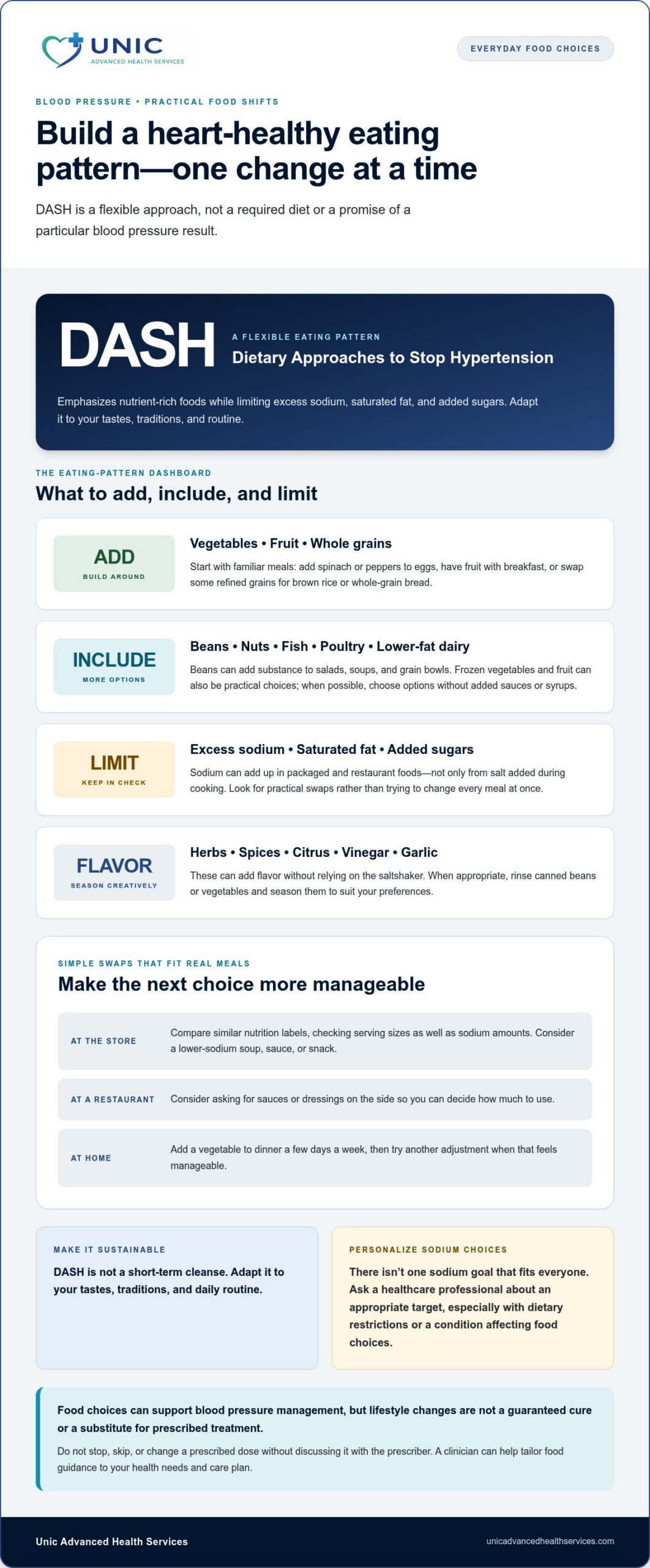
Food choices are personal and often tied to culture, time, and budget. Instead of treating healthy eating as a strict plan, look for additions and swaps that work with meals you already enjoy. The DASH eating pattern, short for Dietary Approaches to Stop Hypertension, is one evidence-informed approach. It emphasizes vegetables, fruit, whole grains, beans, nuts, fish, poultry, and lower-fat dairy, while limiting foods high in saturated fat and added sugars. It’s a flexible pattern, not a required diet or a promise of a particular blood pressure result.
A heart-healthy eating pattern emphasizes vegetables, fruit, whole grains, and other nutrient-rich foods while limiting excess sodium and foods high in saturated fat. The Centers for Disease Control and Prevention (CDC) outlines food and other habits that can support prevention in its CDC Guidelines for Preventing High Blood Pressure. These principles can help you choose a starting point without trying to change every meal at once.
Build meals around a heart-healthy eating pattern
Start with a familiar meal. Add spinach or peppers to eggs, include a piece of fruit with breakfast, or replace some refined grains with brown rice or whole-grain bread. At lunch or dinner, beans can add substance to a salad, soup, or grain bowl. Frozen vegetables and fruit can also be practical choices. When possible, select options without added sauces or syrups.
DASH is a sustainable eating pattern, not a short-term cleanse. Adapt it to your tastes, traditions, and routine. For example, add a vegetable to dinner a few days a week, then try another adjustment when that feels manageable. Dietary needs differ, particularly for people with medical conditions or prescribed food restrictions. Ask a clinician for individualized guidance before making changes that could affect your care.
Reduce sodium without making meals feel restrictive
Sodium can add up in packaged and restaurant foods, not just salt added during cooking. Compare nutrition labels on similar items, paying attention to serving sizes as well as sodium amounts. Choosing a lower-sodium version of a soup, sauce, or snack can be a practical swap. At restaurants, consider asking for sauces or dressings on the side so you can decide how much to use.
Herbs, spices, citrus juice, vinegar, and garlic can add flavor without relying on the saltshaker. You can also rinse canned beans or vegetables when appropriate, then season them to suit your preferences. There isn’t one sodium goal that fits everyone. Discuss an appropriate target with your healthcare professional, especially if you have dietary restrictions or a condition that affects what you should eat.
Choosing which lifestyle changes to lower blood pressure to start can be easier with support that considers your health and routine. In Fort Lauderdale, Health Promotion guidance can help connect food and other daily habits with personalized preventive care.
Movement, Weight, Sleep, and Other Habits: What to Prioritize
No single habit should come first for everyone. Consider what feels achievable, what matters to your health, and what fits your daily routine. If you already walk regularly, sleep might be a more useful focus. If you’ve been less active, a brief movement break may be a reasonable start. A few changes you can sustain are more useful than trying to transform every part of your routine at once.
Choose movement that fits your current routine
Build movement into ordinary activities. Try a comfortable walk, take an active errand when practical, or stand and move during a break from sitting. The U.S. Department of Health and Human Services recommends adults work toward 150 to 300 minutes of moderate-intensity aerobic activity each week, or 75 to 150 minutes of vigorous activity, or a combination. Start at a manageable level and build gradually. Short bouts count toward the total.
Consistency matters more than pushing hard on day one. If you have symptoms, physical limitations, or a health concern that could affect activity, ask a healthcare professional for guidance before increasing intensity. A clinician can help you consider a suitable starting point and adapt movement to your current health.
Support sleep, stress management, and related health goals
A regular sleep and wake schedule can make rest easier to prioritize. Try a calming wind-down routine, such as dimming lights, setting aside screens, or reading quietly before bed. Stress isn’t always avoidable, but a few minutes of paced breathing or a restorative pause between tasks may offer a practical way to reset. Keep the approach simple enough to repeat.
Weight goals, tobacco use, and alcohol choices also deserve supportive, individualized attention, not blame. If weight management is relevant to your health, discuss realistic goals with a clinician rather than relying on a one-size-fits-all target. If you use tobacco, ask about support for stopping. A lapse doesn’t erase progress. For alcohol, the CDC’s current moderate-drinking guidance is no more than two drinks per day for men and one for women. A standard drink is 12 ounces of regular beer, 5 ounces of wine, or 1.5 ounces of 80-proof spirits. Your health history, medications, and personal circumstances may affect what’s appropriate, so discuss alcohol with a healthcare professional.
These lifestyle changes to lower blood pressure can reinforce one another: an active routine may support sleep, while a consistent bedtime can make daily plans easier to maintain. Choose one realistic habit, notice how it fits your life, and adjust with professional guidance when needed. In Fort Lauderdale, personalized Health Promotion can include lifestyle, diet, and exercise guidance as part of preventive and chronic condition care.
A Practical Checklist for Starting and Tracking Blood Pressure Habits
A simple plan makes lifestyle changes to lower blood pressure easier to start and evaluate. You don’t need to monitor every detail of your day. Get a useful picture of your readings, choose a small number of habits, and make a plan to review your records with a healthcare professional.
Turn one goal into a repeatable weekly action
Make a broad intention specific: name the action, when you’ll do it, and what feels realistic now. For example, plan a short walk after lunch on days that fit your schedule, or prepare one lower-sodium meal at home this week. A modest starting point gives you a clear action to repeat and adjust, rather than an all-or-nothing target.
Use this sequence to get started:
- Record a baseline. Take and write down readings according to your clinician’s advice and your monitor’s instructions before deciding what pattern you want to address.
- Choose one or two habits. Pick changes that suit your current routine and health, such as a regular movement break or a planned meal adjustment.
- Track your actions and readings. Use a notebook, calendar, or notes app to record what you did and when you measured.
- Review and adjust. Look at the record with your clinician, discuss what’s manageable, and decide whether to continue or modify your plan.
Missed a planned walk or meal change? Treat it as information, not failure. Notice what got in the way and make the next step easier to repeat. If a goal feels unrealistic, scale it back or choose a habit that better fits your circumstances.
Track readings and prepare useful questions
Follow your blood pressure monitor’s instructions and any measurement guidance from your clinician. Measure consistently as directed, and note the result and time. Your log can also include relevant context, such as a missed habit, a medication question, or anything unusual that may help explain a reading. Avoid drawing conclusions from one entry. Bring the record for clinical interpretation.
Before a visit, gather your log and an up-to-date medication list, including any questions about prescribed treatment. You might ask: What readings or patterns should I report? When should I follow up? Which lifestyle changes fit my health and current medications? Should I continue measuring at home, and how often? Clear questions can turn your record into a practical conversation, not just a collection of numbers.
For additional preventive-care context, see the annual physical exam guide. To discuss blood pressure screening and an individualized plan in Fort Lauderdale, connect with Unic Advanced Health Services about Preventive Care.
When Lifestyle Changes Need Support from a Healthcare Professional
Healthy habits can support blood pressure management, but they don’t always replace medication. Some people need prescribed treatment alongside lifestyle changes, and the right plan depends on individual readings, health history, and other conditions. Don’t stop, skip, reduce, or otherwise change medication on your own, even if you feel well or see a lower reading. Discuss treatment decisions with the clinician who prescribes it.
Follow-up isn’t a sign that you’ve failed to make enough progress. It’s an opportunity to understand your readings, ask questions, and adjust your plan with professional guidance. Bring your home log if you have one, along with a current medication list and notes about changes that have felt manageable or difficult.
Signs it is time to review your plan
Arrange a clinical discussion if readings continue to concern you, you’re unsure how to interpret a pattern, or you’re having difficulty maintaining changes. Bring up possible medication effects, missed doses, and any interest in changing treatment before acting. A clinician can assess your situation and determine appropriate next steps. Don’t wait for symptoms to decide whether a reading deserves attention.
Urgent or severe symptoms aren’t a routine lifestyle-planning issue. Seek appropriate emergency care if you’re experiencing symptoms that may signal a medical emergency. If you’re unsure whether a situation is urgent, get immediate medical help rather than waiting for a routine appointment or relying on a habit change.
How personalized primary care can support sustainable changes
A clinician can review your readings alongside your health history, medications, and relevant conditions. That context helps make goals more individual, including which habits to focus on first, how to monitor progress, and when to revisit the plan. In Fort Lauderdale, Unic Advanced Health Services provides Manage Chronic Conditions and Health Promotion, which includes lifestyle, diet, and exercise guidance.
Preventive Care includes blood pressure screening, and On-Site Lab Services can support chronic-condition monitoring as part of care planning. These services can complement a conversation about home readings and practical changes. Medication decisions remain part of your individualized clinical care. If weight-related goals are relevant to your health, the obesity management care guide offers additional context for discussing individualized support.
The most useful lifestyle changes to lower blood pressure are those that fit your health needs and can be sustained, with clinical guidance when questions arise. For ongoing primary care and chronic-condition support in Fort Lauderdale, explore primary care and chronic condition support.
Make Your Next Step a Conversation
Your next step doesn’t need to be a bigger goal. Choose one question you want answered or one adjustment you’d like help making, then bring it to your next primary care visit. A conversation can connect your day-to-day experience with your health needs and help you decide what feels appropriate to continue, change, or explore. If you’re already tracking your progress, your notes can make the discussion more specific.
Lasting progress comes from decisions you can revisit, not pressure to get everything right at once. The lifestyle changes to lower blood pressure that fit your life may evolve as your needs change, and support can help you adjust with confidence. For individualized primary care and ongoing chronic condition support in Fort Lauderdale, call Unic Advanced Health Services at (954) 767‑0228. Start with one manageable step, and give yourself room to build from there.
Frequently Asked Questions
Can lifestyle changes lower blood pressure without medication?
Yes, lifestyle changes to lower blood pressure can support healthier readings, and some people may see meaningful improvement. They don’t replace medication for everyone. Whether medication is needed depends on your readings, health history, and overall risk. If you’re changing your food, activity, or other habits, keep following your prescribed treatment unless your clinician advises otherwise. Discuss any interest in reducing or stopping medication with the clinician who manages your care.
How quickly can lifestyle changes affect blood pressure?
There’s no reliable timeline that applies to everyone. The pace of change depends on the habits you adopt and other health factors, and some people need additional treatment. Keep measuring as directed and review a series of readings with a healthcare professional rather than relying on one result. If you’re unsure whether a change is helping, share your log and describe what you’ve been able to maintain so your clinician can interpret it in context.
Is walking enough to help lower blood pressure?
Walking can be a practical way to add regular activity, but it may not be enough on its own for everyone. The right amount and pace depend on your current activity level and health. Try a familiar route or a short walk during a break, then build gradually if it feels comfortable. If you experience symptoms during activity or have health limitations, seek individualized clinical guidance before changing your routine.
What foods should I limit if I have high blood pressure?
Start by noticing sodium in packaged foods, restaurant meals, and processed choices. Compare labels on items you regularly buy, such as sauces, canned soups, or prepared meals, and choose a lower-sodium option when it suits your needs. A heart-healthy pattern often includes vegetables, fruit, whole grains, and minimally processed foods. Avoid extreme restrictions. A healthcare professional can help you decide whether a particular eating pattern or sodium goal fits your health.
Can stress cause high blood pressure?
Stress may be associated with temporary changes in blood pressure, but it doesn’t explain every persistently high reading. A demanding day can also affect sleep, food choices, or activity, so note relevant circumstances if you’re tracking readings. Relaxation practices, such as a quiet break or paced breathing, may support well-being, but they aren’t a substitute for measurement or clinical care. If readings concern you, discuss the pattern with a healthcare professional.
Should I stop taking blood pressure medicine if my readings improve?
No. Improved readings don’t mean it’s safe to stop or change medication without medical advice. Your results may reflect the combined effects of treatment and daily habits. Contact the clinician who manages your care to review your readings and discuss whether an adjustment is appropriate. If you’ve missed doses or noticed possible side effects, share that information rather than changing the schedule yourself. Your prescriber can advise you on a safe next step.
How should I track blood pressure at home while changing my habits?
Use your home monitor according to its instructions and follow your clinician’s advice about measurement timing and technique. Keep a record of readings, dates, times, and relevant notes, such as a routine change or a medication question. Bring the log to a healthcare visit and ask how often to measure. During a Fort Lauderdale primary care visit, you can also ask your clinician to review your measurement approach and help interpret the pattern.