
A blood pressure reading is a starting point, not a verdict. One result can raise questions, but a hypertension diagnosis is typically confirmed using the average of multiple readings taken on separate occasions. If you feel well, it can be easy to put off follow-up, even when you’re concerned about what the numbers mean. Hypertension management Fort Lauderdale care can help turn uncertainty into a clearer plan through screening, ongoing monitoring, and guidance shaped around your health.
You may wonder whether lifestyle changes are enough, when medication might be considered, or how to track readings between visits. The answers depend on more than one number. Your health history, repeat measurements, and other risk factors all inform the conversation.
This 2026 guide explains how blood pressure screening and follow-up fit into hypertension care, what information to bring to a primary care appointment, and how home monitoring can support a more complete picture. At Unic Advanced Health Services in Fort Lauderdale, Preventive Care includes blood pressure screening, while Manage Chronic Conditions supports ongoing care for hypertension. You’ll find practical next steps for discussing your readings and building a personalized approach with a primary care provider.
Key Takeaways
- Learn why an elevated screening result calls for follow-up, rather than an immediate conclusion based on one reading.
- Prepare for a care conversation by recording readings, dates, times, and relevant context.
- Understand how health history, daily routines, and other conditions can shape discussions about lifestyle changes, medication, or both.
- See how hypertension management Fort Lauderdale care can connect screening with personalized assessment and ongoing follow-up.
- Explore how Unic Advanced Health Services’ Preventive Care and Manage Chronic Conditions support blood pressure care, with On-Site Lab Services available for chronic-condition monitoring.
Hypertension Management in Fort Lauderdale: What a Screening Can, and Cannot, Tell You
An elevated blood pressure reading is a reason to follow up, not a diagnosis by itself. A screening gives you a useful snapshot, but one result may not reflect your usual blood pressure or explain what is affecting it. A clinician considers repeat readings alongside your health history and other relevant information before assessing what they mean.
Hypertension management is the ongoing process of assessing blood pressure and overall health, monitoring readings over time, and developing an individualized plan with a clinician. Screening is one step. It can identify a result that deserves attention, while follow-up helps clarify whether blood pressure is persistently high and what next steps make sense.
High blood pressure often has no noticeable symptoms, so feeling well doesn’t necessarily tell you what your readings are. The only way to know your blood pressure is to have it measured. For a general overview of the condition and its possible causes and management approaches, see Hypertension on Wikipedia.
What does a blood pressure reading represent?
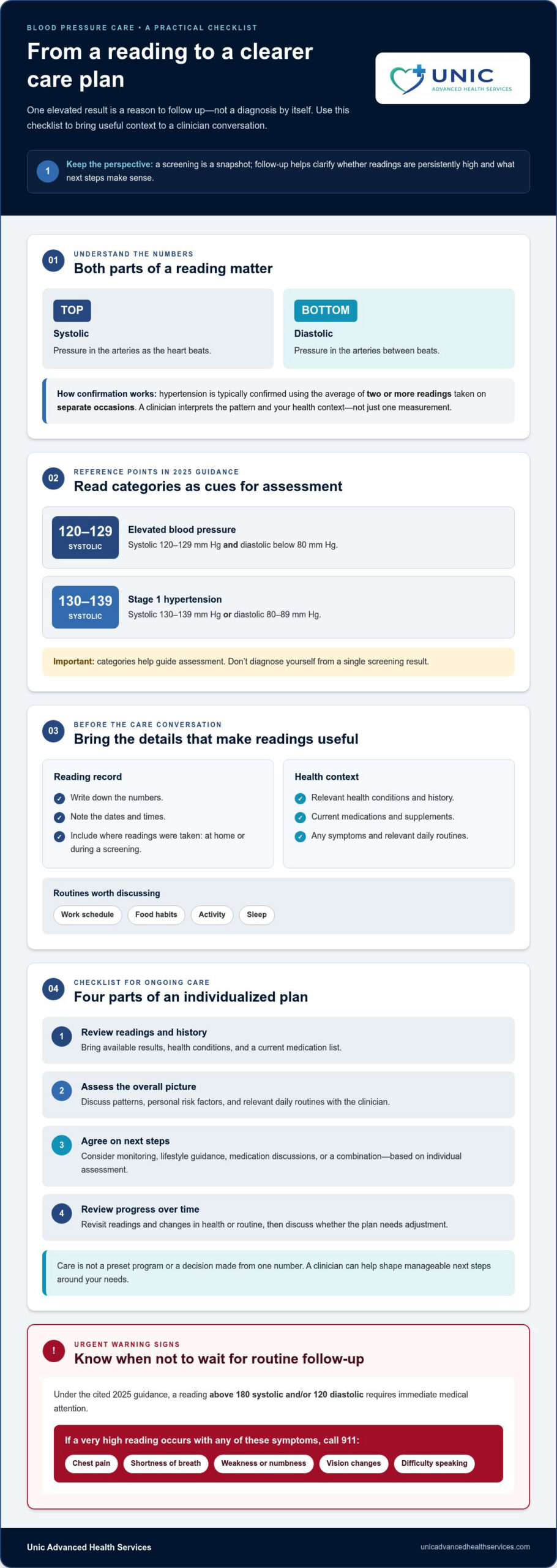
A reading has two numbers. The top, or systolic, measures pressure in the arteries as the heart beats. The bottom, or diastolic, measures pressure between beats. Both numbers matter, and a clinician interprets them in context rather than treating one measurement as the whole story.
Blood pressure can vary between measurements, so the circumstances and pattern matter. The 2025 ACC/AHA categories describe elevated blood pressure as a systolic reading of 120-129 mm Hg with a diastolic reading below 80; Stage 1 hypertension begins at 130-139 systolic or 80-89 diastolic. A diagnosis is typically confirmed using the average of two or more readings taken on separate occasions. These categories help guide assessment, but don’t diagnose yourself from one screening result.
When should a Fort Lauderdale resident follow up?
Arrange a care conversation after a concerning reading, especially if elevated readings recur. Bring the numbers and any available dates or context, such as whether the measurement was taken at home or during a screening. Share relevant health history, medications, and symptoms. This information can help a clinician interpret the readings and decide whether further monitoring or assessment is appropriate.
Routine follow-up is different from urgent care. Under the cited 2025 guidance, a reading above 180 systolic and/or 120 diastolic requires immediate medical attention. If a very high reading occurs with symptoms such as chest pain, shortness of breath, weakness or numbness, vision changes, or difficulty speaking, call 911. Don’t wait for a routine appointment to address these warning signs.
For people seeking hypertension management Fort Lauderdale care, a practical next step is to put the screening result into context with a primary care clinician. A thorough review can help distinguish a one-time finding from a pattern that needs ongoing attention.
How Hypertension Management Works: From Assessment to Ongoing Follow-Up
Once blood pressure readings are available, a clinician can review them alongside your health history and daily life. They can consider what may affect your blood pressure and discuss a practical path forward. Depending on the individual assessment, the plan may involve monitoring, lifestyle guidance, medication discussions, or a combination. It isn’t a preset program or a decision made from one number.
A blood pressure measurement is a snapshot; a care plan is an individualized process of assessment, next steps, and review over time.
A simple care sequence can make the process easier to understand:
- Review readings and history. Bring available blood pressure results, health conditions, and a current medication list.
- Assess the overall picture. Discuss patterns, personal risk factors, and relevant daily routines with the clinician.
- Agree on next steps. Decide together what monitoring or care options fit your circumstances.
- Review progress. Revisit readings and changes in health or routine, then discuss whether the plan needs adjustment.
What may happen during an initial management visit?
Be ready to describe when and where readings were taken, what medications or supplements you use, and any relevant health conditions. Work schedules, food habits, activity, sleep, and other routines can also help shape a realistic discussion. You and the clinician can identify priorities and agree on manageable next steps without assuming everyone needs the same intervention or target.
At Unic Advanced Health Services, Manage Chronic Conditions includes hypertension care. Marc Joseph, an autonomous nurse practitioner, leads care that can include personalized planning and coordination. Lifestyle measures may be part of the conversation, while medication choices or changes are clinician-directed and depend on the person’s needs. The American Heart Association: Managing High Blood Pressure offers further information on lifestyle approaches such as diet and physical activity.
Why follow-up matters over time
Follow-up lets you and your clinician review readings as a pattern, discuss how agreed steps are working in daily life, and adjust the approach when appropriate. Bring updated readings and note changes in medication, health, or routine since your previous conversation. There isn’t one schedule or set of tests for everyone; the clinician can guide what review is appropriate for your situation.
When relevant, On-Site Lab Services can support chronic-condition monitoring as part of a broader care plan. Lab services complement, rather than replace, review of blood pressure readings and health history. For a local, ongoing care conversation, hypertension management Fort Lauderdale support can connect assessment with follow-up through Unic’s chronic-condition care.
Medication, Lifestyle Changes, or Both? Understanding Individualized Hypertension Care
Hypertension care doesn’t mean everyone follows the same plan. One person may focus first on sustainable daily habits, while another may discuss medication with a clinician. Some people may use both approaches. The right conversation depends on blood pressure patterns, health history, other conditions, and a clinician’s assessment. A plan should fit the person, not a one-size-fits-all checklist.
The comparison below describes common areas of discussion, not instructions to start or stop treatment. A clinician can explain which options are appropriate and how they fit together.
| Care approach | What the discussion may cover |
|---|---|
| Lifestyle support | Food choices, sodium, physical activity, stress, sleep, and other routines that may be relevant to blood pressure. |
| Medication discussion | Whether prescription treatment may be appropriate, its intended role, how to take it, and what follow-up is needed. |
| Combined approach | How clinician-guided medication and practical habit changes can work together, with progress reviewed over time. |
What role can everyday habits play?
Everyday routines can be useful topics for a care conversation. Consider what feels manageable: preparing meals differently, noticing sodium in commonly eaten foods, adding activity in a way that suits your abilities, or identifying sources of ongoing stress. The American Heart Association outlines lifestyle approaches in its guidance on managing high blood pressure. These steps can support care, but they aren’t a guaranteed replacement for clinician-recommended treatment.
Weight and blood pressure may also be relevant together for some people. If weight is part of your health discussion, the clinician can help keep the conversation individual and focused on overall well-being rather than assumptions or one measure.
When might medication be part of a plan?
A clinician may discuss medication based on readings, health conditions, risk factors, and the broader clinical picture. Ask what a recommended medicine is intended to do, how to use it as prescribed, what effects to watch for, and when progress should be reviewed. Clear answers can help you understand the role of treatment in your personal plan.
Don’t change a dose, stop a prescribed medicine, or add supplements to manage blood pressure without discussing it with a clinician. Supplements and medicines can have risks or interactions, and a change that seems minor may affect your care. Bring questions and a current list of medications and supplements to your appointment.
For people exploring hypertension management Fort Lauderdale care, individualized support means discussing options in context and reviewing how the plan fits real life. Lifestyle guidance and medication are not competing choices by default; a clinician can help determine what is appropriate and whether the approach should be revisited as circumstances change.
How to Track Blood Pressure and Prepare for a Care Conversation
A useful blood pressure record is more than a string of numbers. Dates, times, and brief notes about what was happening can help your clinician see whether readings form a pattern. The goal is to bring clear information to the conversation, not to diagnose yourself or feel alarmed by every change.
What information is useful to record?
Follow your monitor’s instructions and your clinician’s guidance on when and how often to take readings. For consistent measurements, use the cuff as directed on a bare arm, sit quietly, and keep your body supported. The American Heart Association offers further guidance for measuring blood pressure at home.
Use a notebook, calendar, or device record that you can bring to your appointment. For each measurement, note:
- The date and time, along with the systolic and diastolic numbers shown.
- Which arm you used and whether the reading was taken at home or in a care setting.
- Relevant context, such as a recent medication change, a missed dose, or feeling unwell.
- Questions you want to discuss, including anything that makes monitoring difficult.
Don’t change your monitoring schedule because of worry about one result. Ask your clinician what frequency is appropriate for you, and share the readings as recorded rather than selecting only the highest or lowest numbers. A log helps show context and trends; it doesn’t replace clinical assessment.
What should you bring to a Fort Lauderdale appointment?
Bring your readings, a current list of prescription medicines and supplements, and relevant health records if available. Include notes about recent changes and questions you’d like answered. This preparation can make the conversation more focused and help your clinician understand how blood pressure monitoring fits with your wider health needs.
Blood pressure is also part of preventive care. An annual physical can provide an opportunity to discuss your health history and preventive needs alongside your readings. If you’re preparing for a visit, the article’s Annual Physical Exam Fort Lauderdale guide offers related context.
Quick reminder: record readings with dates and context, follow your device and clinician instructions, and bring the record to your appointment. Use the log to support a conversation, not to make a diagnosis or react to one number in isolation.
For personalized support with hypertension management Fort Lauderdale residents can discuss readings and follow-up through Unic Advanced Health Services’ Manage Chronic Conditions care. Arrange a primary care conversation to review your blood pressure record and prepare practical next steps.
Hypertension Management in Fort Lauderdale with Unic Advanced Health Services
Managing high blood pressure is often an ongoing part of primary care, not a one-time conversation. In Fort Lauderdale, Unic Advanced Health Services offers Preventive Care, including blood pressure screening, and Manage Chronic Conditions for hypertension. These services connect an initial concern with an opportunity to discuss health history, readings, and appropriate follow-up in a supportive care setting.
Care is led by Marc Joseph, an autonomous nurse practitioner. The approach is personalized: recommendations and follow-up are guided by each patient’s needs and circumstances, rather than assuming everyone requires the same plan. If you’re looking for hypertension management Fort Lauderdale residents can discuss as part of primary care, Unic offers local screening and chronic-condition support.
If you’ve received a reading that concerns you or want to discuss ongoing blood pressure care, bring your recent readings, a medication list, and questions about follow-up to your appointment.
What ongoing care at Unic can include
Manage Chronic Conditions can include personalized care planning and follow-up for hypertension. A care conversation may consider your readings, health history, medications, and daily routines. The purpose is to understand your individual situation and discuss appropriate next steps, not to promise a particular blood pressure result or prescribe the same approach to everyone.
When relevant to a patient’s care plan, On-Site Lab Services can support chronic-condition monitoring. The role of laboratory services depends on the person’s needs and clinician guidance; no particular test or schedule applies to every patient. Care coordination may also be part of the process when a patient’s needs call for it, helping keep the plan responsive to their broader health needs.
Unic serves Fort Lauderdale and nearby South Florida communities, offering local primary-care support for people seeking ongoing care for blood pressure and other health concerns. The practice accepts most major insurance plans.
How to take the next step
Before your appointment, gather any home or office readings you have, note relevant changes in your health or medications, and write down your questions. You don’t need to have everything figured out first. Sharing what you know can help make the conversation focused and useful.
Call Unic Advanced Health Services at (954) 767-0228 to schedule a conversation about hypertension management. A primary-care discussion can help you understand your readings and consider an individualized approach to ongoing care.
Make Your Next Blood Pressure Conversation Count
You don’t need to have every answer before taking the next step. Start with the question that matters most to you, whether it’s understanding a pattern in your readings, discussing a change in your routine, or learning what follow-up could involve. A focused conversation can help turn uncertainty into a practical plan that fits your health and day-to-day life.
For hypertension management Fort Lauderdale residents can approach as part of ongoing primary care, Unic Advanced Health Services offers a supportive setting to discuss your needs with Marc Joseph, an autonomous nurse practitioner. Bring your questions and be open about what feels manageable. Your care conversation should make room for clinical guidance and your priorities.
Explore personalized hypertension management in Fort Lauderdale and take a considered step toward ongoing support. Attentive follow-up and a plan shaped around you can help you move forward with greater clarity.
Frequently Asked Questions
Can high blood pressure have no noticeable symptoms?
Yes. High blood pressure often causes no obvious symptoms, so you can’t reliably judge it by how you feel. Feeling energetic and well, for example, doesn’t confirm that your blood pressure is in a healthy range. Measurement is the way to check. If you have new or troubling symptoms, tell a clinician rather than assuming they’re caused by blood pressure.
Does one high blood pressure reading mean I have hypertension?
No. One high reading doesn’t by itself establish hypertension. Blood pressure can change, and a clinician considers repeat measurements, the circumstances of the reading, and your health history. A diagnosis is typically based on the average of two or more readings taken on separate occasions. Share the result with a clinician, especially if readings continue to be higher than expected.
How often should I check my blood pressure at home?
Ask your clinician how often to measure it, since the right schedule can depend on why you’re monitoring and your care plan. Follow your device instructions, record results as they appear, and bring the log to your next visit. If checking repeatedly is making you anxious, mention that too. Your clinician can help set a useful routine and explain what to do with the results.
What is white coat hypertension?
White coat hypertension describes blood pressure that is higher in a clinical setting than it is outside that setting. Anxiety or stress around a medical visit may contribute, but a single reading can’t establish this pattern. Tell your clinician if you feel tense during appointments and share any home readings you have. They can consider the information together when assessing your blood pressure.
Can lifestyle changes help manage high blood pressure?
They can be part of a management plan. A clinician may discuss practical changes to food choices, physical activity, stress routines, or other habits based on your health and circumstances. For instance, you might ask how to make a gradual change that fits your schedule. Lifestyle steps aren’t a guaranteed substitute for medication or other care recommended by your clinician.
Should I stop taking blood pressure medication if my readings improve?
No. Don’t stop or change prescribed blood pressure medication on your own, even if your readings improve. The readings may reflect how your current plan is working, and stopping could affect your blood pressure. If you’re experiencing side effects, have concerns, or think your treatment needs adjustment, contact your clinician to discuss a safe next step. Keep taking medication as prescribed unless they advise otherwise.
Can I discuss blood pressure management during an annual physical in Fort Lauderdale?
Yes. An annual physical is an appropriate time to raise blood pressure questions, review relevant health changes, and discuss whether follow-up is needed. Unic Advanced Health Services’ Preventive Care includes blood pressure screening, and Manage Chronic Conditions includes hypertension care. For hypertension management Fort Lauderdale patients can discuss in primary care, bring any readings, medication details, and concerns you want addressed.