
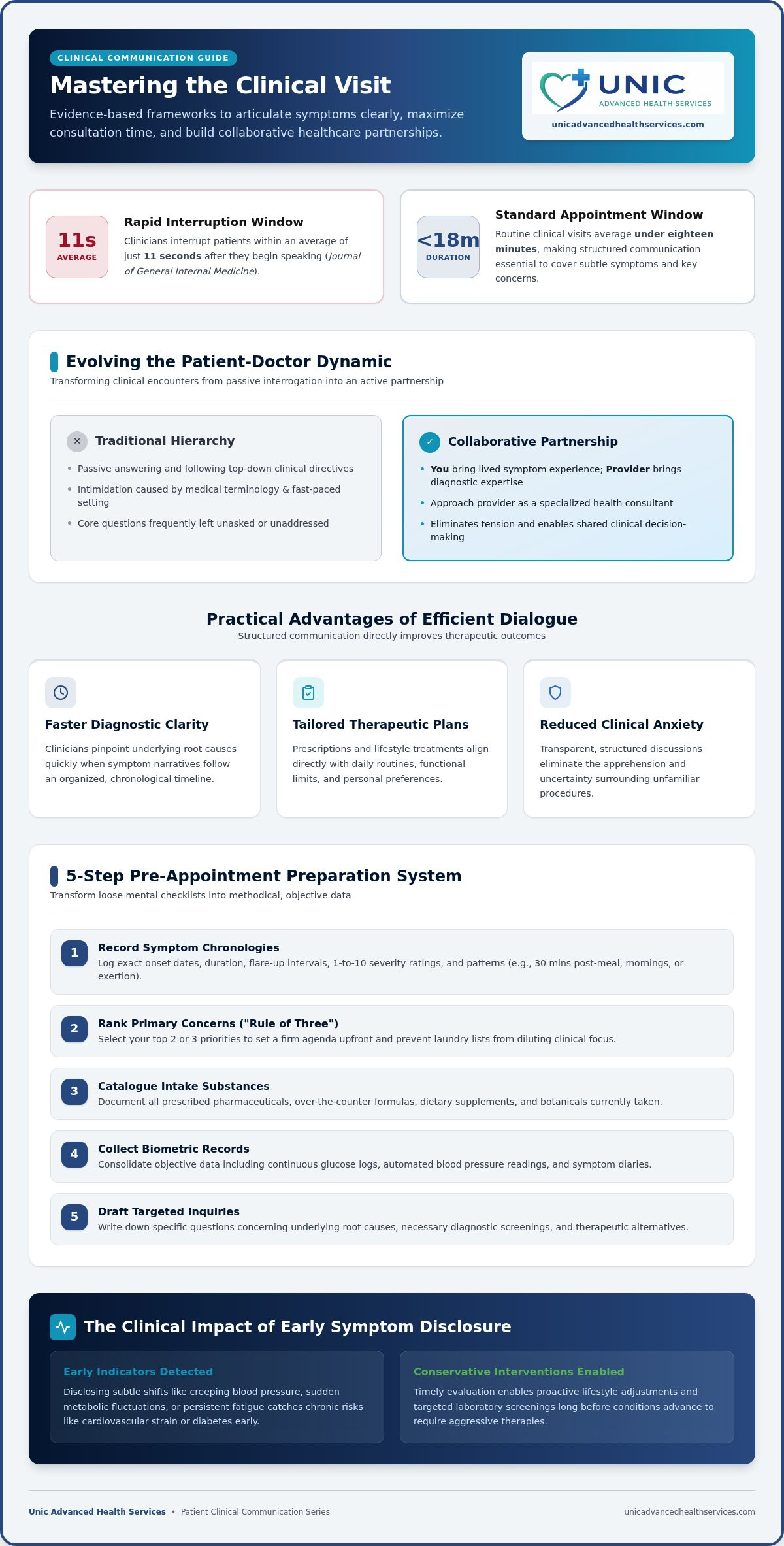
A landmark study published in the Journal of General Internal Medicine revealed that clinicians interrupt patients within an average of just 11 seconds after they begin speaking. If you have ever wondered how to talk to your doctor about health concerns without getting rushed or flustered, that statistic explains why appointments can feel so stressful. When routine visits average under eighteen minutes, it’s easy to forget subtle symptoms, feel embarrassed about sensitive topics, or leave feeling like your concerns weren’t fully heard.
Clinical visits work best as collaborative partnerships rather than passive question-and-answer interrogations. You’ll learn practical preparation strategies, direct conversation scripts, and proven communication techniques to articulate your symptoms with confidence and leave with an actionable treatment plan. Ahead, we examine how to organize your medical priorities before you arrive, steer the dialogue inside the exam room, and ensure you receive thorough, attentive care.
Key Takeaways
- Organize a focused medical agenda before your appointment to ensure your top clinical priorities receive dedicated attention.
- Master how to talk to your doctor about health concerns using structured frameworks that clearly convey symptom duration, severity, and functional impact.
- Apply direct conversational icebreakers to discuss sensitive, lifestyle-related, or anxiety-inducing symptoms without hesitation.
- Review clinical notes, diagnostic orders, and follow-up plans before departing to ensure accurate shared decision-making.
- Identify when comprehensive in-person physicals or remote telehealth consultations offer the most effective setting for your specific health goals.
What Collaborative Healthcare Communication Means for Your Treatment
Clinical medicine was once characterized by a traditional hierarchy where patients passively absorbed advice and followed directives. High-quality primary care now functions as an equal partnership. Establishing a genuine collaborative doctor-patient relationship allows both parties to contribute vital information: you provide the lived experience of your symptoms, while your provider contributes diagnostic expertise and treatment methodologies. When dialogue remains open and structured, it significantly reduces the likelihood of diagnostic missteps and prevents avoidable follow-up appointments.
Given the standard time pressures of modern clinical visits, learning how to talk to your doctor about health concerns is an essential personal health skill. Efficient communication yields several practical advantages:
- Faster diagnostic clarity: Providers can pinpoint underlying causes quickly when symptom narratives follow an organized timeline.
- Tailored therapeutic plans: Treatments align more closely with your daily routine and personal preferences.
- Reduced clinical anxiety: Transparent discussions eliminate the uncertainty that often accompanies unfamiliar medical procedures.
The Clinical Value of Speaking Up Early
Clinicians rely on your personal history to identify subtle clinical patterns before they escalate. Minor shifts, such as creeping blood pressure numbers, sudden metabolic fluctuations, or persistent fatigue, often serve as early indicators for chronic conditions like diabetes or cardiovascular strain. Disclosing subtle symptoms during routine wellness exams ensures prompt evaluation. Early identification enables conservative interventions, such as lifestyle adjustments or targeted laboratory screening, long before issues require aggressive medical therapies.
Overcoming the Traditional Power Dynamic in the Exam Room
Feeling intimidated in a medical office is common. Medical terminology and fast-paced clinic settings can cause patients to defer entirely to their provider’s authority, often leaving their core questions unasked. Clinicians, however, depend entirely on your subjective feedback. While your provider is an expert in clinical pathology, you remain the ultimate authority on your personal baseline. Approaching your primary care provider as a specialized health consultant dissolves unnecessary tension. When you know how to talk to your doctor about health concerns clearly, appointments transform from stressful interrogations into productive, reassuring sessions designed to protect your long-term vitality.
How to Prepare for Your Medical Appointment: A Step-by-Step System
Arriving at a clinic with a loose mental checklist often leads to missed details under standard clinical time constraints. Knowing how to prepare for a medical appointment shifts the dynamic from reactionary answering to methodical fact-sharing. A structured pre-visit system gives your clinician objective data to establish an accurate differential diagnosis while making the best use of face-to-face time.
- Record symptom chronologies: Log specific onset dates, duration, and flare-up intervals.
- Rank your primary concerns: Pick your top two or three priorities to guarantee they are evaluated first.
- Catalogue intake substances: Document all prescribed pharmaceuticals, over-the-counter formulas, and botanicals.
- Collect biometric records: Consolidate continuous glucose logs, automated blood pressure readings, or symptom diaries.
- Draft targeted inquiries: Write out questions regarding root causes, diagnostic screenings, and therapeutic alternatives.
Documenting Your Symptom Timeline Accurately
Vague descriptions like “my stomach has hurt for a while” make diagnosis challenging. Instead, track exact temporal patterns: whether discomfort strikes thirty minutes post-meal, worsens with physical exertion, or spikes during morning hours. Rate severity on a consistent 1-to-10 scale and record what provides relief. Concrete timelines allow providers to distinguish acute infectious processes from progressive inflammatory disorders.
Using the Rule of Three for Agenda Setting
Long laundry lists dilute clinical focus. Selecting your top three issues establishes a clear roadmap the moment the consultation begins. State them clearly up front: “Today I need to evaluate my recurring morning headaches, review my elevated fasting glucose, and discuss lingering fatigue.” Mentioning secondary matters right away lets your clinician triage immediate diagnostic testing and schedule dedicated follow-ups for non-urgent questions.
Organizing Prescriptions, Over-the-Counter Drugs, and Supplements
Drug interactions represent a preventable cause of adverse clinical reactions. Build a comprehensive inventory that records exact brand names, active compounds, and milligram dosages. Do not omit intermittent items like sleep aids, ibuprofen, or herbal supplements, which can alter liver enzymes or influence cardiovascular function. Bringing original containers simplifies verification when regimens are intricate or recently altered.
Adopting this disciplined preparation strategy transforms how to talk to your doctor about health concerns into an efficient diagnostic dialogue. If you are managing multiple symptoms simultaneously, booking an appointment with an attentive provider at Unic Advanced Health Services ensures you have the dedicated time needed for a thorough clinical evaluation.
Articulating Medical Symptoms Clearly: Frameworks for Patient Dialogue
Describing physical distress can feel overwhelming when clinical jargon clouds the conversation. Rather than attempting to guess a medical diagnosis based on internet search queries, focus on relaying sensory observations. Clinicians use structured assessment models to evaluate health history, and learning similar diagnostic patterns sharpens how you report discomfort. Following proven guidelines for preparing for your doctor visit helps translate physical sensations into meaningful clinical insights.
A reliable method for framing your symptoms is the OPQRST structure, an evaluation tool adapted from emergency triage and clinical diagnostic practice:
- Onset: State what you were doing when the sensation first started.
- Provocation: Identify what triggers the discomfort, worsens it, or brings relief.
- Quality: Describe the raw feeling using sensory terms such as burning, dull, throbbing, or sharp.
- Radiation: Specify whether the sensation stays localized or travels to other regions.
- Severity: Assign an objective rating on a scale from 1 to 10.
- Timing: Clarify whether the issue is constant, sporadic, or worsening over time.
Focusing on Functional Impact Over Vague Discomfort
Clinicians gauge clinical urgency by evaluating functional impairment. Explaining that knee pain prevents you from walking down stairs or that morning stiffness delays your commute carries far more diagnostic weight than simply saying a joint hurts. Quantifiable limitations, such as needing to stop after walking three blocks due to breathlessness, illustrate physiological thresholds clearly. These practical data points direct your provider toward targeted diagnostic evaluations without unnecessary guesswork.
Sample Scripts for Communicating Complex or Subtle Sensations
Concise phrasing keeps the consultation centered on root causes. Consider using direct scripts such as: “This sensation feels sharp rather than dull, occurring mostly thirty minutes after eating dinner.” Another effective opening is: “My main goal today is determining why this ongoing fatigue resists eight hours of restful sleep.” Aligning your baseline wellness check with an annual physical exam Fort Lauderdale consultation creates a predictable, structured environment to review these subtle bodily shifts before they trigger acute complications.
Asking Clarifying Questions Without Feeling Intimidated
Conversations should never end with unanswered questions. If your clinician uses complex medical terminology, pause and ask for clarification: “Can you explain what that diagnosis means in plain terms?” Use the teach-back method to verify your treatment instructions: “To make sure I understand correctly, I should take this prescription each morning with food and monitor my blood pressure for two weeks.” Understanding how to talk to your doctor about health concerns ensures you depart with unambiguous testing timelines, explicit diagnostic milestones, and a clear understanding of red-flag symptoms that warrant immediate medical follow-up.
How to Discuss Sensitive, Stigmatized, or Intimidating Health Topics
Holding back sensitive personal details undermines even the most rigorous medical evaluation. A medical survey published in JAMA Network Open found that between 60% and 80% of patients have withheld medically relevant information from their clinicians, often out of embarrassment or fear of judgment. Licensed medical providers examine bodily functions, sexual health challenges, mental strain, and lifestyle habits every day. Viewing your appointment as a confidential, clinical space makes it much easier to share what is truly happening.
Mental well-being directly alters physical health. Chronic emotional stress, panic symptoms, and persistent low mood manifest as tangible physical signs, including elevated resting heart rates, disrupted sleep architecture, and digestive distress. When addressing how to talk to your doctor about health concerns that feel personal or uncomfortable, frame them as biological signals rather than personal shortcomings.
Breaking the Ice on Embarrassing Symptoms
Starting the conversation is often the hardest part. You can lower the emotional hurdle with an honest opening: “I find this uncomfortable to talk about, but I need medical guidance on a symptom I’ve noticed.” If saying the words aloud feels too difficult, hand your written symptom notes directly to your clinician. Total transparency about alcohol use, sexual symptoms, or bowel changes gives your provider the missing pieces needed for an accurate diagnosis.
Approaching Metabolic Health and Weight Management Collaboratively
Weight discussions should focus on metabolic markers, joint protection, and cardiovascular longevity rather than aesthetics or willpower. Ask for objective laboratory panels, including comprehensive lipid panels, fasting insulin, and thyroid profiles, to evaluate underlying endocrine drivers. Consulting an obesity management nurse practitioner Fort Lauderdale specialist helps you build a clinical strategy focused on sustained metabolic stability rather than restrictive dieting.
Managing White-Coat Syndrome and Severe Appointment Anxiety
Clinical settings trigger genuine physiological stress for many individuals. According to the American Heart Association, roughly 15% to 30% of patients undergoing blood pressure screenings experience “white coat hypertension,” where situational anxiety elevates clinic readings above normal home levels. You can manage this clinical anxiety effectively:
- Inform staff immediately: Tell the triage assistant that clinical settings raise your blood pressure so they can allow a five-minute resting window before re-checking.
- Provide ambulatory logs: Bring documented morning and evening readings from an automated home cuff to show baseline cardiovascular numbers.
- Bring a trusted advocate: If processing information feels overwhelming, ask a friend or family member to attend solely to take structured notes.
Mastering how to talk to your doctor about health concerns without shame ensures that subtle red flags receive the clinical attention they deserve. For comprehensive, compassionate evaluations that prioritize your comfort and privacy, schedule a consultation with our primary care team today.
Building Long-Term Care: Follow-Ups and Care Formats
Productive healthcare communication extends well beyond the exam room. Before leaving the clinic, take two minutes to inspect your checkout documents. Review written visit summaries, examine clinical notes, and verify diagnostic laboratory requisition slips to ensure every discussed action matches your expectations. Keeping an organized personal binder or digital folder of previous lab panels and imaging reports empowers you to cross-reference trends over time, establishing true longitudinal care.
Modern primary care also provides multiple pathways to consult your medical team. Deciding between a physical examination and remote virtual care depends on the clinical nature of your current issue:
- Physical clinic consultations: Essential whenever accurate assessment demands abdominal palpation, heart or lung auscultation, on-site blood draws, or physical tests.
- Remote video evaluations: Highly effective for routine medication titration, reviewing diagnostic imaging, analyzing continuous glucose logs, or conducting mental health check-ins.
Optimizing Follow-Ups Through Virtual Consultations
Virtual appointments offer immense convenience, yet they demand deliberate preparation to match the diagnostic quality of in-person care. Position yourself in a quiet, private space with balanced front-facing lighting so skin changes, rashes, or subtle physical signs remain visible on camera. Keep your recent biometric logs and current pill bottles beside your keyboard. Choosing secure telehealth Fort Lauderdale consultations creates an accessible format to discuss maintenance regimens or check on stable chronic conditions without commute delays.
Closing the Loop on Diagnostic Labs and Treatment Adjustments
Never leave diagnostic testing to chance. Always establish explicit communication channels with your provider: “Will these results appear in my electronic chart within 48 hours, or will the nursing staff call me directly?” Set specific milestone checkpoints, such as four-to-six-week intervals, to assess how new prescriptions affect your daily energy, blood pressure, or blood sugar levels. Scheduling routine checkups ahead of time prevents minor metabolic drifts from turning into disruptive health events.
Refining how to talk to your doctor about health concerns turns disconnected appointments into an ongoing partnership. By pairing organized preparation with the right care format, you protect your long-term vitality through clear, consistent medical oversight.
Taking Ownership of Your Next Medical Visit
Navigating healthcare visits doesn’t have to feel rushed or intimidating. By organizing your symptom timeline before you arrive, prioritizing functional limitations, and speaking transparently about sensitive concerns, you establish the foundation for accurate medical decisions. Mastering how to talk to your doctor about health concerns shifts clinical encounters from stressful interrogations into collaborative, productive partnerships that safeguard your long-term vitality.
Quality healthcare begins with a clinician who listens attentively to your lived experience. At Unic Advanced Health Services in Fort Lauderdale, compassionate care is led by an experienced autonomous nurse practitioner providing dedicated appointment times for unhurried, thorough evaluations. With integrated on-site lab services and flexible Monday through Saturday scheduling, our clinic delivers seamless diagnostic clarity. Schedule a Comprehensive Consultation today to take proactive, confident control of your well-being.
Frequently Asked Questions
What should I do if my doctor interrupts me while I am explaining symptoms?
Politely pause and redirect the dialogue back to your timeline. You can say, “I want to share two quick details so you have the full picture before we discuss tests.” Clinicians often jump in to narrow diagnostic possibilities rather than dismiss you, but it’s vital to finish your core thought. If you consistently feel rushed during routine checkups in Fort Lauderdale, choosing a practice with dedicated, unhurried appointment slots provides the space you need.
Can I bring a written list of questions to my medical appointment?
Bringing a written list is highly recommended by clinical providers. It prevents the memory lapse that often occurs inside an exam room and helps structure the appointment efficiently. Limit your written list to your top three concerns, with secondary questions noted for later review. Handing a concise summary to your clinician at the start establishes a shared agenda, making learning how to talk to your doctor about health concerns a smoother, far less stressful process.
How do I talk to my doctor about symptoms I researched online?
Focus on your specific bodily sensations rather than defending an online diagnosis. Tell your provider, “I looked up my symptoms because I was concerned about metabolic issues, and I wanted to ask your medical opinion.” Clinicians welcome engaged questions when they’re framed around your raw experiences. Sharing what you read helps your provider understand your underlying anxieties, verify relevant warning signs, and order targeted diagnostic testing to give you peace of mind.
What happens if I forget to mention an important health concern during my visit?
Send a concise follow-up message through your secure patient portal or contact the clinic directly. If the forgotten issue involves complex or new symptoms, scheduling a prompt follow-up or a virtual telehealth consultation is often the safest choice. Providers can review your records alongside your newly reported details to determine whether physical palpation, an in-person assessment, or routine on-site laboratory work is necessary to investigate what’s causing the problem.
Is it okay to disagree with a recommended medical treatment plan?
Disagreeing or expressing hesitation is an essential part of collaborative healthcare. If a proposed medication or regimen conflicts with your routine, say so clearly: “I’m concerned about potential side effects from this prescription; are there alternative therapies or lifestyle interventions we can explore?” Your clinician can adjust dosages, suggest complementary options, or explain the clinical rationale. Honest feedback ensures you don’t leave with a treatment plan you cannot realistically sustain.
How many health concerns can I realistically cover in a single appointment?
Most routine appointments can thoroughly address two to three primary issues. Attempting to review a long list dilutes clinical focus and leaves insufficient time for diagnostic reasoning. Prioritize your most disruptive symptoms first during your initial consultation. In Fort Lauderdale primary care practices, clinicians often schedule dedicated follow-up visits or routine wellness reviews to systematically evaluate secondary issues without rushing through complex chronic condition management or preventive care.
What should I do if I feel my doctor is not taking my pain seriously?
Shift the focus from subjective pain ratings to concrete functional impairment. Explain exactly what physical activities the discomfort prevents, such as lifting objects, walking, or sleeping through the night. Understanding how to talk to your doctor about health concerns involves asking for objective evaluations: “What diagnostic tests or laboratory screenings can we perform to identify the source of this pain?” If a clinician declines testing, ask them to document their reasoning in your electronic chart.