
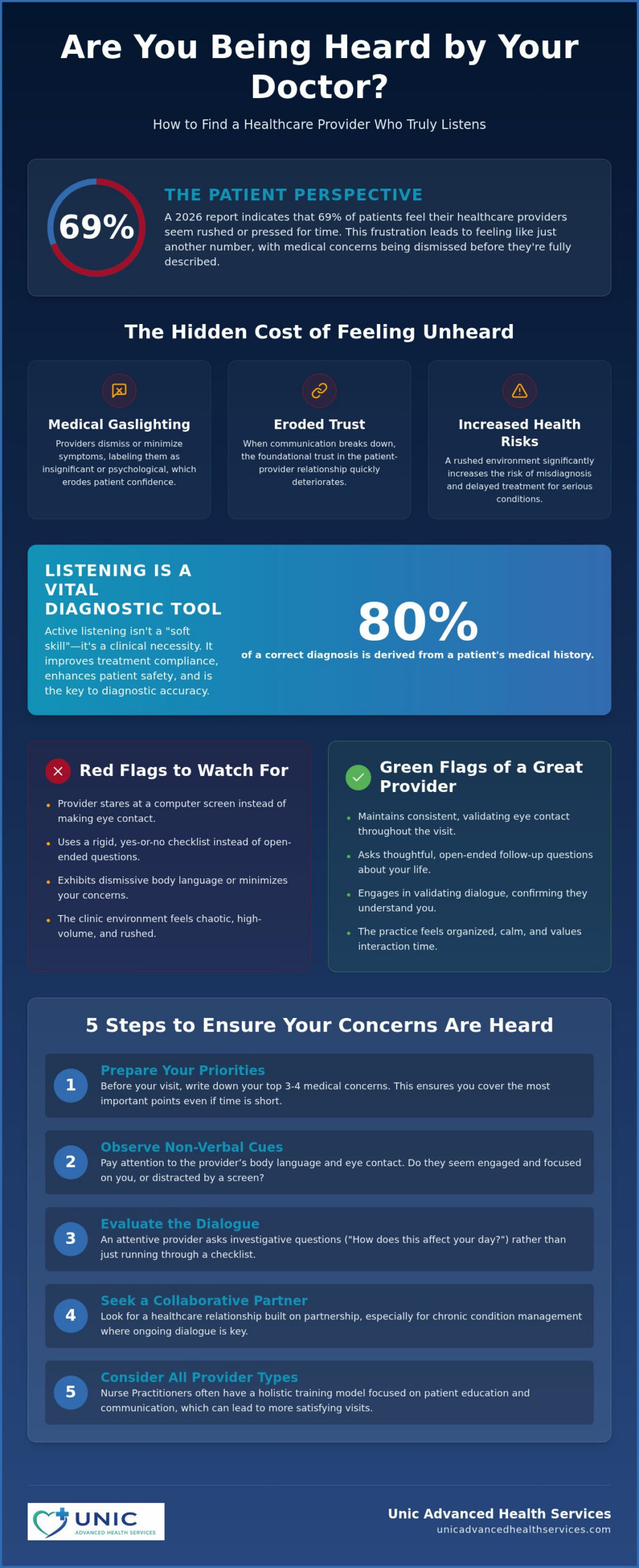
Did you know that 69% of patients in 2026 report that their healthcare providers seem rushed or pressed for time? It’s a frustrating reality when you’re sitting in an exam room, only to feel like your medical concerns are being dismissed before you’ve even finished describing them. You deserve more than a transactional encounter; you deserve a partnership. Finding a doctor who listens Fort Lauderdale shouldn’t feel like an impossible task, yet many residents struggle with short appointment times that prevent thorough discussion and lead to feeling like just another number.
We agree that quality healthcare starts with a provider who views listening as a diagnostic tool, not a luxury. This guide will help you discover how to identify healthcare providers who prioritize active listening and learn the specific steps to ensure your medical concerns are fully addressed. We’ll explore the essential traits of attentive care, provide a checklist for your next consultation, and explain how a collaborative relationship leads to a clearer treatment plan based on your full medical history. You can move toward a healthcare experience where you feel heard, respected, and genuinely supported at every step of your journey.
Key Takeaways
- Understand how active listening serves as a vital diagnostic tool to prevent misdiagnosis and ensure your long-term wellness.
- Master the art of finding a doctor who listens Fort Lauderdale by evaluating non-verbal cues, such as consistent eye contact and investigative questioning.
- Differentiate between dismissive body language and the validating, investigative dialogue that signals a provider is fully engaged with your health.
- Learn a five-step preparation strategy to ensure your top medical concerns are addressed thoroughly during every consultation.
- Discover how personalized primary care and empathetic chronic condition management can transform your relationship with your healthcare provider.
The Hidden Cost of Feeling Unheard in Modern Healthcare
Many patients in South Florida leave their appointments feeling more anxious than when they arrived. This emotional toll often stems from “medical gaslighting,” a phenomenon where a provider dismisses or minimizes a patient’s reported symptoms as insignificant or purely psychological. When your concerns are ignored, the foundation of trust between you and your healthcare provider erodes quickly. This isn’t just a matter of poor bedside manner; it’s a systemic issue. The traditional 10-minute appointment model, common in many high-volume clinics, simply doesn’t allow enough time for a thorough clinical discussion. If you’ve spent more time in the waiting room than with your provider, you’re rightfully frustrated with the lack of attention. Finding a doctor who listens Fort Lauderdale is essential because when communication breaks down, the risk of misdiagnosis and delayed treatment increases significantly. A rushed environment often leads to providers treating symptoms in isolation rather than looking at the comprehensive picture of your health.
Why Active Listening is a Vital Diagnostic Tool
Clinical research consistently shows that approximately 80% of a correct diagnosis is derived from a patient’s medical history rather than expensive imaging or lab tests alone. This makes active listening the most valuable diagnostic tool in a provider’s arsenal. In a 2026 clinical setting, patient-centered care means the provider acts as a professional guide who values your lived experience and personal observations. Empathy isn’t just a “soft skill” in this context. It’s a clinical necessity that improves treatment compliance and patient safety. When you feel understood, you’re more likely to follow a prescribed regimen and share sensitive information that could be the key to your recovery. True diagnostic accuracy requires a provider who is willing to pause, observe, and ask the right questions during every consultation.
The Impact on Chronic Condition Management
Effective healthcare requires a steady hand and a long-term partnership, especially when managing complex issues. Listening becomes even more critical when treating chronic illnesses like diabetes and hypertension. These conditions require constant adjustment and a deep understanding of your daily lifestyle, which can’t be captured in a rushed checklist. Collaborative care ensures that your treatment plan is sustainable and tailored to your specific needs, leading to superior long-term health outcomes and reduced hospitalizations. Active listening serves as the essential bridge between the symptoms you experience and the clinical solutions that restore your quality of life. By prioritizing your voice, providers can identify subtle changes in your condition before they become major medical emergencies.
How to Identify a Healthcare Provider Who Actually Listens
Identifying a provider who truly hears you requires paying close attention to specific behavioral cues during your initial consultation. One of the most telling signs is how the provider manages technology. A clinician who maintains consistent eye contact rather than staring at a computer screen demonstrates that your narrative is the priority. When you’re finding a doctor who listens Fort Lauderdale, you should also evaluate the type of questions they ask. Attentive providers use open-ended follow-up questions like “Can you describe how this affects your daily routine?” instead of sticking to a rigid, yes-or-no checklist.
Beyond the exam room, the clinic’s operational pace offers clues. A chaotic, high-volume clinic often forces even well-meaning providers to rush through their schedule. In contrast, a steady practice with organized scheduling suggests the administration values patient-provider interaction. Online reviews can provide additional insight; look for specific mentions of “bedside manner,” “patience,” and “thoroughness” rather than just general ratings. These qualitative details often reveal more about the patient experience than a simple star count.
The Nurse Practitioner Advantage in Patient Communication
Many patients find that Nurse Practitioners (NPs) offer a distinct advantage in communication. The NP training model is fundamentally holistic, focusing on the patient as a whole person rather than a set of symptoms. This approach prioritizes patient education and long-term partnership, which often leads to more satisfying consultations. In Florida’s personalized primary care model, NPs are known for spending more time discussing lifestyle factors and preventive strategies. This dedication to dialogue helps build the trust necessary for managing complex health journeys. If you value a provider who treats you as an individual, consider exploring a patient-first primary care practice that emphasizes these collaborative values.
Researching Local Fort Lauderdale Providers
When searching for independent practices, use local directories to identify providers who operate outside of massive hospital systems. These smaller settings often allow for a more intimate and less hurried atmosphere. It’s also beneficial to seek out providers who offer telehealth options for follow-ups, as this flexibility shows a commitment to accessible, ongoing communication. In Florida, look for clinicians with “autonomous practice” status. This designation indicates a high level of expertise and the ability to manage your care with full professional independence. Selecting a provider with this status ensures you’re working with a highly skilled professional who is equipped to handle comprehensive evaluations and long-term health strategies.
Red Flags vs. Green Flags in Your First Medical Consultation
The first consultation is a mutual interview. While you evaluate the provider’s clinical expertise, you must also observe their communication style. Finding a doctor who listens Fort Lauderdale requires a keen eye for subtle non-verbal cues. If a provider stands by the door with their hand on the knob, they’re signaling they are already mentally finished with the visit. This physical distance creates a barrier to meaningful dialogue. Conversely, a provider who sits down and faces you directly demonstrates a commitment to the present moment. They treat the consultation as a collaborative session rather than a task to be checked off a list.
Pay close attention to the vocabulary used during the exam. Dismissive language often sounds like “That’s just part of aging” or “Don’t worry about that.” Validating language sounds investigative: “Tell me more about how that sensation feels” or “Let’s explore why that might be happening.” One of the most significant green flags is the “Is there anything else?” question. A provider who asks this before concluding the visit shows they value your perspective and want to ensure no stone is left unturned. It proves they aren’t just looking for the most obvious symptom but are interested in your total well-being.
A practice’s infrastructure also reflects its commitment to thoroughness. Practices that offer on-site lab services suggest a proactive approach to care. It indicates the provider wants immediate, precise data to inform your treatment plan rather than relying on guesswork or external referrals that delay results. This level of organization supports a more efficient and reliable diagnostic process.
Green Flags: Signs of a Healthy Partnership
A healthy partnership is built on clarity and transparency. You know you’ve found a good match when the provider summarizes your concerns back to you to ensure they haven’t missed a detail. They don’t just focus on immediate symptoms; they inquire about lifestyle factors, stress levels, and sleep patterns. Additionally, they take the time to explain the “why” behind every diagnostic test they order. This educational approach empowers you to take an active role in your own health journey. It transforms the medical experience from something that happens to you into something you navigate together.
Red Flags: When to Keep Looking
Some behaviors are clear indicators that a provider is not the right fit for attentive care. Research suggests that many doctors interrupt patients within the first 30 seconds of speaking. Frequent interruptions prevent you from providing a full clinical picture. Watch for visible signs of impatience, such as sighing or checking a watch, when you ask for clarification on a complex topic. A “one-size-fits-all” approach that ignores your specific health history or personal preferences is a major warning sign. If your provider seems more interested in following a generic protocol than understanding your unique situation, it’s time to continue your search for a more dedicated partner.
5 Steps to Ensure Your Concerns Are Heard During Your Visit
Success in the exam room often begins before you even step into the clinic. While finding a doctor who listens Fort Lauderdale is the first step, your active participation ensures the consultation remains productive and focused. You are the expert on your own body; providing clear information helps your provider make more accurate clinical decisions. Follow these five practical steps to maximize your time during your next appointment:
- Prepare a “Top 3” list: Write down your primary concerns in order of importance to ensure the most critical issues are addressed first.
- Bring a second pair of ears: A trusted friend or family member can help you remember complex details and provide emotional support.
- Request a summary: Before leaving, ask the provider to recap the treatment plan to confirm you both have the same understanding.
- Schedule a follow-up: Ask for a telehealth call to discuss lab results in detail so you aren’t rushed during the initial visit.
- Practice radical honesty: Be open about your lifestyle, including any barriers like cost or time that might prevent you from following medical advice.
If you are ready for a different kind of medical experience, consider reaching out to a primary care provider in Fort Lauderdale who values your input and prioritizes your long-term wellness.
Preparing Your Medical History for Success
Your medical history is a map that guides your provider toward the right diagnosis. Create a concise timeline of your symptoms, including when they started and what treatments you’ve already tried. List all current medications and supplements clearly to avoid potential drug interactions. Always lead with your most frightening or severe symptom first to ensure it receives the clinical attention it deserves. This organized approach reduces the anxiety of trying to remember facts under pressure and allows more time for meaningful discussion.
Effective Communication Strategies in the Exam Room
Using “I” statements can help you express your needs without creating a defensive atmosphere. For example, saying “I feel unheard when my symptoms are attributed only to stress” is more effective than making accusations. Don’t be afraid to ask: “What are our alternative options if this doesn’t work?” This question encourages the provider to think critically about your unique case. Ensuring you understand the annual physical exam process also helps you know what to expect and when to speak up about specific health goals. A collaborative relationship is built on this type of transparent, two-way communication.
Personalized Primary Care at Unic Advanced Health Services
Unic Advanced Health Services, led by Marc Joseph (NP), offers a deliberate shift away from the impersonal nature of high-volume clinics. Marc Joseph’s philosophy is rooted in an empathetic, patient-first perspective that prioritizes the human element of medicine. When you’re finding a doctor who listens Fort Lauderdale, you’re looking for a clinician who views your medical history as a narrative rather than a data point. This practice is designed as a medical partnership built on trust. It ensures that every patient feels heard, respected, and valued during their consultations.
The role of a Nurse Practitioner (NP) is vital in this personalized primary care model. NPs are trained with a holistic focus that bridges the gap between expert clinical oversight and compassionate communication. This approach is particularly beneficial for managing complex chronic conditions where lifestyle and emotional well-being are as important as medication. By choosing an NP-led practice, you’re selecting a dedicated advocate who is well-versed in long-term health strategies. You’re choosing a professional who remains approachable and human while solving complex health problems.
A Steady Hand for Fort Lauderdale Residents
Accessibility is a cornerstone of reliable healthcare. Unic Advanced Health Services provides convenient Monday-Saturday hours to accommodate busy professionals and families. This availability ensures that your care remains consistent. It ensures that you have a steady hand to guide you through health challenges. It ensures that your time is respected. The practice emphasizes modern efficiency combined with traditional values of thoroughness. This includes providing on-site lab work and diagnostic testing to streamline your path to a clear treatment plan.
Next Steps: Booking Your First Attentive Consultation
Transitioning to a provider who listens is a straightforward process that begins with your first comprehensive wellness evaluation. During this visit, we’ll review your full medical history, current concerns, and long-term health goals without the pressure of a ticking clock. Our team will assist you in transferring your existing medical records to ensure continuity of care. This is your opportunity to experience a healthcare environment where your voice is the most important tool in the room. Schedule your consultation with Unic Advanced Health Services today.
Your Path to a Collaborative Healthcare Partnership
Securing high-quality medical care requires more than just clinical expertise; it demands a provider who treats communication as a vital diagnostic tool. By identifying green flags like investigative questioning and preparing for your consultations with clear timelines, you can move away from the frustration of rushed, transactional visits. Finding a doctor who listens Fort Lauderdale is the first step toward regaining control over your health journey and ensuring that your treatment plan reflects your unique medical history. You deserve a healthcare experience where your voice is valued and your concerns are never dismissed.
At Unic Advanced Health Services, we specialize in chronic condition management and preventive care designed around your specific needs. Led by an experienced autonomous nurse practitioner, our practice offers a steady hand and a compassionate, patient-first perspective. We provide the convenience of Saturday hours to ensure that thorough, attentive care remains accessible to even the busiest professionals. You don’t have to navigate your health concerns alone. We invite you to book an appointment with a provider who listens at Unic Advanced Health Services and experience a medical relationship built on mutual respect and long-term reliability. Your well-being is our priority, and we look forward to supporting your path to lasting wellness.
Frequently Asked Questions
How do I tell my doctor I don’t feel like they are listening to me?
You should address your concerns directly and respectfully by using “I” statements during your consultation. For example, you might say, “I feel like my concerns about these specific symptoms haven’t been fully explored yet.” This approach shifts the focus to your experience rather than appearing accusatory. A provider who values a collaborative relationship will pause to acknowledge your perspective and adjust their communication style to ensure you feel heard.
Is it okay to switch doctors if I feel rushed during my appointments?
It is entirely appropriate to seek a new provider if your current clinician consistently rushes through your visits. Quality healthcare requires a foundation of trust and thoroughness that cannot be established in a hurried environment. When you are finding a doctor who listens Fort Lauderdale, you are prioritizing your long-term health outcomes. You have the right to a medical partner who allocates the necessary time to understand your full medical history.
Can a nurse practitioner provide the same level of care as a primary care doctor?
Nurse practitioners in Florida provide high-level primary care, including diagnosing conditions, prescribing medications, and managing chronic illnesses. Their clinical training follows a holistic model that emphasizes patient education and empathetic communication. Many patients find that the NP-led approach offers a more personalized experience. Autonomous nurse practitioners are fully equipped to serve as your primary care partner while maintaining a strong focus on attentive, patient-first care.
What should I do if my doctor dismisses my symptoms as “just stress”?
You should ask the provider to document their clinical reasoning and the dismissal of your symptoms in your medical record. Following this, ask what diagnostic tests can be used to rule out other physical causes. This request often encourages a more investigative approach and a more thorough evaluation. If the dismissal continues without a clear diagnostic plan, it is a significant red flag that you may need a second opinion from a more attentive clinician.
How long should a standard primary care appointment in Fort Lauderdale last?
While many high-volume clinics average only 10 to 15 minutes per patient, a comprehensive wellness evaluation should last long enough to address all your primary concerns. The exact duration matters less than the quality of the interaction. An effective appointment allows for a complete review of your symptoms, a discussion of lifestyle factors, and a clear explanation of your treatment plan. You should never feel like the provider is already moving toward the door while you are still speaking.
Are there doctors in Fort Lauderdale who offer Saturday appointments?
Yes, several independent practices and NP-led clinics in the Fort Lauderdale area offer Saturday hours to accommodate busy schedules. These extended hours are a sign that a practice values accessibility and patient convenience. Seeking care on a Saturday can often lead to a more relaxed environment compared to the mid-week rush. This flexibility allows you to focus entirely on your health goals without the pressure of returning to work immediately after your consultation.
What questions should I ask to see if a new doctor is a good listener?
You can evaluate a provider by asking, “How do you approach patients with complex symptoms that don’t have an immediate diagnosis?” or “What is your philosophy on patient-centered care?” Their response will reveal whether they view medicine as a collaborative partnership or a top-down directive. Pay attention to whether they encourage your questions or seem impatient with your need for clarification. A good listener will welcome your engagement and treat your observations as valuable clinical data.
How does telehealth help in finding a doctor who listens?
Telehealth services facilitate more focused discussions by removing the logistical stress of a physical office visit. Many patients find that virtual consultations feel less hurried, allowing for a more intentional exchange of information. When finding a doctor who listens Fort Lauderdale, look for those who use telehealth for detailed follow-ups and lab result reviews. This digital flexibility demonstrates a commitment to maintaining a steady, ongoing dialogue regardless of your physical location.