
Feeling rushed at the doctor’s office isn’t always a sign that your concerns don’t matter. In the United States, a primary care appointment averages 18 minutes, and time spent on electronic records can compete with face-to-face conversation.
If you’ve left an appointment unsure whether you explained everything or understood what comes next, that frustration is understandable. A short visit can make it harder to raise several concerns, but preparing beforehand can help you use the time well and identify what still needs an answer.
This article explains why appointments may feel rushed, how to recognize when an important concern remains unresolved, and practical ways to prepare questions, take notes, and plan follow-up. It also covers when a different approach to primary care may better fit your needs, so you can choose a clear next step.
Key Takeaways
- Prepare a short, prioritized list of concerns so the most important issue is clear from the start of your visit.
- Notice when you leave without understanding the plan, next steps, or how to follow up, and raise those gaps.
- Use notes and direct questions to clarify advice and make sure your main concerns have been addressed.
- If visits repeatedly feel rushed, consider what kind of ongoing primary care relationship and access would better suit your needs.
- For support with ongoing conditions or care through telehealth, Unic Advanced Health Services offers Chronic Condition Management and Telehealth Services.
1. Alternatives when a primary care experience repeatedly feels rushed
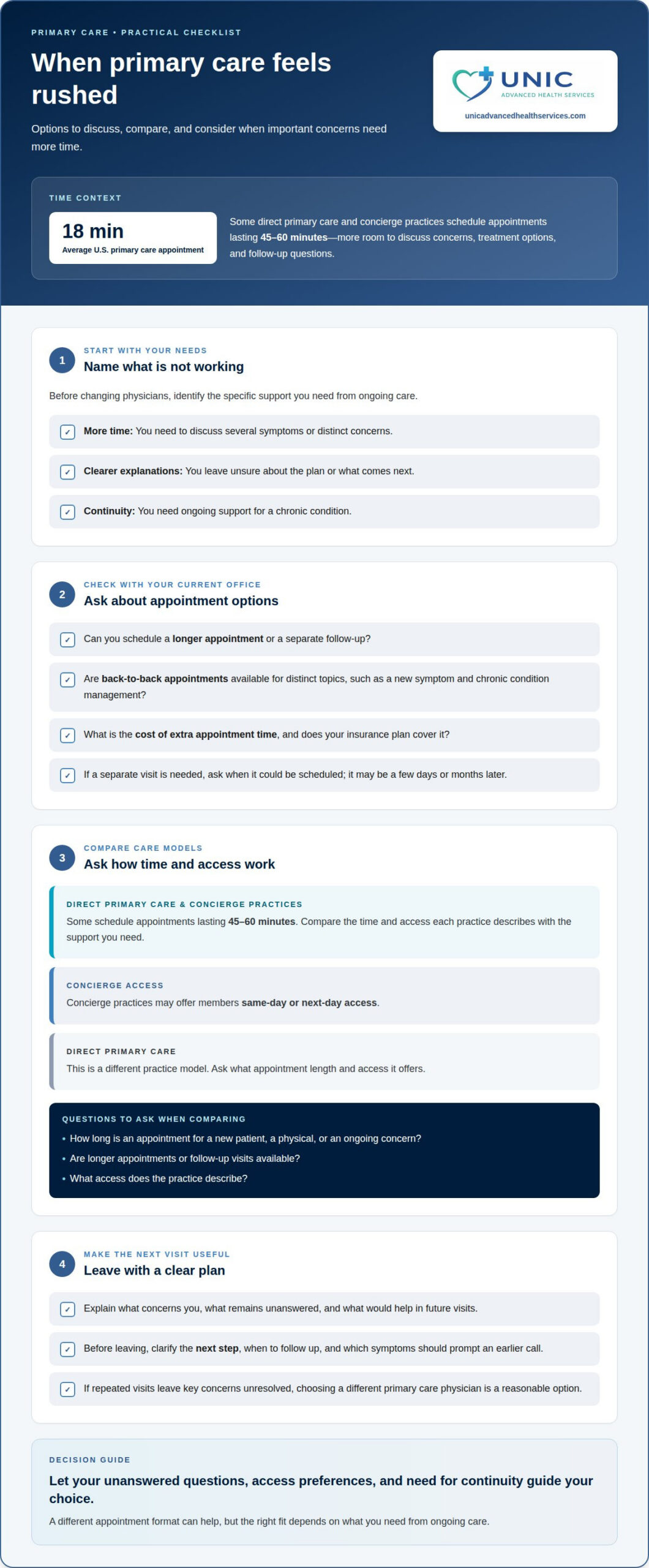
If feeling rushed at the doctor’s office becomes a pattern, consider whether another primary care model fits better. Some direct primary care and concierge practices schedule appointments lasting 45 to 60 minutes. That longer appointment can create more room to discuss several concerns, review treatment options, and ask follow-up questions.
To find a doctor who spends more time with patients, ask how appointment length is set for a new patient, a physical, or a visit about an ongoing concern. Then ask whether longer appointments or follow-up visits are available. Concierge practices may offer same-day or next-day access for members, while direct primary care focuses on a different practice model. Compare the time and access each model describes with the support you need.
Before changing physicians, identify what isn’t working. You may need more time to discuss several symptoms, clearer explanations, or continuity for a chronic condition. Review how the practice schedules appointments and follow-up. Explain what concerns you, what remains unanswered, and what would help in future visits. If the pattern continues, choosing a different primary care physician is a reasonable option.
You can also ask your current office for a longer appointment or a separate follow-up. The clinician may have limited extra time during the current visit, but the office can schedule another appointment, sometimes a few days or months later. Ask about the cost of extra appointment time and whether your insurance plan covers it.
Some offices can schedule back-to-back appointments when available. That may help when you need to discuss distinct topics, such as a new symptom and chronic condition management. Before leaving, clarify the next step, when to follow up, and which symptoms should prompt an earlier call. These details make the plan easier to follow.
- Choose a care model: Compare the appointment length and access offered by direct primary care and concierge practices.
- Discuss a specific need: Ask your current office about a longer visit, follow-up appointment, or back-to-back scheduling.
- Consider a change: If repeated visits leave key concerns unresolved, look for a physician whose appointment structure better matches your needs.
A different appointment format can help, but the right choice depends on what you need from ongoing care. Let your unanswered questions, access preferences, and need for continuity guide your decision.
2. Why Do Doctor Visits Feel So Rushed?
A primary care appointment averages 18 minutes in the United States. That time may cover several tasks, including reviewing symptoms, discussing treatment, and updating records. Harvard Health reports that physicians and primary care providers spend more time on electronic medical records. When documentation competes with conversation, patients may feel their concerns receive only partial attention.
A brief appointment can affect trust as well as what gets discussed. If you feel interrupted or leave without understanding the plan, you may hesitate to mention a symptom next time. For example, someone with recurring dizziness might focus on one episode and leave out when it happens. That missing detail can make it harder to explain the concern and decide what follow-up is appropriate.
Some symptoms need more discussion than a routine check-in allows. Persistent pain, changing symptoms, or several concerns affecting daily life may call for a focused evaluation. At the start of the appointment, explain what has changed and what you most need addressed. If the clinician can’t cover every issue, ask which concern needs follow-up and what to do next.
A concise description can help organize the conversation. Aim to explain the main problem in 1 to 2 minutes: when it began, how often it occurs, what makes it better or worse, and how it affects daily activities. For example: “The headaches started last week, happen each morning, and make it hard to work.” Then pause for questions. Share your worries directly, such as concern that a symptom is worsening.
If a physician seems dismissive, write down the visit date, the concern you raised, and the response you received. You can share feedback or a complaint with the practice’s patient relations contact or manager. For concerns about a physician’s professional conduct in Florida, the Florida Department of Health accepts complaints about health care practitioners.
Severe symptoms need urgent attention, not a routine appointment. Seek emergency care if symptoms feel severe or rapidly worsen. For less urgent concerns, ask the office which symptoms should prompt an earlier call and when to follow up. These questions can help clarify the plan before you leave.
If ongoing symptoms or a chronic condition need structured follow-up, support for ongoing health concerns may be a useful next step.
3. Signs a doctor visit did not address all concerns
A visit may feel unfinished if you leave without a clear explanation of your main symptom. For example, you describe recurring numbness, but the conversation ends without discussing when it occurs. The concern may still need clarification, even if the clinician addressed another issue during the appointment.
Look for gaps in the plan, not just the time spent talking. You may be unsure what a test is meant to answer, how to take a medicine, or when to follow up. If the clinician recommends monitoring a symptom, ask what changes to record and what should prompt another call. A useful plan connects your concern to a next step.
Other signs include leaving without knowing which concern took priority or hearing advice that doesn’t fit your daily experience. Someone with knee pain, for instance, may still need to explain that stairs make it worse. If a recommendation seems difficult to follow, explain what gets in the way, such as your work schedule or a concern about a current medicine.
As a patient, you can speak up when an important concern remains unanswered. Ask the clinician to explain the assessment, options, and next steps in terms you understand. You can also ask how to obtain your visit records or how to submit feedback through the practice’s process.
Before leaving, summarize the plan aloud. You might say, “I’ll track the dizziness and call if it becomes more frequent. Is that right?” This gives the clinician a chance to correct a misunderstanding. If the answer doesn’t address your original concern, restate it plainly and ask what should happen next.
- Check the explanation: Can you describe what the clinician thinks may be causing the problem?
- Check the next step: Do you know what to do, when to follow up, and whom to contact?
- Check the fit: Does the plan account for your symptoms, medicines, and daily routine?
After the visit, write down any unanswered concern, including the symptom and the question you meant to ask. For example, note that a cough happens at night and ask whether that detail changes the follow-up plan. Keeping a record can help you explain the issue in your next conversation.
If symptoms become severe or rapidly worsen, seek emergency care rather than waiting for routine follow-up. For non-urgent concerns that remain unanswered, contact the practice with one clear question, such as whether to continue the current plan or arrange another appointment. A specific request can make it easier to address the gap.
Considering a different doctor
Changing doctors can make sense when the same communication problem continues across visits. Before deciding, identify the pattern. Perhaps you leave without understanding the plan or feel unable to discuss a new symptom. Knowing what’s happening can help you decide what you need from a future primary care relationship.
Consider whether the difficulty came from one appointment or from how your care is organized. A rushed conversation may improve if you ask to focus on one concern. Repeated interruptions or unclear follow-up may point to a larger mismatch. After each visit, note what happened, including the question you raised and whether it was answered.
Before choosing another physician, define what better care would look like for you. You might want time to discuss ongoing symptoms, plain-language explanations, or a clear plan for managing a chronic condition. These preferences give you practical topics to discuss with a practice before establishing care.
- Communication: Explain that you value time to describe symptoms and ask questions.
- Continuity: Ask how follow-up is handled when a concern continues after an appointment.
- Visit purpose: Explain whether you need preventive care, support with a chronic condition, or evaluation of a new concern.
Plan the transition so important details stay organized. Request copies of relevant records, such as recent test results, medication information, and notes about ongoing symptoms. Keep a concise summary of your own, too. For example, list a diagnosis, current treatment, and the question that still needs discussion.
At an introductory visit, notice whether the physician invites you to explain your priorities and checks that you understand the plan. You can say, “I’d like to discuss my recurring fatigue and understand what follow-up makes sense.” Then consider whether the conversation addresses your concern and leaves you with a clear next step.
A good fit isn’t simply a longer appointment. It also means respectful communication, an understandable care plan, and a way to raise concerns between visits. If you have several needs, such as preventive care and ongoing condition management, explain them early so the practice can help organize the discussion.
Changing physicians may not be necessary after one difficult visit. Explain what you need, then see whether the response changes the conversation. If the same concern remains unresolved over repeated visits, use your notes and care priorities to guide a thoughtful transition.
5. Preparing questions and concerns before a visit
A written plan can help you use an appointment well, especially when several concerns compete for attention. Before the visit, choose the issue that most affects your health or daily routine. Write it first, then add other questions in priority order. At the start, tell the clinician you have a short list to discuss.
Make each question specific enough to guide the conversation. Instead of writing “I feel unwell,” note the symptom, when it began, and what you want clarified. For example, ask, “What might explain this fatigue, and what should I watch for?” A focused question gives the clinician a clear starting point and helps you remember the answer.
Prepare a current list of medicines and supplements, including how often you take each one and any recent changes or difficulties following the directions. If a medicine concerns you, describe the effect and when it happens. These practical details can help the clinician review your treatment.
For a new physician, write down major diagnoses in your family history. Include conditions such as diabetes, heart disease, stroke, and cancer, and name the affected relative if you know. This context can help frame questions about your health and preventive care. Keep the list handy rather than relying on memory.
- Main concern: State the symptom or issue you most need to discuss.
- Useful details: Record when it began, how often it occurs, and what changes it.
- Questions: Prioritize what you need explained or decided.
- Care information: Bring medicine names, supplements, doses, and relevant family diagnoses.
At the beginning, summarize your top priority in a few sentences. If you have several topics, ask which can be addressed today and which need follow-up. This helps set expectations and protects time for the concern that matters most. During the visit, mark each question as it’s answered and note anything that still needs clarification.
Before leaving, repeat the next steps in your own words. Confirm what you should do, when to follow up, and what changes should prompt an earlier call. If an answer is unclear, ask the clinician to explain it another way. These small checks can support a collaborative relationship and reduce uncertainty after the visit.
For help discussing ongoing health concerns in a focused primary care visit, schedule a primary care appointment.
Unic Advanced Health Services
Unic Advanced Health Services provides primary care in Fort Lauderdale, including care for ongoing health concerns. Its Chronic Condition Management program supports care for conditions such as diabetes, hypertension, and obesity. Telehealth Services are another option when a remote visit suits your concern.
For specific examination needs, Unic Advanced Health Services also provides DOT Physical Examination and U.S. Coast Guard (USCG) Boat Captain Physical services. These are distinct from chronic condition care, which may suit people seeking ongoing support for a health issue. Consider which type of care matches your concern and the questions you want to discuss.
Contact Unic Advanced Health Services to discuss your care needs and next steps.
Make your next care conversation count
If feeling rushed at the doctor’s office has made you hold back a concern, use that experience to guide your next conversation rather than staying silent. You deserve to understand your care plan and feel able to explain what matters to you. A useful next step is to name the issue you want addressed and ask what follow-up makes sense.
For ongoing health needs, the right care relationship should support clear communication over time. Bring up the questions that remain, describe what has been difficult, and discuss what kind of support would help. If your needs have changed, say so directly. That gives the next conversation a useful starting point.
Connect with Unic Advanced Health Services to discuss your care needs. Taking the first step can help you move toward care conversations that feel clearer, more focused, and centered on your health.
Frequently Asked Questions
Why Do Doctor Visits Feel So Rushed?
Doctor visits can feel rushed when limited appointment time must cover your symptoms, medical history, treatment options, and recordkeeping. In the United States, the average primary care appointment is 18 minutes. The time available for conversation can vary with the visit’s purpose and complexity. If you have several concerns, identify the one that most affects you and tell the clinician what you need to understand before the visit ends.
Why do patients feel rushed during doctor appointments?
Patients may feel rushed when they’re interrupted, have little time to explain a concern, or leave unsure about the care plan. Electronic records can also compete with face-to-face conversation. For example, someone discussing a new medication may still have questions about side effects when the appointment moves to another topic. Naming the gap directly can help: “I still need to understand what to watch for with this medicine.”
How much time do doctors typically spend with each patient in the U.S.?
The average primary care appointment in the United States is 18 minutes. That is an average, not a guarantee of how long an individual appointment will last. Visit length can depend on the reason for care, the practice, and the clinician’s schedule. A focused appointment about one concern may differ from a visit involving several symptoms or ongoing treatment questions. Ask the office about the format when scheduling.
What are signs that a doctor is not giving enough time or attention?
Possible signs include having no chance to finish describing a concern, leaving without understanding the plan, or finding that a key question remains unanswered. One difficult conversation alone may not show a lasting pattern. Consider what happens across visits: can you explain changing symptoms or discuss how treatment affects daily life? If an important point was missed, contact the practice with a clear follow-up question.
How can I prepare for a short doctor appointment to cover my concerns?
Before the appointment, write your main concern first, then list the questions that depend on it. Bring the names and doses of your medicines and supplements, plus relevant health records. For a new physician, note major family diagnoses such as diabetes or heart disease. If you have several topics, tell the clinician at the start and ask which need attention today and which need separate follow-up.
What should I say if I feel rushed at the doctor’s office?
Use a calm, direct sentence to identify what still needs attention. Try, “I have one more concern about these symptoms. Can we discuss the next step?” If time is limited, ask what to address first and how to arrange follow-up for the rest. Before leaving, summarize what you understood and invite correction. This can clarify what you should do, such as monitor a change or contact the practice.
What are the risks of feeling rushed during a medical appointment?
A rushed conversation can leave important symptom details or questions unspoken, and you may leave unsure how to follow the plan. For example, forgetting to mention that a symptom has changed can leave the discussion incomplete. Feeling unheard may also make it harder to raise concerns at a later visit. If symptoms are severe or rapidly worsening, seek emergency care rather than waiting for routine follow-up.