
Fear can turn a routine appointment into something that feels hard to face. The clinical term for a phobia of doctors is iatrophobia, and fear of going to the doctor may involve intense anxiety about medical visits, tests or procedures. A formal diagnosis requires intense fear of doctors or medical tests that persists for at least six months.
Worry about pain, an anticipated diagnosis, or a difficult past experience can all contribute to fear of going to the doctor. Signs may include panic, trouble sleeping, or difficulty concentrating before an appointment. If medical visits make you anxious, ask the health professional to explain what will happen step by step, including any tests or procedures. This article explains iatrophobia, explores possible causes and signs, and offers practical ways to make conversations about care clearer and more manageable.
Key Takeaways
- Ask your health professional what tests or procedures to expect, and request a step-by-step explanation in clear language.
- Iatrophobia is the clinical term for a phobia of doctors; intense fear that persists for at least six months may meet a formal diagnostic criterion.
- Fear may be connected to painful procedures, health concerns, an anticipated diagnosis or a difficult past medical experience.
- Notice whether anxiety brings panic, disrupts sleep or concentration, or leads you to avoid needed care.
- If fear interferes with daily life or medical care, a therapist can help you understand it and develop ways to manage it.
1. Asking doctors to explain procedures step by step
Clear explanations can make an appointment feel more predictable. Before your visit, ask the health professional what tests or procedures to expect. Knowing whether the plan includes a blood draw, an examination, or both can help you prepare specific questions. If you’re unsure what a medical term means, ask for a plain-language explanation before moving on.
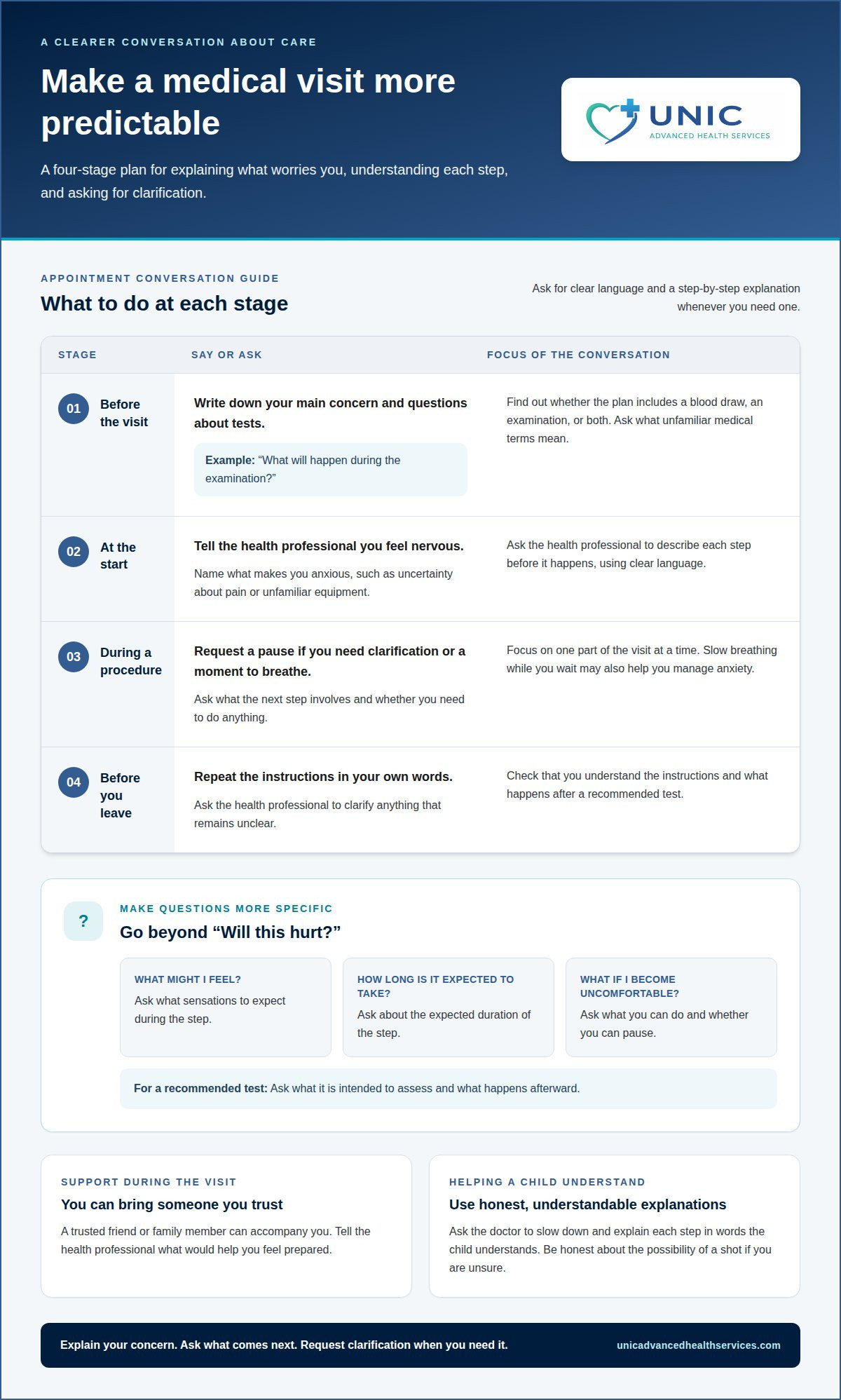
To manage anxiety before and during an appointment, tell the health professional you feel nervous and ask for a step-by-step explanation. You can also bring a trusted friend or family member for support and use slow breathing while you wait. These steps give the care team useful context and help you focus on one part of the visit at a time.
A short plan can help you take part in the conversation:
- Before the visit: Write down your main concern and any questions about tests. For example, ask, “What will happen during the examination?”
- At the start: Say what makes you anxious, such as uncertainty about pain or unfamiliar equipment. Ask the health professional to describe each step before it happens.
- During a procedure: Request a pause if you need clarification or a moment to breathe. Ask what the next step involves and whether you need to do anything.
- Before you leave: Repeat the instructions in your own words. Ask the health professional to clarify anything that remains unclear.
Specific questions can make an explanation more useful. Instead of asking only, “Will this hurt?”, ask what you may feel, how long the step is expected to take, and what you can do if you become uncomfortable. If a test is recommended, ask what it is intended to assess and what happens afterward. These questions help distinguish the procedure itself from worries about what it might mean.
Parents can help a child by asking the doctor to slow down, explain each step, and use words the child understands. Be honest about the possibility of a shot rather than promising there won’t be one when you aren’t sure. For example, you might say, “The doctor will explain whether you need a shot, and we can ask questions together.” This helps the child follow the conversation and understand what to expect.
If fear of going to the doctor makes it hard to attend, consider asking a loved one to accompany you and telling the health professional what would help you feel prepared. You don’t need to hide your anxiety to communicate clearly. Explain your concern, ask what comes next, and request clarification whenever you need it.
2. Definition and meaning of iatrophobia
Iatrophobia is the clinical term for a phobia of doctors. The fear may focus on a medical professional, a medical test, or the prospect of attending an appointment. For example, someone may feel intense dread before seeing a doctor, even for a routine visit. The term describes a specific fear, not simply a preference to avoid appointments.
Feeling nervous before a visit doesn’t automatically mean someone has iatrophobia. A person might dislike blood tests yet still attend and manage the appointment. A phobia involves intense, persistent fear rather than temporary worry about an unfamiliar procedure. The intensity and duration of the fear matter when distinguishing a phobia from ordinary apprehension.
A formal diagnosis of iatrophobia requires intense fear of doctors or medical tests that persists for at least six months. That duration is an important part of the stated diagnostic criterion. A brief reaction to one difficult appointment, by itself, doesn’t establish the diagnosis. A qualified health professional can assess the person’s experience and how long it has lasted.
The fear can be linked to different parts of medical care. One person may dread a doctor’s office, while another may focus on examinations or tests. Someone else may feel anxious about receiving health news, even before any test takes place. These examples describe possible forms of the fear, not a checklist that everyone must meet.
Specific phobic disorders affect about 12% of American adults and about 19% of children and adolescents. Those figures describe specific phobic disorders overall, not iatrophobia alone. Separately, about a third of adults report anxiety or fear surrounding doctor visits. That broader experience includes anxiety and fear, so it shouldn’t be mistaken for a count of people diagnosed with a phobia.
The distinction matters because fear can affect whether someone receives care. A person may cancel or reschedule appointments, or miss preventive care and vaccinations. Another person may attend but feel unable to ask questions or concentrate on what the doctor says. These examples show how the experience can vary, even when the central concern is medical visits.
Consider the pattern, not just one difficult day. Ask yourself whether the fear involves doctors or medical tests, how long it has lasted, and whether it affects appointment decisions. For instance, repeated cancellations over time are useful context to share with a health professional. These details can support a discussion without requiring you to label yourself or diagnose yourself.
Iatrophobia names a specific, persistent fear; it doesn’t explain its cause or prescribe one response. A health professional can discuss the fear, its duration, and the care it affects. If appointments feel difficult, describing your experience is a useful first step. Details such as fear of tests or avoiding visits can make the conversation more focused.
3. Possible causes of fear of doctors
Fear can begin with a specific part of medical care, such as a painful procedure or examination. Someone who remembers discomfort during a previous test may anticipate the same experience at the next appointment. The expectation of pain can become associated with the doctor’s office itself. Naming the feared detail, such as needles or physical discomfort, helps explain what feels difficult.
An anticipated diagnosis can also trigger anxiety before a doctor has assessed the concern. For example, someone who notices a new symptom may worry about receiving serious news during an appointment. A difficult interaction with a doctor or a distressing previous visit can contribute too. These experiences can shape expectations for later visits, even when the circumstances are different.
Medical fears may overlap. A person afraid of doctors might also fear dentists, hospitals, sickness, or particular illnesses. For instance, worry about a hospital may involve the setting, while concern about illness centers on what a symptom could mean. Naming the specific trigger can make a conversation with a therapist more focused than describing every visit as frightening.
Some people notice a physical response in a doctor’s office. White coat syndrome means blood pressure is high when a person sees a doctor, while home readings remain in a healthy range. The term describes this blood pressure pattern. It isn’t the same as a phobia, although anxiety related to the office may be part of the experience.
Therapy can address thoughts and actions connected with medical fear. Cognitive behavioral therapy, or CBT, can help someone examine their thoughts, feelings, and behaviors, then learn strategies to change perceptions and responses. Exposure therapy may combine relaxation techniques with gradual contact with phobia triggers. For example, a therapist might help someone work toward facing a feared medical setting in manageable steps.
Start by noticing what happens before, during, and after an appointment. You might record whether your strongest worry involves pain, an expected diagnosis, a past experience, or a particular setting. Then consider how the fear affects your choices, such as postponing a visit or avoiding a test. This information can help a therapist understand the pattern and choose approaches that address your specific concerns.
Not every anxious reaction has one clear cause. A painful procedure, a difficult conversation, and worry about illness may combine, or the fear may center on one trigger. A therapist can help explore those connections and build coping strategies. If anxiety relates to a particular medical test, describing that concern directly can clarify what support may help during care.
4. Recognizing when medical anxiety may need additional attention
Medical anxiety deserves attention when it repeatedly disrupts care or daily activities. For example, someone who cancels appointments, avoids needed visits, or tries to treat an illness alone is dealing with more than a difficult moment. Write down what happens before and after appointments, including missed care and any panic episodes. This record can help clarify how anxiety affects health decisions.
Repeated panic attacks can lead to panic disorder, so recurring episodes are worth discussing with a mental health professional. Note when each episode happens and whether it connects with a doctor, a test, or another situation. A therapist can help you understand the source of doctor-related fear and learn strategies to manage it. This support focuses on the pattern, not blame.
For a child, pay attention to what happens after the appointment ends. A child who remains preoccupied with the visit or their health afterward may need additional support. Notice whether worry continues during ordinary activities, such as play, schoolwork, or time with family. Anxiety that interferes with a child’s ability to focus on other activities also deserves attention.
To find a doctor who is sensitive to anxiety or medical trauma, explain your needs when arranging or beginning a visit. For example, say that a past experience makes examinations difficult and that you need the clinician to describe each step before proceeding. Notice how the doctor responds and whether you can express your concerns. If you remain uncomfortable, consider seeing another doctor, nurse practitioner, or physician assistant.
A practical next step is to identify the part of care that feels hardest. Is it the waiting room, a conversation about symptoms, or the possibility of a test? Sharing one specific concern gives a therapist or health professional a clearer place to begin. If panic or avoidance has already led you to miss appointments, mention that too.
Telemedicine can be an option when it’s available and appropriate, especially if traveling to an office or entering the setting feels difficult. A virtual visit can offer a different starting point for discussing concerns with a health professional. It doesn’t replace every kind of in-person care, but when suitable, it can support a conversation about next steps.
Routine medical care remains important, even when anxiety makes appointments challenging. Scheduling wellness visits in advance can give you time to prepare questions and arrange support. If anxiety keeps disrupting care, share that pattern with a therapist or health professional. Specific examples, such as repeated cancellations or a child unable to focus after a visit, make the concern easier to explain.
5. Signs that fear may be a phobia
A phobia of doctors can appear as general anxiety or outright panic. Before an appointment, a person may find it hard to concentrate, lose sleep, stop eating, or cry at the thought of going. These reactions can begin days before a visit or intensify as it approaches. One symptom alone doesn’t establish a phobia, but a recurring pattern is worth discussing.
Notice what happens as you prepare for care. For example, someone may lie awake thinking about a scheduled examination, struggle to focus at work, or feel tearful while getting ready to leave home. Another person may feel mounting anxiety at the thought of a medical test. Recording when these reactions occur can show whether they’re tied to appointments or specific parts of care.
The intensity and persistence of fear matter. A formal diagnosis of iatrophobia requires intense fear of doctors or medical tests that persists for at least six months. That duration helps distinguish a lasting pattern from temporary worry about one upcoming visit. A health professional assesses the person’s experience. A symptom list can help explain it, but it cannot replace an assessment.
Consider how symptoms affect decisions and daily routines. A person might lose sleep before each appointment, struggle to eat on the morning of a test, or find ordinary tasks difficult while anticipating a visit. The important detail is the repeated link between the medical situation and the fear. Track what triggers the reaction and how it changes over time.
Children may also show distress by crying or having difficulty concentrating as an appointment approaches. For example, a child might repeatedly return to worries about a planned examination instead of focusing on schoolwork or play. Consider how long the worry lasts and whether it continues after the visit. These observations can help a parent describe the child’s experience to a health professional.
To prepare for that conversation, note the feared situation, the reactions, and their effect on care. Write down examples such as “couldn’t sleep before the test” or “cried while getting ready for the appointment.” Include how long the pattern has been present, especially if it has continued for six months or more. Specific examples give a clinician clearer context than a general statement about nervousness.
If these signs are making routine medical care difficult, contact Unic Advanced Health Services to discuss your care needs.
Unic Advanced Health Services
Unic Advanced Health Services provides primary care options for people who find medical visits difficult in Fort Lauderdale. Telehealth Services may offer a way to discuss health concerns from home when a virtual visit is appropriate. For ongoing health needs, Chronic Condition Management provides care focused on conditions such as diabetes, hypertension, and obesity.
You can explain what makes appointments stressful and ask questions about the care you need. For routine wellness needs, Annual Physicals and Preventive Care can help you stay engaged with ongoing care in Fort Lauderdale. These services don’t replace therapy for a phobia, but they can support medical care while you address anxiety with a mental health professional.
Contact Unic Advanced Health Services to discuss your primary care needs.
Take the Next Step at Your Pace
Living with fear of going to the doctor doesn’t mean you have to manage every health decision alone. A useful next step is to identify the care you need and share concerns that could make an appointment difficult. You can ask questions, explain what would help you feel prepared, and discuss a suitable way to access care in Fort Lauderdale.
Unic Advanced Health Services provides Chronic Condition Management for ongoing health needs, as well as DOT Physical Examination and U.S. Coast Guard (USCG) Boat Captain Physical services in Fort Lauderdale. These services address specific medical needs, while support for a phobia itself may involve a therapist. The right next step depends on the care you’re seeking.
If you’re ready to discuss your primary care needs, contact Unic Advanced Health Services. A clear conversation can help you move toward care in a way that feels manageable.
Frequently Asked Questions
What is a phobia of doctors?
A phobia of doctors is an intense, persistent fear connected with medical professionals or medical tests. It can affect someone who feels panic before a routine checkup, not only someone facing a procedure. The fear may lead them to avoid appointments or tests. A health professional can assess its intensity, duration, and effect on care to determine whether it meets the criteria for a phobia.
Why do some people have a fear of going to the doctor?
People may feel afraid because they anticipate pain, worry about a diagnosis, or remember a difficult medical experience. The fear can also involve a related concern, such as hospitals or illness. These triggers can overlap: for example, a painful test in the past may increase worry about what a future appointment will involve. Identifying the specific concern can help someone explain their needs during a conversation about care.
What is iatrophobia?
Iatrophobia is the clinical term for a phobia of doctors. The term alone doesn’t diagnose anyone or identify the cause of their fear. A formal diagnosis requires intense fear of doctors or medical tests that persists for at least six months. If you’re concerned about your reactions, tell a qualified health professional how long they’ve lasted and how they affect your medical decisions.
What questions should I ask?
Ask questions that clarify the purpose and sequence of care. For example: “What are you looking for with this test?”, “What might I feel during it?”, and “What should I expect afterward?” If you’re worried about a possible diagnosis, ask what the next steps would be for different results. You can also ask how to pause and discuss your concerns if anxiety rises during the visit.
When should I seek help?
Seek support when anxiety repeatedly interferes with appointments, preventive care, or your ability to focus on daily activities. Tell a therapist or health professional if you’ve postponed care, experienced repeated panic attacks, or tried to manage an illness without medical advice. For a child, ongoing worry after an appointment or difficulty returning attention to school and play can be reasons to discuss additional support.
What causes fear of doctors and medical appointments?
There may be more than one trigger. A negative past visit, fear of procedures, concern about pain, and dread of a diagnosis can combine. Some people also experience white coat syndrome, in which blood pressure is high during a doctor visit but home readings are in a healthy range. Describe the setting and circumstances of your anxiety to help a health professional understand your experience.
What are common symptoms of doctor anxiety?
Symptoms can include general anxiety or panic, difficulty concentrating, lost sleep, not eating, or crying at the thought of an appointment. Anxiety may also raise blood pressure during a doctor visit. Notice when these reactions begin, what situations trigger them, and whether they affect your ability to attend. Recording these details can give a health professional a clearer picture of your experience.
What should I do if fear of doctors is preventing me from getting necessary care?
Tell a health professional that fear is keeping you from attending, and name the specific obstacle, such as travel, the office setting, or a particular test. Ask a trusted person to accompany you, and ask whether a virtual visit is appropriate for your needs. A therapist can help you work on the fear, while scheduling routine care in advance may give you more time to prepare.