The DOT physical isn’t a test you simply pass or fail; it’s a compliance process where your level of preparation is the primary differentiator between leaving with a medical card or leaving with a “pending” status. Many drivers walk into their appointments feeling anxious that a single missing document could sideline their career. Knowing exactly what to bring to a DOT physical exam is the most effective way to protect your livelihood and avoid unnecessary delays.
We understand that the pressure to maintain your CDL is high, especially with the 2026 federal standards and evolving electronic reporting requirements. It’s frustrating to manage tight hauling schedules while trying to figure out if your CPAP logs or diabetic records meet current FMCSA guidelines. This guide provides a comprehensive checklist of every document and medical record you need for a successful 2026 certification. We’ll walk you through the specific requirements for chronic conditions, vision, and hearing so you can walk into your exam with total confidence and a steady hand on your professional future.
Key Takeaways
- Bring a valid government-issued photo ID and your current CDL or permit to establish your identity and licensing eligibility.
- Drivers managing chronic conditions should gather specific clinical records, like recent A1C results or 90-day CPAP compliance logs, before their appointment.
- Our guide simplifies what to bring to a DOT physical exam by detailing the exact medical records and corrective devices required for a successful certification.
- Small adjustments on the day of your exam, such as avoiding energy drinks and drinking plenty of water, can significantly improve your clinical readings.
- Working with a dedicated expert in Fort Lauderdale ensures you have a steady hand to guide you through complex 2026 federal medical requirements.
Essential Identification and Licensing Documentation
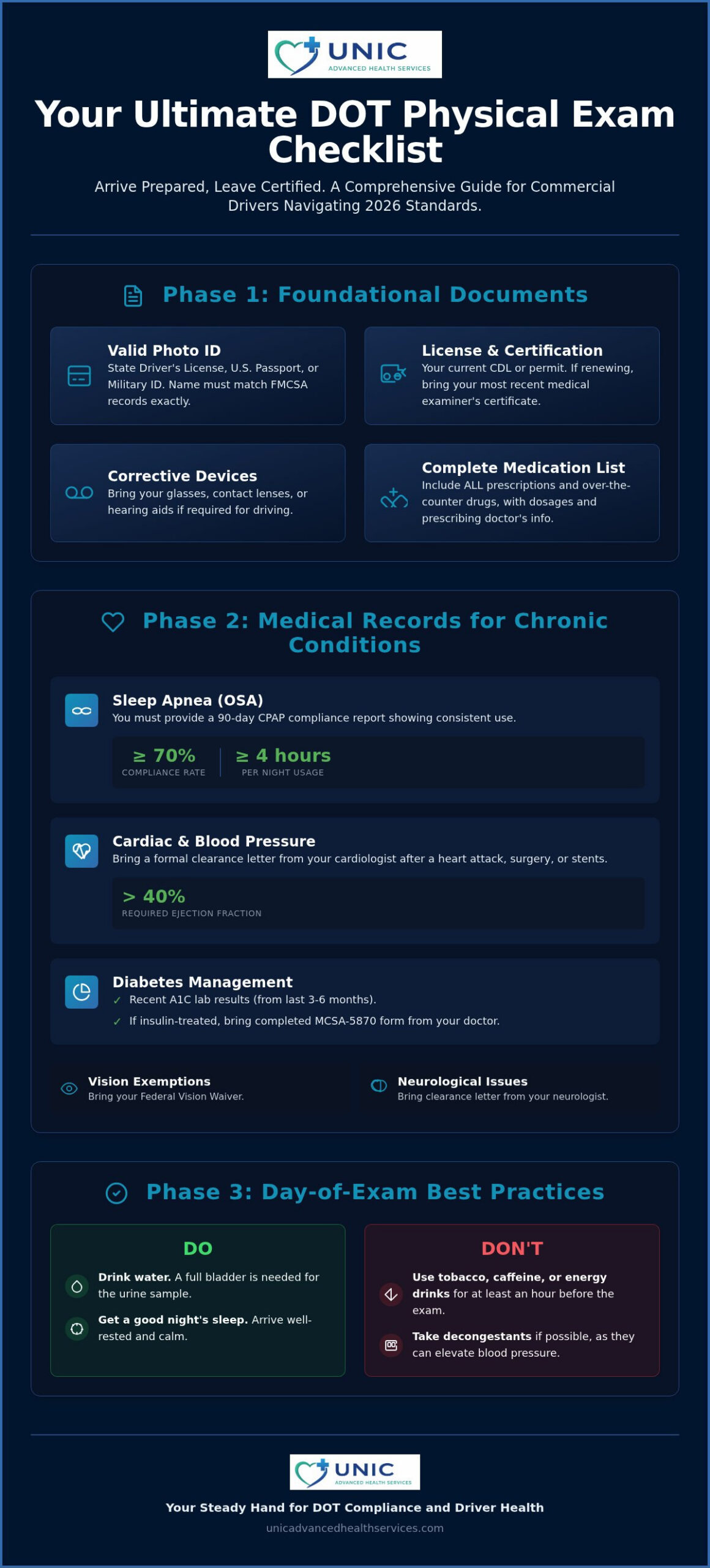
Before you sit for your evaluation, the medical examiner must verify your identity and professional status. This step is the foundation of your clinical record. When considering what to bring to a DOT physical exam, your identification is the most critical piece of the puzzle. Without valid documentation, the exam cannot legally proceed, and you may be required to reschedule your appointment.
Primary Forms of Identification
A state-issued driver’s license is the gold standard for these exams. It confirms your identity and your current driving status in a single document. If you are an initial applicant or a Commercial Learner’s Permit (CLP) holder who doesn’t have a state license yet, you can use a valid U.S. passport or a military ID. It’s vital that the name on your identification matches your records in the FMCSA portal exactly. As we move into 2026, the integration of digital medical certificates makes this consistency even more important for seamless data transmission to state licensing agencies. If you are a non-US citizen, ensure you have your permanent resident card or employment authorization document ready to avoid administrative delays.
Previous Medical Certification Records
If you’re renewing your status, bring your most recent medical examiner’s certificate. This is especially important for drivers who hold specific CDL Medical Requirements waivers or exemptions. If you have a ‘Skills Performance Evaluation’ (SPE) certificate for a limb impairment, you must present the original document for review. Providing your previous certificate’s expiration date helps the examiner maintain a continuous medical history. This continuity is a key part of the federal government’s shift toward fully integrated electronic records, which aims to reduce the paperwork burden on drivers over the long term.
Lastly, prepare a clear list of contact information for your primary care physician and any specialists you see. If the examiner needs to clarify a specific health history point, having these numbers ready shows you are a proactive and organized professional. It helps us act as a steady hand during the certification process, ensuring we can reach out for necessary clinical data without wasting your time. This level of preparation is what separates a stressful appointment from a smooth, professional experience. Having these details on hand allows for a more collaborative relationship between you and your healthcare provider.
Medical Records for Chronic Condition Management
For many commercial drivers, the most stressful part of the certification process involves documenting long-term health issues. A diagnosis like diabetes, hypertension, or sleep apnea doesn’t automatically end your career, but failing to provide the correct clinical data can lead to a “pending” status. Understanding the DOT Physical Checklist requirements for these conditions ensures you arrive prepared. When you’re deciding what to bring to a DOT physical exam, specialized medical records should be at the top of your list.
Managing Diabetes and Vision Requirements
If you manage diabetes, you must provide your most recent A1C lab results, ideally from the last 3 to 6 months. For those using insulin, the FMCSA requires the Insulin-Treated Diabetes Mellitus (ITDM) Assessment Form, known as MCSA-5870, completed by your treating clinician. Stable A1C levels are critical for long-term certification and demonstrate that your condition is under control. Additionally, drivers with monocular vision or those operating under a vision exemption must present a valid federal vision waiver at the time of the exam for review.
Sleep Apnea (CPAP) Compliance Reports
Obstructive Sleep Apnea (OSA) is a high-priority area for medical examiners because of its impact on driver alertness. To meet federal standards, you must prove you use your CPAP machine at least 4 hours per night for at least 70% of the time. You should bring a printed 90-day compliance report or have verified digital access ready during the appointment. It’s essential to ensure your machine’s data is current, covering your usage up to the week of your exam, to avoid any gaps in your compliance history.
Cardiac and Blood Pressure Clearances
Heart health requires specific documentation to confirm you can safely handle the physical demands of commercial driving. If you’ve had a heart attack, bypass surgery, or stents, you must bring a formal clearance letter from your cardiologist. This documentation should explicitly confirm that your ‘ejection fraction’—a measure of how much blood your heart pumps with each contraction—is above 40%. For neurological issues like seizures or strokes, a similar letter of clearance from your neurologist is mandatory to prove you’re fit for duty.
Our expertise in chronic care management allows us to act as a supportive partner in your health journey. We help you navigate these complex federal requirements so you can stay on the road safely and legally. Taking the time to gather these specialized records is the best way to ensure your session is productive and stress-free.
Corrective Devices and Medication Lists
The physical evaluation relies on more than just your medical history; it requires a functional assessment of your senses and the substances you use to manage your health. When planning what to bring to a DOT physical exam, you must include any physical aids and a detailed pharmacological record. These items allow the examiner to verify that you can operate a commercial vehicle safely under real-world conditions. Preparation in this area prevents simple mechanical failures, like a dead battery or a forgotten prescription, from delaying your certification.
Vision and Hearing Assistance
If you use prescription glasses or contact lenses, you must bring them to your appointment. The federal standard requires at least 20/40 vision in each eye, with or without correction. During the screening, we’ll test your vision both with and without your lenses to ensure your prescription is adequate for the road. Similarly, hearing aid users must bring their devices and ensure the batteries are fresh. You’ll need to perceive a “forced whisper” from a distance of five feet to meet the hearing requirement. If your hearing aids are required for safe operation, this will be noted on your medical certificate as a restriction you must follow while driving.
The Comprehensive Medication Log
A complete medication list is one of the most vital components of your preparation. This log should include every prescription you take, the specific dosages, and the names of the prescribing physicians. Don’t forget to include over-the-counter supplements or herbal remedies. These products can sometimes interact with other medications or cause unexpected spikes in blood pressure. If you’re taking medication for ADHD or anxiety, you must bring a letter from your treating doctor. This note should confirm that the medication is well-tolerated and doesn’t cause side effects like drowsiness or impaired judgment that would interfere with driving.
While our office provides expert oversight as an autonomous practice, this doesn’t mean the process is unregulated. We must strictly adhere to federal guidelines regarding medication safety during a DOT Physical Examination. For drivers using “exempt” medications, such as certain stimulants or prescribed painkillers, detailed documentation from your specialist is mandatory. This paperwork must state that the prescribing doctor is aware of your safety-sensitive duties as a commercial driver. Having these records ready prevents the need for follow-up appointments and keeps your certification process moving forward.
Day-of Preparation for Optimal Exam Results
Preparation for your certification extends beyond gathering records. While knowing what to bring to a DOT physical exam covers the administrative requirements, your physiological state during the appointment is equally important. The clinical data gathered during the exam, such as blood pressure and urinalysis results, depends heavily on your habits in the 24 hours leading up to your visit. Taking proactive steps ensures your body reflects your true health status rather than a temporary spike caused by stress or diet.
Managing Blood Pressure Readings
High blood pressure is a frequent cause of short-term certifications or temporary disqualifications. To obtain the most accurate reading, avoid caffeine, nicotine, and energy drinks for at least 24 hours before your exam. These stimulants can cause artificial elevations in your heart rate and pressure. We recommend arriving at the clinic 15 minutes early. This allows you to sit quietly in our supportive environment and lower your heart rate before the evaluation begins. If you tend to experience “white coat syndrome,” focus on slow, deep breathing during the cuff reading to stay calm. Another helpful strategy is to empty your bladder after the initial blood pressure check if possible, as a full bladder can sometimes cause a slight increase in pressure readings.
Nutrition and Hydration Tips
Your diet the night before the exam can influence your results. Avoid high-sodium foods like processed meats or fast food, which can cause fluid retention and temporary blood pressure spikes. Instead, prioritize getting at least 7 to 8 hours of restful sleep to ensure your system is balanced and ready. Hydration is also vital for a smooth appointment. Drink plenty of water to ensure you can provide a sample for the required kidney function dipstick test. This test screens for protein, blood, and sugar in the urine, which serve as indicators of underlying health issues. Our on-site lab work capabilities ensure these indicators are processed immediately, providing fast data for your certification.
Wear loose-fitting clothing to your appointment to allow for easy blood pressure cuff placement and a thorough physical assessment. By following these simple preparation steps, you transform the exam from a source of anxiety into a routine professional requirement. If you are ready to secure your status for the road ahead with a local expert, schedule your DOT physical exam today and experience a stress-free certification process.
Why Choose Unic Advanced Health Services in Fort Lauderdale
Choosing the right clinic is just as important as knowing what to bring to a DOT physical exam. While national chains focus on high volume and rapid turnover, Unic Advanced Health Services prioritizes the individual driver’s career and long-term wellness. Our Fort Lauderdale location is strategically situated to provide easy access for commercial vehicles; this ensures you don’t have to navigate impossible parking or narrow streets before your appointment. We offer a comprehensive approach to occupational health exams by bridging the gap between regulatory compliance and personalized primary care.
The Advantage of a Personalized Provider
Marc Joseph, our experienced autonomous nurse practitioner, serves as a steady hand for drivers, especially those with complex medical histories. Unlike high-volume clinics where you might feel like just another number, we take the time to review your medical records with thoroughness and clinical seriousness. If you are managing chronic conditions like hypertension or diabetes, we don’t just look at today’s numbers; we provide clinical insights on how to maintain these conditions effectively to keep you on the road. Our goal is your long-term health and professional stability, not just a one-time certification. We understand that your CDL is your livelihood, and we treat each evaluation as a partnership designed to protect your career.
Scheduling and Logistics for Mariners and Drivers
We recognize that commercial drivers and maritime professionals operate on demanding schedules that rarely align with standard nine-to-five business hours. To accommodate your busy hauling or sailing schedule, we offer Saturday appointments. This professional flexibility ensures you can complete your medical requirements without sacrificing valuable time on the road or at sea. In addition to DOT evaluations, we specialize in USCG boat captain physicals for maritime professionals in the South Florida area.
Our clinic utilizes a methodical, streamlined scheduling system to minimize your downtime. We ensure that every step of the process, from the initial document review to the on-site lab work, is organized and intentional. This structured approach reduces the anxiety often associated with medical evaluations and federal compliance. When you know what to bring to a DOT physical exam and pair that preparation with an expert local provider, the process becomes a routine part of your professional success. Contact us today to secure your 2026 certification appointment and experience a healthcare partnership built on reliability and expert guidance.
Secure Your Road Ahead with Expert Certification
Navigating federal medical standards doesn’t have to be a source of anxiety for commercial drivers. By organizing your identification, gathering specific clinical records for chronic conditions, and following day-of preparation tips, you ensure a smooth path to certification. Knowing exactly what to bring to a DOT physical exam is the most effective way to protect your CDL and avoid administrative delays. Our clinic provides the specialized oversight you need to meet 2026 requirements with total confidence.
Led by Autonomous NP Marc Joseph, Unic Advanced Health Services offers a supportive environment designed for the modern driver. We provide Saturday appointments to fit your hauling schedule and use on-site lab services for faster results. Don’t leave your livelihood to chance. Schedule Your DOT Physical in Fort Lauderdale Today and let us act as a steady hand for your professional health. We look forward to keeping you safe, healthy, and compliant on the open road.
Frequently Asked Questions
What happens if I forget my CPAP report for my DOT physical?
If you forget your CPAP report, the examiner cannot verify your compliance with federal sleep apnea standards. This usually results in a “pending” status or a very short temporary certification. You’ll need to submit the 90-day usage log before a final medical card is issued. Gathering this data is a key part of what to bring to a DOT physical exam to avoid multiple trips to our Fort Lauderdale office.
Can I take my blood pressure medication on the morning of the exam?
You should definitely take your blood pressure medication on the morning of your appointment. Maintaining your prescribed routine ensures your vitals reflect your managed health status. Skipping a dose can cause a temporary spike that might lead to a shorter certification period or a “disqualified” result. If you’re unsure about your regimen, our team can provide guidance on managing chronic conditions to keep you on the road safely.
Do I need to bring a urine sample with me to the appointment?
You don’t need to bring a sample from home, as we collect the specimen on-site during your visit. This urinalysis is a kidney function screening to check for sugar, protein, and blood; it’s not a standard drug test. We recommend hydrating well with water before you arrive at our Fort Lauderdale clinic. This ensures you can provide a sample easily and helps our lab team process your clinical data without delay.
What if my driver’s license is from another state but I’m in Fort Lauderdale?
Having an out-of-state license is not a problem for your evaluation in Fort Lauderdale. Since the DOT physical is based on federal FMCSA standards, a certified medical examiner can perform the exam regardless of which state issued your CDL. We will verify your identity using your valid government-issued ID and ensure your results are correctly linked to your driver record. This flexibility helps long-haul drivers maintain compliance while they are away from home.
Will my DOT physical results be uploaded to the FMCSA portal automatically?
Your results are uploaded to the National Registry of Certified Medical Examiners by our office. While the FMCSA is moving toward a fully integrated digital system, the transmission to state licensing agencies can sometimes experience delays. We provide you with a paper Medical Examiner’s Certificate to keep in your vehicle as a backup. This physical document remains your primary proof of medical fitness until your electronic record is fully updated by the state.
What should I bring if I have recently had a major surgery?
If you’ve had a major surgery, you must bring a formal clearance letter from your operating surgeon or specialist. This documentation should explicitly state that you are physically fit to handle the strenuous demands of commercial driving. It should also list any medications prescribed during your recovery. Providing these clinical records is essential when considering what to bring to a DOT physical exam to ensure your certification process isn’t stalled by missing safety data.
Can a nurse practitioner perform a DOT physical in Florida?
Yes, a nurse practitioner can perform your exam in Florida as long as they are certified by the FMCSA. Marc Joseph is an autonomous nurse practitioner and a registered medical examiner who specializes in these evaluations. Our practice combines clinical expertise with a supportive, patient-first approach. This ensures you receive a thorough assessment that meets all federal standards while benefiting from the personalized attention that a dedicated local provider in Fort Lauderdale offers.
How long does the DOT physical exam usually take if I have all my paperwork?
A standard appointment typically takes between 30 and 45 minutes to complete. This timeframe includes the physical assessment, vision screening, and review of your medical history. If you arrive with all your documentation and medication lists ready, the process is very efficient. Our goal is to respect your time and hauling schedule, providing a streamlined experience that gets you back on the road with your medical certification as quickly as possible.