What if a high blood pressure reading didn’t have to mean the end of your career behind the wheel? For many commercial drivers, the medical exam feels less like a health check and more like a high-stakes hurdle that could sideline their livelihood. It’s completely natural to feel anxious about white-coat syndrome or confused by the difference between Stage 1 and Stage 2 hypertension, especially as enforcement of the DOT physical blood pressure requirements Florida follows becomes more rigorous in 2026.
We understand that your CDL is more than just a license; it’s your security and your future. That’s why we’ve created this guide to help you master the FMCSA blood pressure standards. You’ll learn exactly how to secure your medical certification even if you’re currently managing hypertension, ensuring you remain compliant and confident on the road.
We’ll break down the specific thresholds for two-year, one-year, and temporary certifications. We also provide actionable steps to lower your blood pressure before your appointment and explain how to find a clinical partner in Fort Lauderdale who focuses on your long-term health. High blood pressure is a manageable metric, not a career-ender, and we’re here to help you navigate the process with a steady hand.
Key Takeaways
- Understand the specific FMCSA blood pressure thresholds and how they dictate the duration of your medical certification.
- Learn why the DOT physical blood pressure requirements Florida enforces are critical for road safety and how to meet them even with a history of hypertension.
- Discover strategic preparation techniques to use 48 hours before your appointment to achieve the most accurate clinical readings.
- Explore the benefits of choosing an examiner who provides both regulatory evaluations and specialized chronic condition management for long-term career stability.
- Identify the immediate steps required to renew an expired medical card and avoid the legal complications of operating with lapsed credentials.
Understanding the FMCSA Blood Pressure Standards for Florida Drivers
Every commercial driver in Florida must meet specific health criteria to maintain their commercial driver’s license (CDL). These regulations aren’t just local suggestions; they’re federal mandates established by the FMCSA. When you visit a clinic for your exam, the primary objective is to evaluate your fitness to practise as a commercial vehicle operator. This ensures you aren’t at risk of a sudden medical emergency, such as a heart attack or stroke, while behind the wheel of a heavy vehicle. Understanding the DOT physical blood pressure requirements Florida examiners use is the first step toward protecting your career and your health.
The ultimate goal of the screening is safety. The FMCSA wants to confirm that drivers won’t suffer a cardiac event while operating a commercial motor vehicle (CMV). Because of this, the 140/90 mmHg reading has become the “magic number” for drivers. If your reading is below this threshold, you satisfy the blood pressure portion of the exam without restrictions. However, readings above this mark lead to conditional certifications. In 2026, enforcement is stricter, and examiners look closely at long-term stability rather than just a single day’s reading. Ensuring compliance with the DOT physical blood pressure requirements Florida mandates ensures you remain eligible to drive while managing your cardiovascular health.
To better understand how these standards impact your certification, watch this helpful video:
What Happens During the Blood Pressure Screening?
During the examination, a certified medical examiner uses a calibrated sphygmomanometer to measure the force of blood against your artery walls. It’s standard practice to take two or more readings to ensure accuracy. If your initial reading is elevated, don’t panic. Many examiners allow a brief rest period, typically about 10 to 15 minutes, to let your heart rate settle. This is particularly helpful for drivers who experience anxiety in clinical settings. Every examiner must be listed on the National Registry of Certified Medical Examiners (NRCME), which ensures they follow these uniform procedures correctly and fairly.
The Definition of Hypertension in a DOT Context
The FMCSA categorizes high blood pressure into three distinct stages, each carrying different certification outcomes. It’s vital to distinguish between a single high reading caused by stress and a chronic clinical diagnosis. Examiners are trained to look for patterns rather than isolated incidents when possible.
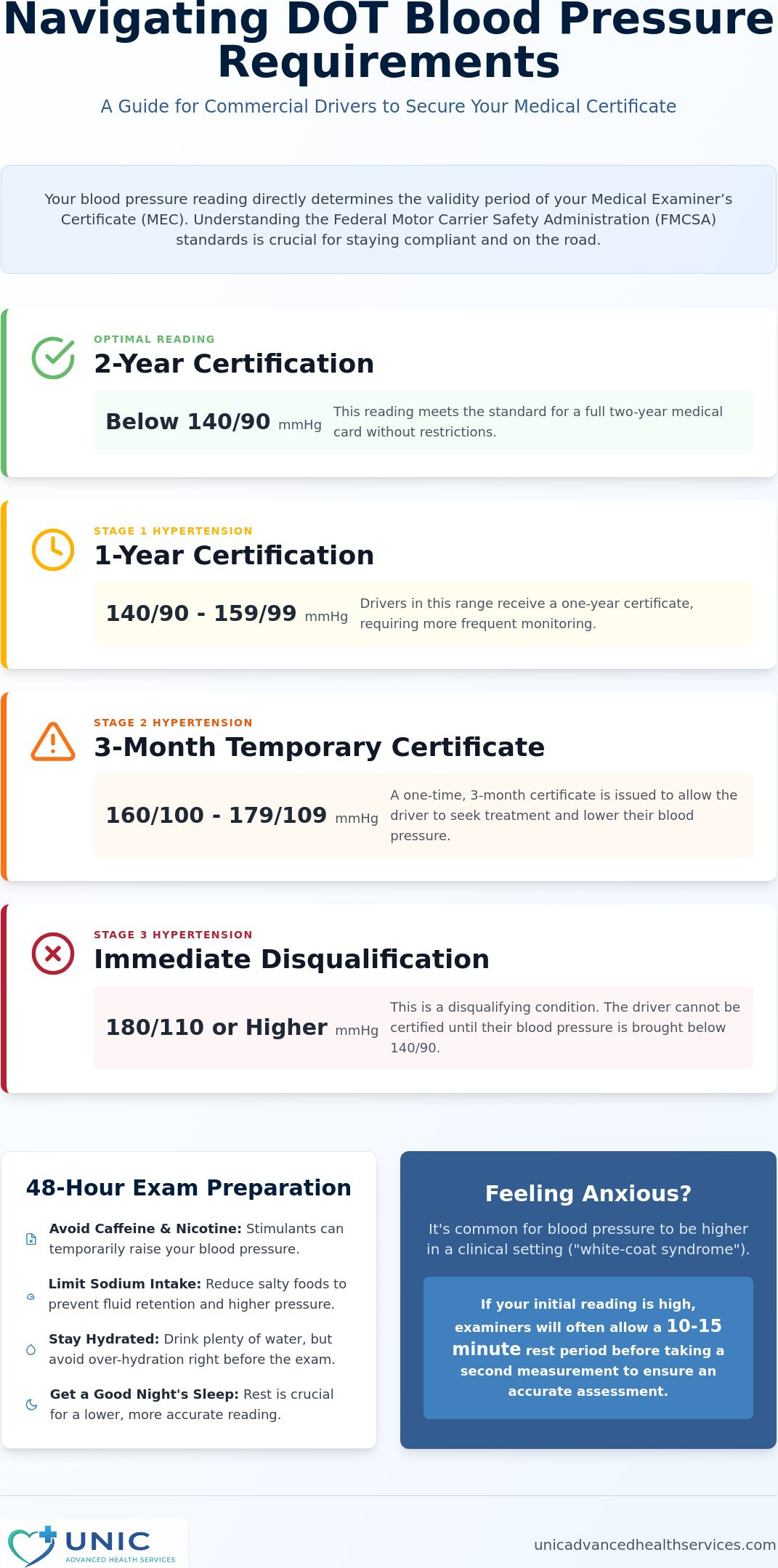
Stage 1 Hypertension is defined as a blood pressure reading ranging from 140/90 to 159/99 mmHg.
Beyond this initial stage, the requirements become more restrictive to ensure driver safety:
- Stage 2 Hypertension: Readings between 160/100 and 179/109 mmHg result in a one-time, three-month certificate to allow for treatment.
- Stage 3 Hypertension: A reading of 180/110 mmHg or higher is an immediate disqualification until the pressure is lowered below 140/90.
Certification Lengths: How Your Blood Pressure Affects Your Medical Card
Your blood pressure reading does more than just assess your cardiovascular health; it acts as a direct timer for your career. According to the FMCSA blood pressure standards, the numbers on the monitor determine exactly how long your Medical Examiner’s Certificate (MEC) remains valid. While a healthy reading grants you a full two years of road time, elevated numbers can shrink that window to one year or even three months. This tiered system ensures that drivers with hypertension receive more frequent clinical oversight to prevent sudden health crises while operating heavy machinery.
Taking blood pressure medication doesn’t disqualify you from driving, but it does change the certification landscape. Even if your pressure is perfectly controlled at 120/80 mmHg, the use of anti-hypertensive drugs often limits your certification to one year. This allows medical examiners to monitor potential side effects, such as dizziness or fatigue, that could interfere with safe operation. If you’re concerned about how your current prescription affects your status, scheduling a DOT physical exam in Fort Lauderdale with a provider who understands chronic care can help you navigate these nuances with confidence.
Short-term certificates aren’t just an inconvenience; they carry a real financial and logistical cost. Frequent re-certifications mean more time away from the road, extra examination fees, and the recurring stress of potentially failing. Mastering the DOT physical blood pressure requirements Florida follows is the most effective way to secure a longer certificate and maintain a predictable work schedule.
The DOT Blood Pressure Tier System
The FMCSA uses a specific hierarchy to categorize your fitness to practise based on your systolic and diastolic readings. These categories determine your eligibility for the following certification periods:
- Normal (Less than 140/90 mmHg): You’re eligible for a full 2-year medical card if no other disqualifying conditions exist.
- Stage 1 Hypertension (140/90 to 159/99 mmHg): You may receive a 1-year certificate. You must lower your BP below 140/90 by the following year to maintain your status.
- Stage 2 Hypertension (160/100 to 179/109 mmHg): This results in a one-time, 3-month certificate. This period is strictly for stabilizing your pressure; you won’t receive another 3-month extension if you fail to reach the target within that window.
Stage 3 Hypertension and Disqualification
Readings of 180/110 mmHg or higher represent a significant safety risk and lead to immediate disqualification. You can’t operate a CMV until your pressure is brought under control. Once you lower your blood pressure to below 140/90 mmHg, you may be eligible for a 6-month certificate. This certificate is renewable as long as your pressure remains stable and you continue your treatment plan. Meeting the DOT physical blood pressure requirements Florida examiners enforce is essential for avoiding the logistical headache of frequent, repeated examinations that follow a Stage 3 event.
How to Prepare for Your DOT Physical When You Have High Blood Pressure
Securing a medical card isn’t just about what happens during the few minutes the cuff is on your arm. Effective preparation begins at least 48 hours before you arrive at the clinic. For drivers managing chronic hypertension, this window is critical for ensuring your body is in a stable, baseline state. Relying on “quick fixes” like extreme fasting or sudden, intense exercise can backfire; these methods often stress the body and may actually cause a spike in your readings. Instead, focus on sustainable habits that demonstrate your commitment to long-term health and safety.
Many drivers experience “White Coat Syndrome,” a documented phenomenon where blood pressure rises specifically in a clinical setting due to anxiety. This spike can make it difficult to meet the DOT physical blood pressure requirements Florida examiners must enforce. To minimize this impact, it’s helpful to bring documentation if you’re already being treated for hypertension. A current list of medications and a recent clearance letter from your primary care provider can provide essential context for the medical examiner. Taking proactive steps for managing high blood pressure ensures that you’re viewed as a partner in safety rather than a liability.
The 24-Hour Pre-Exam Checklist
The day before your appointment is the time to eliminate external triggers that can artificially inflate your numbers. Avoid caffeine and nicotine for at least 24 hours, as both are stimulants that constrict blood vessels and raise heart rates. You should also limit high-sodium foods, which cause the body to retain fluid and increase blood volume. Hydration is equally important; drinking adequate water helps maintain proper blood volume and supports kidney function. Finally, prioritize a full night of restorative sleep. Fatigue is a known physiological stressor that can cause your sympathetic nervous system to overreact during the exam.
During the Appointment: Staying Calm
Your experience at the Fort Lauderdale office should be as stress-free as possible. Arrive at least 15 minutes early to avoid the rush of traffic or paperwork delays. Once you’re in the exam room, use controlled breathing techniques; slow, deep breaths can help lower your heart rate and settle your nervous system during the cuff inflation. Don’t hesitate to communicate openly with Marc Joseph, NP, about your health history and any anxiety you’re feeling. A transparent relationship with your examiner ensures they have the full clinical picture, allowing them to act as a steady hand and a reliable advocate for your continued career on the road.
Navigating Hypertension Management and DOT Compliance in Fort Lauderdale
For many commercial drivers, the medical exam feels like a pass or fail obstacle that stands between them and their paycheck. However, seeing a provider like Marc Joseph, NP, transforms this checkpoint into a strategic health partnership. By integrating chronic disease management into your routine, you move beyond simply trying to beat the cuff on exam day. This proactive approach ensures that the DOT physical blood pressure requirements Florida enforces are met through consistent care rather than last minute luck.
Medication plays a vital role for many drivers in maintaining their commercial driving career. While some worry that prescriptions might disqualify them, the reality is that controlled hypertension is far safer for the road than untreated high blood pressure. In Florida, drivers have access to specialized resources and clinics that focus on cardiovascular health within the framework of FMCSA regulations. This localized expertise helps you stay compliant while prioritizing your longevity in the industry. It’s about finding a balance that keeps you healthy and keeps your truck moving.
Long-Term Strategies for CDL Holders
Effective management often starts with weight regulation, which has a direct correlation to lower blood pressure readings. At our clinic, we utilize on-site lab work to monitor critical indicators of kidney and heart health, providing immediate clinical data to guide your care. We work with you to create a personalized Driver Health Plan that aligns with FMCSA standards. This plan includes specific dietary adjustments and activity goals that fit the unique lifestyle of a professional driver, making health goals attainable even during long hauls across the state.
Working with an Autonomous Nurse Practitioner
Choosing a primary care setting led by an autonomous nurse practitioner offers a significant advantage for personalized care. At Unic Advanced Health Services, we help drivers stay compliant year-round by offering flexible Saturday appointments and a supportive atmosphere that reduces the anxiety of the exam. NP-led clinics are ideal for occupational health because they combine advanced clinical expertise with a patient-centered approach that prioritizes education and preventative strategies. If you’re ready to take control of your health and your career, schedule your consultation with our expert team today to ensure you’re ready for your next certification.
Renewing Your Expired DOT Medical Card at Unic Advanced Health Services
Operating a commercial vehicle with an expired medical card carries significant legal and professional risks in the state of Florida. The Department of Highway Safety and Motor Vehicles (DHSMV) monitors expiration dates closely; if your certificate lapses, your CDL may be downgraded to a non-commercial status within weeks. This administrative shift can halt your ability to work and lead to costly reinstatement fees. Beyond the paperwork, a renewal is a vital opportunity to ensure you still meet the DOT physical blood pressure requirements Florida mandates for safe operation on public roadways.
Preparation is the key to a smooth renewal process. When you book your DOT physical exam in Fort Lauderdale, ensure you have your current driver’s license and a comprehensive list of any medications you’re taking for chronic conditions. If you’re managing hypertension, bringing recent logs of your home blood pressure readings can provide helpful clinical context. Our clinic provides same-day results and handles the electronic filing with the Florida DHSMV, which minimizes the time you spend worrying about your status and maximizes your time on the road.
What to Do if Your Card is Already Expired
If you’ve discovered that your medical card is already past its expiration date, you must stop driving commercially immediately to avoid citations or employer liability. Your first priority should be securing an urgent appointment to prevent the state from downgrading your license. At Unic Advanced Health Services, we understand that your livelihood depends on your medical clearance, and we prioritize urgent driver renewals to get you back into compliance. While Florida provides a 15-day window for the state to process your submitted paperwork, the physical exam itself must be completed and valid before you can legally operate a CMV.
Scheduling Your Appointment in Fort Lauderdale
We recognize that a driver’s schedule is rarely a standard nine-to-five. To accommodate your needs, we offer Saturday office hours, allowing you to complete your exam without missing valuable work shifts during the week. Our clinic is conveniently located in Fort Lauderdale near major transit routes, making it easily accessible for drivers passing through or living in the South Florida area. Our team acts as a steady hand, guiding you through the regulatory requirements and providing the clinical oversight needed for long-term health. Don’t wait for a deadline to pass; book your DOT Physical renewal today to secure your career and your peace of mind.
Securing Your Future on the Florida Roadways
Navigating the DOT physical blood pressure requirements Florida enforces is a critical step in protecting your livelihood and your long-term health. By understanding the FMCSA thresholds and implementing strategic preparation techniques, you can approach your medical exam with confidence rather than anxiety. Your blood pressure is a manageable metric; having a dedicated clinical partner makes all the difference in maintaining your certification and your career stability.
At Unic Advanced Health Services, we specialize in helping drivers meet these rigorous standards through expert evaluations and personalized chronic care management. Marc Joseph, NP, provides thorough, efficient exams in our convenient Fort Lauderdale office. We offer Saturday appointments to ensure you don’t have to choose between your health and your next haul. Our team acts as a steady hand, guiding you through the renewal process and ensuring your paperwork is filed correctly with the state.
Take the next step toward a stress-free renewal. Schedule Your DOT Physical at Unic Advanced Health Services today. Your career is worth the investment, and we’re committed to keeping you safely on the road for years to come.
Frequently Asked Questions
Can I pass a DOT physical if I am taking blood pressure medication?
Yes, you can pass the exam while taking anti-hypertensive medication. However, federal regulations require more frequent clinical monitoring for drivers using these prescriptions, which typically limits your medical certification to a one-year period. It is important to ensure your medication effectively controls your pressure without causing side effects like dizziness that could interfere with safe driving.
What is the absolute maximum blood pressure allowed for a 1-year CDL medical card?
The maximum blood pressure allowed for a one-year certificate is 159/99 mmHg. This range is classified as Stage 1 hypertension by the FMCSA. If your reading falls within this bracket, you must work with a provider to lower it below 140/90 mmHg before your next annual exam to maintain your driving status under the DOT physical blood pressure requirements Florida mandates.
How long does a DOT physical take at Unic Advanced Health Services?
A standard examination typically takes between 30 and 45 minutes to complete. We value your time and strive for a process that is both thorough and efficient. This duration allows enough time for a comprehensive health review, including the required vision, hearing, and blood pressure screenings, while ensuring you can get back to your route quickly.
Will “White Coat Syndrome” disqualify me from driving?
Anxiety-induced spikes in blood pressure do not automatically disqualify you from receiving your medical card. We understand that clinical environments can be stressful, and we use calming techniques to help you reach a relaxed state. As long as your resting readings eventually fall within the acceptable FMCSA thresholds during the appointment, you will remain eligible for certification.
What happens if my blood pressure is too high during the first reading?
If your initial reading is elevated, our medical examiner will typically allow you a rest period of 10 to 15 minutes. During this time, you can practice deep breathing or simply sit quietly to allow your heart rate to settle. We then take subsequent readings to ensure we capture the most accurate and stable representation of your cardiovascular health before making a final determination.
Do I need to bring my current medical card to the renewal appointment?
Yes, bringing your current Medical Examiner’s Certificate is highly recommended for a smooth renewal process. It provides our team with your medical history and ensures continuity in your certification records. This documentation, along with a list of current medications, helps us verify that you consistently meet the DOT physical blood pressure requirements Florida examiners look for during a renewal.
Can a Florida nurse practitioner sign off on my DOT physical?
Yes, an autonomous nurse practitioner can perform and sign off on your physical as long as they are certified by the National Registry of Certified Medical Examiners (NRCME). Marc Joseph, NP, is a registered examiner who specializes in occupational health and chronic condition management. This expertise ensures your exam is handled with the highest level of professional authority and clinical accuracy.
How much does it cost to renew an expired DOT medical card in Fort Lauderdale?
The cost for a medical card renewal can vary based on the specific clinical services or lab work required during your visit. We recommend contacting our Fort Lauderdale office directly to discuss your needs and receive the most accurate information regarding our current service fees. We focus on providing high-value care that supports your long-term career stability and regulatory compliance.