
Nearly 46.7% of adults in the United States are currently living with high blood pressure, yet many remain unaware that their numbers have reached a clinical threshold. It’s completely understandable if you feel a wave of anxiety at the sight of a medical cuff or if you’re confused by the complex relationship between systolic and diastolic measurements. We know that finding time for a professional blood pressure screening Fort Lauderdale can be challenging, especially when you’re searching for reliable care within Broward County that fits into a demanding schedule.
In this 2026 health guide, you’ll discover why a professional evaluation is the most critical 15 minutes of your year. We’ll demystify the latest 2025 AHA/ACC guidelines and show you how to secure an accurate reading without the stress of “white coat syndrome.” You’ll learn exactly what your numbers mean for your long-term health and how to establish a clear, manageable path forward if your results are higher than expected. By prioritizing this simple check, you’re taking a proactive step toward personalized longevity and professional compliance.
Key Takeaways
- Understand why hypertension is labeled the “silent killer” and how the unique South Florida climate contributes to cardiovascular strain.
- Gain clarity on the latest clinical guidelines to accurately interpret your systolic and diastolic numbers during your next evaluation.
- Learn why a professional blood pressure screening Fort Lauderdale offers the clinical accuracy that automated pharmacy kiosks often fail to deliver.
- Discover the essential preparation steps, including what to avoid before your visit, to ensure your clinical reading is as accurate as possible.
- Explore how a personalized approach to heart health provides a clear path for managing chronic conditions and maintaining long-term wellness.
The Importance of Blood Pressure Screening in Fort Lauderdale
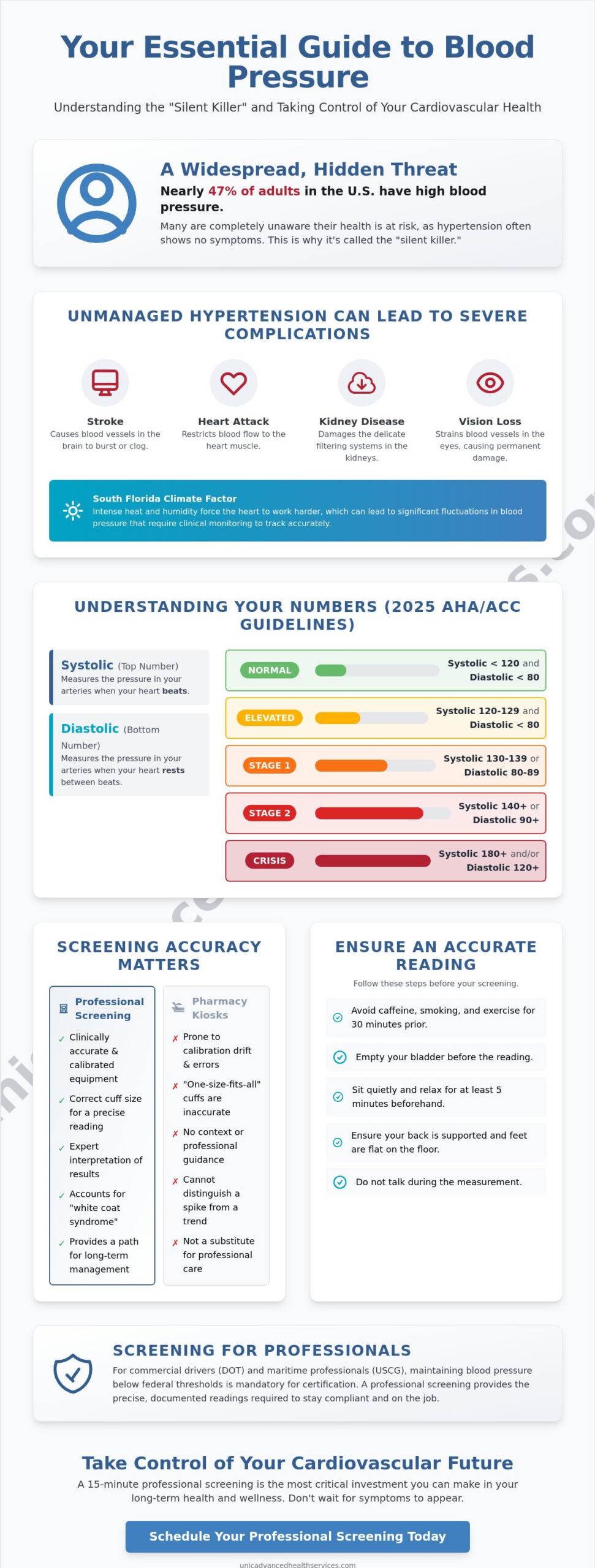
Hypertension is frequently identified as the “silent killer” because it typically progresses without any outward physical symptoms. Many people live for years with elevated levels, unaware that the internal pressure is gradually damaging their arteries and organs. In South Florida, our environment introduces unique variables that can complicate cardiovascular health. The intense heat and relentless humidity characteristic of the Fort Lauderdale climate force the heart to work harder to cool the body down, which can lead to fluctuations in pressure that are difficult to track without clinical oversight.
A professional blood pressure screening Fort Lauderdale is the most effective defense against life-altering complications. When left unmanaged, high pressure is a primary driver for several severe conditions:
- Ischemic and Hemorrhagic Stroke: Excessive pressure can cause blood vessels in the brain to burst or clog.
- Myocardial Infarction: Hardened arteries restrict blood flow to the heart muscle.
- Chronic Kidney Disease: High pressure damages the delicate filtering system within the kidneys over time.
- Vision Loss: Strain on the small blood vessels in the eyes can lead to permanent damage.
To better understand the clinical recommendations for monitoring your heart health, watch this helpful video:
While pharmacy kiosks offer a convenient way to get a quick number, they aren’t a substitute for professional care. These automated machines often suffer from calibration drift and use “one-size-fits-all” cuffs that can produce inaccurate results. A clinical screening ensures that the equipment is maintained to medical standards and that your reading is interpreted by an expert who can distinguish between a temporary spike and a chronic health trend.
Why “Feeling Fine” is Not a Reliable Health Indicator
It’s a common misconception that you’ll feel “jittery” or experience headaches if your pressure is high. For most adults, especially those over 40, there’s no internal alarm that goes off. The active lifestyle in Broward County often involves high-stress professional environments and intense outdoor recreation, both of which can mask the subtle signs of cardiovascular strain. Regular clinical monitoring provides the objective data you need to ensure your “feeling fine” actually matches your internal health status.
Screening for Professionals: DOT and USCG Requirements
For many in our community, a blood pressure screening Fort Lauderdale is a mandatory part of their livelihood. Commercial drivers and maritime professionals must meet strict federal health standards to maintain their certifications. If your pressure exceeds specific thresholds, you may be denied the medical certificates required for your career. Ensuring your numbers are within the safe range is a critical component of your DOT physical exam Fort Lauderdale or your USCG boat captain physical. We provide the precise, documented readings necessary to keep you compliant and on the job.
Understanding Your Numbers: Systolic vs. Diastolic
When you receive a blood pressure screening Fort Lauderdale, the result is presented as two distinct figures measured in millimeters of mercury (mm Hg). These numbers aren’t just arbitrary data points; they provide a comprehensive snapshot of your cardiovascular efficiency and the physical state of your arteries. Interpreting these values correctly is the first step toward effective heart health advocacy. While many people focus solely on the “top” number, both measurements offer vital insights into how your heart and vascular system are functioning under the unique environmental conditions of South Florida.
Systolic Pressure: The Top Number
Systolic pressure is the force of blood against artery walls during heart contraction. It represents the maximum pressure your heart exerts while beating. Clinicians often prioritize this top number because it’s a major risk factor for cardiovascular disease, particularly for individuals over age 50. As we age, the large arteries naturally stiffen and plaque builds up, which typically causes the systolic number to rise even if the bottom number remains stable.
Diastolic Pressure: The Bottom Number
The bottom number, or diastolic pressure, measures the force of blood against your artery walls while your heart rests between beats. This is the period when your heart is refilling with blood and receiving its own oxygen supply. A consistently high diastolic reading suggests that your blood vessels are under constant tension, even when the heart isn’t actively pumping. Monitoring this number is essential for assessing overall arterial health and long-term vascular resistance.
The 2025 AHA/ACC guidelines, which serve as the authoritative standard for 2026, establish clear thresholds for adult health. A reading is considered normal when it’s less than 120/80 mm Hg. If your systolic number falls between 120 and 129 while your diastolic remains below 80, your pressure is classified as “Elevated.” Stage 1 hypertension is defined by a range of 130 to 139 systolic or 80 to 89 diastolic. Once your numbers reach 140/90 mm Hg or higher, you’ve entered Stage 2 hypertension.
Moving into these higher categories isn’t just a clinical designation. It indicates that your heart is working significantly harder than it should, which can lead to fatigue, organ strain, and increased risk of crisis. For those who find their numbers consistently climbing, chronic condition management provides a structured way to stabilize these levels through professional oversight and personalized care plans.
A hypertensive crisis is a critical medical emergency that occurs when blood pressure suddenly exceeds 180/120 mm Hg. If your numbers reach this level, it’s vital to rest for five minutes and test again. If the reading remains at or above 180/120, seek immediate emergency care. This is especially urgent if you experience symptoms like chest pain, severe headache, shortness of breath, or sudden changes in vision, as these can signal acute organ damage.
Professional Clinical Screening vs. Pharmacy Kiosks
While it’s tempting to use a retail kiosk during a routine grocery run, these automated machines often lack the precision required for a meaningful medical assessment. A professional blood pressure screening Fort Lauderdale provides a level of accuracy that public hardware simply cannot match. Retail machines frequently suffer from mechanical wear and lack the rigorous, daily calibration schedules mandated in a clinical environment. When your cardiovascular health is on the line, relying on a machine that may not have been serviced recently can lead to unnecessary anxiety or, worse, a false sense of security.
A significant limitation of pharmacy kiosks is the fixed cuff size. Medical research indicates that using an incorrectly sized cuff is one of the most common sources of error in blood pressure measurement. If the cuff is too small for your arm, the reading will be falsely elevated; if it’s too large, the number will be falsely low. In a clinical setting, we select the specific cuff size that matches your physiology, ensuring the data we collect is both reliable and actionable.
Professional clinicians are also trained to identify and mitigate “White Coat Hypertension,” a phenomenon where a patient’s blood pressure spikes simply because they’re in a medical or high-traffic environment. Unlike a machine that provides a single, rigid data point, a healthcare provider can allow you to rest in a quiet space and take multiple readings over several minutes. This methodical approach ensures that the final numbers reflect your true baseline rather than a temporary stress response to a busy retail aisle.
The Accuracy Factor in Professional Settings
Manual auscultation, which involves the use of a high-quality stethoscope and a manual sphygmomanometer, remains the gold standard for accuracy in the medical field. This technique allows a provider to hear the subtle Korotkoff sounds that signal the exact moments of systolic and diastolic pressure. Proper arm positioning at heart level and a controlled, quiet environment are essential components of this process. These clinical standards are why a professional screening is a cornerstone of a preventive care checkup Fort Lauderdale, providing a foundation of trust for your entire wellness journey.
Immediate Clinical Interpretation and Next Steps
The most vital difference between a kiosk and a clinic is the transition from data to insight. A pharmacy machine gives you a printed receipt with numbers that may be difficult to interpret without context. In contrast, a clinical visit includes a professional consultation where those numbers are explained in the context of your age, family history, and lifestyle. If your screening reveals elevated levels, we can immediately utilize on-site lab work Fort Lauderdale to investigate potential underlying causes, such as kidney function issues or electrolyte imbalances, allowing for a proactive and integrated management plan.
How to Prepare for Your Blood Pressure Screening
Achieving an accurate clinical reading requires more than just showing up for your appointment. To ensure your blood pressure screening Fort Lauderdale reflects your true cardiovascular baseline, you must take specific steps to stabilize your system beforehand. External factors like what you’ve eaten, how you’ve moved, and even the fit of your clothing can significantly skew the results, leading to unnecessary concern or missed opportunities for intervention.
Your preparation should begin well before you enter the clinical environment. We recommend following these practical guidelines to ensure the highest level of precision during your evaluation:
- Wear appropriate attire: Choose a shirt with loose-fitting sleeves that can be easily pushed up. Avoid tight sleeves that might act as a tourniquet when rolled, as this can artificially inflate the pressure reading.
- Manage your documentation: Bring a comprehensive list of your current medications, including dosages and supplements. It’s also helpful to have a summary of your family’s cardiovascular history ready for discussion.
- Arrive early: Plan to arrive at the office 10 to 15 minutes before your scheduled time. This buffer allows your heart rate to normalize and your body to transition from the stress of Broward County traffic into a restful state.
The 30-Minute Rule for Accurate Results
Stimulants such as caffeine and nicotine are known to cause temporary but significant spikes in blood pressure. To avoid a false reading, refrain from consuming coffee, energy drinks, or tobacco products for at least 30 minutes prior to your test. Similarly, vigorous physical exercise should be avoided during this window. One often overlooked factor is bladder comfort; a full bladder can add up to 10 or 15 points to your systolic reading. Always use the restroom before your screening begins. During the test, sit quietly with your back supported and both feet flat on the floor, as crossing your legs can alter blood flow and affect the accuracy of the data.
Discussing Your Lifestyle with Your Provider
A single screening is a powerful tool, but it’s most effective when viewed as part of your broader health narrative. Use this time to discuss your daily habits, including sodium intake and stress management strategies. If you track your numbers at home, bring those logs to provide your healthcare provider with a more comprehensive data set. This proactive approach is a vital component of your annual physical exam Fort Lauderdale, ensuring that every measurement is interpreted with your unique lifestyle in mind. If you’re ready to establish a reliable health baseline, you can schedule your professional screening today to gain clear, clinical insights into your heart health.
Selecting the right clinical partner is the final and most important step in your cardiovascular health journey. At Unic Advanced Health Services, we specialize in providing professional blood pressure screening Fort Lauderdale within a framework of personalized, expert care. Led by Marc Joseph, an experienced autonomous nurse practitioner, our practice is designed to be more than just a diagnostic stop. We function as a steady hand for our patients, offering the clinical seriousness required for accurate management while maintaining a compassionate, patient-first perspective that helps alleviate the stress often associated with medical evaluations.
Our approach is built on the belief that effective healthcare requires a combination of modern methodology and traditional thoroughness. We don’t just record your numbers; we integrate them into a comprehensive view of your overall well-being. This is particularly vital for those who require precise documentation for occupational health requirements, such as maritime certifications or commercial driving physicals. By choosing a dedicated healthcare partner over a retail kiosk, you ensure that your heart health is being monitored by a professional who understands the nuances of your medical history and the specific stressors of the South Florida lifestyle.
A Compassionate Approach to Hypertension Management
Hypertension is a chronic concern that requires consistent oversight rather than a single, isolated check. Unlike corporate clinics where appointments may feel rushed or detached, we prioritize longer consultation times to ensure every question is answered. This supportive environment is intentional; it’s designed to reduce the anxiety that can lead to “white coat” spikes and provide a clearer picture of your resting baseline. We focus on building a reliable, long-term partnership with each patient, offering proactive strategies for blood pressure control that go beyond simple data collection to include personalized lifestyle guidance and specialized evaluation.
Convenient Care for Busy Professionals
We recognize that residents of Broward County often have demanding professional schedules that don’t align with standard business hours. To accommodate working professionals, maritime captains, and commercial drivers, our office offers flexible appointment options from Monday through Saturday. For those who need to complete their cardiovascular evaluation outside of the traditional workweek, booking a Saturday doctor appointment in Fort Lauderdale ensures you receive the same high-quality clinical care without sacrificing your weekday productivity. Our Fort Lauderdale facility is equipped with on-site diagnostics, which allows us to gather immediate clinical data and begin treatment planning during the same visit if elevated numbers are detected. This seamless integration of screenings, lab work, and primary care ensures that your health management is efficient, well-organized, and focused on your long-term peace of mind.
Schedule your blood pressure screening at Unic Advanced Health Services today.
Take Control of Your Cardiovascular Future
Prioritizing your heart health shouldn’t be a source of stress or confusion. By moving beyond the limitations of automated kiosks and preparing for your clinical visit with the 30 minute rule, you’ve already taken the most important steps toward accurate self-awareness. You now understand how systolic and diastolic numbers serve as a roadmap for your long-term wellness and professional compliance. Obtaining a professional blood pressure screening Fort Lauderdale is about more than just a number; it’s about context, accuracy, and expert guidance.
At Unic Advanced Health Services, Marc Joseph, an experienced autonomous nurse practitioner, provides the steady hand and clinical expertise you need to manage your cardiovascular health effectively. With Saturday doctor appointments available in Fort Lauderdale and on-site diagnostic lab services, we make it simple to integrate vital screenings into your busy Broward County schedule. Don’t leave your health to chance when you can access personalized, expert care right here in our community.
Book Your Professional Blood Pressure Screening in Fort Lauderdale. Your future self will thank you for the clarity and peace of mind you gain today.
Frequently Asked Questions
How often should I have my blood pressure screened?
Most healthy adults should have their blood pressure screened at least once a year during a routine preventive checkup. If your previous readings were in the elevated or hypertensive range, your provider will likely recommend more frequent monitoring, such as every three to six months. Consistent blood pressure screening Fort Lauderdale helps track how lifestyle changes or medications are impacting your cardiovascular health over time.
What is considered a “normal” blood pressure reading in 2026?
A normal blood pressure reading is defined as less than 120/80 mm Hg according to the current clinical guidelines. The top number represents systolic pressure, while the bottom number indicates diastolic pressure. If your systolic number is between 120 and 129, your pressure is classified as elevated even if the diastolic number remains below 80. Regular monitoring ensures you stay within these safe parameters for long-term health.
Can I lower my blood pressure without medication?
You can often lower your blood pressure through structured lifestyle modifications, especially if you are in the elevated or Stage 1 hypertension categories. Reducing sodium intake, increasing potassium-rich foods, and engaging in at least 150 minutes of moderate aerobic activity per week are highly effective strategies. Your healthcare provider can help you create a personalized plan to manage these changes before determining if medication is clinically necessary.
Is a pharmacy kiosk reading as accurate as a doctor’s office?
Clinical screenings in a medical office are significantly more accurate than pharmacy kiosks because of equipment calibration and professional technique. Pharmacy machines often use a generic cuff size that may not fit your arm correctly, leading to false readings. In a professional setting, a trained clinician ensures proper positioning and uses medical-grade instruments to provide a reliable blood pressure screening Fort Lauderdale residents can trust for their medical records.
What should I do if my blood pressure screening shows a high reading?
If a screening shows a high reading, the first step is to remain calm and rest for several minutes before taking a second measurement. A single high reading doesn’t always indicate chronic hypertension, as it can be influenced by recent activity or stress. If your numbers remain elevated across multiple tests, you should schedule a consultation with a healthcare provider to discuss a management plan and investigate potential underlying causes.
Do I need to fast before a blood pressure screening?
You don’t need to fast from food before a blood pressure screening. However, you must avoid caffeine, nicotine, and exercise for at least 30 minutes prior to the test to ensure the results aren’t artificially inflated. It’s also helpful to arrive with a comfortable bladder, as a full bladder can temporarily increase your pressure readings. Eating a light meal beforehand won’t negatively impact the accuracy of your clinical results.
Does insurance cover blood pressure screenings in Fort Lauderdale?
Most private insurance plans and Medicare cover blood pressure screenings as part of your annual preventive care benefits. In Florida, specific coverage for home monitoring equipment can vary by plan, so it’s best to verify your specific benefits with your insurer. Our office can assist you in determining how your coverage applies to screenings and any follow-up diagnostic services that may be required for chronic condition management.
Can stress from a DOT physical cause a high blood pressure reading?
The stress of a DOT physical or maritime certification can certainly cause a temporary spike in blood pressure, often referred to as “white coat syndrome.” Clinicians are trained to recognize this and will typically allow you to rest in a quiet room before taking a follow-up reading. To minimize this effect, arrive early to your appointment and practice deep breathing exercises to help your body maintain its natural resting state during the examination.