
What changes when a nurse practitioner knows your health history over time? The benefits of having a dedicated nurse practitioner often start with continuity: you can build on previous conversations instead of explaining everything from the beginning at each visit.
If preventive care and follow-up keep slipping down your list, an ongoing relationship can give you a consistent place to discuss them. A nurse practitioner can provide primary care, but does not replace every physician or specialist. Knowing what an NP can do, and when other care may be needed, helps you make an informed choice.
This guide explains how ongoing NP-led care can support preventive visits, chronic condition monitoring, and more coordinated health decisions. It also covers how to make visits useful, whether they’re in person or through telehealth. At Unic Advanced Health Services in Fort Lauderdale, NP-led primary care includes annual physicals, preventive care, chronic condition management, and on-site lab services.
Key Takeaways
- Learn what makes an ongoing nurse practitioner relationship different from a one-time visit, and how continuity can inform future care.
- Explore how preventive screenings, personal health goals, and follow-up can fit into a longer-term care plan.
- Compare ongoing and episodic care across health history, follow-up, and coordination to decide which pattern suits your needs.
- Prepare for productive visits by organizing your health history, medications, allergies, concerns, and goals.
- Understand the benefits of having a dedicated nurse practitioner and what to consider when seeking NP-led primary care in Fort Lauderdale.
What Does Having a Dedicated Nurse Practitioner Mean for Your Care?
A dedicated nurse practitioner (NP) is a clinician you return to for primary care over time, rather than someone you see for only one concern or evaluation. As you build a relationship, earlier conversations, health information, and agreed follow-up can help shape what you discuss next. Continuity doesn’t guarantee a particular health outcome, but it can make visits feel more connected and purposeful.
NP credentials describe a clinician’s education and role; continuity describes the ongoing relationship that can make care more informed over time. A one-time appointment can address an immediate need. An established relationship can also help keep preventive care and longer-term concerns on the agenda. The Nurse practitioner overview provides background on the profession and the range of settings where NPs work.
This video introduces one advanced nursing specialty as an example of the field’s breadth:
How Is a Nurse Practitioner Different from Other Care Options?
NPs are registered nurses who complete graduate-level nursing education and prepare for an advanced clinical role. They assess health concerns, consider a person’s history, and contribute to evaluation and care planning within their training and legal scope. Their credentials and authority depend on their qualifications and the rules that apply where they practice.
A registered nurse (RN) provides essential nursing care, such as monitoring a patient, supporting treatment, and communicating health information. An NP has additional advanced education and a different clinical role, so the two positions aren’t interchangeable. Physicians, NPs, and specialists bring distinct expertise. An NP can support primary care and ongoing health management, while a specialist focuses on a particular field. A person’s care may involve more than one clinician.
What Does Continuity Look Like Between Visits?
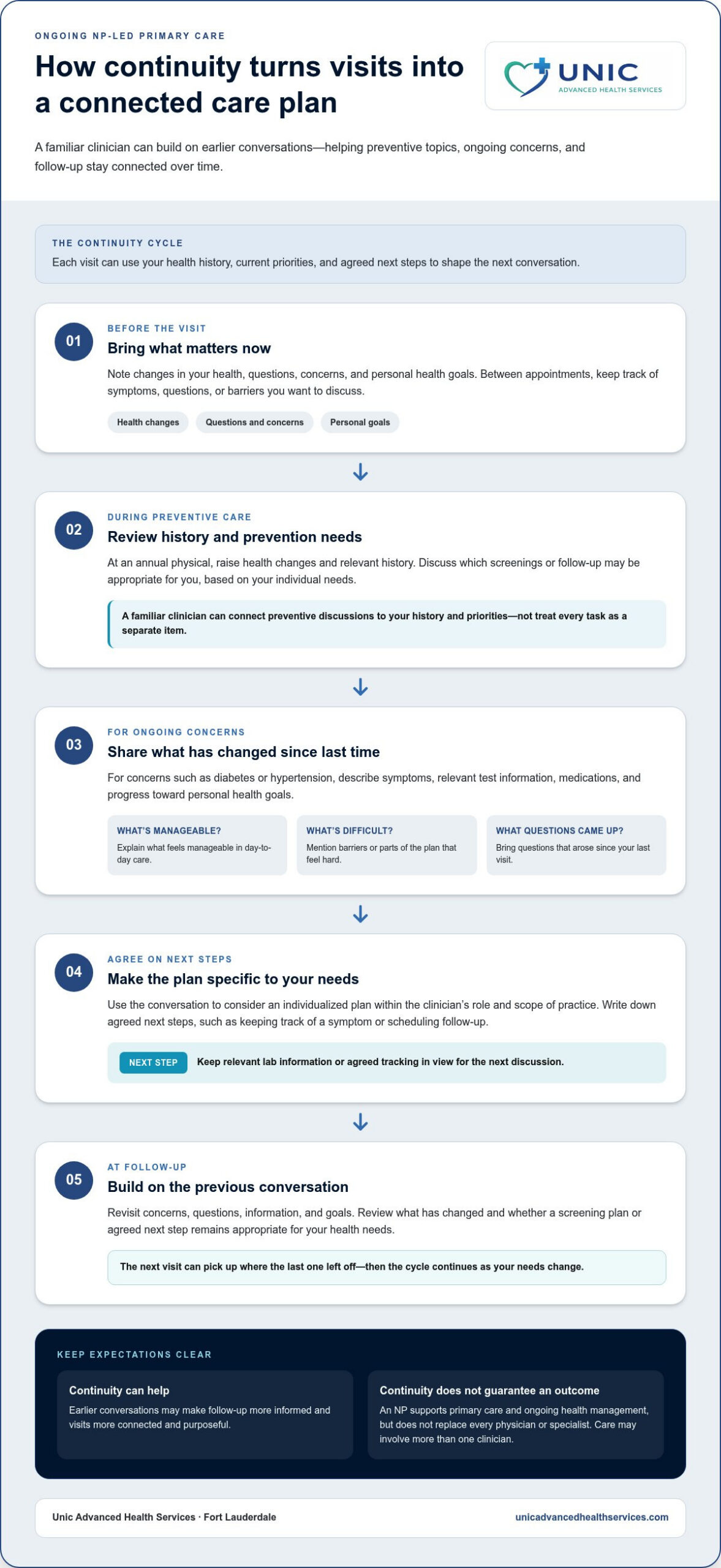
Continuity develops as you and your clinician revisit concerns, clarify priorities, and consider what has changed. Information from earlier visits can guide questions and follow-up. For example, if you discussed a screening plan at an earlier appointment, a later visit can review whether it remains appropriate, answer questions, and identify a next step based on your health needs.
This can matter if you’re managing an ongoing concern or trying to keep preventive care in view. At Unic Advanced Health Services in Fort Lauderdale, annual physicals, preventive care, and chronic condition management provide opportunities for continuing conversations. The benefit is a consistent point of care, not a promise that every visit will resolve a concern or replace care from a physician or specialist.
How a Dedicated Nurse Practitioner Supports Prevention and Long-Term Health
Preventive care is easier to put into practice when it connects to your health history, priorities, and next steps. An ongoing primary-care relationship gives you a place to review which screenings may be appropriate, discuss health goals, and revisit plans as your needs change. It doesn’t guarantee a particular result, but it can make prevention more manageable than treating each task as a separate item.
Making Preventive Care More Consistent
A familiar clinician can consider your health history and concerns when discussing preventive care. During an annual physical, raise questions about changes in your health, review relevant history, and discuss screenings or follow-up that may be appropriate for you. Before the visit, note any concerns you want to cover. Afterward, write down agreed next steps, such as keeping track of a symptom or scheduling follow-up.
Annual physicals and preventive care provide a structured opportunity for these discussions. They don’t replace visits for specific health concerns, and recommendations depend on the individual. If you’re preparing for a routine wellness visit, this annual physical exam guide can help you understand what to expect and how to make the conversation useful.
Supporting Chronic Condition Follow-Up
For a long-term concern, follow-up may involve reviewing symptoms, test information, medications, and progress toward personal health goals. If you’re managing diabetes or hypertension, for example, describe what feels manageable, what feels difficult, and what questions have come up since your last visit. Your clinician can use that information to guide the conversation and consider an individualized plan within their role and scope of practice.
Continuity can make follow-up more informed because each conversation can build on earlier questions, information, and goals. That context supports clearer communication, but it doesn’t guarantee that a condition will improve or remove the need for other care. If weight management is part of your health goals, ongoing discussion can help keep priorities and next steps in view; learn more about nurse practitioner support for weight management.
Between appointments, note changes, questions, or barriers you want to discuss. Bring those notes to your next visit to focus the conversation on what matters most now. Depending on your concerns, follow-up may also include reviewing relevant lab information or deciding how to track an agreed next step.
These are practical benefits of having a dedicated nurse practitioner: preventive topics and ongoing concerns have a consistent place in primary-care conversations. In Fort Lauderdale, Unic Advanced Health Services provides NP-led primary care, preventive care, chronic condition management, and telehealth. Learn more about NP-led primary care in Fort Lauderdale.
Dedicated Nurse Practitioner vs. Episodic Care: What Changes?
Episodic care addresses a concern as it arises, often without an ongoing relationship with the clinician. A dedicated nurse practitioner relationship focuses on continuing primary care, so visits can build on earlier discussions. Neither pattern is right for everyone. The difference is how health information, follow-up, and care planning may carry forward, not a promise of faster access or a particular outcome.
This comparison can help clarify what fits your needs:
| Care consideration | Ongoing NP relationship | Episodic care |
|---|---|---|
| Continuity | Visits are intended to build over time. | Care is focused on the current need. |
| Health history | Prior discussions may inform new questions. | You may need to explain relevant history at each visit. |
| Follow-up | Plans and concerns can be revisited. | Follow-up depends on the visit and care arrangement. |
| Coordination | Ongoing primary care may help organize information. | Coordination may require sharing information across visits or clinicians. |
These are general patterns, not guarantees. A continuing relationship doesn’t ensure that every appointment will be with the same clinician, and episodic care may include appropriate follow-up. Consider whether you have recurring health needs or goals that benefit from revisiting, and how you prefer to organize your care.
When Can Continuity Be Especially Useful?
Continuity may be useful when preventive needs recur, a health concern requires monitoring, or questions develop over time. For example, you may want to revisit a health goal after trying a new routine or discuss how symptoms have changed since your last visit. A familiar health history gives those conversations context and can help identify what still needs attention. Whether a dedicated NP is useful depends on your circumstances.
The benefits of having a dedicated nurse practitioner may be most relevant when your care involves more than one conversation. Convenience, personal preference, and the type of concern matter, too. A one-time evaluation can address a specific need, while ongoing primary care may suit someone who wants regular opportunities to review health priorities and follow-up.
When Might Another Clinician or Setting Be Needed?
A dedicated NP does not eliminate the role of physicians or specialists. Some concerns call for specialist evaluation or additional clinical expertise, and an NP may be one part of a broader care team. Decisions about scope, referrals, and coordination depend on your clinical needs and applicable rules. A primary-care relationship can support a discussion of next steps, but it doesn’t replace every other form of care.
Urgent emergencies require emergency services rather than a routine primary-care visit. For non-emergency needs, the right care pattern depends on the question and the follow-up it requires. Consider whether your concerns recur, whether you want a continuing primary-care relationship, and whether specialty care is involved when deciding what role an NP may play in your care.
How to Build a Useful Ongoing Relationship with Your Nurse Practitioner
A continuing care relationship works best as an active exchange. You bring the details and questions that shape your daily experience; your nurse practitioner assesses them and discusses appropriate next steps. Preparing for a visit can help you use appointment time well, keep important information in view, and understand what happens after you leave.
Prepare for a First or Follow-Up Visit
Before an appointment, gather information that gives the clinician a clear picture of your health. You don’t need a perfect record. A current list and a few focused notes are a useful start.
- Bring your health history: Include relevant diagnoses, past procedures, and family health details you know.
- Update medications and allergies: List prescription medicines, over-the-counter products, supplements, and any known medication or other allergies.
- Describe your concerns: Note what has changed, when it began, and how it affects daily activities.
- Share recent care: Mention tests, results you’ve received, and visits with specialists so those details can be considered in context.
- Choose your priorities: Write down the questions you most want answered and health goals that matter to you, such as having more energy for a regular activity.
If you have several concerns, lead with the ones that feel most important or time-sensitive. Tell the NP what you hope to understand by the end of the visit. Clear priorities help guide the conversation without requiring you to remember every detail on the spot.
Keep Care Coordinated Between Appointments
Before a visit ends, make sure you understand the plan. Summarize the next steps in your own words and discuss when follow-up may be appropriate. If tests are part of the plan, ask how results will be communicated and what to do if you have questions. Clarifying these details helps you understand what happens next.
Shared decisions matter. If a recommendation doesn’t fit your schedule, preferences, or daily routine, explain why. Your NP can discuss options and clarify which steps are appropriate for your situation. Keep a brief note of the agreed plan and any questions that arise afterward, so you can bring them to the next conversation.
Some follow-up discussions may suit telehealth, while other concerns may call for an in-person assessment or referral. The right format depends on the reason for the visit and clinical judgment. For an overview of virtual primary-care visits, the Fort Lauderdale telehealth guide explains how telehealth can fit into care.
These habits make the benefits of having a dedicated nurse practitioner more practical: useful information is ready, goals are clear, and follow-up has a place in the plan. Explore primary care with Unic Advanced Health Services to learn about ongoing NP-led care in Fort Lauderdale.
Finding Ongoing NP-Led Primary Care in Fort Lauderdale
Choosing ongoing care is a practical decision as well as a clinical one. Consider the health needs you want to address, how you prefer to communicate, and whether the care setting fits your routine. Look for primary care that gives you a practical way to discuss preventive needs, follow-up, and changing concerns over time, rather than expecting a particular outcome.
What to Consider When Choosing Ongoing Care
Start with the support you’re looking for. You may want to keep preventive care in view, manage a long-term condition, or have a consistent place to discuss health questions. Consider whether those needs involve follow-up conversations and how ongoing primary care fits alongside care from other clinicians.
Communication and practical access matter, too. Consider whether you feel comfortable sharing concerns, whether explanations help you understand possible next steps, and whether the care approach supports clear follow-through. An established relationship develops through repeated communication and shared planning. It takes time and depends on both your needs and the care provided.
Location and visit format affect how care fits into everyday life. In Fort Lauderdale and surrounding communities, in-office visits can support concerns that call for an in-person assessment. Telehealth provides a virtual option for appropriate primary-care discussions. The format depends on the reason for care, so weigh convenience alongside the type of evaluation or follow-up you need.
A Patient-Centered Next Step in Fort Lauderdale
Unic Advanced Health Services provides primary care and telehealth in Fort Lauderdale and surrounding communities. The clinic is led by Marc Joseph, an experienced autonomous nurse practitioner. Care includes preventive services and chronic condition management, including support related to diabetes, hypertension, and obesity. Annual physicals and on-site lab services are also part of the practice’s primary-care offering.
As you consider fit, think about what you want from an ongoing relationship: a place to discuss preventive needs, follow up on health concerns, or access care in a format that fits your routine. In-office and telehealth visits can serve different needs. These considerations help you choose based on your priorities, not on a promise of a specific health result.
The benefits of having a dedicated nurse practitioner can include a more connected approach to primary care, especially when health questions or goals continue across visits. For Fort Lauderdale patients exploring that relationship, Unic Advanced Health Services offers local NP-led primary care and telehealth. Explore primary care and telehealth services to learn more about the practice.
Take a Thoughtful First Step Toward Ongoing Care
You don’t need to have every health concern mapped out before choosing a primary-care relationship. Start with one practical priority: a question you’ve been putting off, a preventive-care goal, or a concern you’d like to discuss over time. Bringing that priority to a first visit can help you understand whether the communication style and approach suit you.
The benefits of having a dedicated nurse practitioner are most meaningful when the relationship supports your needs and encourages clear, shared decisions. Consider what you want from ongoing care, then explore how an NP-led practice may fit your routine. A first conversation is a starting point, not a commitment to a particular outcome.
For patients in Fort Lauderdale and surrounding communities, Unic Advanced Health Services offers primary care and telehealth, including preventive care, chronic condition management, and on-site lab services. Explore primary care and telehealth at Unic Advanced Health Services to consider whether this approach is a good next step for you.
Frequently Asked Questions
Can I keep seeing my current physician if I establish care with a nurse practitioner?
Yes. Seeing an NP for primary care doesn’t require ending your relationship with your physician. You can decide which clinician handles different parts of your care and share relevant updates with both, especially if medication or treatment plans overlap. For example, let each provider know about changes recommended by the other. This can help keep decisions aligned while preserving the benefits of having a dedicated nurse practitioner.
Do I need a referral to make an appointment with a nurse practitioner?
For a routine primary-care visit, patients can often make an appointment directly with an NP. Referral requirements may differ for specialty services or particular care arrangements. Before scheduling, identify the reason for your visit, such as a preventive exam or ongoing health concern, so the appointment can be directed appropriately. In Fort Lauderdale, NP-led primary care can be an option for people seeking ongoing support.
Can a nurse practitioner prescribe medication in Florida?
Some nurse practitioners in Florida have prescribing authority, depending on their qualifications, practice authority, and applicable rules. Qualified APRNs registered for autonomous practice may prescribe within primary care, subject to legal limits. Authority isn’t identical for every NP or every medication. During care, share your complete medication list, including supplements, and discuss prescription questions with the clinician managing that part of your treatment.
Should I bring medical records to my first nurse practitioner appointment?
Yes, bring records that help explain your health history, especially recent test results, specialist notes, and discharge or treatment summaries. If you can’t access everything, a list of prior diagnoses, procedures, medications, and allergies is still useful. For example, a recent lab report may help the NP understand why follow-up was recommended. Keep copies or digital access details organized so important information is easier to review during a Fort Lauderdale visit.
Can I see a nurse practitioner through telehealth in Florida?
Yes, NPs can provide telehealth in Florida when the visit is appropriate for a virtual format and the clinician is authorized to practice in the state. Telehealth may work for certain follow-up conversations or care-plan discussions, while some concerns need an in-person assessment. Unic Advanced Health Services provides telehealth for patients in Fort Lauderdale and surrounding communities. The purpose of the visit helps determine whether a virtual or in-person format is appropriate.
What should I do if I have an urgent medical emergency?
Call 911 or go to the nearest emergency department for a potentially life-threatening emergency. Examples include severe trouble breathing, signs of a stroke, or serious chest pain. Don’t wait for a routine primary-care or telehealth appointment to address an emergency. If you’re unsure whether symptoms are immediately dangerous, prioritize urgent evaluation. Routine NP-led primary care is intended for non-emergency health needs and follow-up, not emergency response.
Can a nurse practitioner help coordinate care with a specialist?
An NP may help coordinate care when a concern calls for specialist input, depending on the clinical situation and applicable practice rules. Coordination can include discussing why additional evaluation may be useful, sharing relevant records with your permission, or reviewing a specialist’s recommendations during primary-care follow-up. Keep the specialist’s office information and visit summaries available. This gives your NP useful context for understanding how recommendations fit with your overall care.