
Quitting vaping is easier to approach with a plan than with willpower alone. Counseling combined with medication or nicotine replacement products doubles the success rate compared with either approach alone. Medical help to quit vaping can help you build a plan around your nicotine use, cravings, and withdrawal.
If you’re also wondering whether e-cigarettes can help you stop smoking, that’s a separate decision from how to quit vaping. The FDA has not licensed nicotine replacement products specifically to treat vaping.
This article covers practical ways to address nicotine use, what to expect from withdrawal, and potential benefits of quitting. It also explains how smoking cessation differs and how a conversation with a primary care provider can help you consider support suited to your health and goals.
Key Takeaways
- Explore nicotine replacement options and prescription medicines with a healthcare professional to find an approach suited to your needs.
- Quitting may benefit your health, and support is available; according to Smokefree.gov, call 1-800-QUIT-NOW to connect with quitting resources, local programs, and counselors.
- Vaping is not an FDA-licensed nicotine replacement treatment for quitting vaping, so consider the distinction between stopping smoking and stopping vaping.
- A personalized quit plan can account for nicotine use, cravings, triggers, health history, and the support that feels manageable.
- Talking with a primary care provider can help you discuss counseling, medication options, and ongoing care as you work toward quitting.
1. What are ways to limit nicotine intake?
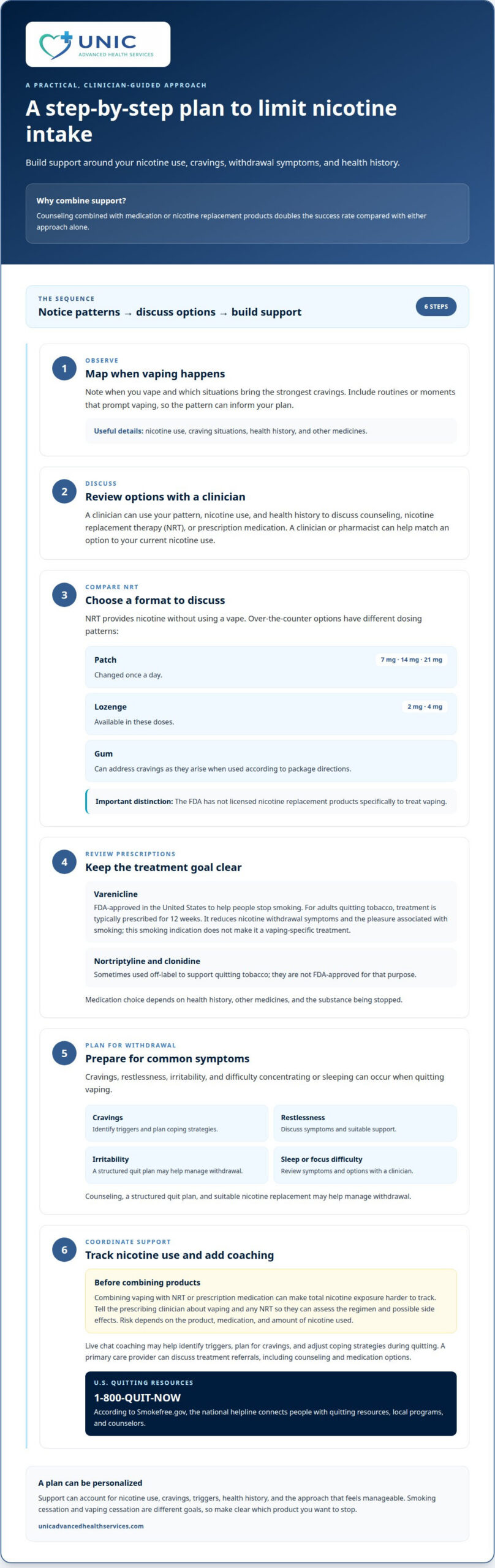
Start by noting when you vape and which situations bring the strongest cravings. A clinician can use that pattern, your nicotine use, and your health history to discuss counseling, nicotine replacement therapy, or prescription medication. Combining counseling with medication or nicotine replacement products doubles the success rate compared with either approach alone.
Nicotine replacement therapy (NRT) provides nicotine without using a vape. Over-the-counter options include patches, gum, and lozenges. Patches come in 7 mg, 14 mg, and 21 mg doses and are changed once a day. Lozenges are available in 2 mg and 4 mg doses. Gum can address cravings as they arise when used according to its package directions. These products have different dosing patterns, so a clinician or pharmacist can help match the option to your current nicotine use.
Prescription medicines are another option to discuss. Varenicline is FDA-approved in the United States to help people stop smoking. For adults quitting tobacco, treatment is typically prescribed for 12 weeks. It reduces nicotine withdrawal symptoms and the pleasure associated with smoking, but that smoking indication does not make it a vaping-specific treatment. Nortriptyline and clonidine are sometimes used off-label to support quitting tobacco; they are not FDA-approved for that purpose. Medication choice depends on health history, other medicines, and the substance being stopped.
What nicotine withdrawal symptoms can occur when quitting vaping, and how can they be managed? Cravings, restlessness, irritability, and difficulty concentrating or sleeping can occur. Counseling, a structured quit plan, and suitable nicotine replacement may help manage withdrawal. A clinician can review your symptoms and discuss options.
Combining vaping with nicotine replacement therapy (NRT) or prescription medication can make total nicotine exposure harder to track. The risk depends on the product, medication, and amount of nicotine used. Tell the prescribing clinician about vaping and any NRT before combining them, so they can assess the regimen and possible side effects.
Coaching can add practical support to medication. Live chat coaching may help someone identify triggers, plan for cravings, and adjust coping strategies during quitting. Smokefree.gov lists 1-800-QUIT-NOW as a national helpline connecting people with quitting resources, local programs, and counselors. If nicotine use feels difficult to manage alone, ask a primary care provider about treatment referrals for nicotine dependence, including counseling and medication options.
2. What are the benefits of quitting vaping?
Quitting vaping can reduce routine nicotine use and loosen the link between cravings and daily habits. A morning commute, work break, or social gathering may become easier to manage when vaping is no longer part of the routine. You may also spend less time planning when or where to vape. Progress can be gradual, so tracking each vape-free situation can help you recognize new patterns.
Nicotine withdrawal symptoms after stopping vaping subside in a couple of weeks, while changing vaping behavior usually takes several months. Physical discomfort and familiar routines may ease on different timelines. A written plan can address both, with coping strategies for cravings and alternatives for moments previously linked with vaping. If a lapse happens, noting the trigger can help you refine the plan rather than abandon it.
Free, science-based quit-smoking and vaping support can offer structured education and practical coaching. In the United States, people can call 1-800-QUIT-NOW for a national helpline connecting them with quitting resources, local programs, and counselors, according to Smokefree.gov. Support can help people identify triggers, set a quit date, and plan how to respond when cravings arise. Ask about English- or Spanish-language options when exploring a program, and choose a format that feels accessible.
Support may be available in person, by phone, or through telehealth. Each format can help with a different barrier: an in-person conversation offers direct discussion, phone support reduces travel, and telehealth can make scheduled care more accessible. Someone who prefers remote appointments can use telehealth services to discuss health concerns and next steps with a medical professional.
Not feeling ready to quit doesn’t prevent a useful conversation. A counselor or clinician can explore what vaping does for you, what concerns you, and what change feels manageable. You might first track situations that prompt vaping or discuss a gradual plan before choosing a quit date. Support can help build readiness without treating uncertainty as failure.
Insurance benefits differ by plan. Coverage for medical visits, counseling, and cessation medication may be handled separately, while out-of-pocket spending depends on the plan’s deductible, copayment, network rules, and selected treatment. Review those benefit categories before scheduling or filling a prescription. If a plan covers only some components, that distinction can help shape a practical support plan without assuming every service or medicine is included.
3. Can e-cigarettes or vapes be used to quit smoking?
Smoking cessation and vaping cessation are different goals, so your plan should name which nicotine product you want to stop. A person who smokes and vapes can discuss both habits during individual counseling. The counselor can explore when each product is used, what triggers cravings, and which change the person wants to make first.
Individual counseling gives you space to discuss personal routines rather than follow a generic script. For example, a counselor may help you plan for cigarette breaks, social triggers, or stress that prompts vaping. Counseling and medication may increase your chances of successfully quitting vaping. Behavioral support can also help you identify setbacks, review what happened, and adjust your next steps.
Vapes are sometimes considered as a way to move away from cigarettes, but they are not the same as approved nicotine replacement therapy. The FDA has not licensed nicotine replacement products specifically to treat vaping. If you’re considering a vape to quit smoking, discuss the plan with a healthcare professional, including whether you’ll continue smoking alongside vaping and how you’ll measure cessation.
Using both cigarettes and a vape can make it harder to tell whether smoking has stopped or nicotine use has simply shifted. A counseling conversation can clarify your goal, identify situations that prompt each behavior, and set a way to track progress. If you want to stop both tobacco and vaping, your plan can address both habits rather than treating them as interchangeable.
Youth prevention and cessation require age-appropriate conversations about nicotine and social pressure. The CDC recommends that adults who have never smoked or used tobacco products should not start vaping. In the United States, almost 6% of middle and high school students currently vape. A supportive discussion can explore what a young person knows, what influences use, and how to seek help without shame.
Not On Tobacco is a named teen smoking cessation program. Families and teens can ask a healthcare professional about youth-focused cessation support and whether a program like Not On Tobacco fits the young person’s needs. Prevention conversations can also address vaping, since avoiding tobacco initiation and stopping current nicotine use are distinct goals.
For adults, counseling can be paired with a discussion of medication options when nicotine dependence makes quitting difficult. Your smoking and vaping patterns, health history, and preferences help shape that conversation. A useful first step is to describe each product you use, when you use it, and what outcome matters most, such as stopping cigarettes or ending all vaping.
4. Personalized quit plans
A personalized quit plan turns a broad goal into practical decisions for ordinary days. Identify whether you’re stopping vaping, cigarettes, or both, since each pattern can have different triggers. Start by recording when you vape, what is happening, and how you feel beforehand. A morning routine, a stressful task, or time with friends can reveal when cravings are most likely.
Next, choose strategies for those specific moments. If a work break usually prompts vaping, plan a different activity for that break. If stress is a trigger, identify a calming action that fits your day, such as taking a short walk or contacting someone supportive. These examples make the plan more concrete than a general intention to quit. Keep the steps simple enough to use when cravings interrupt your routine.
Withdrawal can bring cravings, restlessness, irritability, and difficulty concentrating or sleeping. These symptoms after stopping vaping subside in a couple of weeks, while changing vaping behavior usually takes several months. Your plan can account for both timelines: prepare coping strategies for withdrawal and continue adjusting routines as new habits take shape. If a particular situation leads to vaping again, note the trigger and revise your response for next time.
Daily check-ins can turn your plan into practical decisions. At the start of each day, identify one situation that might prompt vaping and one action to try instead. In the evening, consider which strategy helped and where your plan needs adjustment. For example, if a social event made cravings harder to manage, your next plan might include telling a trusted friend about your goal or deciding how to respond when offered a vape.
A clinician can help shape your plan around nicotine use, health history, and treatment preferences. Discuss whether counseling, nicotine replacement, or prescription medication may fit, along with questions about using any treatment safely. Share other medications and relevant symptoms so the conversation reflects your full health picture, not just your vaping habits.
Concerns about cigarettes, nicotine, or cancer can also be part of a personalized plan. Name the concern and ask how it relates to your health and quitting goals. Review the plan when cravings, daily routines, or treatment needs change. Progress can mean following the next planned step, even when the full process takes time.
5. Talking to a primary care provider
A primary care visit can turn a general wish to quit into a focused treatment discussion. Tell the provider whether you vape, smoke cigarettes, or use both, and describe when you use nicotine. Include cravings, withdrawal symptoms, past quit attempts, and what made them difficult. These details help clarify whether your plan should address vaping, smoking, or both.
Medical help to quit vaping can include reviewing your health history, current medications, and nicotine use. A primary care provider can discuss counseling and medication options, explain how they relate to your goal, and help identify practical next steps. Counseling combined with medication or nicotine replacement products doubles the success rate compared with either approach alone. Treatment should reflect your circumstances, not just the product you use.
Specific examples can make your appointment more useful. Note whether cravings arise after meals, during work breaks, while driving, or around friends who vape. Share any symptoms affecting sleep, concentration, or mood. If you have tried nicotine replacement or prescription medication before, describe what you used and what happened. This helps the provider consider your past experience alongside your current health needs.
Primary care professionals can assess nicotine use and discuss treatment options. A behavioral health counselor can support the habit and trigger changes involved in quitting. A pharmacist can explain directions and medication safety for products they dispense. Each role addresses a different part of care, and your primary care provider can help coordinate the conversation or identify when additional support may be useful.
Use your appointment to ask direct questions: Which options fit my health history? What side effects should I watch for? How should I respond if cravings continue? What should I do if I vape during the plan? These questions focus the discussion on safety, practical strategies, and possible treatment adjustments. Mention conditions such as diabetes, hypertension, or obesity because they are part of your overall medical picture.
Write down the agreed next steps before the visit ends. The plan might include a counseling discussion, medication review, or follow-up conversation about withdrawal symptoms. If addiction concerns or repeated quit attempts are part of your experience, say so plainly. A clear account helps the provider understand what support may be relevant.
For a focused conversation about your health and quitting goals, schedule a primary care discussion.
Unic Advanced Health Services
Unic Advanced Health Services provides primary care and telehealth services in Fort Lauderdale for people who want to discuss vaping alongside their broader health needs. A visit can include a conversation about your nicotine use, quit goals, health history, and any ongoing conditions relevant to your care. This context can be useful if you’re managing concerns such as diabetes, hypertension, or obesity while considering changes to vaping.
Telehealth Services offer a way to have a medical discussion remotely. Annual Physicals and Preventive Care can also support broader conversations about your health. Bring up your current medications and any withdrawal symptoms so your provider can consider them in the context of your overall care.
Contact Unic Advanced Health Services in Fort Lauderdale to discuss your health concerns and next steps.
Take the Next Step Toward Care That Fits
You don’t need a perfect plan before starting a conversation. Decide what you want help with first, such as understanding treatment choices, discussing nicotine use alongside another health concern, or planning an initial change. That gives your appointment a clear starting point without requiring you to have every answer in advance.
Medical help to quit vaping can begin with an open discussion about your goals and health. If you’re also managing an ongoing condition, mention how it affects your priorities. Unic Advanced Health Services offers Chronic Condition Management in Fort Lauderdale, which may be relevant when vaping concerns intersect with broader care.
Contact Unic Advanced Health Services to discuss your health needs and next steps. A manageable first conversation can help you move forward at your own pace.
Frequently Asked Questions
Can e-cigarettes or vapes be used to quit smoking?
Vaping and smoking are different behaviors, so using a vape to stop cigarettes doesn’t automatically mean nicotine use has ended. Discuss your goal with a healthcare professional, especially if you continue using both products. They can help distinguish a smoking cessation plan from a plan to stop vaping. The FDA has not licensed nicotine replacement products specifically to treat vaping, so don’t assume smoking cessation approaches directly apply to quitting vapes.
What are the benefits of quitting vaping?
Quitting can reduce nicotine use and help break routines connected to vaping, such as reaching for a device during a drive or work break. Withdrawal symptoms after stopping vaping subside in a couple of weeks, while changing the behavior can take several months. Consider tracking changes in daily routines and cravings as you adjust. In the United States, Smokefree.gov says 1-800-QUIT-NOW connects callers with quitting resources, local programs, and counselors.
What are the best ways to quit vaping?
The most useful approach combines a clear goal with support suited to your nicotine use and health history. Counseling paired with medication or nicotine replacement products doubles the success rate compared with either approach alone. Identify situations that prompt vaping, decide what support you’ll use, and discuss treatment options with a healthcare professional. If you slip, consider what triggered the return and adapt your plan rather than treating one lapse as the end of your effort.
What are ways to limit nicotine intake?
Nicotine replacement products offer options that don’t involve vaping. Patches are available in 7 mg, 14 mg, and 21 mg doses and are changed once a day; lozenges come in 2 mg and 4 mg doses. Gum is another over-the-counter option. A clinician or pharmacist can help discuss which product may fit your nicotine use and how to follow its directions. Avoid combining products with vaping without discussing the plan with a clinician.
What medications are used to help quit vaping nicotine?
No medication is described here as FDA-approved specifically to help people quit vaping. Varenicline is FDA-approved in the United States to help people stop smoking, while nortriptyline and clonidine are prescription medicines used off-label to help people quit tobacco. These distinctions matter: a medicine used for smoking cessation isn’t automatically a vaping treatment. Discuss your goal, health history, and current medications with a healthcare professional before considering any prescription option.
Can nicotine replacement therapy help with vaping cessation, and what types and doses are recommended?
Nicotine replacement products may help reduce cravings and make quitting vaping easier, but dosing should reflect the person’s nicotine use. Available examples include patches in 7 mg, 14 mg, and 21 mg doses, plus lozenges in 2 mg and 4 mg doses. Gum is another option. These product strengths aren’t a personalized recommendation; discuss selection and directions with a healthcare professional or pharmacist, particularly if you’re also vaping.
What free quit-vaping services are available in the United States, including quitlines and text programs?
In the United States, Smokefree.gov identifies 1-800-QUIT-NOW as a national helpline connecting callers with quitting resources, local programs, and counselors. Those services can help you explore support and discuss next steps. Ask about options that match your preferred language and contact method. Before relying on a text program, confirm its details through a trustworthy quitting resource, since services and enrollment methods can vary.
What steps should someone take with a doctor to make a quit-vaping plan?
Start by explaining what you use, when vaping tends to happen, and whether you also smoke cigarettes. Share relevant health conditions, medications, and previous quit attempts. Then discuss possible counseling, nicotine replacement, or prescription options, including how each relates to vaping cessation. Ask how to handle cravings and what to do after a lapse. Medical help to quit vaping can turn those details into a plan that reflects your health and goals.