
Consistent care can lower the risk of diabetes complications. The practical answer to how to avoid diabetes complications is to manage blood glucose, blood pressure, and cholesterol, build healthy routines, and keep up with recommended screenings. Check your feet daily and follow up on changes early, since complications can affect several parts of the body.
Managing diabetes can feel like a lot, especially when you feel well and complications may not cause noticeable symptoms at first. Small, steady steps and regular medical checkups can help you stay informed and address concerns early.
This article explains how glucose monitoring and prescribed treatment support prevention, which everyday habits can help, and why routine checks matter for your eyes, kidneys, heart, feet, nerves, and teeth. You’ll also learn how ongoing care can help you adjust your plan as your needs change.
Key Takeaways
- Track blood glucose and follow your prescribed treatment plan, while discussing personal targets for blood sugar, blood pressure, and cholesterol with your healthcare team.
- Make daily foot checks part of your routine, and seek prompt care for an open sore or an injury that isn’t healing.
- Build sustainable habits around balanced meals, regular physical activity, oral care, and avoiding tobacco to support your overall health.
- Keep routine diabetes appointments and recommended eye, dental, kidney, and heart screenings, even when you feel well.
- Use regular check-ins to review your results and adjust your care plan as your health needs change.
1. Kidney, heart, eye, foot, nerve, and dental examinations
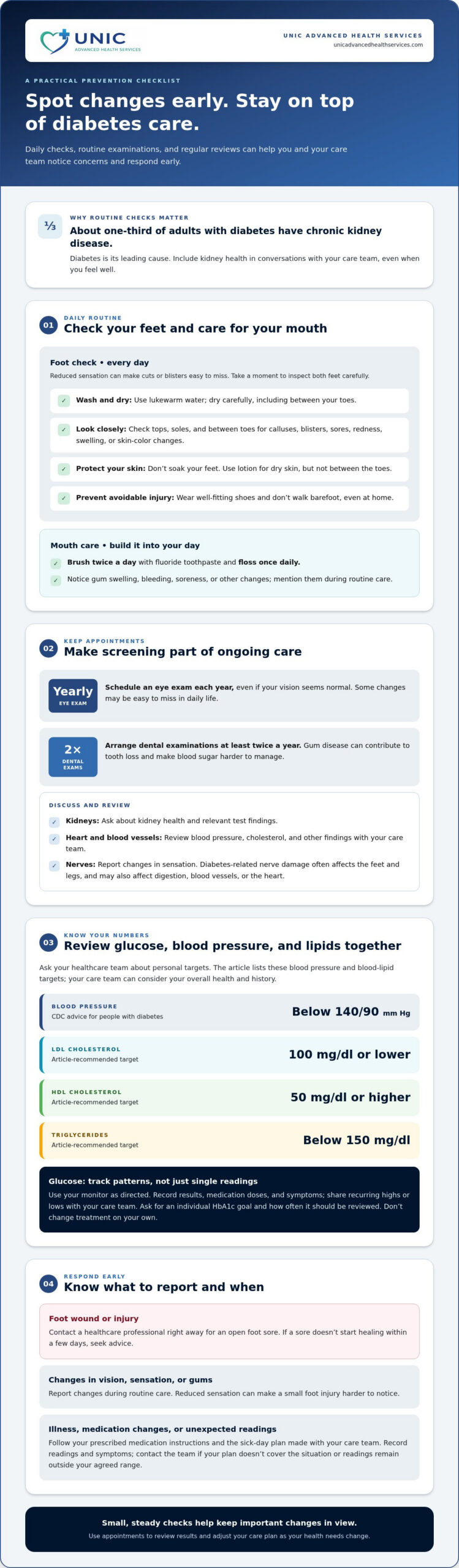
Daily attention and routine examinations can help identify diabetes-related changes early. Diabetes can affect the eyes, feet, legs, kidneys, and heart, sometimes before symptoms appear. About one-third of adults with diabetes have chronic kidney disease, and diabetes is its leading cause. Untreated chronic kidney disease can progress to kidney failure, so include kidney health in discussions with your care team.
Heart checks matter, too. People with diabetes face a higher risk of heart disease, which may develop at a younger age and more severely than in people without diabetes. Diabetes also raises the risk of stroke. Ask your care team how your blood pressure, cholesterol, and other findings affect your personal heart-health plan. Regular reviews of kidney, heart, blood vessel, and blood lipid health can help track changes over time.
Eye and nerve examinations can reveal changes that are easy to miss in daily life. Arrange an eye exam each year, even if your vision seems normal. Diabetes-related nerve damage most often affects the feet and legs, but can also affect digestion, blood vessels, and the heart. Reduced sensation may make a small cut or blister harder to notice, so visual checks are especially useful.
What daily steps help prevent diabetes complications? Wash your feet daily with lukewarm water, dry them carefully, and inspect the tops, soles, and spaces between your toes. Look for calluses, blisters, sores, redness, swelling, or changes in skin color. Don’t soak your feet. Use lotion to prevent dry skin, but avoid applying it between your toes. Wear well-fitting shoes and don’t walk barefoot, even at home.
Take injuries seriously. If you find an open foot sore, contact a healthcare professional right away. If a sore doesn’t start healing within a few days, seek advice. Damaged nerves and blood vessels can make foot infections difficult to treat. In severe cases, amputation may be needed to stop an infection from spreading. Prompt attention to a wound helps your care team assess it before it worsens.
Include your mouth in daily checks. Look for gum swelling, bleeding, soreness, or other changes, and arrange dental examinations at least twice a year. Brush with fluoride toothpaste twice a day and floss once daily. Gum disease can contribute to tooth loss and make blood sugar harder to manage. Report oral changes during routine care, along with foot concerns or changes in vision or sensation.
2. Diabetes management and blood glucose control
Managing glucose is one way to lower the risk of diabetes-related disease. Persistently high blood sugar can damage large and small blood vessels throughout the body. Use your glucose monitor as directed and record results, medication doses, and symptoms. A log can help your care team spot patterns, such as readings that rise after meals or fall during activity. Take prescribed medication as directed, and discuss recurring highs or lows rather than changing treatment on your own.
Ask your care team to set an individual HbA1c goal and explain how often it should be reviewed. HbA1c reflects longer-term blood sugar levels, while home readings show day-to-day changes. The right target depends on your existing conditions and health history. Share changes in appetite, activity, or medication use, since each can affect glucose. Avoiding severe hyperglycemia and hypoglycemia is an important part of a safe management plan.
Blood pressure deserves regular attention because high readings can worsen eye and kidney disease. The Centers for Disease Control and Prevention advises people with diabetes to keep their blood pressure below 140/90 mm Hg. Track readings as directed and bring the record to appointments. Discuss repeated elevated results with your care team, which can consider your overall health and adjust the plan. Blood pressure management helps address a major strain on the vessels.
Cholesterol and triglycerides also influence cardiovascular risk. Diabetes can lower HDL cholesterol and raise LDL cholesterol and triglycerides, increasing the risk of heart disease and stroke. The article’s recommended targets are LDL cholesterol of 100 mg/dl or lower, HDL cholesterol of 50 mg/dl or higher, and triglycerides below 150 mg/dl. Review your lipid results with your care team, and ask how food choices, activity, and prescribed treatment fit your results. Keep blood pressure and blood lipids in view alongside glucose, not as separate concerns.
Which medications help protect the heart and kidneys in people with diabetes? Prescribed medicines that manage blood sugar, blood pressure, or cholesterol can help control risk factors. The right choice depends on your health history and test results. Take medicines as instructed, and report side effects or missed doses so your care plan can be reviewed.
How can people with diabetes manage sick days and avoid dangerous blood sugar levels? Check glucose as directed, follow your prescribed medication instructions, and use the sick-day plan developed with your care team. Record readings and symptoms, including changes that may affect eating or medication routines. Contact your care team if your plan doesn’t cover the situation or your readings remain outside your agreed range.
3. Healthy lifestyle changes to lower complication risk
Start with changes you can repeat, such as planning meals and scheduling walks. Healthy eating, physical activity, and stress management can support diabetes care. These habits complement prescribed treatment, not replace it. Choose a practical first step, like adding vegetables to lunch or taking a short walk after dinner. Note how the routine fits your schedule, then build from there.
Choose varied, balanced meals with fiber. Beans, fruit, vegetables, and whole grains are useful options. Include plant-based oils as part of a balanced eating pattern. A doctor or dietitian can help you adapt meals to your glucose goals, preferences, and daily routine. Track how different meals relate to your blood sugar readings. This record can help you discuss patterns with your care team.
Make movement a regular part of the week. Adults with diabetes should be physically active for at least 150 minutes a week. Walking, cycling, and other activities you enjoy can help make exercise easier to maintain. Divide activity across your week in a way that fits your routine. If you’re starting from a low activity level, discuss a suitable plan with your doctor. Keep track of activity alongside glucose readings to see how they relate.
Weight management can also matter. For people with diabetes who are overweight, losing 5 to 10 percent of initial weight can significantly improve glucose metabolism. Set manageable goals and review progress with your care team, rather than relying on restrictive approaches. Avoid tobacco, too. Smoking doubles the risk of heart disease in people with diabetes and raises the risk of other complications, including nerve and kidney disease. Ask your doctor for support with quitting as part of your health plan.
Oral care is another daily habit with a clear routine. Brush with fluoride toothpaste at least twice a day, and floss once a day. Gum disease can contribute to tooth loss and higher blood sugar, making diabetes harder to manage. Look for bleeding, swelling, or soreness while brushing, and mention changes at dental visits. Keep oral care in view alongside your other routines. A small daily step can help you notice changes worth discussing.
Pair these habits with consistent self-care. Check your feet each day for blisters, sores, or redness, especially after activity. Keep a simple record of meals, exercise, tobacco use, and glucose patterns. Bring it to your next appointment so your doctor can discuss how your routines fit your diabetes care plan. Focus on changes you can sustain, then review them as your needs change.
4. Routine diabetes checkups and eye exams
Regular visits can reveal changes before they cause noticeable symptoms. Plan for 2 to 4 diabetes checkups each year, in addition to a yearly physical. At these appointments, review HbA1c, blood pressure, weight, medications, and any new symptoms. Bring glucose records and questions about changes in your routine, such as smoking or reduced activity. This gives your primary care doctor useful context for interpreting results and updating your care plan.
Some checks may be repeated every 3 months. A diabetes health-check schedule includes body weight, waist circumference, blood pressure, HbA1c, severe low blood sugar episodes, injection sites, and smoking status. These measures help show how treatment and daily habits are working together. Keep a simple record between appointments, and tell your care team about significant changes. Kidney function and blood lipids also deserve attention because diabetes can affect kidneys and blood vessels.
Schedule a comprehensive eye exam each year, even when your vision seems unchanged. Diabetes is the leading cause of new blindness cases among working-age adults, and early eye changes may not be obvious. An eye-care professional can assess diabetes-related damage and determine whether follow-up is needed sooner. Share your diabetes history and recent glucose results at the appointment, then make sure the findings reach your primary care team.
Keep dental care on the calendar, too. The American Diabetes Association recommends yearly dental and eye exams for people with diabetes. Tell your dentist about diabetes and any gum changes. Regular cleanings and examinations can identify problems early, and your dentist can share relevant findings with your broader care team.
What vaccines are recommended for adults with diabetes in the United States? A yearly flu vaccine can help prevent serious influenza complications. Adults younger than 60 who haven’t previously received hepatitis B vaccine are recommended to get it; adults aged 60 or older should discuss whether it’s appropriate with a healthcare professional.
How often should people with diabetes see their primary care doctor and specialists? Plan for 2 to 4 diabetes checkups each year, plus a yearly physical; have an eye exam each year and dental exams at least twice a year. Additional specialist visits may be needed based on examination findings, kidney disease, eye changes, or other complications.
Keep appointments even when you feel well, because complications can develop without symptoms. Before each visit, list your concerns, bring medication details, and note any changes in vision, sensation, energy, or glucose readings. Ask which results need follow-up and when to schedule the next check. A clear appointment plan helps keep routine screenings and primary care on track.
5. Reducing the risk of diabetes complications
A practical way to avoid diabetes complications is to connect everyday choices with regular clinical follow-up. Cardiovascular disease is the leading cause of death among people living with diabetes. People with diabetes are twice as likely to have heart disease or a stroke as those without diabetes. That makes glucose, blood pressure, and cholesterol parts of one prevention strategy, not separate concerns. Review these measures with your healthcare team and agree on priorities for your care.
Take prescribed medicines as instructed, and keep an up-to-date list of each medication and dose. Tell your healthcare professional about side effects, missed doses, or changes in your routine. This information can guide treatment adjustments and help address risk factors before they contribute to serious complications. Some people with diabetes and other heart disease risk factors may be advised by a healthcare professional to take a low dose of aspirin every day. Follow professional advice about aspirin use.
Smoking increases the risk of diabetes-related complications, including heart disease, stroke, eye disease, nerve damage, and kidney disease. Tobacco use is also a major cardiovascular risk factor. If you smoke, make quitting part of your prevention plan and discuss support with your healthcare team. Avoiding tobacco addresses several risk pathways, while glucose and cholesterol management remain important for protecting blood vessels.
Plan preventive steps beyond glucose management. People with diabetes should have a yearly flu vaccine to help prevent serious influenza complications. Adults younger than 60 who have never received hepatitis B vaccine are recommended to receive it. Adults aged 60 or older who have never received it should discuss whether vaccination is appropriate with a healthcare professional. Review your vaccine history during a routine appointment.
Use each check-in to turn test results into specific next steps. Ask which findings need attention first, what changes to track, and when to review progress. Keep a record of glucose readings, medication use, blood pressure, and cholesterol results. Note changes in mood or daily functioning, since diabetes increases the risk of depression. Clear information helps your healthcare team identify patterns and coordinate care around your needs.
Knowing how to avoid diabetes complications means treating prevention as an ongoing process, not a single task. Choose a manageable action, such as organizing medicines, planning a tobacco-cessation discussion, or recording questions before your next appointment. For ongoing support with diabetes routines and treatment oversight, explore chronic condition management.
Unic Advanced Health Services: DOT Physical Examination
Unic Advanced Health Services provides Chronic Condition Management for people living with diabetes who need ongoing support with their care plan. Regular follow-up can help you review health changes, treatment, and questions as they arise. Annual Physicals and Preventive Care can also support routine health reviews.
Unic Advanced Health Services also provides a DOT Physical Examination for Driver. This examination serves a different purpose from diabetes management, which focuses on ongoing chronic care. Choose the service that fits your current need, whether you’re seeking diabetes follow-up or a required physical examination.
For ongoing diabetes care or a DOT Physical Examination for Driver, contact Unic Advanced Health Services to schedule your next step.
Make your next step part of the plan
Learning how to avoid diabetes complications is most useful when it leads to a care plan you can maintain. Choose one action to carry forward, such as preparing questions for your next appointment or setting a reminder to review your care goals. Small, deliberate steps can make ongoing health management feel more organized and easier to sustain.
Unic Advanced Health Services offers Chronic Condition Management for ongoing diabetes care, along with DOT Physical Examination and U.S. Coast Guard (USCG) Boat Captain Physical services for people who need those examinations. If you’re ready to discuss your care or arrange a relevant physical, contact Unic Advanced Health Services.
Bring your concerns and priorities into the conversation. A clear next step can help you move forward with confidence and keep your health goals in view.
Frequently Asked Questions
How often should people with diabetes check blood sugar and A1C?
Check blood sugar as directed in your care plan, and have HbA1c tested regularly. The timing depends on treatment, readings, and health changes. Diabetes checkups may occur 2 to 4 times each year, with HbA1c included in ongoing monitoring. Keep a record of readings and note when they were taken, such as before meals or after activity. This context helps your care team interpret patterns.
What A1C, blood pressure, and cholesterol targets reduce diabetes complications?
There isn’t one HbA1c target for everyone, so discuss a personal goal with your doctor. The Centers for Disease Control and Prevention advises people with diabetes to keep blood pressure below 140/90 mm Hg. The research facts also give lipid targets of LDL cholesterol 100 mg/dl or lower, HDL cholesterol 50 mg/dl or higher, and triglycerides below 150 mg/dl. Review results together, since overall health affects goals.
How often should people with diabetes get eye exams, kidney tests, and foot checks?
Schedule an eye exam each year and include kidney health in regular diabetes reviews. The Diabetes Health Passport schedule lists annual kidney checks, while examination frequency may increase depending on findings. Check your feet daily, especially after wearing new shoes or walking for an extended time. Note changes in sensation, skin, or nails so you can describe them accurately at an appointment. Record the dates of your latest eye and kidney checks.
How can people with diabetes prevent foot ulcers and infections?
Inspect both feet daily, including the soles and between your toes, using a mirror if needed. Wash with lukewarm water, dry carefully, avoid soaking, and wear well-fitting shoes. Don’t walk barefoot, even indoors. If you notice a blister, redness, swelling, or an open sore, contact a healthcare professional promptly. Nerve changes can make injuries less noticeable, so visual checks are useful even when there’s no pain.
How do smoking, diet, exercise, and weight affect diabetes complication risk?
Smoking doubles heart disease risk in people with diabetes. A varied eating plan with fiber-rich foods, such as beans, fruit, vegetables, and whole grains, supports diabetes management. Adults with diabetes should aim for at least 150 minutes of physical activity a week. For people with diabetes who are overweight, losing 5 to 10 percent of initial weight can significantly improve glucose metabolism. Choose realistic habits you can sustain and discuss changes with your care team.
What are the warning signs of diabetes complications that need urgent care?
An open foot sore needs prompt professional attention, even if it doesn’t hurt. Redness, swelling, or a wound that isn’t starting to heal within a few days also warrants follow-up. Changes in vision or sensation deserve attention at a medical appointment, since complications may develop without obvious symptoms. Note when a change began and whether it’s worsening. Share those details with your healthcare professional to support timely assessment.