
A few minutes of preparation can help you feel more confident about what to discuss. If you’ve ever forgotten a question or struggled to summarize a health change once the appointment begins, you’re not alone. Knowing how to prepare for a doctor’s visit to maximize time starts with turning scattered concerns into a short, clear brief.
A focused conversation begins with the details that matter most: what brought you in, what has changed, and what you want to understand before you leave. You don’t need every answer ready. A simple plan can help you describe your concern, set priorities, and make room for questions.
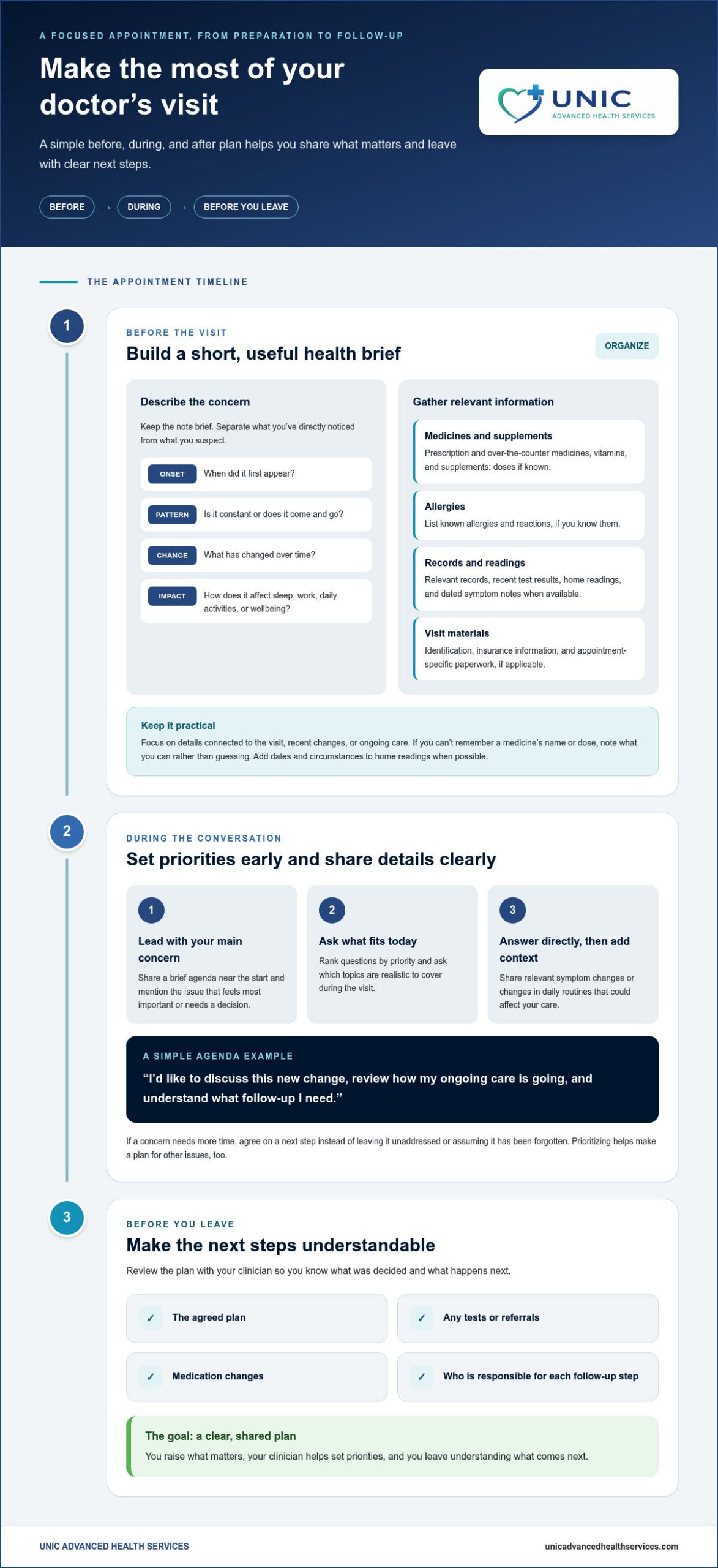
This guide offers a practical before, during, and after checklist. Before the visit, organize your symptoms, medications, and priorities. During the conversation, share concise details and ask questions that support clear communication. Before you leave, confirm the plan and follow-up steps. Whether you’re discussing a new concern, managing an ongoing condition, or attending preventive care, preparation can make the visit more focused and collaborative.
Key Takeaways
- To learn how to prepare for a doctor’s visit to maximize time, create a brief health summary with your main concern, when it began, how often it occurs, and what has changed.
- Gather medication names, doses if known, allergies, relevant records, and recent test information so you can share useful details during the conversation.
- Rank your questions by priority, share your agenda early, and ask which topics can be addressed during the visit.
- Answer directly, then add context that could affect your care, such as changes in symptoms or daily routines.
- Before leaving, review the plan, tests, referrals, medication changes, and who is responsible for each follow-up step.
Why preparing for a doctor’s visit helps you use the time well
A useful appointment isn’t measured by how many topics you squeeze in. It’s a focused conversation where you and your clinician agree on priorities, discuss the information that matters, and leave with understandable next steps. A little preparation can help make that conversation more organized, even when the time available is limited.
It’s understandable to feel rushed or remember a question only after you leave. Preparing won’t guarantee a longer visit or resolve every concern in one conversation. It can help your clinician understand what matters most to you early in the appointment. A brief agenda gives the conversation a starting point and helps you decide together what needs attention first.
A useful appointment is shared, focused, and action-oriented: you raise what matters, your clinician helps set priorities, and you leave understanding what comes next. That is the central idea behind how to prepare for a doctor’s visit to maximize time. Instead of trying to present your entire health history at once, focus on the purpose of this visit and the details that support it.
What a short appointment can, and cannot, cover
Visit time is limited, so begin with the concern that feels most important or needs a decision. If you’re managing a long-term condition and have also noticed a new symptom, mention both near the start. Your clinician can help determine what can be addressed today and whether the separate concern needs its own appointment. Prioritizing doesn’t mean dismissing other issues. It helps you make a clear plan for them.
Choose the right goal for this particular visit
Before you prepare, identify whether the appointment is preventive, focused on a symptom, related to ongoing condition management, or occupational. The purpose determines which information is most useful. For a symptom visit, note when the change began and how it affects you. For ongoing care, think about what has changed since your last discussion. For preventive or occupational care, write down your questions and any relevant health updates.
A simple agenda can be one sentence: “I’d like to discuss this new change, review how my ongoing care is going, and understand what follow-up I need.” Share it near the start, then ask which topics are realistic to cover. If something needs more time, agree on a next step instead of leaving it unaddressed or assuming it has been forgotten.
This approach works across routine and ongoing care. You don’t need a perfect script, just a clear starting point and room for your clinician’s guidance. The next sections explain how to gather relevant details, communicate them clearly, and confirm the plan before you go.
What to gather before your doctor’s appointment
A compact, accurate summary is more useful than trying to remember every detail in the moment. Write down the concern you want to discuss, when it began, how often it occurs, and what has changed. Add relevant home readings, such as blood pressure or blood sugar measurements, if you already track them. Include dates and circumstances when possible. For example, note whether a reading was taken after exercise or at rest.
A clear symptom summary covers four essentials: onset, pattern, change, and impact. This keeps the information practical without requiring you to diagnose the cause. A short note is a helpful starting point for how to prepare for a doctor’s visit to maximize time.
Make a concise symptom and health-history note
Record when the issue first appeared, whether it comes and goes or is constant, and what seems to make it better or worse. Note meaningful changes over time and how the concern affects sleep, work, daily activities, or wellbeing. If you’re unsure what triggers it, say so. Separate what you’ve directly noticed from what you suspect may be causing it, so your clinician can evaluate the information clearly.
Keep the note brief enough to scan during the appointment. For example: “The discomfort began last week, happens after meals, and has become more frequent. It’s affecting my sleep.” If the pattern is hard to recall, add a few dated entries. The National Institute on Aging guidelines for doctor’s visits also recommend organizing concerns and information before speaking with your clinician.
Organize medicines, records, and appointment materials
Gather information that can help your clinician understand your health and current care. Make a list or bring the containers if that’s easier. Include:
- Prescription medicines, over-the-counter products, vitamins, and supplements, with doses if known
- Known allergies and the reactions you’ve experienced, if you know them
- Relevant medical records, recent test results, or information about care received elsewhere, when available
- Home readings or symptom notes, with dates and circumstances when possible
- Identification, insurance information, and appointment-specific paperwork, if applicable
You don’t need every record you’ve ever received. Focus on information connected to the reason for the visit, recent changes, or ongoing care. If you can’t remember a medication’s name or dose, note what you can rather than guessing. A family member or support person may also help organize details or remember questions, if that would be useful.
For continuing care in Fort Lauderdale, organized notes can support conversations about primary care and telehealth services. Bring the information you have, and your clinician can help determine which details are relevant.
How to prioritize questions and make your concerns clear
A long list of concerns can be difficult to work through in one conversation. A simple ranking method helps you show your clinician what matters most without losing sight of other questions. Start with the concern that most affects your health or daily life. Then list any decisions you need to make, followed by questions you’d like to address if time allows.
Share your agenda near the beginning of the appointment. You might say, “My main concern is the change in my symptoms. I also need to understand my treatment options, and I have two other questions. Which topics can we cover today?” This gives your clinician a chance to help set a realistic order and identify what may need a separate discussion.
Prioritizing doesn’t mean hiding anything. Briefly flag secondary concerns, even if they aren’t the main focus. Your clinician can help determine whether they’re connected, can be addressed during the visit, or should be scheduled for follow-up. This keeps important issues visible without asking you to rush through every subject at once.
Turn a long list into a focused visit agenda
Before the appointment, group related questions and remove duplicates. Mark which ones need a decision, an explanation, or a review of options. For example, questions about a treatment’s purpose and possible effects can sit together. Keep unrelated concerns on the list too, but label them as secondary so you can raise them if there’s time or return to them later.
- Main concern: What has the greatest effect on your health or daily activities?
- Decision needed: What choice, explanation, or review of options would help you move forward?
- Remaining questions: What else would you like to discuss or plan for later?
This order can work for a symptom-focused visit, ongoing condition management, preventive care, or an occupational appointment. It gives the conversation a clear starting point while leaving room for your clinician to adjust priorities based on what you share.
Describe the concern clearly and honestly
Use direct observations rather than minimizing or exaggerating. Instead of saying “It’s probably nothing” or “It’s unbearable” without context, describe what you notice, how it affects you, and what has changed. Be open about relevant habits or barriers to following a care plan, such as difficulty remembering a routine or fitting it into your day. Clear details help your clinician understand your situation without judgment.
If anxiety, discomfort, or feeling rushed makes it hard to speak, say so. Refer to your written agenda or ask to pause while you check your notes. A useful approach to how to prepare for a doctor’s visit to maximize time is to be concise without leaving out context that could change the clinical picture. Honest, prioritized communication supports a focused discussion and a clearer shared plan.
Tips for a productive doctor’s appointment
Once the conversation begins, use your prepared agenda as a guide, not a script. Start by naming your main concern, when it began, and how it affects your daily life. Then give the clinician a brief overview of your other topics. For example: “I’m here because the dizziness has become more frequent. I’d also like to review my current plan and ask about one other concern. How should we use today’s visit?”
Answer questions directly, then add context that could change the clinical picture. If asked how often something happens, give a clear estimate and describe any pattern you’ve noticed. Mention relevant changes in routine, medication use, or wellbeing. If you don’t know an answer, say so rather than guessing. Your clinician can guide follow-up questions and any examination needed to understand the concern.
Start with the priority and give the essential context
Opening clearly establishes a shared focus while leaving space for your clinician to lead the assessment. Share the main concern, its effect on daily life, and your concise agenda. Then pause and listen. Follow-up questions may clarify what needs attention first, and your clinician may suggest adjusting the order or setting aside a secondary topic for later discussion.
For virtual appointments, prepare the same notes and records you’d use in person, and keep them nearby so you can refer to them without losing track of the discussion. Choose a private setting where you can speak comfortably. If you’re preparing for telehealth in Fort Lauderdale, having your agenda and relevant information ready can help keep the conversation organized.
Clarify recommendations before the visit ends
Before wrapping up, ask what each recommendation means in practical terms. If you’re unsure how to follow an instruction, ask for clarification. You can repeat the plan in your own words, such as, “I’ll make this change and follow up if the symptom continues.” This gives your clinician a chance to correct a misunderstanding and helps you leave with a clearer sense of what to do.
Notes can help you remember key points. Write down the plan, any medication changes, and what follow-up is expected. If you’d prefer to record instructions, ask permission first rather than assuming recording is allowed. Also clarify who to contact if the plan is unclear or you have a question after the appointment.
A simple closing check can bring the conversation together: “What should I do next, and when should I follow up?” If the answer includes several tasks, ask which one comes first. Productive visits depend on clear communication from both sides, not on getting through every possible topic. If you’re looking for primary care or virtual care in Fort Lauderdale, explore primary care and telehealth services at Unic Advanced Health Services.
How to leave with clear next steps and continue care in Fort Lauderdale
A visit is easier to act on when you leave knowing what was decided and what happens next. Before you go, review the plan with your clinician. Confirm any tests or referrals, medication changes, follow-up timing, and who is responsible for each task. If a detail is unclear, ask for clarification rather than relying on memory.
Sort next steps into two groups: actions to take now and topics that need a later conversation. You might need to follow an instruction, arrange a test, or keep a record of a symptom. A separate concern may need another appointment. This distinction helps you focus on the immediate plan without losing track of what still needs attention.
Use a simple after-visit checklist
Before leaving, make a short note of the next action, who will handle it, and any timing your clinician gave you. Save the instructions and appointment notes in a consistent place, such as a folder or secure digital file, so you can find them later. Your checklist might include:
- Tests or referrals discussed and any steps you need to take
- Medication changes and when to begin them, if directed
- Follow-up plans, including who is expected to schedule or arrange them
- Questions or concerns to revisit at another appointment
Review your notes while the conversation is still fresh. If written instructions conflict with what you understood, or you’re unsure how to carry out the plan, contact the care team for clarification. Don’t guess about medication directions or assume someone else is handling a follow-up task.
Match the next appointment to the kind of care needed
The right follow-up depends on the reason for the visit and the plan you discussed. Preventive care may include future wellness conversations, while ongoing condition management may involve reviewing changes and adjusting the care plan with your clinician. Keep any recommended timing in your notes, and ask how to handle a separate concern if it wasn’t addressed today.
If you’re preparing for preventive care in Fort Lauderdale, an annual physical is one setting where an organized health summary and clear questions can support the discussion. Unic Advanced Health Services provides primary care, telehealth, and chronic condition management. Knowing how to prepare for a doctor’s visit to maximize time includes carrying the plan forward after you leave, not just organizing the conversation beforehand.
Care works best as an ongoing conversation. If you’re looking for care in Fort Lauderdale, explore primary care and telehealth services at your own pace.
Make your next visit a confident step forward
A more useful appointment doesn’t require a perfect script. It starts with one clear priority and a willingness to work with your clinician on what happens next. The approach to how to prepare for a doctor’s visit to maximize time can also help you feel more prepared for ongoing care, preventive visits, and conversations about changes in your health.
For care in Fort Lauderdale, Unic Advanced Health Services is led by experienced autonomous nurse practitioner Marc Joseph. The practice provides primary care, chronic condition management, preventive care, telehealth, and on-site lab services, with office hours Monday through Saturday. Care is a continuing conversation, and your questions and observations are an important part of it.
When you’re ready to consider your next step, explore primary care and telehealth services in Fort Lauderdale. Bring your concerns, take them one conversation at a time, and feel confident asking for a plan you understand.
Frequently Asked Questions
How early should I arrive for a doctor’s appointment?
Follow the arrival time provided by the clinic, and allow extra time for parking, finding the office, and completing any paperwork. If you’re a new patient or need to update records, arriving with a little margin can reduce the pressure of getting checked in. For appointments in Fort Lauderdale, consider local traffic and parking conditions when planning your trip. Use your appointment reminder to confirm the expected arrival time.
Can I bring someone with me to a doctor’s appointment?
Yes, you can ask to bring a support person if that would help you feel more comfortable or remember information. They might help you explain a concern, take notes, or recall the plan afterward. Let the clinician know what role you’d like the person to play, and be prepared to discuss sensitive topics privately if needed. For a virtual visit, your companion can join from your location if you’re comfortable with that.
Should I fast before a doctor’s appointment?
Don’t fast unless the clinic or a clinician has specifically instructed you to do so for a test or procedure. Preparation requirements depend on what’s planned, and fasting unnecessarily may affect how you feel. If you’ve received instructions but aren’t sure whether they apply, contact the clinic before changing your usual routine. Don’t stop or adjust prescribed medication on your own. Ask for guidance about what to take on the day of the visit.
Can I ask my doctor for a copy of my visit notes?
Yes, you can ask how to access or request a copy of your visit notes. Ask the care team about the process for obtaining them. Notes can help you remember the clinician’s assessment and plan, but medical terminology may be unfamiliar. If something isn’t clear, write down the specific phrase or instruction and ask the care team to explain it in plain language.
What should I do if I have more concerns than can fit into one visit?
Tell the clinician that you have additional concerns, even if you can’t discuss them all today. Ask which one needs attention first and how to arrange time for the others. If you’re unsure what to prioritize, mention which concern is changing, disrupting daily life, or creating the most worry. This helps the clinician guide the next step and keeps an unaddressed issue from disappearing from your care plan.
Is a telehealth visit suitable for every health concern?
No. Telehealth can be useful for some conversations, but a concern that needs a hands-on examination, testing, or another in-person assessment may be better addressed in the office. The right format depends on the reason for care and the information the clinician needs. Unic Advanced Health Services offers telehealth in Fort Lauderdale. When arranging care, describe the concern so the visit format can be matched to the discussion.
What if I cannot remember the names of my medicines?
If you can’t recall medication names, bring the containers or use a current list from your pharmacy or patient portal. A clear photo of each label can also help, provided the name and directions are readable. Include nonprescription medicines, vitamins, and supplements, not just prescriptions. If you can’t gather these beforehand, share what you remember and explain which details you’re uncertain about rather than guessing.