
A prescription renewal appointment isn’t simply a request for another fill. It gives a clinician the opportunity to review whether continuing your medication is appropriate and whether you need monitoring or follow-up. If you’re worried about running out, contact the practice early so there’s time to ask about an appropriate visit.
To prepare, bring an up-to-date medication list with each medicine’s dose and schedule. Gather relevant records and recent test results, and write down questions about side effects or changes in your health. A renewal isn’t guaranteed. After reviewing your situation, the clinician may recommend an evaluation or monitoring before deciding what comes next.
This guide explains how to arrange a visit, what a clinician may review, and what information to have ready. In Fort Lauderdale, Unic Advanced Health Services provides primary care and telehealth. Ask the practice whether it can address your medication concern and which visit format may be appropriate. Suitability depends on the medication and your circumstances.
Key Takeaways
- A prescription renewal appointment includes contacting the practice, confirming visit options, preparing information, and following up after the clinician’s review.
- Ask whether an office or telehealth visit may be appropriate. The decision depends on the medication and your clinical circumstances.
- Have the medication name, dose, schedule, prescribing clinician, and preferred pharmacy ready.
- Before booking with a Fort Lauderdale care team, confirm appointment availability, visit format, and which records to bring or securely share.
What happens at a prescription renewal appointment?
A prescription renewal appointment is a clinical review of a medication you already take and the health needs it addresses. The clinician considers whether continuing treatment is appropriate, whether monitoring or a change may be needed, and what follow-up makes sense. A prescription drug requires a clinician’s authorization, so renewing it involves more than repeating a pharmacy request.
A renewal request asks a clinician to reassess an existing prescription. It isn’t an automatic refill or a guarantee of a prescription or specific quantity. The decision and timing depend on the medication, your clinical history, and the provider’s assessment. Some medications may require additional evaluation or monitoring rather than a routine renewal visit.
When should you schedule a prescription renewal visit?
Contact the practice before you’re close to running out. This gives you time to ask about an appropriate appointment and any preparation needed. Check with your pharmacy to find out whether refills remain on your current prescription. When contacting the practice, mention new symptoms, a dose change, or other changes in your health or treatment. The clinician may need to assess these concerns as part of a broader evaluation.
What can a clinician review during the appointment?
The clinician may ask which medication you take, its dose and schedule, how you use it, and whether it’s helping. Be ready to discuss side effects, missed doses, or changes in how you feel. Your health conditions and other medicines can also inform the decision. This review helps the provider assess your current needs, but it doesn’t mean every medication can be renewed through a routine visit.
Specific information makes the conversation more useful. If you take several medicines, list each one and note any recent changes. If another clinician prescribed the medication or you receive care for a chronic condition, share that context. These details help the provider understand how the prescription fits into your overall care and whether additional records or follow-up may be needed.
In Fort Lauderdale, a local primary care practice can be a place to discuss ongoing medication needs. Unic Advanced Health Services provides primary care and chronic condition management. Contact the practice to confirm whether it schedules this type of visit and which appointment options may be appropriate. If you’re concerned about running out, explain your timing when you call. Confirm the visit format and availability rather than assuming a renewal or a particular appointment is available.
How a prescription renewal appointment works, from booking to follow-up
The process can help you prepare while leaving the clinician room to make an individual decision. Use these stages as a guide, and confirm the practice’s current booking steps instead of assuming a particular visit type or outcome.
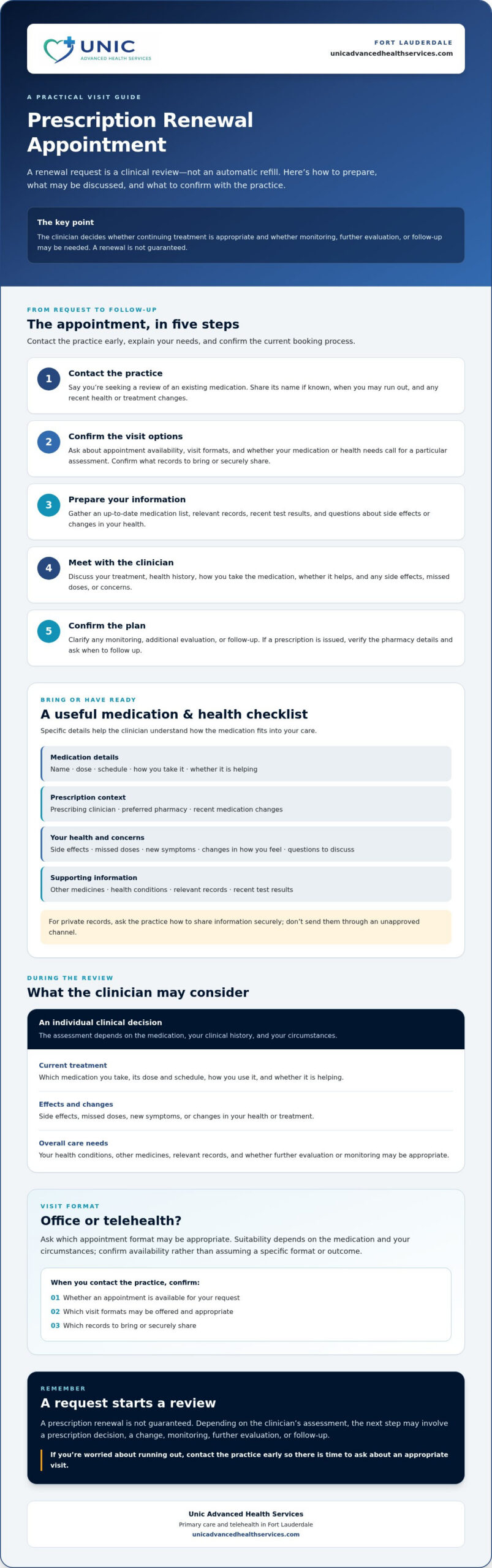
- Contact the practice. Explain that you’re seeking a review of an existing medication. Name it if you can, say how soon you may run out, and mention any recent changes in your health or treatment.
- Schedule an appropriate visit. Ask whether an appointment is available for your request, which formats may be offered, and whether your medication or health needs call for a particular type of assessment. Staff can also clarify what to prepare.
- Prepare your information. Gather medication details and relevant records. Follow the practice’s instructions for sending sensitive information. The National Institute on Aging offers further guidance on how to prepare for your doctor’s appointment.
- Meet with the clinician. The clinician reviews your treatment, health history, and concerns before deciding whether to prescribe or recommend another step. Be candid about how you take the medication and any difficulties or changes you’ve noticed.
- Follow the plan. Confirm what happens next, including any monitoring, additional evaluation, or follow-up appointment. If a prescription is issued, verify the pharmacy details and ask when to follow up.
What information should you provide when booking?
Keep the first conversation focused: name the medication, explain that you’re requesting a renewal review, and say when you expect to run out. Mention new symptoms, a dose change, or a change in how you take it. Don’t send private records through an unapproved channel. Ask the practice how to share them securely.
Renewal decisions depend on the individual patient’s medication, health history, and clinician’s assessment, not on a refill request alone. The review may lead to a renewal, a change in the treatment plan, a decision not to prescribe, or a request for further evaluation. The right next step varies, so ask questions if the reasoning or instructions aren’t clear.
What happens after the clinician’s assessment?
Before ending the conversation, make sure you understand the plan and whether anything else is needed from you. Confirm the pharmacy if a prescription is sent. If you’re unsure about the instructions or the request remains unresolved, contact the practice for clarification rather than assuming the prescription has been renewed.
If you’re looking for a local place to discuss ongoing medication needs, ask about Fort Lauderdale primary care services at Unic Advanced Health Services. Confirm whether an appropriate appointment is available and what information to provide.
In-person or telehealth: which renewal appointment should you ask about?
Office visits and telehealth can both support a clinical conversation, but they offer different ways to assess your needs. An office visit allows the clinician to examine you or arrange in-person testing if indicated. A virtual appointment may be accessible for some patients, but it still requires a clinical review and may not be appropriate for every medication or situation.
The right format depends on the medication, your health history, current symptoms, and the clinician’s assessment. When contacting a Fort Lauderdale practice, explain what you’re requesting and ask which options may fit. Unic Advanced Health Services provides primary care and telehealth. Contact the practice to confirm whether it can schedule a suitable visit for your request.
When might an office appointment be more appropriate?
An in-person evaluation may be needed if the clinician needs to check vital signs, perform an examination, or arrange testing before making a decision. New symptoms or a change in your health may also call for assessment beyond the medication request. The clinician determines whether an office visit is necessary. If you’re also looking for broader preventive care, see this annual physical exam guide.
When should you ask about telehealth?
Ask whether a virtual visit could work for your medication and circumstances. Telehealth still involves a clinician reviewing your health needs. It isn’t an automatic refill, and the provider may recommend an office evaluation if more assessment is needed. For an overview of virtual primary care, read the Fort Lauderdale telehealth guide.
Whichever format you discuss, have accurate information about your medicines ready and mention any recent changes or concerns. Reviewing medications as part of care helps the clinician consider how treatments fit together and what follow-up may be appropriate. The Agency for Healthcare Research and Quality offers a medication management strategy that emphasizes accurate medication information and patient involvement.
Before booking, confirm the available format, whether it suits your request, and what records or preparation the practice needs. If the clinician decides a virtual visit cannot adequately address your needs, ask what type of follow-up to arrange. Choosing a format that allows the needed assessment can make the conversation more useful and clarify the next steps.
How to prepare for your prescription renewal appointment
A little preparation can help the clinician understand how you use your medication and what has changed since it was prescribed. Check the practice’s instructions for bringing or securely sharing records. You don’t need every document to start the conversation, but accurate details can make the review more useful.
Medication details and records to gather
Bring prescription containers or make a current list. For each medication, note the name, dose, schedule, prescribing clinician, and pharmacy. Include nonprescription medicines and supplements, too, since they may be relevant to your care. If available, gather related specialist notes, recent test results, or discharge instructions. Follow the clinic’s directions for sharing records, especially if sending them before the appointment.
Write down side effects, concerns, missed doses, and recent changes in your health or medication routine. Be specific. For example, note when a concern began or whether you changed how often you take a dose. These notes can serve as a prompt during the discussion and help the clinician understand your experience.
Questions to ask during the visit
Use your notes to make sure you leave with a clear plan. You might ask:
- Does this treatment still fit my current health needs?
- Is any monitoring or additional evaluation recommended?
- How should I take the medication, and what should I do if I have a concern?
- When should I follow up, and what happens if this request needs further review?
Listen for changes to the plan and repeat back instructions if you want to confirm you understood them. If the clinician recommends testing or another evaluation before making a decision, ask what the next step is and how to arrange it. Don’t assume a requested prescription has been renewed until you’ve received clear instructions.
Quick preparation checklist:
- Medication names, doses, and schedules
- Prescribing clinician and preferred pharmacy
- Other medicines and supplements
- Relevant records or test results, if available
- Notes about side effects, missed doses, concerns, and recent changes
- Questions about treatment, monitoring, and follow-up
Practices may have different instructions for records and appointment preparation, so confirm what to bring or share before your visit. If you’re in Fort Lauderdale, contact Unic Advanced Health Services to ask whether an appropriate appointment is available and what information the practice needs.
Book a prescription renewal appointment with a Fort Lauderdale care team
If you need to discuss ongoing medication, contact Unic Advanced Health Services and ask whether the practice can arrange an appropriate appointment. The practice provides primary care and telehealth in Fort Lauderdale, but you’ll need to confirm whether it can address your specific medication concern and which visit format may be suitable. A clinician will assess your request. A renewal or particular quantity isn’t guaranteed.
What to confirm before scheduling
When you contact the practice, explain which medication you’re asking about and whether your health or treatment has changed. Confirm these practical details so you know what to expect:
- Whether the practice can address your medication concern and which appointment format may fit.
- Current appointment availability and any preparation instructions.
- Which records to bring or how to share them securely.
- Visit fees and insurance arrangements, directly with the practice. Don’t assume your plan is accepted or that a visit is covered.
Have the medication name and the date you may run out ready when you contact the practice. If you’re unsure how to share health information, ask for the clinic’s preferred process rather than sending sensitive details through an unconfirmed channel.
When to seek help sooner
If your medication supply is nearly exhausted, contact the prescribing clinician or practice promptly and explain the timing. A routine appointment request may not resolve an immediate concern, and the clinician must determine the appropriate next step. Don’t change how you take a medication or stop it based on guesswork. Ask a qualified clinician for guidance.
For a medical emergency or severe symptoms, contact emergency services rather than waiting for a routine appointment. If your symptoms are concerning but not an emergency, tell the practice what’s happening so staff can advise you on the appropriate next step.
Unic Advanced Health Services can be a local starting point for discussing ongoing medication needs as part of primary care. Before confirming an appointment, make sure you understand the visit format, availability, and records required. The clinician’s assessment will determine whether a renewal, further evaluation, or another plan is appropriate.
Contact Unic Advanced Health Services to ask about an appointment for your medication concern and confirm the next steps.
Take the next step in planning your medication review
A prescription renewal appointment is a clinical review, not an automatic refill. Contact the practice before your medication supply is nearly exhausted, and have accurate details about your medicines and health changes ready. The clinician will determine whether a renewal, further evaluation, or another plan is appropriate.
For patients in Fort Lauderdale, Unic Advanced Health Services provides primary care and telehealth, with care led by an experienced autonomous nurse practitioner. The practice’s office hours are Monday through Saturday. Ask whether the practice can address your medication concern, which appointment format may be appropriate, and what records to bring or share. Availability and suitability depend on your individual request, and a prescription renewal isn’t guaranteed.
Contact Unic Advanced Health Services to ask about an appointment and confirm the practical next steps. With accurate information and a clinician’s guidance, you can approach the conversation with greater clarity.
Frequently Asked Questions
Can a clinician renew my prescription during the appointment?
A clinician may renew a prescription after reviewing your medication and current health needs, but a renewal isn’t guaranteed. The decision may depend on your health history, how the medication is working, and whether monitoring or further evaluation is needed. The clinician may also recommend a different plan or decide not to prescribe. Ask what the decision means for your next steps and any follow-up care.
How do I book a prescription renewal appointment?
Contact the practice and explain that you’re seeking a review of an existing medication. Share the medication name, how soon you may run out, and whether your health or treatment has changed. In Fort Lauderdale, contact Unic Advanced Health Services to ask whether it currently schedules an appropriate appointment. Confirm the available format, appointment availability, and any records or preparation instructions before booking.
Can I get a prescription renewal through telehealth?
Possibly, but telehealth isn’t suitable for every medication or clinical situation. A virtual appointment still requires the clinician to assess your health needs, and the provider may recommend an office visit if an examination, vital signs, or testing is needed. Unic Advanced Health Services offers telehealth, so Fort Lauderdale patients can ask whether a virtual visit may fit their request. A renewal is not automatic.
What should I bring to a prescription renewal appointment?
Bring prescription containers or an accurate medication list with each medicine’s name, dose, schedule, prescribing clinician, and pharmacy. Include nonprescription medicines and supplements, too. Relevant specialist notes, test results, or discharge instructions may help if they relate to your care. Write down side effects, missed doses, concerns, and recent changes. Follow the practice’s instructions if you’re asked to share records securely before the visit.
How far in advance should I schedule a prescription renewal appointment?
Contact the practice before you’re close to running out, since appointment availability and the review needed can vary. There isn’t one timing rule that fits every medication or patient. While arranging follow-up, ask your pharmacy whether refills remain on the current prescription and tell the practice when your supply may run low. If you’re nearly out, contact the prescribing clinician or practice promptly for guidance.
What happens if my clinician cannot renew my prescription?
If the clinician can’t renew it at the appointment, ask why and what needs to happen next. The provider may recommend further evaluation, monitoring, a different treatment plan, or follow-up with another clinician involved in your care. Confirm who to contact and when. Don’t change how you take the medication based on guesswork. If instructions aren’t clear or the request remains unresolved, contact the practice for clarification.
Can a new provider renew a prescription written by another clinician?
A new provider can review a medication prescribed by another clinician, but whether they can renew it depends on their assessment, the medication, and the information available. Bring the prescription details and relevant records, and identify the original prescriber if you know them. The new clinician may need more information or an evaluation before deciding. In Fort Lauderdale, ask the practice whether it can assess your specific medication concern.