
Could the closest clinic be the wrong choice if it can’t assess your symptoms or you need urgent care? Searching for treatment for cold and flu near me is a sensible first step, but the right next step depends on how you feel and what care a provider confirms it can offer.
A cough, fever, or body aches can have several causes, including a cold, flu, COVID-19, or another illness. This guide explains how to choose between home care, a clinic visit, telehealth, and emergency care, and what a clinician may consider during an evaluation. It also covers symptoms that call for prompt attention, especially if you or someone you care for has an underlying condition.
In Fort Lauderdale, Unic Advanced Health Services provides primary care and telehealth. Contact the practice to confirm whether it currently evaluates acute respiratory symptoms, what appointment options are available, and whether telehealth may be appropriate. For severe symptoms, such as difficulty breathing or chest pain, seek emergency evaluation instead of waiting for a routine visit.
Key Takeaways
- Check symptom severity first to decide whether home care, a clinician’s assessment, or emergency evaluation is the appropriate next step.
- A clinician may consider when symptoms began, how they’re changing, your health history, and whether an examination or testing is appropriate.
- Before choosing treatment for cold and flu near me, confirm that the provider currently evaluates acute respiratory symptoms and ask which visit formats may be suitable.
- Keep a brief record of symptoms, their timing, relevant health conditions, and possible exposures to help prepare for an evaluation.
- Unic Advanced Health Services provides primary care and telehealth in the Fort Lauderdale area. Contact the practice to confirm acute-symptom services and current visit options.
Looking for Cold and Flu Treatment Near Me in Fort Lauderdale?
Congestion, fever, a persistent cough, and body aches can leave you feeling miserable and raise a practical question: should you stay home, contact a clinician, or seek emergency help? A search for treatment for cold and flu near me can point you toward local options, but the appropriate choice depends on symptom severity, personal health risks, and what the provider evaluates.
An outpatient evaluation is a clinician’s assessment of your symptoms, relevant health risks, and possible next steps. It may help determine whether a routine visit or another level of care is suitable, but it doesn’t replace emergency evaluation when symptoms are severe. This guide offers general information, not a diagnosis. Before booking with any clinic, confirm that it currently evaluates acute respiratory symptoms and ask which visit formats are available.
Cold, flu, COVID-19, or another respiratory illness?
Symptoms can overlap, so how you feel alone may not reliably identify the cause. A sore throat, cough, runny or stuffy nose, fever, fatigue, and body aches can occur with different respiratory infections. Possible causes include influenza, SARS-CoV-2, which causes COVID-19, and respiratory syncytial virus (RSV), as well as viruses that cause the common cold.
The combination and timing of symptoms can give a clinician useful context, but they don’t confirm which illness you have. Exposure history, health conditions, and clinical judgment may also matter. If knowing the cause could affect your care or contact with others, ask a clinician whether testing is appropriate and whether the provider offers it.
What nearby care can, and cannot, provide
Outpatient primary care can provide a setting for symptom assessment and discussion of appropriate next steps, depending on the clinician’s judgment and the services the practice confirms. It isn’t the same as an emergency department, which is designed to assess and treat emergencies. Don’t assume a clinic offers specific respiratory tests, prescriptions, or immediate appointments unless it confirms those details.
Unic Advanced Health Services provides primary care and telehealth in the Fort Lauderdale area, but confirm directly whether it currently evaluates acute cold or flu symptoms. Ask whether the practice can assess your symptoms, whether an in-person or telehealth visit may be appropriate, and whether it can address any testing needs. Telehealth is not a substitute for emergency care. If symptoms feel severe or rapidly worsen, seek urgent medical attention rather than waiting for a routine appointment.
How a Clinician Evaluates Cold and Flu Symptoms
A respiratory-symptom evaluation begins with your account of what’s happening, not a guess based on one symptom. A clinician may ask when symptoms started, how severe they are, whether they’re changing, and whether you have health conditions that could affect your risk. They may also ask about possible exposure to someone who was ill.
Overlapping respiratory symptoms don’t establish which infection is present. A clinician considers the overall pattern and your health history. The CDC comparison of cold and flu symptoms explains why symptom patterns alone may not settle the question. Depending on the situation, an examination may include checking vital signs or assessing breathing. The clinician guides the specific assessment based on your circumstances.
What information to share during a visit
A short, clear timeline can make the conversation more useful. Note when symptoms began, whether they’re improving or worsening, and what has changed. Share relevant exposures and health details, including chronic conditions, pregnancy, allergies, and medications you take. If available, bring a current medication list and prior test results. Having this information ready helps the clinician consider your risks and discuss suitable next steps.
When testing or treatment may be discussed
Testing may be considered when a result could influence care or what you should do next. The decision depends on symptoms, exposure, individual risk, and clinical judgment. Don’t assume a nearby clinic offers a particular respiratory test simply because it provides lab services. Unic Advanced Health Services lists on-site lab services, but availability of specific cold, flu, or other respiratory testing isn’t confirmed.
Treatment recommendations are individualized, too. A clinician considers the assessment and your circumstances before discussing care options. A prescription isn’t appropriate for everyone with respiratory symptoms. If you’re seeking treatment for cold and flu near me, call before booking to confirm that the practice currently evaluates acute symptoms, which tests or services it offers, and whether an in-person or telehealth visit may be suitable.
For general information about the practice’s local care options, review Unic’s Fort Lauderdale primary care and telehealth services, then contact the office to verify current availability for your needs.
When to Seek Local Care, and When Symptoms Need Urgent Attention
Not every cough, fever, or sore throat calls for the same level of care. Mild symptoms that are manageable at home may not require an immediate visit, while worsening symptoms or personal health risks can make prompt clinician advice important. If you’re searching for treatment for cold and flu near me, consider first whether a routine appointment is appropriate or whether you need urgent attention.
Who should contact a clinician sooner?
Some people are more likely to develop complications from flu, including adults 65 and older, young children, pregnant people, and people with certain chronic conditions or weakened immune systems. These factors don’t determine a diagnosis, but they can affect the need for individualized advice. If you have an underlying condition, your symptoms are worsening, or you’re unsure what to do, contact a healthcare professional promptly. The CDC’s guidance on people at higher risk offers further context.
Recognizing symptoms that should not wait
Severe or rapidly worsening symptoms warrant urgent assessment. Seek emergency care for warning signs such as difficulty breathing, persistent chest pain or pressure, new confusion, inability to stay awake, or severe weakness or unsteadiness. Other concerning signs can include dehydration, such as not urinating, or symptoms that improve and then return or worsen. The CDC lists emergency warning signs of flu complications to help you recognize when routine care may not be enough.
- Call emergency services for severe breathing difficulty, persistent chest pain, new confusion, or another life-threatening emergency.
- Contact a clinician promptly for worsening symptoms or questions about how an existing health condition may affect your care.
- Ask for individualized guidance if you’re at higher risk, even if symptoms don’t seem severe.
For additional perspective, Cedars-Sinai explains when to seek emergency care for flu symptoms. Don’t wait for a clinic appointment if emergency warning signs are present. Unic Advanced Health Services is not a 24/7 emergency-care provider, and telehealth should not replace emergency evaluation. If you’re uncertain about the appropriate level of care, contact emergency services for an emergency or a clinician for non-emergency advice.
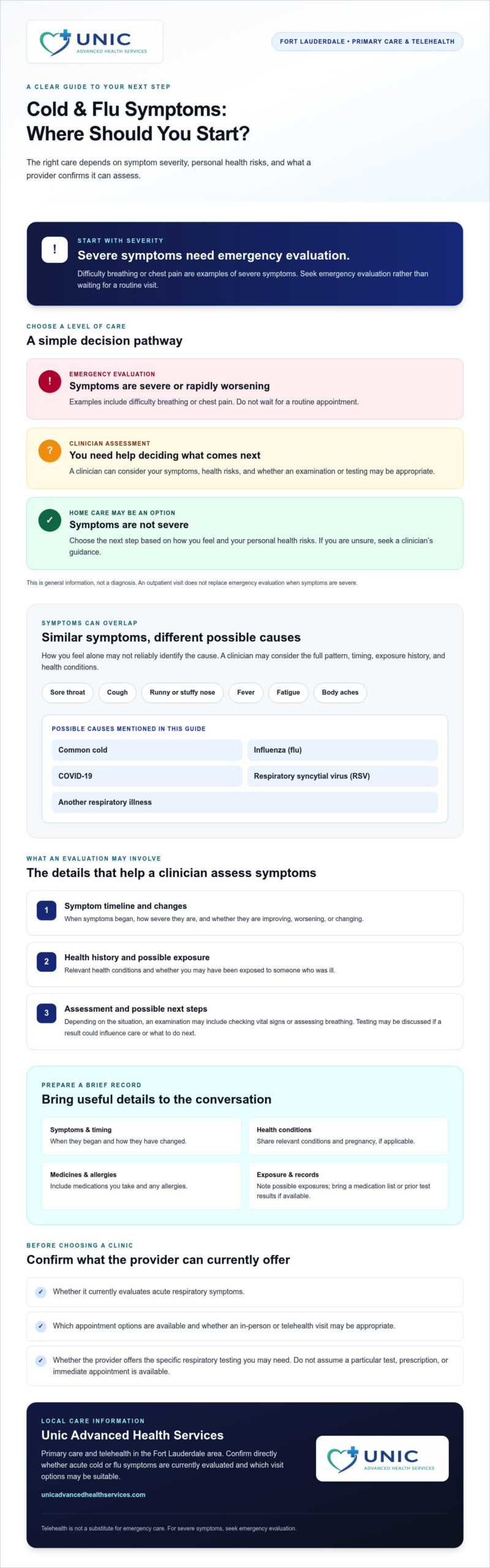
Choosing Cold and Flu Care Near You: Questions to Ask First
A little preparation can help you choose an appropriate local option and avoid traveling to a practice that can’t address your needs. Use this sequence before booking: check urgency, confirm the service, ask about the visit format, and gather information about your symptoms. If you have emergency warning signs, seek emergency care instead of waiting for a routine appointment.
Questions to ask a Fort Lauderdale-area clinic
First, confirm that the practice currently evaluates acute cold, flu, or other respiratory symptoms. Then ask what appointment formats may be available, whether the clinician determines if telehealth is suitable, and whether respiratory testing is offered or arranged elsewhere. Confirm current hours and appointment availability directly, since these details can change. Ask what you should do if symptoms worsen before your visit.
- Check urgency: Are your symptoms severe or rapidly worsening? If so, don’t delay emergency evaluation.
- Confirm services: Does the practice currently assess acute respiratory symptoms, and what testing options can it confirm?
- Ask about logistics: What visit formats, hours, and appointment options are currently available?
- Plan for changes: Who should you contact if your condition worsens while you’re waiting?
These questions matter because a search for treatment for cold and flu near me doesn’t confirm that a particular clinic offers acute illness evaluation, a specific test, or a particular appointment time. Unic Advanced Health Services provides primary care and telehealth in the Fort Lauderdale area. Contact the practice to verify current services and discuss available visit options before booking or traveling.
Preparing for an in-person or telehealth visit
Before the visit, write down when symptoms began, whether they’re changing, your medications and allergies, relevant health conditions, and any recent test information. Having these details together can help you explain your concerns clearly and make good use of your time with the clinician.
For a telehealth appointment, check that you can access the required device, have a private place to speak, and can maintain a reliable connection. Ask the practice whether there are location or technology requirements and whether your symptoms can be assessed remotely. A clinician’s judgment and the need for an examination may make an in-person visit more appropriate. For more about preparing for remote care, consult the practice’s Telehealth Fort Lauderdale information.
To confirm whether acute respiratory evaluations are currently available and ask about visit options, contact Unic Advanced Health Services.
Contact Unic Advanced Health Services About Cold and Flu Care
Choosing where to seek care comes down to three steps: assess how urgent your symptoms are, confirm that a practice evaluates acute respiratory illness, and ask which visit option may fit your situation. Unic Advanced Health Services provides primary care and telehealth in the Fort Lauderdale area. Confirm the practice’s current availability for cold and flu evaluations directly before booking or traveling.
The practice also lists on-site lab services, but that doesn’t confirm that a particular flu, COVID-19, or other respiratory test is available. Testing needs and next steps depend on clinical assessment. If you’re looking for treatment for cold and flu near me, verify the service details rather than assuming a clinic can provide a specific test or treatment.
What to confirm before arranging care
Before making plans, ask whether the practice currently evaluates acute cold, flu, or other respiratory symptoms. Confirm current appointment availability and office hours, and ask whether an in-person or telehealth visit may be appropriate. Check whether respiratory testing is offered at the practice, referred elsewhere, or considered during the clinician’s assessment.
It’s also reasonable to clarify payment and insurance details directly with the office. Don’t assume a particular plan is accepted or that a specific fee applies. Getting these answers ahead of time can help you choose a suitable next step and avoid an unnecessary trip.
When a different level of care is more appropriate
A routine clinic visit is not the right route for every situation. Severe breathing difficulty, persistent chest pain or pressure, new confusion, or another emergency warning sign calls for emergency services, not a routine appointment or telehealth visit. Unic Advanced Health Services is not a 24/7 emergency-care provider. If symptoms worsen or new concerns arise, seek prompt medical guidance. Use emergency care if warning signs appear.
For non-emergency symptoms, contact the practice to ask whether it currently evaluates acute respiratory illness and which visit options are available. Contact Unic Advanced Health Services to confirm current cold-and-flu evaluation options, appointment availability, hours, and any testing arrangements before deciding where to seek care.
Choose Your Next Care Step With Confidence
The right response to cold or flu symptoms depends on their severity, your health risks, and the care a provider can confirm. Symptoms can overlap, so a clinician may consider your history and condition before discussing appropriate next steps. For severe or rapidly worsening symptoms, seek urgent or emergency care rather than waiting for a routine visit.
If you’re searching for treatment for cold and flu near me, verify that the practice currently evaluates acute respiratory symptoms, which visit formats may be suitable, and whether respiratory testing is available. Unic Advanced Health Services provides primary care and telehealth in the Fort Lauderdale area, led by an experienced autonomous nurse practitioner. On-site lab services are listed, but specific respiratory tests and acute cold or flu evaluations should be confirmed directly.
Contact Unic Advanced Health Services to confirm your care options, including current services, appointment availability, and visit formats. A clear conversation can help you identify an appropriate next step. With the right guidance, you can move forward calmly and focus on your health.
Frequently Asked Questions
Where can I get cold and flu treatment near me in Fort Lauderdale?
In Fort Lauderdale, start by contacting a local primary care practice and confirming that it currently evaluates acute cold, flu, or other respiratory symptoms. Unic Advanced Health Services provides primary care and telehealth in the area, but confirm acute-symptom availability directly. Ask about appointment options and whether the practice can address your needs before booking or traveling. For emergency symptoms, seek emergency care instead of waiting for a clinic visit.
Can a primary care provider tell whether I have the flu or a cold?
A primary care provider can assess your symptoms and health history, but symptoms alone may not identify the cause with certainty. Colds and flu can share symptoms such as cough, congestion, sore throat, and fatigue. A clinician may consider when symptoms began, possible exposures, risk factors, examination findings, and whether testing could help guide next steps. Testing decisions depend on clinical judgment and the services available through the provider.
When should I see a doctor for cold or flu symptoms?
Contact a clinician if symptoms are worsening, you have an underlying health condition, or you’re unsure what level of care is appropriate. People at higher risk of complications may benefit from individualized advice sooner. A routine clinic visit may suit non-emergency concerns, but severe or rapidly worsening symptoms need urgent assessment. Difficulty breathing, persistent chest pain, or new confusion are emergency warning signs. Don’t wait for a routine appointment if they occur.
What happens during a visit for flu-like symptoms?
A clinician will generally ask when symptoms started, how they’ve changed, how severe they feel, and whether you have relevant health conditions, medications, allergies, or possible exposures. They may examine you and decide whether testing or other next steps are appropriate based on your situation. Bring a medication list and any recent test information you have. The evaluation and care plan depend on clinical judgment, not a guaranteed set of tests or treatments.
Can I use telehealth for cold or flu symptoms in Florida?
Telehealth may be an option for some non-emergency symptoms, but suitability depends on your symptoms, whether an examination is needed, and the clinician’s judgment. Contact the practice to confirm that it currently evaluates acute respiratory concerns remotely and ask about appointment availability and any technology or location requirements. Telehealth isn’t a substitute for emergency evaluation. If you have severe breathing difficulty, persistent chest pain, new confusion, or another emergency symptom, seek emergency care.
When should I go to the emergency room instead of a clinic?
Go to an emergency department or contact emergency services for severe breathing difficulty, persistent chest pain or pressure, new confusion, inability to stay awake, or another life-threatening symptom. These warning signs shouldn’t wait for a routine clinic appointment or telehealth visit. If symptoms are worsening but aren’t an emergency, contact a clinician promptly for individualized guidance. Unic Advanced Health Services isn’t a 24/7 emergency-care provider.
Does Unic Advanced Health Services offer flu or COVID-19 testing?
Specific flu and COVID-19 testing availability at Unic Advanced Health Services isn’t confirmed. The practice lists on-site lab services, but that doesn’t establish which respiratory tests are offered or whether testing may be referred elsewhere. Contact the office to ask what’s currently available and whether testing may be considered during a clinical assessment. Confirm current appointment options and hours directly, since these details may change.