
What if seeing the same primary care provider made each visit more useful than the last? If you’ve felt like just a number, repeated your medical history from scratch, or struggled to connect advice from different care settings, that frustration makes sense. Building a long-term relationship with your PCP gives your provider time to understand your health history, priorities, and changing needs.
That familiarity can support more proactive care, especially when you’re managing a chronic condition or coordinating with specialists. It also gives you a consistent person to turn to with questions and follow-up needs. In this guide, you’ll learn why continuity matters, how to build a more effective partnership, and what to discuss at appointments.
We’ll also look at how a primary care provider can help keep long-term health concerns in view and support preparation for occupational physicals. At Unic Advanced Health Services in Fort Lauderdale, Marc Joseph, NP, leads a personalized primary care practice offering chronic condition management, preventive care, and on-site lab services. The goal is an informed partnership that supports ongoing attention to your health.
Key Takeaways
- Building a long-term relationship with your PCP can turn routine visits into an ongoing plan shaped around your health history and priorities.
- Reviewing blood pressure and glucose readings with your provider can help you discuss patterns and chronic condition care over time.
- Bring your main concerns, an updated medication list, and honest notes about daily habits to make appointments more focused.
- Sharing relevant health information with your PCP can support coordination with specialists and preparation for occupational physicals.
- A nurse practitioner-led practice and on-site lab services can contribute to connected primary care in Fort Lauderdale.
What Does Building a Long-Term Relationship With Your PCP Actually Mean?
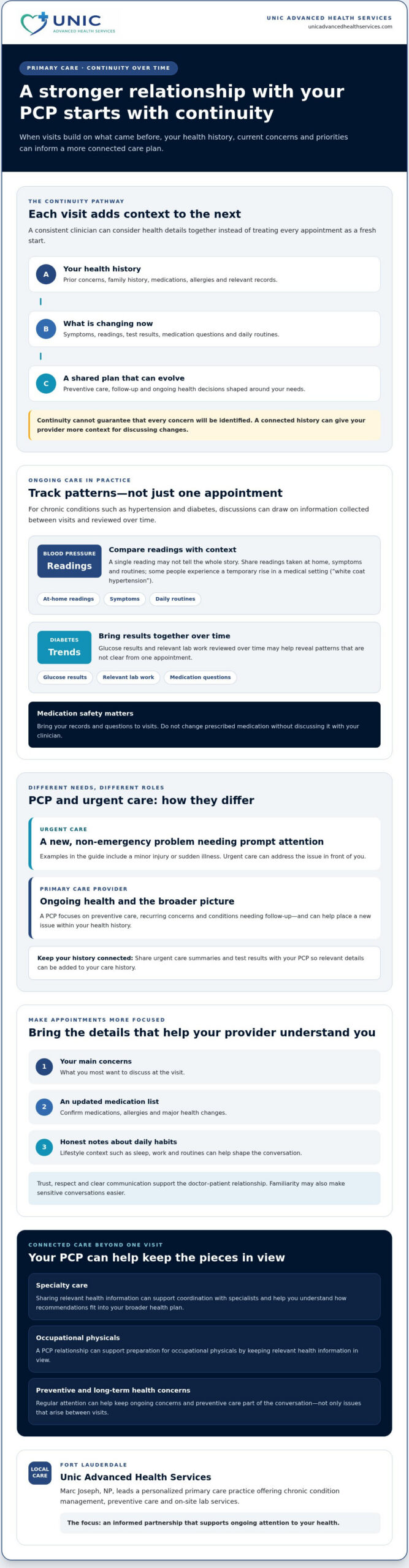
Building a long-term relationship with your PCP means having a consistent clinician who can consider your health history, current concerns, and future risks together. Instead of treating each appointment as an isolated event, your provider can use what they learn over time to guide preventive care and ongoing health decisions. Visits can become part of a shared plan rather than a series of fresh starts.
Your primary care provider can also help you understand your options, keep track of important details, and support communication with other clinicians when needed. Trust, respect, and clear communication are central to the doctor-patient relationship. This foundation supports preventive visits and regular attention to chronic conditions, rather than waiting until a concern requires attention.
For a closer look at establishing this kind of connection, watch this video:
Health changes often become clearer across multiple visits. A provider who can compare blood pressure readings, symptoms, medications, or test results over time has more context for discussing a change. Continuity cannot guarantee that every concern will be identified, but a connected history can inform decisions.
The Difference Between a PCP and Urgent Care
Urgent care is generally suited to a new, non-emergency problem that needs prompt attention, such as a minor injury or sudden illness. A PCP focuses on ongoing health: preventive care, recurring concerns, and conditions that need follow-up. Urgent care can address the issue in front of you; your PCP can also help place it within your broader health picture.
Separate, one-off visits may leave less room to connect recurring symptoms or compare changes, particularly when records don’t follow you between settings. Share urgent care summaries and test results with your PCP so relevant details can be added to your care history.
The Power of Being Known
Family history and lifestyle provide context for health decisions. A family pattern of diabetes, or details about sleep, work, and daily routines, can help shape what you discuss with your provider. Consistent records can reduce information gaps, but confirm your medications, allergies, and major health changes at each visit.
Familiarity can also make sensitive conversations easier. At Unic Advanced Health Services in Fort Lauderdale, Marc Joseph, NP, leads a primary care practice that includes chronic condition management. A trusted provider can help you raise concerns openly and take an active role in your care.
The Clinical Benefits of Continuity in Chronic Disease Management
Chronic conditions such as hypertension and diabetes often need attention between appointments, not just a plan made during one visit. Building a long-term relationship with your PCP can connect symptoms, test results, medication questions, and everyday routines over time. That context supports more informed conversations about what’s working and what may need review.
The benefits of having a primary care provider include having a consistent clinician who can help keep care focused on your needs. A PCP can also coordinate with specialists when needed and help you understand how their recommendations fit into your broader health plan.
Managing Hypertension and Diabetes Over Time
A single blood pressure reading may not tell the whole story. Some people experience “white coat hypertension,” a temporary rise in blood pressure in a medical setting. Sharing readings taken at home, along with information about symptoms and routines, gives your provider more context. For diabetes, tracking glucose results and relevant lab work over time can help reveal patterns that may not be clear from one appointment.
Bring your records and questions to visits, and don’t change prescribed medication without discussing it with your clinician. Your PCP can review trends with you and determine whether your care plan needs adjustment or coordination with another clinician. Unic Advanced Health Services offers on-site lab services that can provide clinical information for follow-up conversations about chronic conditions.
Personalized Plans and Lifestyle Changes
A care plan should make sense for your health and your life. Work schedules, food access, activity, stress, and medication routines can change. Tell your provider what has shifted instead of trying to follow a plan that no longer fits. A consistent point of contact can help you discuss changes and practical next steps.
Weight-related goals may connect with other health priorities, including blood pressure and blood sugar. Rather than treating weight as an isolated number, discuss factors affecting your wellbeing and agree on realistic goals with a qualified clinician. For background, see obesity management with a nurse practitioner in Fort Lauderdale.
For ongoing support with a chronic condition, explore chronic care management with a nurse practitioner in Fort Lauderdale and discuss whether the available care aligns with your needs.
The PCP as Your Hub for Occupational and Specialty Care
Occupational physicals are more than a form to complete. For commercial drivers and mariners, they’re an opportunity to review health factors that may matter for work and raise questions with a qualified provider. Building a long-term relationship with your PCP can make preparation more informed because your clinician may already know your medical history, medications, and ongoing health concerns.
That context can help you prepare for a DOT physical exam in Fort Lauderdale. It doesn’t guarantee a particular certification outcome, but it can help you gather relevant records and raise concerns before the examination. Unic Advanced Health Services offers DOT and U.S. Coast Guard (USCG) physicals as well as chronic condition management, connecting occupational health with ongoing primary care.
Preparing for Occupational Physicals
If you’re monitoring blood pressure or managing another chronic concern, discuss it with your provider before an occupational exam. You can review your current health status, discuss your care plan, and ask what information to bring. Keep an up-to-date medication list and relevant medical records, and follow the examiner’s instructions about required documentation.
A consistent record can also provide useful context during a USCG boat captain physical. Your provider’s familiarity with your history may help you explain past evaluations or current treatment clearly. The physical itself determines whether you meet the applicable requirements; an ongoing PCP relationship supports preparation and continuity, not a guaranteed result.
Coordinating Specialists and Medications
Seeing multiple clinicians can create gaps if test results, recommendations, or medication changes aren’t shared. Your PCP can help you make sense of specialist advice and maintain a clearer overall picture of your care. Bring visit summaries and an updated medication list to appointments. Ask your clinicians to review the list together, since duplicate or interacting medications may need attention. Don’t stop or change a prescription without medical guidance.
A PCP can help you identify follow-up questions: What is the specialist recommending? Who will monitor the treatment? When should results be reviewed? Clear answers help turn separate recommendations into practical next steps. Telehealth may be an option for some follow-up discussions, depending on the concern and the practice’s arrangements.
With an ongoing relationship, specialist care and work-related exams can become part of a more connected health record rather than isolated events. If you’re preparing for a DOT or USCG physical, ask your provider what history and records may be useful and how your ongoing health needs fit into the process.
How to Build and Maximize Your Relationship with Your Provider
A productive appointment starts before you enter the room. Building a long-term relationship with your PCP is a shared effort: your provider brings clinical expertise, and you bring knowledge of your symptoms, routines, concerns, and goals. A little preparation can help you use visit time well and follow through afterward.
An annual physical can provide a regular opportunity to review preventive care, discuss changes in your health, and set priorities. Learn what to expect from an annual physical exam in Fort Lauderdale, and ask your provider which topics are appropriate for your visit.
Make Each Conversation Count
Try the “Top 3 Concerns” approach. Before your visit, write down the three issues you most want to address, then put the most important one first. You can also prepare a one-sentence health goal, such as, “I want to understand how to keep my blood pressure on track while managing a busy work schedule.” This gives your provider a clear starting point.
Be candid about medication routines, diet, activity, stress, sleep, and other factors that affect your health. If you’ve missed doses or haven’t followed a recommendation, say so without embarrassment. Those details help your provider understand what’s realistic and discuss options with you. Ask “Why?” if you’re unsure about a treatment, test, or next step. Understanding the reasoning helps you make informed decisions and raise concerns early.
Choose the Right Way to Follow Up
Some concerns are easier to discuss in person, particularly when an examination or hands-on assessment may be needed. Telehealth can be useful for certain follow-ups or conversations, depending on your concern and the provider’s guidance. Explore telehealth in Fort Lauderdale, and ask the practice which visit format fits your needs. If a patient portal is available, ask how to use it for messages, results, or appointment updates.
Unic Advanced Health Services offers on-site lab services, which can support discussions that depend on lab results. Ask your provider how and when results will be reviewed, and keep your medication list and outside medical records current. The practice offers care Monday through Saturday; confirm current office hours and appointment availability when planning around work.
For details about primary care, annual physicals, telehealth, or on-site lab services, see Unic Advanced Health Services.
Unic Advanced Health Services: Your Local Partner in Long-Term Wellness
A lasting primary care relationship depends on more than having a name in your medical record. It grows through consistent conversations, attention to your history, and a provider who helps you make sense of your health priorities. In Fort Lauderdale, Unic Advanced Health Services is led by Marc Joseph, NP, an autonomous nurse practitioner focused on personalized primary care.
At Unic, care includes chronic condition management, annual physicals and preventive care, telehealth services, and on-site lab services. The practice also specializes in DOT and U.S. Coast Guard physicals. If occupational requirements are part of your health needs, review the occupational health exam options in Fort Lauderdale.
Personalized Care and Practical Continuity
Working with a consistent provider can make it easier to discuss changes, ask follow-up questions, and keep relevant health information connected across visits. On-site lab services can provide information for conversations about your care, while a provider who knows your history can help place results in context. These services don’t replace specialist care when it’s needed, but they can support a clearer overall care plan.
Building a long-term relationship with your PCP also means choosing a practice where you feel comfortable sharing concerns and asking how decisions are made. A nurse practitioner-led setting offers a clinician-focused approach to primary care, with attention to each patient’s needs. Ask the practice about appointment options, services, and costs before scheduling so you can make an informed choice.
Preparing to Establish Care
For an initial visit, gather a current medication list, known allergies, relevant medical records, and notes about your health history. Include ongoing conditions, previous test results you have, and questions you want to address. If you’re seeking care for a specific concern, describe when it began and how it affects your daily life. This preparation gives your provider a useful starting point for getting to know you and discussing next steps.
Information about establishing care with Marc Joseph, NP, and the available services is provided by Unic Advanced Health Services. You can also review appointment information before your first visit.
Make Your Next Health Visit Count
Better-connected care grows through steady communication, a provider who understands your health history, and your willingness to share what matters. Building a long-term relationship with your PCP can help you approach preventive care, chronic conditions, and occupational health needs as parts of an ongoing health journey.
At Unic Advanced Health Services in Fort Lauderdale, care is led by Marc Joseph, an autonomous nurse practitioner. The practice offers telehealth and on-site lab services, along with appointments Monday through Saturday. Confirm current availability when scheduling.
Your first step can be simple: gather your medication list, note your main health priorities, and start a conversation about the care you want. An informed partnership takes shape one conversation at a time.
Frequently Asked Questions
How often should I see my PCP if I am healthy?
If you’re generally healthy, ask your PCP how often preventive visits make sense for your age, personal health history, and risk factors. An annual physical can provide an opportunity to review health changes, preventive care, and questions, but your clinician can recommend a schedule that fits your needs. Arrange a visit sooner if you develop a new concern or need follow-up. In Fort Lauderdale, Unic Advanced Health Services offers annual physicals and preventive care.
Can a Nurse Practitioner be my primary care provider in Florida?
Yes, a nurse practitioner can serve as your primary care provider. The care available depends on the clinician’s qualifications and the services offered by the practice. Unic Advanced Health Services in Fort Lauderdale is led by Marc Joseph, an autonomous nurse practitioner, and offers primary care services including chronic condition management, annual physicals, preventive care, telehealth, and on-site lab services. Ask a practice about its services and whether it’s a good fit for your needs.
What is the difference between a PCP and a family doctor?
A primary care provider, or PCP, is a general term for a clinician who provides ongoing, first-contact care and helps manage your overall health. A family doctor is a physician trained to care for patients across different ages and health needs. Family doctors can be PCPs, but a PCP may also be another qualified clinician, such as a nurse practitioner. Ask about the provider’s training, services, and approach to ongoing care.
How do I switch to a new PCP if I am unhappy with my current one?
Start by identifying a new practice that meets your needs, then confirm it accepts your insurance, if applicable, and is taking patients. Request copies of your medical records or ask how to have them transferred. Schedule an initial visit and bring your medication list and health history. If you manage a chronic condition, plan the transition before you run low on prescriptions or miss follow-up care. You can change providers without needing to justify your decision.
Will my PCP help me manage my DOT physical requirements?
Your PCP can help you keep track of health concerns that may be relevant to an occupational physical, review your health history, and discuss questions before the exam. A PCP cannot guarantee that you’ll meet certification requirements; the physical examiner makes that determination. Unic Advanced Health Services offers DOT physical examinations in Fort Lauderdale. Ask the practice what records to bring and what the examination includes so you can prepare appropriately.
Does a long-term relationship with a PCP really save money?
A consistent PCP may help you avoid repeated explanations, keep preventive care on track, and coordinate information from different clinicians. These benefits may support more efficient care, but savings aren’t guaranteed. Costs depend on your insurance, services, and individual health needs. Before scheduling, confirm coverage and ask the practice about charges for visits, lab services, or occupational physicals. The value of continuity also includes having a provider who understands your history and goals.
What should I bring to my first appointment with a new PCP?
Bring a current medication list, known allergies, relevant medical records, and details about ongoing conditions or previous procedures. Note your main health concerns and questions so you can use the appointment time effectively. If you have recent test results or specialist summaries, bring them or ask how to send them ahead. For a first visit at a Fort Lauderdale practice, confirm any paperwork or insurance information required when booking.