
An “abnormal” flag on your blood work is often less a medical emergency and more a starting point for a professional conversation. Since the 21st Century Cures Act mandate took effect, most patients now receive their data instantly through online portals. While this transparency is a victory for patient rights, it often leaves you staring at complex abbreviations and bolded numbers without a provider there to explain them. You’ve likely experienced that sudden wave of anxiety when a result doesn’t fall perfectly within the lines, but it’s important to remember that these reference ranges are based on broad averages, not your individual health story.
In this guide, we’ll focus on understanding your lab results by decoding the most common markers found in routine panels. You’ll learn why “out of range” doesn’t always mean bad news and how various lifestyle factors can shift your numbers. We’ll also provide a clear framework for identifying which results require immediate attention and which are routine variations. By the end of this article, you’ll feel prepared to review your data calmly and walk into your next appointment with the right questions for your provider.
Key Takeaways
- Gain clarity on why you receive data instantly through patient portals and how to manage the initial stress of seeing “abnormal” flags before your follow-up.
- Master the basics of understanding your lab results by learning how reference ranges are calculated and why they often differ between various laboratories.
- Discover what common diagnostic panels like the CBC and CMP reveal about your immune system, organ function, and overall metabolic health.
- Identify how everyday variables such as hydration levels and fasting habits can significantly impact the accuracy and presentation of your clinical data.
- Learn the specific questions to ask your provider to transform raw numbers into a personalized, long-term strategy for your health and well-being.
The Modern Lab Experience: Portals and Patient Anxiety
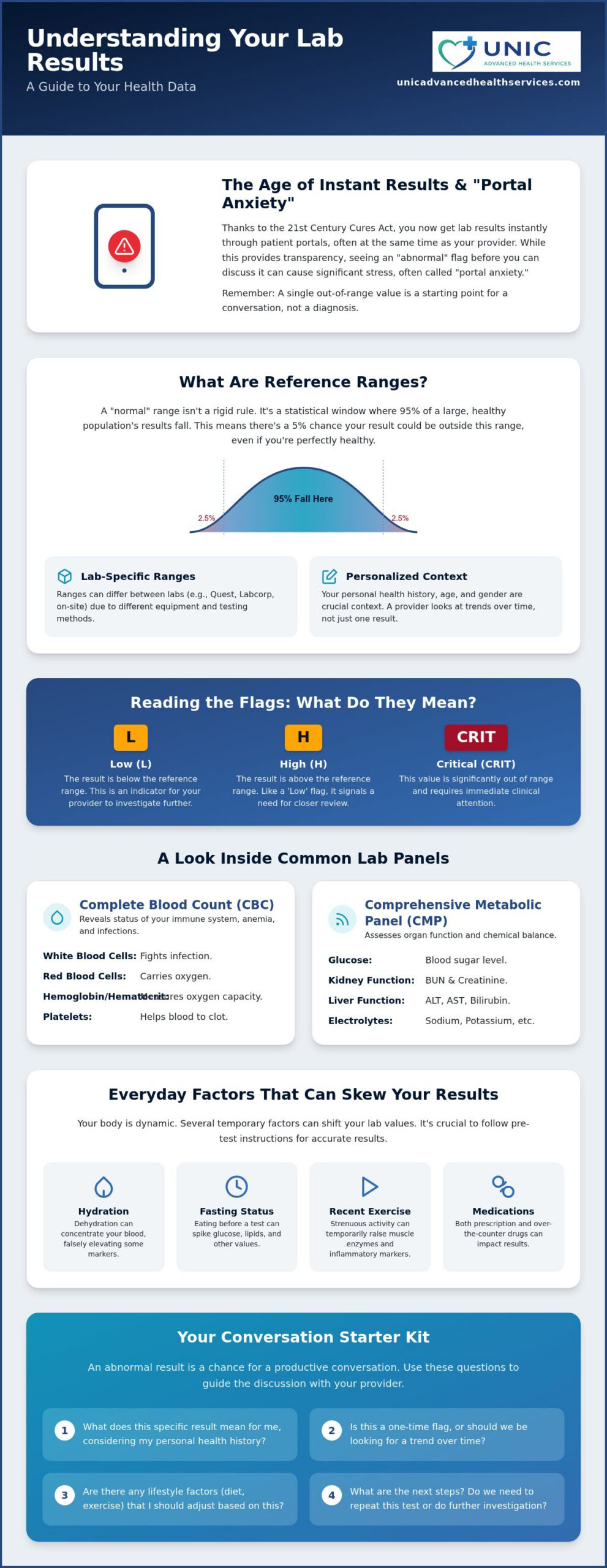
A lab test is a clinical tool used to measure substances in body fluids, providing a precise roadmap for health decisions. In the past, patients often waited days or even weeks for a phone call to hear their results. Today, the 21st Century Cures Act ensures you have immediate, unencumbered access to your electronic health information. This federal mandate means you often see your data at the same moment your provider does. While this transparency is empowering, it frequently triggers “portal anxiety” when you see a value marked in red or labeled as “abnormal.”
At Unic Advanced Health Services, we utilize on-site lab services in Fort Lauderdale to streamline this clinical process. By keeping testing close to the point of care, we reduce the friction of waiting and ensure your data is integrated into your health record immediately. Our “steady hand” approach focuses on calming the initial alarm. A single “high” flag is rarely an immediate cause for panic. Instead, it’s a specific data point that requires a professional’s context to interpret correctly. Understanding your lab results starts with recognizing that your body is a dynamic system, not a static set of numbers.
Why Your Provider Hasn’t Called Yet
You might see your results on a Friday evening while your provider is managing a full clinic or reviewing dozens of other files. Our review process is methodical. We look at the “big picture” of your health history rather than reacting to a single line item. We prioritize critical alerts that require immediate clinical intervention. Routine variations or minor flags are usually reserved for a scheduled follow-up. This allows our Nurse Practitioner to provide the thorough, supportive explanation you deserve without rushing the conversation. We believe in a collaborative relationship where your peace of mind is as important as the clinical data.
Lab Results vs. Clinical Diagnosis
It is vital to distinguish between a lab value and a medical diagnosis. A single number rarely confirms a condition without a physical exam and a detailed review of your symptoms. For example, Reference Ranges for Blood Tests are based on statistical averages of a broad population. Your individual baseline might naturally sit slightly outside those margins due to genetics or lifestyle. When we manage chronic conditions like hypertension or diabetes, we use these markers to monitor your progress over time. We aren’t just looking for a “normal” result. We’re looking for a trend that shows your management plan is working. This personalized attention ensures that understanding your lab results leads to better health outcomes rather than unnecessary stress.
Decoding the Vocabulary: Reference Ranges and Flags
A reference range is not a rigid boundary between health and illness. Instead, it is a statistical bracket based on the results of a specific population of healthy individuals. Most laboratories establish these margins by testing a large sample and identifying where 95% of those people fall. This means that even if you’re perfectly healthy, there’s a 5% chance your result might naturally sit slightly outside the expected window. Learning How to Understand Your Lab Results requires looking past the bolded numbers to see the clinical context. Your age, gender, and even local environmental factors influence these numbers. For example, while high altitude can skew red blood cell counts in other regions, our sea-level environment in Florida means we focus more on how the heat and hydration levels affect your blood concentration.
You might notice that a range at a large commercial facility like Quest or Labcorp differs from the data produced by our on-site lab services. This happens because different labs use varied equipment, chemical reagents, and testing methodologies. A “normal” value on one machine might be calibrated differently on another. When your report arrives, you’ll see specific flags. “H” stands for high, and “L” stands for low. These are indicators for your provider to investigate further. However, “CRIT” or “Critical” signifies a value that requires immediate clinical attention. Most routine flags are simply signals to look closer at your lifestyle or health history during your next visit.
Understanding False Positives and Negatives
Screening tests are designed to be highly sensitive. Their primary goal is to catch any potential issue, which sometimes leads to a “false positive” where the test suggests a problem that doesn’t exist. This is why we distinguish between a screening test and a diagnostic test. If a screening result comes back abnormal, we don’t immediately assume a diagnosis. We often order a more specific follow-up test to confirm the findings. This methodical approach ensures we don’t jump to conclusions without sufficient evidence.
The “Normal” for You vs. The “Normal” for the Lab
A value slightly outside the lab’s range might be perfectly healthy for your specific body. This is where the concept of “trending” becomes essential. Marc Joseph, NP, evaluates your personal baseline by comparing today’s results to your records from previous years. A number that has remained steady for a decade is often less concerning than a “normal” number that has suddenly doubled since your last exam. We prioritize these long-term patterns to provide a steady hand in managing your health, ensuring your care plan is based on your unique history rather than just a generic population average.
Common Lab Panels: What the Numbers Actually Mean
The foundation of understanding your lab results often begins with two primary panels: the Complete Blood Count (CBC) and the Comprehensive Metabolic Panel (CMP). A CBC acts as a snapshot of your blood’s cellular health, monitoring your white blood cells for immunity, red blood cells for oxygen transport, and platelets for clotting. If your hemoglobin is low, it might suggest anemia; if your white cells are high, your body could be fighting an undetected infection. Meanwhile, the CMP functions as a check-up for your body’s internal engine. It evaluates liver and kidney function while measuring electrolytes and blood sugar. These numbers provide a baseline that helps us identify systemic issues before they manifest as physical symptoms.
We also look closely at your lipid panel and Hemoglobin A1c. While many patients focus on total cholesterol, we analyze the nuances of “good” HDL versus “bad” LDL to assess cardiovascular risk. For those managing blood sugar, the A1c is the gold standard for managing diabetes without a specialist. Unlike a daily glucose finger-prick, the A1c provides a three-month average of your blood sugar levels. This stable metric is essential for long-term health planning. For more detailed definitions of these terms, the National Library of Medicine offers a guide on How to Understand Your Lab Results to help you prepare for your consultation.
Labs for Occupational Health and Certifications
For commercial drivers and maritime professionals, lab results are more than just health markers; they are requirements for employment. During a DOT physical exam in Fort Lauderdale, we perform urinalysis to check for protein, blood, or glucose. These findings can indicate underlying conditions that might affect your safety on the road. Similarly, USCG boat captain physicals require specific health screenings to ensure mariners can handle the rigors of life at sea. A “borderline” result in these contexts matters because it could require a shorter certification period or additional monitoring to keep you compliant with federal regulations.
Metabolic Markers and Chronic Disease
When we evaluate kidney health, we look at Creatinine and the Glomerular Filtration Rate (GFR). These markers tell us how efficiently your kidneys are filtering waste from your blood. If these numbers shift, it often informs our approach to hypertension treatment in Fort Lauderdale. High blood pressure and kidney function are deeply linked; managing one often requires understanding your lab results in the other. By tracking glucose and metabolic markers over time, we can differentiate between a temporary spike caused by a recent meal and a chronic trend that requires a new management strategy. This steady, proactive oversight is the core of how we protect your long-term well-being.
Factors That Can Skew Your Results
The accuracy of your diagnostic data depends as much on your preparation as it does on the laboratory equipment. When understanding your lab results, it’s essential to recognize that biological variables can trigger “false” flags. For instance, that morning cup of coffee might seem harmless, but caffeine and even sugar-free additives can stimulate metabolic processes that skew glucose and lipid tests. Similarly, your hydration status plays a critical role in how your blood is concentrated. If you’re dehydrated, markers for kidney function like creatinine can appear elevated, suggesting a problem that may not exist. We aim to provide a steady hand in your care, ensuring that every result we review is a true reflection of your health.
Supplements and physical activity are often overlooked variables. Biotin, a common ingredient in hair and nail vitamins, is notorious for interfering with hormone and heart health assays. High-intensity exercise can also spike liver enzymes or creatine kinase, leading to unnecessary concern during a routine review. To ensure your data is reliable, we recommend a proactive approach to preparation. If you’re ready for a thorough evaluation, you can schedule your on-site lab services with our team to get started on the right foot.
Preparation Checklist for Accurate Labs
- Fasting requirements: If your provider specifies “nothing by mouth” for 8 to 12 hours, this includes gum, mints, and black coffee. Only plain water is permitted.
- Medication transparency: Document everything you take. This includes prescription meds, herbal teas, and over-the-counter supplements.
- Timing: Certain tests, particularly those for cortisol or testosterone, must be drawn early in the morning because levels fluctuate significantly throughout the day.
Common Mistakes Patients Make Before Lab Work
Alcohol consumption within 24 hours of a lipid or liver panel can temporarily alter your enzyme levels and triglycerides. Patients also frequently arrive for non-fasting tests under-hydrated, which makes the blood draw more difficult and can concentrate certain markers. Finally, don’t forget to mention if you’ve had a recent illness or vaccination. Your immune system’s response to a common cold or a flu shot can temporarily shift your white blood cell count, leading to a flag on your CBC. By avoiding these common pitfalls, you play an active role in understanding your lab results and ensuring the data we use for your chronic condition management is precise.
Next Steps: How to Discuss Results with Your Provider
Once you have accessed your data, the final step in understanding your lab results is the clinical consultation. Raw data only becomes medical intelligence when it’s filtered through a professional’s expertise. To make the most of your follow-up, arrive prepared with a log of any recent symptoms, such as changes in sleep patterns or energy levels. This context helps your provider determine if a borderline result is a clinical priority or a minor variation. You should feel empowered to ask direct questions. Inquire about how these numbers affect your daily life and whether they represent a long-term trend. This collaborative approach ensures you aren’t just a passive recipient of care but an active partner in your health journey.
The logistics of your care also matter. Utilizing on-site lab work in Fort Lauderdale makes this process more seamless. When your diagnostics and your provider are in the same environment, the transition from testing to treatment is faster and more accurate. We act as a steady hand, guiding you through the numbers without the typical delays of third-party facilities.
Creating a Chronic Care Strategy
We use your lab data to refine your management plan for conditions like hypertension or obesity. If your markers show improvement, we may discuss reducing medication dosages. Conversely, if numbers are rising, we might pivot toward more aggressive lifestyle changes or pharmaceutical interventions. We work with you to set specific “target numbers” for your next check-up, providing a clear goal for your wellness efforts. This methodical oversight allows us to adjust your strategy in real-time based on concrete evidence.
Booking Your Follow-Up and Future Screenings
Consistency is a cornerstone of reliable diagnostics. We recommend using the same laboratory for your year-over-year comparisons to ensure the equipment and methodologies remain constant. This makes understanding your lab results easier as we track subtle changes in your baseline over time. If it’s been a year since your last comprehensive review, it’s time to schedule your annual physical exam in Fort Lauderdale. Proactive screening is the most effective way to catch issues before they become emergencies. You can schedule a consultation with Marc Joseph, NP to review your latest lab results today and gain the peace of mind that comes with expert guidance.
Taking Charge of Your Health Data
Navigating the digital era of healthcare means you’re often the first to see your diagnostic data. While instant access is beneficial, it requires a steady hand to interpret correctly. Remember that a single value marked in red is rarely a final diagnosis; it’s a starting point for a deeper conversation about your unique baseline and long-term trends. By properly preparing for your tests and tracking your results year over year, you move from passive observation to active health management.
Mastering the process of understanding your lab results is simpler when you have an expert guide to provide clinical context. At Unic Advanced Health Services, we specialize in translating complex markers into actionable chronic care strategies. Our team offers on-site laboratory services for faster results and personalized attention from Marc Joseph, NP. We also provide convenient Saturday appointments to fit your busy schedule. Book your lab review and physical exam at our Fort Lauderdale clinic today. We look forward to partnering with you to achieve your long-term wellness goals.
Frequently Asked Questions
What does it mean if my lab result is marked ‘High’ but my provider hasn’t called?
A “high” flag usually means the result falls outside the statistical average, but it is not necessarily a medical emergency. Providers prioritize critical values that require immediate intervention. Routine flags are typically reviewed as part of your total health history and discussed during your scheduled follow-up. At our Fort Lauderdale clinic, we ensure every result is reviewed thoroughly before we reach out to discuss a personalized management plan that fits your specific needs.
Can stress cause abnormal blood test results?
Yes, acute and chronic stress can significantly alter your physiological markers. Stress triggers the release of hormones like cortisol, which can temporarily spike your blood glucose levels and impact your white blood cell count. When understanding your lab results, it’s helpful to consider your recent mental and physical state. We evaluate these numbers alongside your lifestyle to determine if a flag is a temporary reaction to stress or a chronic health concern.
Why do my lab results look different than they did last year?
Variations often occur due to changes in diet, activity levels, or even the specific laboratory equipment used for the analysis. Your body’s baseline shifts naturally as you age or if you have started new medications. We focus on “trending” rather than a single snapshot. By comparing your data year over year at our Fort Lauderdale office, we can identify whether a shift is a healthy adaptation or a sign that we need to adjust your care.
Do I really need to fast before my blood work?
You must fast if your provider specifies it, as nutrients in food and drink enter your bloodstream and can skew results for glucose and lipids. Fasting typically means consuming only plain water for 8 to 12 hours before the draw. Even a small snack or a cup of black coffee can trigger metabolic processes that make understanding your lab results more difficult. Following these instructions ensures the data we use for your chronic condition management is accurate.
How long does it typically take to get lab results back in Fort Lauderdale?
Most routine results are available within 24 to 48 hours, though specialized tests may take longer. Because Unic Advanced Health Services offers on-site lab services, we can often access your data faster than clinics that rely solely on external facilities. This efficiency reduces your waiting time and allows our Nurse Practitioner to integrate the findings into your treatment plan without unnecessary delays. We prioritize getting you answers quickly to provide peace of mind.
Is a ‘normal’ lab result a guarantee that I am 100% healthy?
A “normal” result indicates that your markers fall within a statistical average, but it is not a complete guarantee of health. Lab work is just one diagnostic tool used alongside physical exams and your reported symptoms. Some conditions don’t appear in standard blood panels during their early stages. This is why we emphasize comprehensive annual physicals in Fort Lauderdale to ensure we are looking at the total picture of your well-being rather than just the numbers.
What should I do if I see a ‘critical’ value in my patient portal?
If you see a result labeled “critical” or “CRIT,” you should contact our office immediately or follow the specific instructions provided in your portal. While portals provide instant access, a critical value represents a result that requires prompt clinical attention. Our team monitors these alerts closely to ensure patient safety, but we encourage you to be proactive. We will guide you through the necessary next steps to ensure you receive the appropriate care and stabilization.
Can dehydration affect my CBC or kidney function results?
Dehydration is a common factor that can skew your blood concentration and kidney markers. When you are low on fluids, your blood volume decreases, which can make your red blood cell count appear falsely high on a CBC. It also makes it harder for your kidneys to filter waste, potentially raising your creatinine levels. We recommend drinking plenty of water before your appointment to ensure your results reflect your true health status and provide a clear clinical picture.