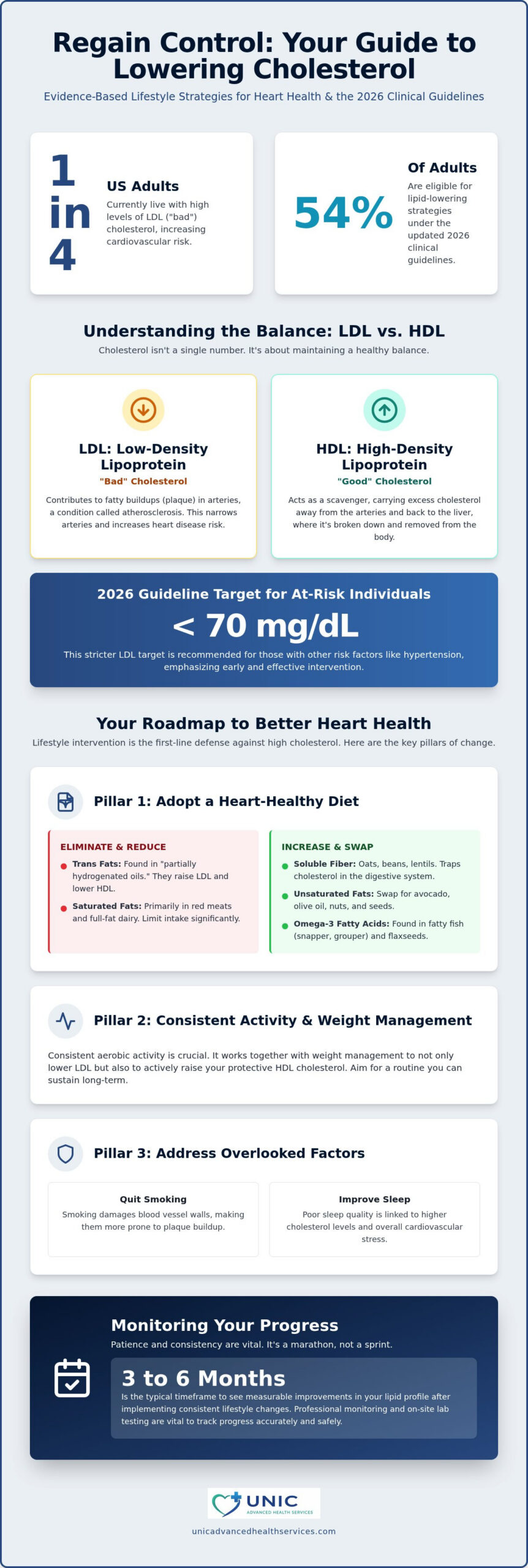
Nearly 1 in 4 adults in the United States currently lives with high levels of LDL cholesterol. Under the updated 2026 clinical guidelines, over 54 percent of adults are now eligible for lipid-lowering strategies to protect their heart health. If you’re struggling to make sense of conflicting health trends, focusing on sustainable lifestyle changes for high cholesterol is the most effective way to regain control. Whether you’re aiming for better cardiovascular health or need to clear a DOT or USCG physical for work, understanding these new standards is the first step toward a healthier future.
We understand that the anxiety of a high reading can be heavy, especially when your livelihood or long-term wellness feels at risk. You deserve a clear, evidence-based roadmap rather than a generic list of restrictions. This guide provides professional strategies to lower your LDL levels and improve your heart health under expert guidance. We’ll examine the 2026 LDL targets, the importance of the new PREVENT risk calculator, and how targeted nutrition and movement can help you meet the rigorous standards of occupational physicals.
Key Takeaways
- Understand why the 2026 clinical guidelines emphasize lifestyle intervention as the primary defense against cardiovascular disease.
- Learn to identify and eliminate the specific fats that contribute most significantly to arterial buildup and high LDL levels.
- Discover how consistent aerobic activity and weight management work together to raise your protective HDL cholesterol.
- Implement specific lifestyle changes for high cholesterol to help you meet the rigorous health standards required for DOT and USCG physicals.
- Find out why professional oversight and on-site laboratory testing are vital for tracking your progress accurately and safely.
Understanding Cholesterol and the Power of Lifestyle Intervention
Cholesterol isn’t a single number but a balance of different lipoproteins. LDL, or Low-Density Lipoprotein, is often called “bad” cholesterol because it contributes to fatty buildups in arteries. In contrast, HDL, or High-Density Lipoprotein, is considered “good” because it carries cholesterol away from the arteries and back to the liver. Understanding High Cholesterol is essential for anyone facing a diagnosis. When LDL levels remain high, they lead to atherosclerosis, a condition where plaque hardens the artery walls. This narrowing restricts blood flow and increases the risk of heart disease.
Atherosclerosis doesn’t happen overnight. It’s a slow, cumulative process that often goes unnoticed until a major event occurs. This is why the latest 2026 standards recommend starting risk assessments as early as age 30. By intervening early with lifestyle changes for high cholesterol, you can often halt or even reverse some of the damage to your vascular system. Clinical guidelines prioritize these modifications as the “first-line” defense because they address the root causes of lipid imbalances naturally.
For many professionals in South Florida, these numbers carry significant weight. Managing your lipid profile is a critical component of passing a DOT physical exam Fort Lauderdale. Commercial drivers and maritime professionals must meet specific cardiovascular health standards to maintain their certifications. We help you align your daily habits with these professional requirements to ensure you stay healthy and on the job.
The Role of Genetics vs. Lifestyle
A family history of heart disease doesn’t mean your health is out of your control. While genetics influence how your body processes fats, lifestyle choices significantly impact your final numbers. What qualifies as a “normal” range often varies based on your overall cardiovascular risk profile. For example, the 2026 guidelines suggest an LDL target under 70 mg/dL if you have other risk factors like hypertension. Establishing your baseline through an annual physical exam Fort Lauderdale allows us to create a personalized strategy that accounts for both your genetic predispositions and your daily habits.
How Long Does it Take to See Results?
Patience is vital when monitoring your progress. Most patients begin to see measurable improvements in their lipid profiles within three to six months of implementing consistent changes. It’s a marathon, not a sprint. Consistency in your daily routine provides better long-term heart health than short bursts of intense effort. We use periodic re-testing to track your progress and keep you motivated. Seeing the data improve on your lab results confirms that your hard work is paying off and your risk is decreasing.
The Heart-Healthy Diet: Beyond Just Cutting Fat
Managing nutrition is more than just avoiding “bad” foods; it’s about strategically selecting nutrients that actively lower your levels. When implementing lifestyle changes for high cholesterol, the first step is eliminating trans fats, often listed on labels as partially hydrogenated oils. These artificial fats raise your LDL while simultaneously lowering your protective HDL. You should also reduce saturated fats, primarily found in red meats and full-fat dairy products. Replacing these with unsaturated options can significantly improve your lipid profile over time.
Adding soluble fiber is equally important. Think of soluble fiber as a sponge that “traps” cholesterol in the digestive tract before it enters your bloodstream. Foods like oats, beans, and lentils are excellent sources. Additionally, integrating Omega-3 fatty acids from fatty fish or flaxseeds provides essential heart protection by reducing triglycerides and blood pressure. If you’re unsure where to start, our team at Unic Advanced Health Services can help you design a personalized nutrition plan based on your latest lab results.
Smart Swaps for a Florida Lifestyle
Living in Florida provides unique access to heart-healthy resources. Many people use tropical oils like coconut or palm oil, but these are high in saturated fat. Swap them for monounsaturated fats like avocado or olive oil. For protein, take advantage of local Florida seafood like snapper or grouper instead of heavy beef. If you’re a commercial driver, snacking is often a challenge. Walnuts and almonds are the ultimate desk snacks because they’re portable and packed with healthy fats that support cardiovascular health.
The Power of Plant Sterols and Stanols
Plant sterols and stanols are naturally occurring substances that mimic the structure of cholesterol. Because they’re so similar, they compete for absorption in your gut, which helps lower the amount of LDL that reaches your blood. While you can find them in small amounts in grains and vegetables, many people benefit from fortified foods to reach the recommended 2 grams per day. Research suggests that consistent intake of these compounds, as part of 5 lifestyle changes for heart health, can lower LDL by about 5 to 15 percent.
Physical Activity and Weight Management in Fort Lauderdale
Regular aerobic exercise serves as a powerful catalyst for improving your lipid profile. While nutritional adjustments reduce the intake of harmful fats, physical activity specifically boosts your HDL (good) cholesterol levels. These “good” particles act as a biological cleanup crew, hauling excess fats out of your arteries and back to the liver for disposal. For many patients, implementing consistent lifestyle changes for high cholesterol through movement is the missing piece of their cardiovascular puzzle. It’s not just about the numbers on a lab report; it’s about enhancing the efficiency of your entire circulatory system.
Managing your weight is equally essential, as excess body fat often leads to elevated triglycerides and lower HDL. Maintaining a healthy Body Mass Index (BMI) isn’t just about aesthetics; it’s a core requirement for those undergoing an occupational health exam Fort Lauderdale. Professionals in the transportation or maritime industries frequently find that small reductions in weight make the difference between a restricted medical card and a full, multi-year certification. We help you set realistic movement goals that fit into a demanding professional schedule, ensuring your fitness routine supports both your health and your career.
Staying Active in the South Florida Heat
Exercising in Fort Lauderdale presents unique environmental challenges, particularly during the humid summer months. High heat puts additional strain on your heart, which can make traditional outdoor activity difficult or even dangerous. We recommend utilizing local resources like Birch State Park for walks during the early morning or at sunset when temperatures are manageable. On high-heat days, consider indoor alternatives such as mall walking or local fitness centers. Hydration remains critical in our humid climate. You must drink water before, during, and after your movement sessions to maintain metabolic efficiency and prevent heat-related fatigue.
Weight Loss Strategies for Heart Health
Losing even a modest amount of weight can yield clinical results. Research indicates that dropping just 5 to 10 percent of your total body weight can drastically lower LDL cholesterol and improve your blood pressure. Achieving these goals often requires more than just willpower. Working with an obesity management nurse practitioner Fort Lauderdale provides you with a structured, medical approach to weight loss. We focus on combining strength training with aerobic activity. While cardio boosts your HDL, building lean muscle mass increases your resting metabolic rate, making it easier to maintain a healthy weight for the long term.
Quitting Smoking and Improving Sleep: The Overlooked Factors
While diet and exercise are foundational, smoking cessation remains one of the most impactful lifestyle changes for high cholesterol. Tobacco smoke introduces toxic chemicals that directly damage the endothelial lining of your arteries. This damage creates a rough, “sticky” surface where LDL cholesterol can easily adhere and accumulate. Quitting smoking doesn’t just improve your lung capacity; it immediately stabilizes your heart rate and reduces blood pressure. This creates a safer environment for your cardiovascular system to recover and prevents the accelerated buildup of arterial plaque.
Sleep is often the most neglected pillar of metabolic health. When you’re chronically sleep-deprived, your body’s ability to process lipids is compromised. This is especially dangerous for those in high-stakes maritime or commercial driving careers where stress levels are naturally elevated. High cortisol levels from chronic stress and poor sleep can trigger the liver to produce more cholesterol while making it harder for the body to clear existing fats. Managing these factors is essential for maintaining a clean bill of health and long-term career stability. If you’re struggling to balance these demands, we recommend a consultation for chronic condition management to receive personalized support and monitoring.
The 20-Minute Timeline of Quitting
Your body begins to heal almost instantly after you stop smoking. Just 20 minutes after your last cigarette, your heart rate and blood pressure drop toward more normal levels. Within 12 hours, the carbon monoxide level in your blood returns to baseline, allowing more oxygen to reach your heart and brain. Over the long term, the benefits are even more dramatic. After one year of cessation, your risk of coronary heart disease is reduced by approximately half compared to that of a current smoker. We encourage patients in the Fort Lauderdale area to utilize local support systems and clinical guidance to ensure a successful transition to a smoke-free life.
Sleep Hygiene for Lipid Control
Aiming for 7 to 9 hours of restful sleep is a non-negotiable requirement for heart health. During deep sleep, your body undergoes metabolic recovery and regulates hormones that control fat storage and energy usage. Sleep Apnea is a common condition that can complicate these efforts. It often correlates with high cholesterol levels and increased cardiovascular strain due to repeated drops in blood oxygen. You can improve your sleep environment by maintaining a cool room temperature, avoiding screens before bed, and sticking to a consistent schedule. These small adjustments support the metabolic processes necessary to keep your lipid profile within a healthy range.
Professional Monitoring: Why You Need a Primary Care Partner
Attempting to manage your lipid profile without clinical oversight is a significant risk. While implementing lifestyle changes for high cholesterol is highly effective, you cannot track internal progress through feeling alone. High cholesterol is often a “silent” condition with no outward symptoms until a cardiovascular event occurs. On-site laboratory services provide the immediate, objective data required to adjust your strategy in real time. For maritime professionals in South Florida, this professional oversight is mandatory to meet the rigorous USCG boat captain physical Florida standards. We ensure your cardiovascular health aligns with federal regulations so your career remains uninterrupted and your heart remains protected.
A dedicated healthcare partner acts as a steady hand, guiding you through the complexities of modern medical guidelines. We don’t just hand you a list of “do’s and don’ts” but instead monitor how your body responds to specific interventions. This proactive approach allows us to identify if your efforts are yielding the desired results or if we need to refine your plan. By combining modern efficiency with thorough, individualized care, we help you navigate the path to better health with confidence and peace of mind.
Personalized Care with a Nurse Practitioner
The Nurse Practitioner (NP) model of care offers a distinct advantage for patients managing chronic conditions. We prioritize education and lifestyle counseling, ensuring you have a deep understanding of your “Heart Health Roadmap.” We take the time to explain the nuances of your lab results and how they relate to your daily habits. To make this process more accessible, telehealth Fort Lauderdale services allow for convenient follow-up visits. These virtual consultations are perfect for reviewing progress, adjusting goals, and staying motivated without the need for frequent office commutes.
Next Steps: Booking Your Screening
Your journey toward better health starts with a comprehensive cholesterol screening. During this visit, we’ll perform a full lipid panel to establish your baseline. To ensure the most accurate results, you’ll typically need to fast for 9 to 12 hours before your blood draw. This means consuming only water and avoiding all food and other beverages. We’ll guide you through these preparations so you feel fully informed. Taking control of your numbers today is the single most important step you can take to ensure a healthier 2026 and a longer, more active life.
Taking Control of Your Cardiovascular Future
Managing your heart health is a proactive commitment rather than a series of restrictions. By focusing on evidence-based lifestyle changes for high cholesterol, you can reduce your cardiovascular risk and protect your long-term wellness. Success requires a combination of strategic nutrition, consistent movement, and restorative sleep. These habits don’t just improve your lab numbers; they ensure you remain fit for your professional certifications and personal goals. Taking these steps today creates a foundation for a more active and secure future.
Consistent monitoring is essential to verify that your efforts are working effectively. We provide expert chronic condition management and on-site lab work to deliver the fast, accurate results you deserve. To accommodate your professional schedule, we offer Saturday appointments in our Fort Lauderdale office. You don’t have to navigate these changes alone; our team is here to serve as your dedicated healthcare partner and guide. Schedule your cholesterol screening at Unic Advanced Health Services today. Your journey to a healthier heart begins with a single, informed decision.
Frequently Asked Questions
How fast can lifestyle changes lower my cholesterol levels?
You can typically see measurable changes in your lipid profile within three to six months of consistent effort. Some individuals notice a shift in their numbers in as little as four to six weeks. However, the American Heart Association emphasizes that long-term sustainability is more important than rapid drops. Regular laboratory testing is necessary to confirm these internal changes, as your body needs time to metabolize existing buildup and adjust to new inputs.
Can I lower my cholesterol without taking statins or other medication?
Many patients successfully manage their levels through lifestyle changes for high cholesterol alone. This approach is often the first-line recommendation for those with moderate risk. Success depends on your genetic predisposition and how strictly you adhere to heart-healthy habits. If your cardiovascular risk is high or you have existing heart disease, we may recommend a combination of lifestyle modifications and clinical therapy to meet the 2026 LDL targets safely.
What is the single most effective lifestyle change for high cholesterol?
There isn’t a single magic change, but reducing saturated and trans fats typically has the most significant impact on LDL levels. Eliminating processed oils and limiting red meat directly reduces the raw materials your liver uses to produce bad cholesterol. When you combine this with increased soluble fiber intake, you create a dual-action defense that both lowers production and increases the clearance of cholesterol from your bloodstream during digestion.
Does drinking water help lower cholesterol levels?
Drinking water doesn’t directly dissolve cholesterol or lower your lipid numbers. However, staying properly hydrated is essential for overall metabolic function and liver health. Water is a superior alternative to sugary sodas or energy drinks, which contribute to weight gain and high triglycerides. By choosing water, you support your body’s natural detoxification processes and make it easier to maintain the healthy weight necessary for a strong cardiovascular system.
Can exercise alone fix a high cholesterol lab result?
Exercise alone is rarely enough to fix a significantly high cholesterol result. While aerobic activity is excellent for raising your good HDL levels, it has a more modest effect on lowering bad LDL. A comprehensive approach that combines physical activity with strict nutritional changes is much more effective. Think of exercise as a tool to improve your heart’s strength while your diet handles the chemical balance of your blood and arterial health.
What foods should I avoid entirely to lower my LDL?
You should aim to eliminate trans fats entirely, often found in commercial baked goods and fried foods. It’s also vital to limit saturated fats found in full-fat dairy, butter, and marbled red meats. Processed meats like sausages and bacon are particularly harmful because they contain high levels of sodium and nitrates alongside unhealthy fats. Replacing these items with plant-based proteins, nuts, and fatty fish supports a more favorable profile.
Is high cholesterol a disqualifier for a DOT physical exam?
High cholesterol isn’t an automatic disqualifier for a DOT physical exam, but it’s a significant risk factor for cardiovascular disease. If your levels are poorly controlled, it may lead to a shorter medical certification period or require further evaluation. Examiners look at your overall heart health to ensure you can safely operate a commercial vehicle. Managing your numbers through lifestyle changes for high cholesterol helps you secure a full certification.
How often should I have my cholesterol checked while making lifestyle changes?
We generally recommend having your cholesterol checked every three to six months while you’re actively implementing new habits. This frequency allows us to monitor your progress and make necessary adjustments to your plan. Once your levels stabilize within a healthy range, we may move to annual screenings. Regular testing provides the data needed to stay motivated and ensures that your lifestyle modifications are delivering the clinical results required for long-term health.