An expired or invalid medical certificate is the leading cause of violations during roadside inspections, often resulting in immediate out-of-service orders and fines exceeding $1,000. It’s a heavy burden to carry when you’re simply trying to keep your career moving forward. Knowing exactly what to bring to a DOT physical exam is the most effective way to avoid these costly delays and the stress of a potential disqualification. We understand the anxiety that comes with these high-stakes evaluations, especially when your livelihood depends on a single signature.
You deserve a certification process that’s efficient, supportive, and clear. This guide ensures you arrive prepared for a smooth, one-visit certification by identifying the exact documents and medical records required for your 2026 physical. We’ll walk through the latest FMCSA regulations, including the transition to the National Registry II electronic system and the temporary paper certificate waivers currently in effect. From specialist clearances for chronic conditions to vision and hearing requirements, you’ll find a complete roadmap to secure your medical card on the same day.
Key Takeaways
- Identify the essential government identification and prior medical certificates required to initiate your evaluation and prevent administrative delays.
- Review the specific specialist letters and clinical logs needed for chronic condition management to ensure your certification remains uninterrupted.
- Utilize our comprehensive checklist of what to bring to a DOT physical exam to ensure you have every required medical aid and document ready for review.
- Adopt simple pre-exam strategies, such as proper hydration and caffeine management, to support stable clinical results during your visit.
- Discover how flexible Saturday scheduling in Fort Lauderdale can help you maintain regulatory compliance without disrupting your professional driving route.
Essential Identification and Core Documentation
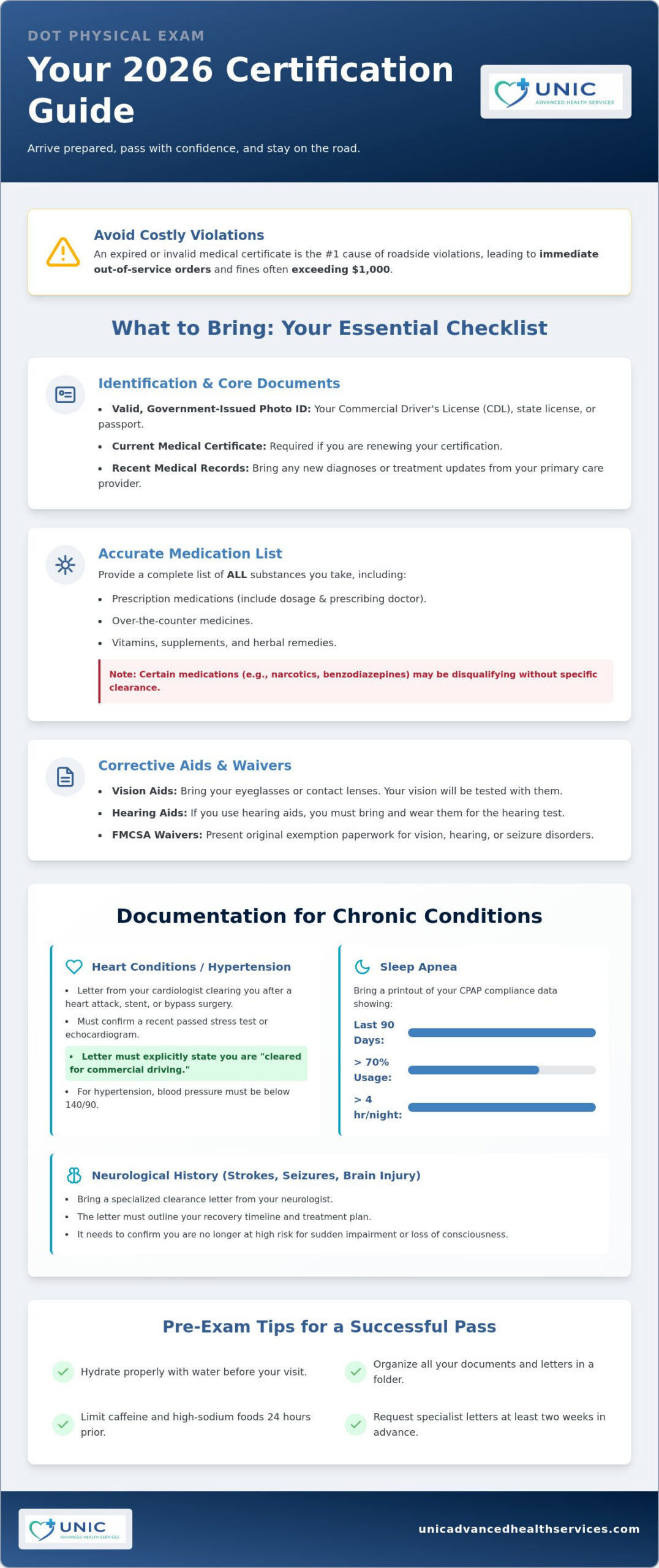
Arriving at the clinic with the correct paperwork is the first step toward a stress-free experience. Your examiner needs specific credentials to verify your identity and medical history before the physical assessment begins. When considering what to bring to a DOT physical exam, your primary identification is the most basic requirement. You must present a valid, government-issued photo ID. For most drivers, this is your Commercial Driver’s License (CDL). If you’re a new driver, a state-issued license or passport is acceptable. If you’re renewing your card, bring your current medical certificate to help the examiner establish your health timeline.
In addition to your ID, bring the most recent medical records from your primary care provider if you’ve received a new diagnosis since your last evaluation. This documentation is vital for the examiner to understand your current health status and any treatments you’re undergoing. Having these records on hand prevents the need for a second visit and allows the examiner to make an informed decision on the same day.
The Importance of an Accurate Medication List
An accurate medication list is a critical part of what to bring to a DOT physical exam. The examiner must evaluate whether any substances you take could impair your ability to operate a commercial vehicle safely. Certain medications, such as specific narcotics, benzodiazepines, or anti-seizure drugs, are often disqualifying under FMCSA guidelines unless specific criteria are met. To streamline your intake, organize your list to include the medication name, the exact dosage, and the name of the prescribing physician. Don’t forget to include over-the-counter supplements, herbal remedies, and vitamins. These substances can sometimes impact your blood pressure or heart rate during the clinical evaluation.
Previous Medical Certificates and Waivers
Documentation for variances is vital for drivers with specific health histories. If you have an FMCSA-issued waiver for vision, hearing, or a seizure disorder, you must present the original exemption paperwork during your visit. Bringing your old certificate helps clarify your history of compliance and provides a reference for your baseline health. The MCSA-5875 form serves as the official Medical Examination Report where the examiner records your health history and physical results to determine your fitness for duty in 2026. This documentation ensures your file is complete and ready for electronic submission to the National Registry, which is now a standard requirement for all certified examiners.
Requirements for Chronic Health Conditions
Managing a long-term health condition doesn’t mean your time on the road is over. It simply means you need to provide the medical examiner with a clear picture of your stability and treatment success. When you’re preparing what to bring to a DOT physical exam, specific clinical records for chronic issues are often the difference between a same-day card and a frustrating delay. The examiner’s goal is to ensure your condition doesn’t pose a sudden risk to yourself or others while behind the wheel.
Heart conditions require significant documentation. If you’ve had a heart attack, stent placement, or bypass surgery, you must bring a letter from your cardiologist. This letter needs to confirm that you’ve passed a recent stress test or echocardiogram. Most importantly, it must explicitly state that you’re cleared for commercial driving. Without this specific language, the examiner may be unable to finalize your certificate. We suggest requesting this letter at least two weeks before your appointment to avoid last-minute stress.
Sleep apnea is another area where precision is required. You must provide a printout of your CPAP compliance data covering at least the last 90 days. This report should show that you’re using the device for at least four hours a night on 70% of those nights. Neurological history, including strokes, seizures, or brain injuries, also requires specialized clearance. These letters should outline your recovery timeline and confirm that you’re no longer at high risk for sudden impairment or loss of consciousness.
Cardiovascular Health and Blood Pressure
If you’re taking medication for hypertension, your blood pressure must be under 140/90 at the time of the exam. Your cardiologist’s clearance should list your current medications and confirm they don’t cause side effects that interfere with driving. For those seeking a DOT physical exam Fort Lauderdale, having these letters ready saves valuable time. It allows us to focus on your health rather than chasing missing paperwork from a specialist’s office.
Diabetes and Vision/Hearing Standards
The FMCSA recently updated its rules for insulin-treated diabetes, making it easier for many drivers to stay on the road. You must bring your most recent Hemoglobin A1C results, ideally from within the last three to six months. If you use a continuous glucose monitor (CGM), bring the associated blood sugar logs to prove your condition is stable. These FMCSA medical standards are designed to ensure safety while recognizing modern medical advancements. If you’re struggling with balancing these requirements, our team offers specialized Chronic Condition Management to help you maintain your health and your livelihood.
Visual Aids, Hearing Devices, and Form Preparation
Ensuring your senses are sharp is a non-negotiable part of the clinical evaluation. When organizing what to bring to a DOT physical exam, remember that any device you use to see or hear on the road must come with you to the clinic. The examiner’s role is to verify that these aids bring your physical capabilities up to the required safety standards. If you wear glasses or contacts only for certain conditions, bring them anyway. It’s better to have them and not need them than to fail the vision screen because of a minor deficit. Arriving prepared shows the examiner you take your professional responsibilities seriously.
Every evaluation also includes an on-site urinalysis. Many drivers confuse this with a drug test, but they serve very different purposes. The examiner uses this sample to check for protein, blood, and sugar. These clinical markers can reveal underlying issues like kidney disease or uncontrolled blood sugar. Arriving well-hydrated is essential so you can provide the sample comfortably. This lab work provides immediate data, helping the examiner confirm your fitness for duty on the same day. Being prepared with your visual aids and a completed form ensures the clinical portion remains the focus of your visit.
Vision and Hearing Assessment Prep
You must meet a 20/40 vision standard in each eye and both eyes combined. This applies whether you’re using corrective lenses or not. We strongly suggest bringing a backup pair of glasses to your appointment. If a contact lens becomes irritated or a frame breaks during the day, having a spare ensures your exam can proceed without interruption. The hearing portion typically involves a “whisper test.” The examiner will stand five feet away and speak a sequence of numbers or letters. If you use a hearing aid, make sure it’s functioning perfectly. Bringing extra batteries is a simple, proactive step that demonstrates your commitment to safety and readiness.
Completing the Medical Examination Report Form
The Medical Examination Report, or Form MCSA-5875, is the foundation of your driver file. You can save a significant amount of time by pre-filling the “Health History” section before you arrive. This section asks for details on past surgeries, hospitalizations, and chronic symptoms. Honesty is the most important factor here. The examiner acts as a steady hand, guiding you through the regulatory requirements, but they rely on your transparency to do so accurately. If you’re scheduling an Occupational Health Exam Fort Lauderdale, having this form ready allows for a much smoother intake process. It ensures that the conversation stays focused on your health and long-term career longevity.
Scheduling Your Weekend DOT Physical Exam in Fort Lauderdale
Finding time for medical compliance shouldn’t mean losing a day of income. Many commercial drivers spend their entire week on the road, making traditional Monday through Friday clinic hours nearly impossible to manage. At Unic Advanced Health Services, we recognize these logistical challenges. We offer a flat-fee structure for our DOT Physical Examination services to ensure transparency and predictability for every driver. By utilizing an autonomous Nurse Practitioner like Marc Joseph, our clinic provides a high level of clinical expertise with the efficiency you need to get back on the route. When you’re reviewing your checklist of what to bring to a DOT physical exam, the most important thing to bring is a scheduled appointment that fits your professional life.
Our approach prioritizes a steady hand and a supportive atmosphere. We understand the anxiety that often accompanies these exams, especially when your medical card is nearing its expiration date. Unlike high-volume corporate clinics where you might feel like just another number, we focus on a patient-first perspective. This means shorter wait times and a more thorough, personalized evaluation. We aim to be your long-term partner in health, providing clear guidance on how to maintain your certification through modern methodology and regulatory compliance.
Saturday Availability: A Driver’s Resource
Saturday office hours are a vital resource for the local trucking community. We specifically offer weekend availability to accommodate long-haul and regional drivers who cannot visit a clinic during the work week. This flexibility reduces the stress of rushing to a clinic on a Friday afternoon or taking unpaid time off. By booking a Saturday slot, you can ensure your medical certification is updated before your current card expires, keeping you legal and on the road. We recommend scheduling your weekend visit at least two weeks in advance to secure your preferred time.
Local Logistics for Fort Lauderdale Drivers
Our Fort Lauderdale location is strategically situated near major transport routes, making it easily accessible for drivers passing through or living in the area. We understand that parking can be a significant concern for commercial operators. Our facility offers convenient parking options that accommodate personal cars and smaller commercial vehicles, ensuring your visit starts without unnecessary frustration. Choosing a local expert like Marc Joseph, NP, provides a level of individualized care that corporate mills simply cannot match. You’ll receive clear, actionable feedback regarding your health and your certification status in a professional, welcoming environment.
Ready to secure your medical card without the weekday rush? Schedule your DOT physical exam in Fort Lauderdale today and experience a more efficient, driver-focused certification process.
Pre-Exam Preparation Tips for a Successful Pass
Your preparation in the hours leading up to the appointment is just as vital as the paperwork you’ve gathered. While knowing what to bring to a DOT physical exam covers the administrative side, your physical state during the evaluation determines your certification length. To ensure your blood pressure remains within the standard range, avoid caffeine and nicotine for at least 2 to 4 hours before your visit. These stimulants can cause temporary spikes that don’t reflect your baseline health but can complicate the exam process. Similarly, you should take all your regular medications as prescribed on the morning of your physical. Skipping a blood pressure or diabetes pill to “test” your natural levels often leads to clinical results that prevent same-day certification and require a follow-up visit.
Hydration and rest are equally important factors in your success. Drink plenty of water throughout the morning to ensure you can easily provide a urine sample for the mandatory kidney function screen discussed earlier. A full night’s sleep is also essential. Fatigue can negatively impact your performance on vision and reflex tests, potentially leading to restricted certification periods. By arriving well-rested and hydrated, you present the most accurate and stable version of your health to the examiner.
Managing White Coat Syndrome
It’s common for drivers to experience ‘white coat syndrome,’ where anxiety in a clinical setting causes a temporary rise in heart rate and blood pressure. We recommend practicing simple diaphragmatic breathing techniques while in the waiting area to lower your heart rate. Our empathetic, professional environment is specifically designed to help drivers feel at ease rather than scrutinized. Rushing to your appointment is the most frequent cause of elevated readings. We suggest arriving 15 minutes early to allow your body to settle before the blood pressure cuff is applied. This small window of calm can make a significant difference in your final clinical data.
Final Checklist: Before You Leave the House
Before you leave the house, perform a final scan of your materials to ensure a smooth, one-visit experience. Double-check your list of what to bring to a DOT physical exam one last time: ensure you have your government-issued ID, your organized medication list, and any required CPAP compliance data or specialist clearance letters. Verifying the clinic address and your appointment time prevents the stress of getting lost, which can also impact your vitals upon arrival. Taking these final steps ensures that you and the examiner can focus on your long-term health and professional longevity. Ready to get back on the road? Schedule your weekend DOT physical with Unic Advanced Health Services today!
Secure Your Medical Certification with Confidence
Preparing for your evaluation is about more than just checking boxes; it’s about protecting your career and ensuring your safety on the road. By organizing your specialist clearance letters, medication lists, and compliance data, you remove the administrative barriers that often lead to delays. Knowing exactly what to bring to a DOT physical exam ensures that your visit remains focused on your health and professional longevity. This proactive approach allows you to walk into the clinic feeling prepared rather than anxious.
Our clinic, led by experienced Nurse Practitioner Marc Joseph, provides a steady hand through the complexities of regulatory compliance. We offer on-site lab services for faster clinical data and convenient Saturday appointments to fit your demanding driving schedule. This patient-first perspective allows you to address medical requirements without sacrificing your income or peace of mind. We are committed to being a reliable partner in your long-term health strategy.
Book Your Fort Lauderdale DOT Physical Exam Online to secure your appointment today. We look forward to supporting your professional success and keeping you moving forward with the stability you deserve.
Frequently Asked Questions
Do I need to bring a urine sample to my DOT physical?
No, you do not need to bring a sample with you because you will provide one on-site during your appointment. This sample is used for a clinical urinalysis to detect protein, blood, and glucose, which can indicate underlying kidney issues or undiagnosed diabetes. It is helpful to arrive well-hydrated so you can provide the sample easily during the initial intake process.
What happens if I forget my CPAP data for the exam?
If you forget your CPAP compliance data, the medical examiner typically cannot finalize your certification on the same day. Drivers with sleep apnea are required to provide a report covering at least the last 90 days of use to prove they are using the device for at least four hours per night. Without this documentation, your exam may be placed in a pending status, which could delay your ability to drive commercially.
Can I pass a DOT physical if I am on blood pressure medication?
Yes, you can pass the exam while taking blood pressure medication provided your reading is below 140/90 at the time of the evaluation. When organizing what to bring to a DOT physical exam, make sure your medication list is current and you have a clearance letter from your cardiologist if required. Drivers successfully managing hypertension with medication are generally eligible for a one-year medical certificate.
Is a DOT physical the same as a drug test?
No, a DOT physical is a medical fitness evaluation and does not automatically include a federal drug screen. The urinalysis performed during the physical checks for clinical health markers like sugar and protein rather than controlled substances. However, many employers request that both a physical and a drug test be performed during the same visit, so you should confirm your company’s specific instructions.
How long is a DOT medical card valid for in 2026?
A standard DOT medical certificate is valid for up to 24 months for drivers who meet all health standards without complications. The certification period is often reduced to one year or six months for individuals managing chronic conditions like Stage 1 hypertension or diabetes. The examiner determines the expiration date based on your clinical results and your adherence to the what to bring to a DOT physical exam checklist for specialist documentation.
What if my primary doctor is in another state?
You can still complete your exam even if your primary doctor is in another state as long as you have access to your medical records and clearance letters. We can accept faxed or digital documentation from out-of-state providers to verify your health history. The most important factor is that the information is current and clearly outlines your treatment plan for any chronic conditions.
Can a Nurse Practitioner perform my DOT exam in Florida?
Yes, a certified Nurse Practitioner listed on the National Registry of Certified Medical Examiners is fully authorized to perform DOT exams in Florida. Our clinic is led by Marc Joseph, an experienced NP who provides autonomous and thorough evaluations. Choosing an NP often results in a more efficient and patient-focused experience while ensuring full compliance with all FMCSA regulations.
What should I do if I fail my DOT physical?
If you do not pass the physical, the examiner will provide a clear explanation of the clinical reasons for the disqualification. Many issues, such as high blood pressure or missing CPAP data, are temporary and can be resolved with proper medical management or documentation. We work as a steady hand to guide you through the necessary steps to improve your health so you can return for a successful re-evaluation.