
Did you know that approximately one in three truck drivers currently manages obstructive sleep apnea? If you are preparing for your next exam, that statistic might feel like a threat to your career. It is natural to worry that a high BMI or a specific neck measurement could lead to an automatic disqualification. You have worked hard for your CDL, and the fear of losing your livelihood due to confusing sleep apnea DOT physical guidelines is a burden no driver should carry alone.
We understand that navigating CPAP compliance and medical data can be frustrating. This guide is designed to replace that anxiety with a clear, actionable plan for 2026. You will learn exactly how medical examiners evaluate your fitness for duty, from the “70/4” usage rule to the specific documentation required for a successful certification. We will also explore how a supportive healthcare partner can help you manage underlying triggers like obesity, ensuring you secure your one or two-year medical certificate and stay focused on the road ahead.
Key Takeaways
- Understand how examiners apply the 2026 sleep apnea DOT physical guidelines to assess respiratory risks without triggering an automatic disqualification.
- Identify the specific physical screening triggers, such as BMI and neck circumference, that lead a medical examiner to request a formal sleep study.
- Master the “70/4 rule” for CPAP compliance and learn how to provide the exact usage data required for a one-year medical certificate.
- Explore the differences between in-lab and home sleep testing to determine which option best fits your schedule and budget.
- Learn how proactive chronic condition management can help you address the root causes of sleep apnea and protect your CDL long-term.
Understanding the FMCSA Sleep Apnea Guidelines for 2026
The 2026 regulatory landscape for commercial drivers focuses on safety through effective management rather than exclusion. The Federal Motor Carrier Safety Administration (FMCSA) identifies Obstructive sleep apnea as a significant respiratory disorder that can lead to excessive daytime sleepiness. Because untreated sleep apnea increases the risk of fatigue-related accidents on our highways, the FMCSA requires Certified Medical Examiners (CMEs) to screen for any “risk of respiratory dysfunction” during your exam. This doesn’t mean a diagnosis is a career-ender. Instead, the focus has shifted toward ensuring the condition is controlled so you can stay behind the wheel safely.
Your medical examiner acts as a steady hand during this process. They use clinical judgment to determine if your physical profile suggests a high risk for sleep apnea. In the past, certain markers might have led to an immediate “no,” but modern sleep apnea DOT physical guidelines emphasize conditional certification. If you show signs of the condition, you aren’t automatically disqualified. You’re guided toward testing and treatment that allows you to maintain your livelihood while protecting everyone on the road.
To better understand how these evaluations work and what to expect if you use a CPAP machine, watch this helpful video:
The Legal Basis for Sleep Apnea Screening
The requirement for screening is rooted in 49 CFR 391.41(b)(8), which states a driver must have no established medical history or clinical diagnosis of a respiratory dysfunction likely to interfere with their ability to control a commercial motor vehicle. Examiners use discretionary guidance to decide when a sleep study is necessary. Honesty is vital when you fill out the MCSA-5875 form. Disclosing symptoms like loud snoring or morning headaches helps your examiner, like Marc Joseph, NP, at Unic Advanced Health Services, create a fair and accurate health strategy for you.
Certification Outcomes for Sleep Apnea Drivers
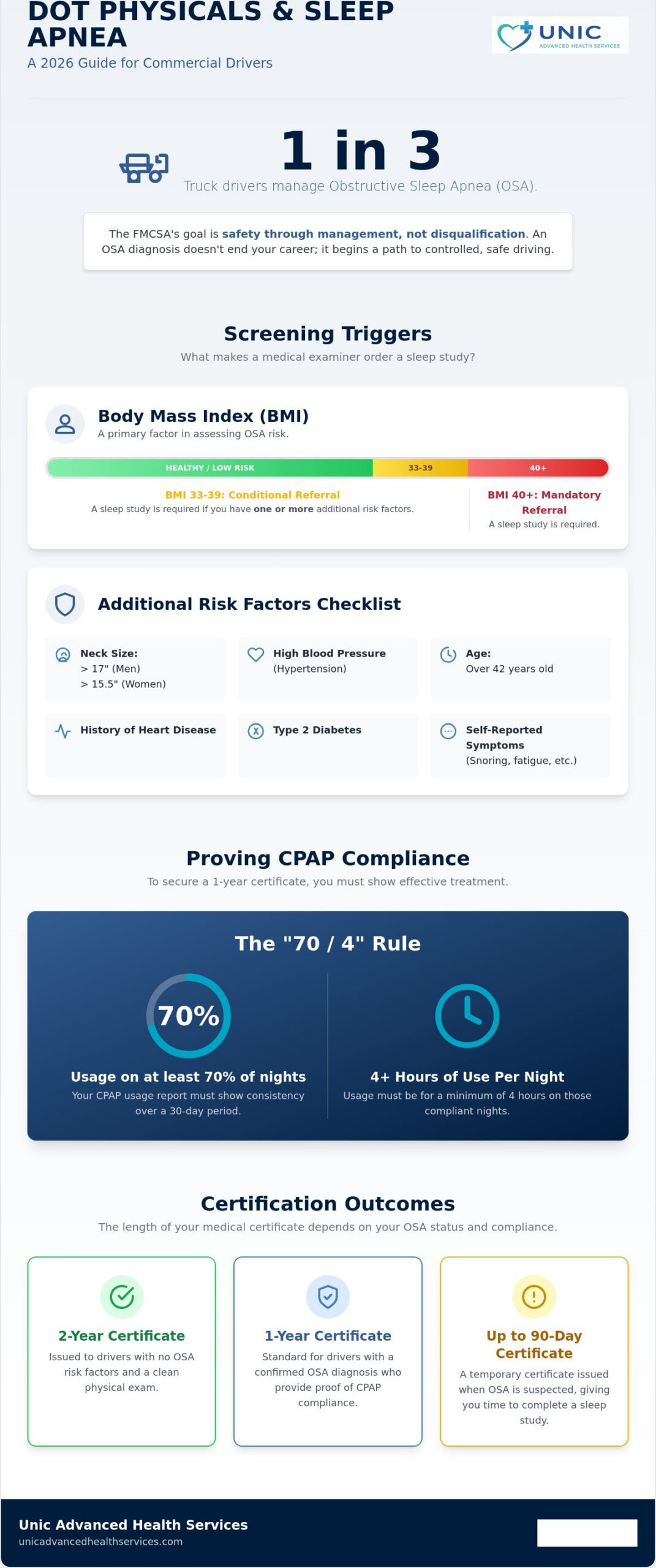
Certification lengths vary based on your health status. A one-year certificate is the standard for drivers who have a confirmed diagnosis and provide proof of treatment compliance. If your examiner suspects you have sleep apnea but you haven’t been tested yet, they may issue a short-term certificate for 30, 60, or 90 days. This gives you time to complete a sleep study without losing your driving privileges. Only drivers with no risk factors and a clean physical exam typically receive the full two-year medical certificate.
Screening Triggers: BMI, Neck Size, and Symptoms
Medical examiners don’t just guess who needs a sleep study. They follow a structured physical profile to identify potential risks. It’s not just one number. Instead, it’s a combination of physical measurements and daily symptoms that paint a complete picture of your health. These indicators help determine if you meet the current sleep apnea DOT physical guidelines. A primary factor in this evaluation is neck circumference. For men, a neck size of 17 inches or larger is a key indicator of risk. For women, the threshold is 15.5 inches. These measurements suggest a narrower airway, which increases the likelihood of obstruction during sleep.
The evaluation also includes the Epworth Sleepiness Scale. This is a series of questions designed to gauge your level of daytime fatigue. Your answers help the examiner understand if you’re experiencing excessive sleepiness that could interfere with safe driving. Citing the FMCSA sleep apnea guidelines, examiners look for any condition that might compromise your alertness. If you’re concerned about how your physical profile might impact your exam, seeking guidance from an obesity management nurse practitioner Fort Lauderdale can help you address these triggers proactively.
The BMI Threshold Breakdown
Body Mass Index (BMI) remains a significant part of the screening process. A BMI of 40 or higher is a near-universal trigger for a mandated sleep study in 2026. If your BMI falls between 33 and 39, the examiner looks for additional risk factors, such as:
- High blood pressure (hypertension)
- Type 2 diabetes
- History of heart disease
- Being over the age of 42
Managing these comorbidities is essential for your long-term career. Taking steps to improve your health before your next DOT physical exam Fort Lauderdale can often prevent the need for additional testing.
Symptom Checklist Beyond the Scale
Examiners also listen for clinical indicators that don’t show up on a scale. Loud, chronic snoring or “witnessed apnea,” where a partner sees you stop breathing, are major red flags. You should also watch for “micro-sleeps.” These are brief, involuntary moments of sleep that can last just a few seconds. If you find yourself drifting off at stoplights or struggling with morning headaches and chronic grogginess, these are signs that your sleep quality is compromised. Being honest about these symptoms allows your examiner to act as a supportive advocate for your safety and health.
The Sleep Study Requirement: Lab vs. Home Testing
If your medical examiner identifies risk factors during your exam, they’ll likely place your certification in a “pending” status. This status isn’t a disqualification. It’s a temporary pause that allows you time to complete a sleep study and demonstrate that you can drive safely. Under current sleep apnea DOT physical guidelines, you typically have a window of up to 90 days to provide these results. During this period, you may receive a short-term medical certificate so you don’t lose time on the road while waiting for your results.
Choosing between an in-lab study and a home sleep test depends on your medical history and the examiner’s requirements. While both methods aim to measure your breathing patterns, they offer different levels of detail. To ensure your results are FMCSA-compliant, the study must be interpreted by a board-certified sleep physician. Your medical examiner will then review these findings to determine your certification length. While insurance rarely covers the DOT physical itself, some drivers find that their health plans may cover the sleep study if it’s coded as a medical necessity for chronic condition management.
Home Sleep Testing (HST) for Drivers
Home sleep testing has become a common and accepted method for commercial drivers because of its convenience and lower cost. You can perform the test in the comfort of your own bed or even in your sleeper cab. These portable devices track your oxygen levels, heart rate, and breathing effort. HST is often the most efficient way to maintain compliance without the long wait times associated with sleep labs. However, HST has limitations. It may fail to detect mild cases of apnea or other complex sleep disorders. If you choose this route, you must provide a full report from the sleep specialist to your CME to confirm the diagnosis.
In-Lab Studies: When They Are Necessary
In-lab polysomnography remains the gold standard for accuracy and is often mandatory for drivers with underlying heart or lung conditions. These studies monitor brain waves and leg movements, providing a comprehensive view of your sleep health. Many labs offer a “split-night” study. This allows for diagnosis and CPAP titration in a single visit, which saves you time and effort. The primary metric you’ll see on your report is the Apnea-Hypopnea Index (AHI) score. This number represents the average number of times your breathing stops per hour. An AHI score of 15 or higher generally requires treatment to meet sleep apnea DOT physical guidelines. Understanding this score helps you work with your provider to create a management plan that keeps you compliant and healthy.
Maintaining CPAP Compliance for Your Medical Certificate
Once you receive a diagnosis, the focus shifts from screening to consistent, long-term management. The most critical part of this process is proving that your treatment is effective through measurable data. The sleep apnea DOT physical guidelines center on the “Golden Rule” of CPAP compliance. To maintain your CDL, you must use your machine for at least four hours per night on 70% of the nights in a given period. This means if you are evaluated over a 30-day window, you need at least 21 days of compliant use. Consistency is the key to proving you are rested and safe to operate.
Your medical examiner will review these data logs during your occupational health exam Fort Lauderdale to ensure you meet safety standards. If your machine breaks or you have a period of non-compliance, it’s vital to document the issue immediately. Don’t wait until the day of your physical to address a gap in your data. Proactive communication with your provider shows that you take your health and safety responsibilities seriously. We often see drivers who are nervous about their data, but having a clear record is the best way to protect your livelihood.
Generating Your Compliance Report
Modern CPAP machines make data collection much easier than in the past. Most devices connect to cloud-based apps like myAir or DreamMapper, allowing you to track your own progress in real-time. When you prepare for your exam, you should generate a 90-day report, though some examiners may request a full year of data for long-term tracking. It’s vital that your report includes specific metrics:
- Average Hours of Use: This should be at least 4 hours.
- Percent of Days Used: This must be 70% or higher.
- Detailed Daily Logs: A simple summary page usually isn’t enough for a full certification.
Troubleshooting Compliance Issues
Sometimes, compliance is difficult due to technical issues like a “CPAP Mask Leak.” High leak rates can make your data invalid because the machine cannot accurately track your breathing events. If you notice your numbers slipping, check your equipment or consult your sleep specialist. If you fall below the 70% threshold, don’t panic. Examiners may issue a 30-day temporary certificate to give you time to bring your usage numbers back up. For drivers who cannot tolerate CPAP, alternative treatments like oral appliances or Inspire therapy are options, but they require specific documentation from a specialist. If you’re struggling with your current setup, schedule a consultation with our team to discuss a strategy that works for your unique lifestyle.
Navigating Your DOT Physical in Fort Lauderdale with Sleep Apnea
Choosing the right medical examiner is just as important as the physical exam itself. For drivers in South Florida, Marc Joseph, NP, at Unic Advanced Health Services acts as a dedicated guide through the complexities of the 2026 certification process. We understand that your CDL is your livelihood. Our approach balances the strict safety requirements of the sleep apnea DOT physical guidelines with a compassionate, driver-first perspective. Instead of feeling like a pass-fail checkpoint, your exam becomes an opportunity to build a long-term health strategy that keeps you safe and compliant.
We recognize that long-haul drivers face unique scheduling challenges. To support your needs, our Fort Lauderdale office offers Saturday appointments. This allows you to complete your exam without disrupting your weekday routes or losing valuable time on the road. Whether you are passing through Florida or based locally, our goal is to provide a steady hand and a reliable path to maintaining your medical card. We specialize in chronic condition management, which is essential since conditions like hypertension often appear alongside sleep apnea.
The Unic Advanced Health Services Advantage
Our clinic provides a comprehensive healthcare experience that goes beyond the basic DOT requirements. We offer personalized care that integrates your annual physical exam Fort Lauderdale needs with your commercial certification. This one-stop-shop model is designed for efficiency and peace of mind. Our clinic offers on-site laboratory services to ensure that comorbid conditions like diabetes or high blood pressure are cleared quickly, preventing delays in your certification. By managing your weight and blood pressure proactively, you can often reduce the severity of sleep apnea symptoms over time.
Booking Your 2026 Certification Exam
Preparation is the most effective way to avoid a “pending” status on your medical certificate. Before you arrive at our Fort Lauderdale office, ensure you have the following documentation ready:
- A 90-day CPAP compliance report showing the “70/4” usage rule.
- A copy of your most recent sleep study results.
- A current list of all medications and dosages.
- A clearance letter from your sleep specialist if you use alternative treatments like an oral appliance.
Staying healthy is the best way to stay on the road. By following the sleep apnea DOT physical guidelines and maintaining your treatment, you protect your career and the safety of everyone sharing the highway. It’s not just about passing a test; it’s about ensuring you have the energy and alertness to finish every haul safely. Contact our office today to schedule your visit and take the next step in your professional health journey.
Securing Your Career Through Proactive Health Management
Navigating the sleep apnea DOT physical guidelines doesn’t have to be a source of stress. By focusing on consistent CPAP usage and managing physical triggers like BMI, you can maintain your certification with confidence. Success in your next physical depends on preparation and a clear understanding of the “70/4” compliance rule. Your medical examiner is a partner in your career, ensuring you have the energy and health to complete every haul safely.
At Unic Advanced Health Services, we offer a supportive environment tailored to the unique challenges of the trucking industry. Led by Marc Joseph, an autonomous nurse practitioner with deep expertise in chronic condition and obesity management, our team helps you address the root causes of sleep apnea while staying compliant. We provide Saturday appointments to accommodate your schedule and offer on-site labs for faster results. Schedule your compliant DOT Physical in Fort Lauderdale today. Your dedication to the road is matched by our commitment to your health. Let us help you stay behind the wheel safely for years to come.
Frequently Asked Questions
Can I pass a DOT physical if I have sleep apnea?
Yes, you can absolutely pass your exam with a sleep apnea diagnosis. The Federal Motor Carrier Safety Administration focuses on whether the condition is effectively managed, not just its existence. If you provide a compliance report showing consistent treatment, you will typically receive a one-year medical certificate. This allows you to stay on the road safely while prioritizing your long-term health and professional safety.
What neck size triggers a mandatory sleep apnea test for a CDL?
A neck circumference of 17 inches or more for men and 15.5 inches or more for women often triggers a screening. These measurements suggest a higher risk for airway obstruction during sleep. However, examiners also consider other factors like high blood pressure or daytime sleepiness before mandating a study. It is part of a comprehensive physical profile used to ensure every driver is fit for duty.
What is the minimum CPAP compliance required for a DOT physical?
The standard requirement is usage for at least four hours per night on 70% of nights. This “70/4 rule” is the primary metric examiners use to verify treatment compliance. You will need to bring a data report, usually covering the last 90 days, to your appointment. Meeting these sleep apnea DOT physical guidelines proves your treatment is effective and that you are well-rested for the road.
Will a sleep apnea diagnosis disqualify me from driving a commercial vehicle?
No, a diagnosis is not an automatic disqualification for commercial drivers. The primary goal of the FMCSA is to identify and treat the condition to prevent fatigue-related accidents. Drivers who use their CPAP machines as prescribed and show consistent compliance are fully eligible to drive. Modern regulations emphasize keeping skilled drivers behind the wheel through proactive chronic condition management rather than removing them from service.
Does the DOT require a sleep study if my BMI is over 40?
Yes, a BMI of 40 or higher is a near-universal trigger for a mandated sleep study under current clinical practices. If your BMI is between 33 and 39, the examiner may still require a study if you have other risk factors like hypertension or diabetes. Managing your weight through specialized obesity management services can help you address these triggers and potentially avoid future testing requirements; for instance, you can discover Dr. Harris Medical Weight Loss to see how medical supervision can assist in reaching your health goals.
How often do I need a DOT physical if I use a CPAP machine?
Drivers with treated sleep apnea are typically issued a one-year medical certificate rather than the standard two-year card. This means you will need to return for a DOT physical annually to verify your treatment remains effective. During each visit, you will provide a fresh compliance report showing you still meet the 70% usage threshold. This yearly check-up ensures your condition stays under control for your ongoing safety.
Can I use a home sleep apnea test for my DOT certification?
Yes, home sleep apnea tests (HST) are widely accepted for DOT certification in 2026. They are often more convenient and cost-effective than in-lab studies for most drivers. However, the results must be interpreted by a board-certified sleep physician to be valid. If you have complex medical issues like heart disease, your examiner might still require a more detailed in-lab study for a complete health assessment.
What happens if my CPAP compliance report shows less than 70% usage?
If your compliance falls below 70%, you might not receive a full one-year certificate immediately. Instead, a medical examiner may issue a temporary 30-day certificate. This short-term window gives you time to improve your machine usage and generate a new, compliant report. It is a supportive measure designed to keep you working while you get your treatment back on track with the sleep apnea DOT physical guidelines.