Did you know that 26% of commercial drivers currently manage hypertension, yet many still live in fear that a single high reading will end their career? It’s completely natural to feel a surge of anxiety when the blood pressure cuff tightens during your exam. You’ve worked hard for your CDL, and the thought of losing your livelihood due to “white coat syndrome” or confusion over regulations is incredibly stressful. Approaching a DOT physical with high blood pressure doesn’t have to be a source of panic if you have the right information and a supportive medical partner.
We understand that your medical certificate is the lifeblood of your profession. This guide provides the exact 2026 FMCSA requirements to help you secure your card and protect your driving career. You’ll learn the specific blood pressure thresholds for one-year and two-year certifications, how to handle Stage 1 or Stage 2 hypertension, and why proactive management is the key to long-term compliance. We also preview how working with an expert examiner in Fort Lauderdale can help you navigate these clinical standards with confidence and a steady hand.
Key Takeaways
- Understand the 140/90 threshold required to secure a full two-year medical certificate and avoid the stress of frequent recertifications.
- Learn how simple adjustments to sodium intake and caffeine consumption in the 48 hours before your appointment can prevent temporary blood pressure spikes.
- Navigating a DOT physical with high blood pressure is more manageable when you understand how the FMCSA categorizes Stage 1 and Stage 2 hypertension.
- Discover why partnering with a clinical expert for chronic condition management protects both your CDL and your long-term cardiovascular health.
- Find out how a supportive, patient-first environment in Fort Lauderdale can help you overcome “white coat syndrome” and remain compliant with 2026 regulations.
Understanding FMCSA Blood Pressure Standards for 2026
The Federal Motor Carrier Safety Administration (FMCSA) establishes specific health benchmarks to ensure that commercial drivers can safely operate heavy vehicles without the risk of sudden medical emergencies. For a standard two-year medical certificate, your blood pressure must measure 140/90 or lower. If you are preparing for a DOT physical with high blood pressure, it’s vital to recognize that these numbers aren’t just arbitrary limits. They represent a calculated balance between your professional freedom and the safety of everyone on the road.
High blood pressure is a primary risk factor for heart attacks and strokes, both of which can be catastrophic when occurring behind the wheel of a commercial vehicle. The FMCSA prioritizes these readings because they offer a clear snapshot of your cardiovascular stability. While “passing” means you meet the standard safety requirements, “qualifying with restrictions” allows you to continue your livelihood while you actively manage your health under a shorter certification window. This approach ensures you remain a safe operator while receiving the care you need.
To better understand how these health conditions affect your certification, watch this helpful video:
The 140/90 Threshold: What It Means for You
Your blood pressure reading consists of two distinct numbers: systolic and diastolic. The systolic (top) number measures the pressure in your arteries when your heart beats, while the diastolic (bottom) number measures the pressure when your heart rests between beats. Achieving a result below 140/90 is the primary goal for every driver. However, a single elevated reading during your exam does not always lead to an immediate disqualification. Understanding Hypertension and how it fluctuates is a core part of a medical examiner’s expertise. A supportive examiner will often allow a period of rest and a re-check if they suspect “white coat syndrome” is causing a temporary spike during your DOT physical with high blood pressure.
New 2026 Compliance Updates for CDL Holders
In 2026, the FMCSA is emphasizing stricter enforcement and a more holistic review of a driver’s cardiovascular risk profile. One major shift involves the mandatory electronic submission of medical results. As of June 2025, certified medical examiners are required to submit your physical results to the National Registry by the next calendar day. This digital system automatically updates your CDL record with your state’s licensing agency, which eliminates manual errors but also means compliance is tracked in real-time. It’s more important than ever to visit an examiner who is fully registered and understands these digital workflows. If you currently use medication to manage your condition, 2026 guidelines confirm you can still qualify, provided your readings stay within acceptable tiers and your health remains stable.
The DOT Certification Tiers: How BP Affects Your Medical Card
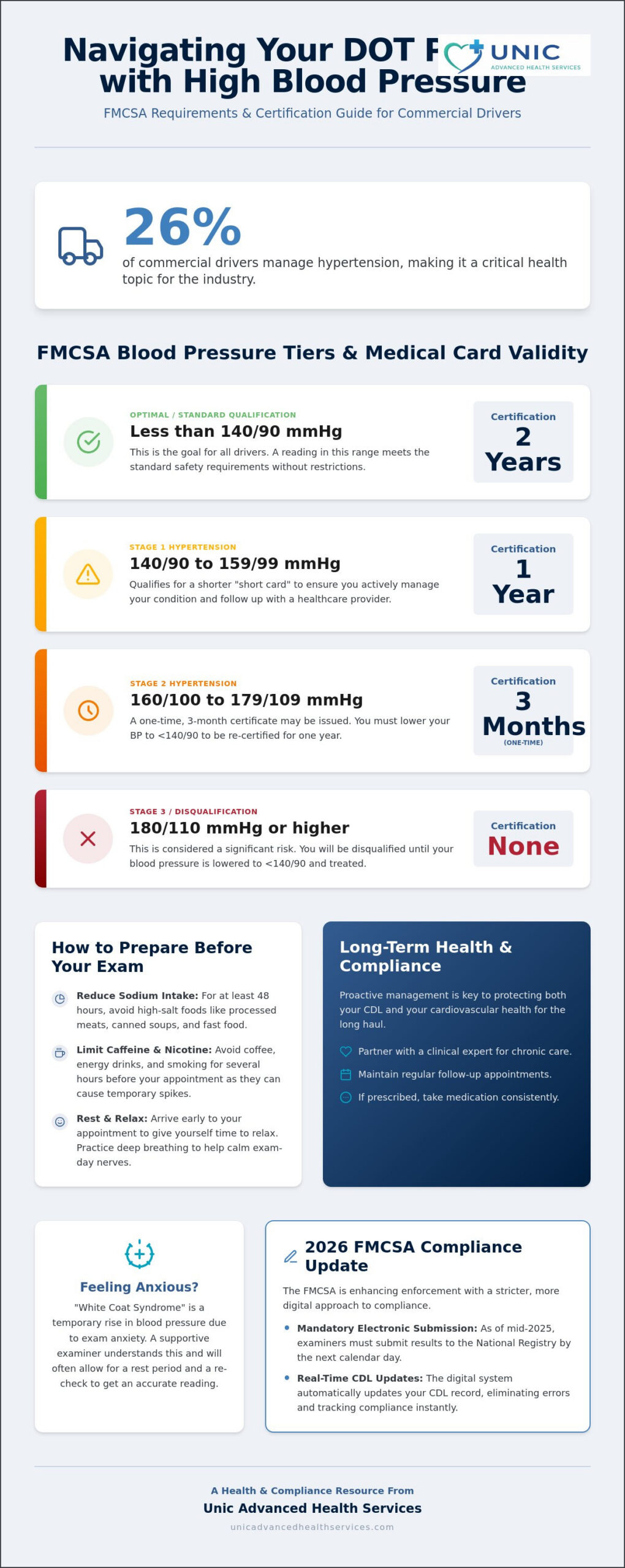
The FMCSA categorizes blood pressure readings into four distinct tiers. Each tier determines how long your medical certificate remains valid and what steps you must take to maintain your CDL. Understanding what your blood pressure numbers mean in the eyes of the DOT is the first step toward reducing exam-day anxiety. These tiers are designed to identify risks early, ensuring you stay safe behind the wheel while providing a clear path for health management.
If your blood pressure is less than 140/90, you typically qualify for a standard two-year medical certificate. This is the ideal outcome for every driver. However, if you attend your DOT physical with high blood pressure that falls between 140-159 systolic or 90-99 diastolic, you’ve entered Stage 1 hypertension. In this case, the examiner can issue a one-year “short card.” This shorter window ensures that you and your healthcare provider are actively monitoring your cardiovascular health more frequently than a driver with normal readings.
Readings between 160-179 systolic or 100-109 diastolic are classified as Stage 2 hypertension. This tier is significantly more restrictive, resulting in a one-time, three-month temporary certificate. If your reading reaches or exceeds 180/110, it’s considered Stage 3 hypertension. This level is an immediate disqualifying risk because it presents a high danger for a sudden cardiovascular event while driving. At this stage, the priority shifts from certification to immediate medical intervention.
Stage 1 vs. Stage 2 Hypertension: Recertification Rules
The “one-time” three-month certificate for Stage 2 readings is a critical rule to remember. You only get this 90-day window once in your lifetime to bring your blood pressure down to 140/90 or lower. If you don’t meet that target by the end of the three months, you cannot be recertified until your levels are under control. If you’re using medication to manage Stage 1 or Stage 2, bring a list of your prescriptions to the clinic. Proactive chronic condition management can help you stay within compliant tiers and avoid the stress of a looming expiration date.
What Happens During a Stage 3 Emergency Reading?
If your blood pressure hits 180/110 or higher during the exam, the medical examiner must stop the certification process. A Stage 3 reading is considered “medically unfit” for commercial driving due to the high risk of stroke or heart failure. You won’t be able to drive until you bring these levels down. The path to reinstatement involves working closely with a provider to stabilize your health; in cases where specialized cardiac care is required, clinics often utilize advanced supplies from global wholesalers like IMT Medical Devices. Once your blood pressure is consistently below 140/90, you can be recertified, though typically only in six-month intervals to ensure ongoing safety.
Immediate Tactics: How to Lower Blood Pressure Before Your Exam
Preparing for your appointment starts long before you sit in the exam chair. The 48 hours leading up to your visit are critical for stabilizing your readings. High sodium intake causes your body to retain water, which directly increases the volume of blood pumping through your veins. Reducing salt and processed foods for just two days can result in a measurable drop in pressure. Additionally, your hydration strategy plays a vital role. Drinking plenty of water helps your kidneys flush excess sodium, keeping your cardiovascular system balanced and your arteries relaxed.
Stimulants are a major culprit for failed exams. Caffeine, nicotine, and energy drinks constrict your blood vessels and force your heart to work harder. If you are heading into a DOT physical with high blood pressure, avoid these substances for at least 12 hours prior to your checkup. Finally, prioritize a full eight hours of sleep. Fatigue triggers the release of stress hormones like cortisol, which can artificially inflate your numbers. Arriving well-rested ensures your body is in its most stable state for an accurate evaluation.
Beating “White Coat Syndrome” at the Clinic
Many drivers experience a spike in blood pressure simply because they are nervous about the exam. This “white coat syndrome” is common, but you can mitigate its effects with a few physiological tricks. While in the waiting room, practice deep, rhythmic breathing to lower your heart rate. When it’s time for the reading, sit with both feet flat on the floor and your back supported. Ensure your arm is resting at heart level, as dangling your arm or crossing your legs can lead to a false high reading. If your first measurement is high, don’t panic. You can request a “re-check” after a few minutes of quiet rest. Most examiners will accommodate this request to ensure they are capturing your true baseline.
Timing Your Medication for Maximum Compliance
Consistency is your best ally when managing a DOT physical with high blood pressure. You should never skip your prescribed blood pressure medications on the day of the exam. Skipping a dose can lead to a rebound spike that may result in a shorter certification or even a temporary disqualification. To ensure a smooth process, bring your prescription bottles or a detailed list of your medications to the clinic. This transparency helps the medical examiner follow the guidelines in the FMCSA Medical Examiner Handbook accurately. If you have concerns about how your medication affects your performance, consult with your primary care provider about the best timing for your doses to achieve maximum stability during your work hours.
Long-Term Management: Bridging DOT Compliance and Chronic Care
Passing your medical exam is a vital milestone, but true career longevity requires moving beyond temporary fixes. Many drivers focus only on the 48 hours before their test, yet this “quick fix” mentality often leads to recurring anxiety and restrictive short-term cards. Managing a DOT physical with high blood pressure is a continuous process that demands a bridge between regulatory requirements and daily health management. By prioritizing your cardiovascular health year-round, you protect your livelihood and ensure you remain a safe, reliable operator on the road.
In addition to clinical monitoring, maintaining a healthy nervous system through specialized spinal adjustments can be a valuable part of your long-term wellness toolkit; visit Chiropractic Lifestyle Family Practice P.C. to see how their focus on alignment can support your health journey.
A dedicated healthcare partner provides the stability you need to stay compliant. Utilizing specialized chronic care management nurse practitioner Fort Lauderdale services allows for consistent oversight of your hypertension. These services include regular monitoring and on-site lab work to track your progress between physicals. This proactive approach ensures that your medication remains effective and that any health shifts are addressed long before they become disqualifying issues during your next DOT physical with high blood pressure.
The Link Between Weight Management and Blood Pressure
Weight management is one of the most powerful tools for controlling hypertension. Clinical data shows that even a modest weight loss of 5-10% can significantly lower systolic blood pressure, often moving a driver from a Stage 1 or Stage 2 reading back into the normal range. For many commercial drivers, the challenges of a sedentary lifestyle and limited food options make this difficult. Partnering with an obesity management nurse practitioner Fort Lauderdale provides access to medical weight loss strategies tailored to the unique demands of life behind the wheel. We’ve seen drivers move from a stressful three-month temporary card to a full two-year certification by simply stabilizing their weight and blood pressure through these structured programs.
Telehealth for Continuous Hypertension Oversight
Long-haul drivers often struggle to maintain regular appointments while traveling across state lines. Modern virtual care eliminates this barrier to compliance. Through telehealth Fort Lauderdale services, you can schedule monthly blood pressure check-ins from any rest stop or terminal. These virtual consultations allow your provider to review your home readings, adjust medications in real-time, and provide guidance on managing stress while on duty. This continuous care model ensures that you are always ready for your next exam, providing peace of mind and professional security.
If you want to secure your driving career with a personalized health strategy, schedule a chronic care consultation to start your journey toward long-term compliance.
Navigating Your DOT Physical in Fort Lauderdale with Unic Advanced Health Services
Choosing the right clinic for your medical certification can significantly reduce the stress of the examination process. At Unic Advanced Health Services, we provide a supportive and non-judgmental environment where your professional goals are respected. Marc Joseph, an experienced autonomous nurse practitioner, understands the delicate balance between meeting strict FMCSA regulatory requirements and acting as a dedicated patient advocate. If you’re approaching your DOT physical with high blood pressure, you don’t have to face the clinic with fear. We focus on thorough evaluations that prioritize both your safety and your ability to stay on the road.
Our facility is designed to accommodate the demanding schedules of commercial drivers and maritime professionals. We offer a streamlined occupational health exam Fort Lauderdale for both CDL holders and U.S. Coast Guard boat captains. By providing Saturday office hours, we ensure you can complete your physical without sacrificing valuable hauling time or personal days. This commitment to convenience and clinical excellence makes us a trusted partner for the Fort Lauderdale driving community.
What to Bring to Your Appointment at Unic
Preparation is the most effective way to ensure a smooth examination. When you arrive for your DOT physical with high blood pressure, please bring the following items to your appointment:
- A valid government-issued photo ID.
- Your current medical examiner’s certificate.
- A complete list of all medications, including dosages and the prescribing physician’s contact information.
- If you have a history of heart attack, stroke, or heart disease, bring a recent clearance letter from your cardiologist.
- For drivers using a CPAP machine for sleep apnea, provide a compliance report covering the last 90 days of use.
Having these documents ready allows Marc Joseph to complete your evaluation efficiently and helps avoid delays in your certification. Clear documentation is especially important if you’re managing chronic conditions that require ongoing oversight.
Scheduling Your Exam: Saturday and Weekday Options
We’ve made it simple to book your DOT physical exam Fort Lauderdale through our online scheduling portal. This system allows you to select the time that best fits your route or home time. While many clinics only focus on the immediate needs of the DOT card, we encourage a more comprehensive approach to your wellness. Choosing a provider that also offers annual physical exam Fort Lauderdale services means you have a steady hand guiding your health throughout the year, not just on the day of your recertification. Secure your professional future and your peace of mind by scheduling your appointment with us today.
Secure Your Career with Proactive Health Management
Navigating a DOT physical with high blood pressure doesn’t have to be a source of stress or career uncertainty. By understanding the 140/90 threshold and utilizing immediate tactics like sodium reduction and proper breathing, you can approach your exam with confidence. Long-term compliance is built on consistent oversight rather than last-minute adjustments. Partnering with a medical examiner who views your health as a long-term collaboration ensures that you stay compliant with 2026 regulations while protecting your cardiovascular well-being.
At Unic Advanced Health Services, we provide the expertise and support needed to keep you on the road. As an FMCSA Certified Medical Examiner, Marc Joseph (NP) offers comprehensive chronic care support and the convenience of Saturday appointments to fit your busy schedule. We’re here to act as your steady hand, helping you manage hypertension and maintain your CDL without the anxiety of “white coat syndrome.” Don’t leave your livelihood to chance or temporary fixes. Take the first step toward a stress-free certification and a healthier future today.
Schedule Your DOT Physical in Fort Lauderdale with Marc Joseph, NP and drive with the peace of mind that comes from professional advocacy and expert care.
Frequently Asked Questions
Can I pass a DOT physical if I am on blood pressure medication?
Yes, you can certainly pass a DOT physical while taking hypertension medication. The FMCSA allows the use of most blood pressure medications as long as they effectively control your readings and don’t cause side effects that impair your ability to drive safely. If you use medication to manage a DOT physical with high blood pressure, you’ll typically be issued a one-year medical certificate to ensure regular monitoring of your condition.
What happens if my blood pressure is high during the exam?
Your certification length will depend on the specific severity of your reading. A reading between 140/90 and 159/99 results in a one-year certificate. Readings between 160/100 and 179/109 result in a one-time, three-month certificate. If your pressure reaches 180/110 or higher, you’ll be disqualified until you can demonstrate that your levels are consistently brought below 140/90 through proper medical management.
Does the DOT test for high blood pressure in a urine sample?
No, the DOT urine test does not measure blood pressure. The urinalysis is used to screen for underlying health conditions like diabetes or kidney disease by checking for sugar, protein, and blood. Blood pressure is measured exclusively using a sphygmomanometer, commonly known as a blood pressure cuff, during the clinical portion of your physical examination.
How many times will the examiner check my blood pressure if it is high?
Most medical examiners will check your blood pressure at least twice if the initial reading is elevated. At our clinic, we understand that “white coat syndrome” can cause temporary spikes. We typically allow you to rest for several minutes in a quiet environment before performing a re-check to ensure we capture your true baseline rather than a reading influenced by temporary stress.
Can I get a waiver for high blood pressure from the FMCSA?
There are currently no FMCSA waivers or exemptions available for high blood pressure. Unlike vision or hearing requirements, hypertension standards are strictly numerical. Every commercial driver must meet the established blood pressure thresholds to remain compliant. If you struggle to meet these standards, we recommend working with a healthcare provider for chronic condition management to stabilize your readings.
What is the “one-time” 3-month certificate for hypertension?
The three-month certificate is a temporary grace period issued to drivers with Stage 2 hypertension (160-179/100-109). This is a one-time certification intended to give you enough time to consult a physician and lower your blood pressure to 140/90 or less. If you don’t reach this target within 90 days, you cannot be recertified until your pressure is fully controlled.
Will drinking a lot of water before the test lower my blood pressure?
Maintaining proper hydration is helpful for overall cardiovascular health, but drinking excessive amounts of water immediately before your test won’t significantly lower a high reading. In fact, a very full bladder can sometimes cause a slight increase in blood pressure. It’s much more effective to maintain consistent hydration and follow a low-sodium diet in the days leading up to your exam.
How long does a DOT physical take at your Fort Lauderdale clinic?
A standard appointment at our Fort Lauderdale clinic usually takes between 30 and 45 minutes. You can help speed up the process by arriving with your paperwork completed and your medication list ready for review. Our goal is to provide a thorough evaluation that respects your time and ensures you leave with a clear understanding of your certification status.