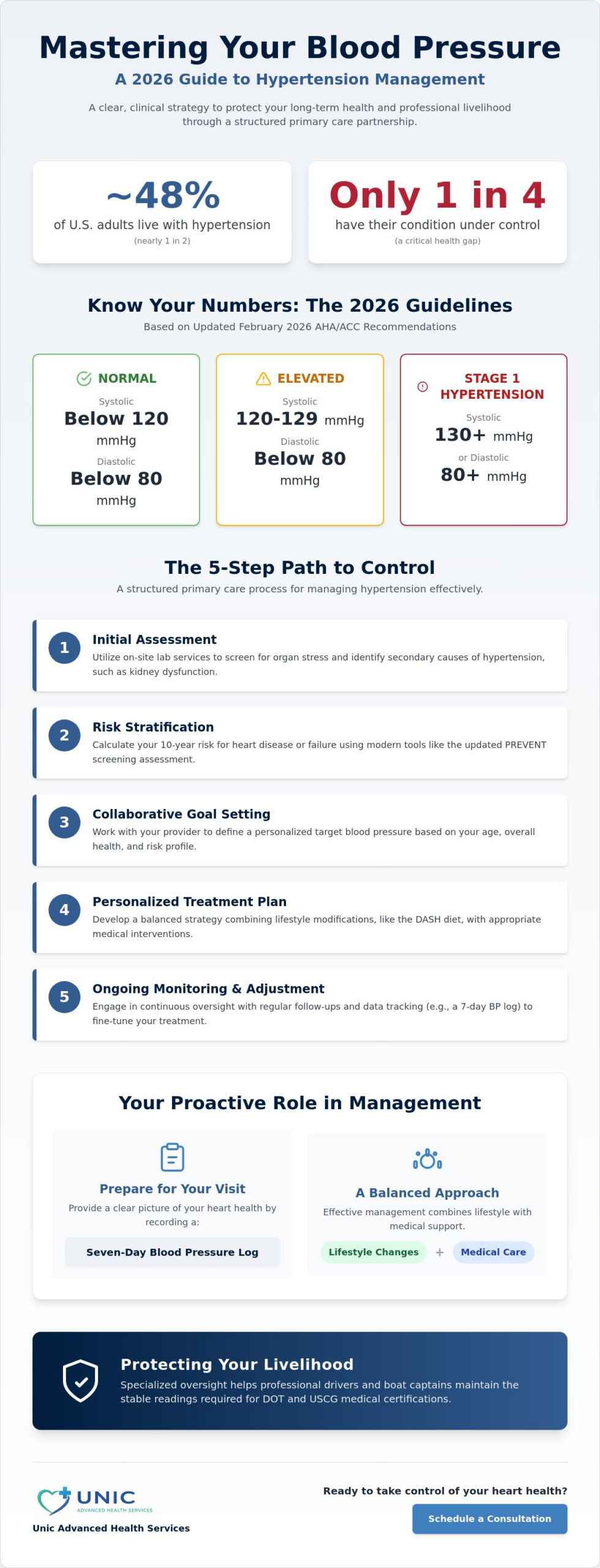
Nearly 48% of adults in the United States currently live with hypertension, yet only about one in four have their readings under control. If you’ve felt a surge of anxiety after a high reading or worried that a diagnosis might disqualify you from your DOT or USCG certification, you aren’t alone. You deserve a clear, clinical strategy for high blood pressure management primary care that protects both your long-term health and your professional livelihood. It’s often difficult to filter through conflicting diet advice while managing the fear of a sudden cardiac event.
Mastering your heart health isn’t just about starting a prescription; it’s a dedicated partnership designed to stabilize your numbers through modern diagnostic tools and personalized oversight. This guide provides a comprehensive roadmap for 2026, incorporating the latest AHA guidelines and FDA-approved treatments like Baxfendy. We’ll explore how a structured management plan helps you achieve consistent readings, navigate new Medicare Part D cost caps, and maintain the medical clearances required for your career.
Key Takeaways
- Understand how a structured clinical partnership in a primary care setting provides the consistent monitoring needed to reduce the risk of heart disease and stroke.
- Explore the five-step assessment process, which utilizes on-site lab services to identify underlying causes and calculate your specific cardiovascular risk profile.
- Learn how to balance lifestyle modifications like the DASH diet with medical interventions to create an effective high blood pressure management primary care strategy.
- Gain practical tips for preparing for your next visit, such as recording a seven-day blood pressure log to give your provider a clear picture of your heart health.
- Discover how specialized oversight helps professional drivers and boat captains maintain the stable readings required for their DOT and USCG certifications.
What is High Blood Pressure Management in Primary Care?
High blood pressure management primary care represents a comprehensive clinical strategy for monitoring, treating, and preventing hypertension within a family practice setting. It isn’t just about a single measurement during an annual checkup. Instead, it’s a continuous oversight model where autonomous nurse practitioners serve as the frontline for long-term health. These providers offer steady guidance, helping you understand how daily habits and clinical interventions work together to protect your heart. By establishing a partnership with a primary care provider, you ensure that your cardiovascular health is managed by someone who understands your full medical history and professional requirements.
To better understand how clinicians approach these challenges, watch this helpful video:
The focus has shifted significantly in 2026. We no longer wait for a crisis to occur before taking action. Modern management of hypertension emphasizes proactive cardiovascular risk reduction rather than reactive symptom control. Under the updated February 2026 guidelines from the AHA and ACC, a normal reading is strictly defined as systolic below 120 mmHg and diastolic below 80 mmHg. Readings between 120-129 systolic with a diastolic under 80 are now classified as “elevated.” This category requires immediate lifestyle intervention to prevent progression to Stage 1 hypertension, which begins at 130/80 mmHg.
The Silent Threat: Why Management Cannot Wait
High blood pressure is often called a silent threat because it rarely produces obvious symptoms until damage is already done. Sustained pressure weakens the walls of your arteries, creating microscopic tears that lead to plaque buildup. Over time, this restricts blood flow to vital organs like the kidneys and the brain. Recent 2026 clinical data has strengthened the link between untreated hypertension and accelerated cognitive decline, including certain types of dementia. Relying on “feeling fine” is a dangerous strategy; your internal organs can be under significant stress even when you feel perfectly healthy. Proactive screening is the only way to identify these risks early.
Systolic vs. Diastolic: Knowing Your Numbers
Understanding your blood pressure requires looking at both numbers on the monitor. Systolic pressure is the force exerted against artery walls during a heartbeat, while diastolic pressure measures the force between beats when the heart is at rest. While a single high reading can be caused by stress or caffeine, your primary care provider looks for patterns. Consistency in these readings over a week or a month matters far more than one “bad” day in the office. Effective high blood pressure management primary care relies on this data to catch issues before they become life-altering emergencies, ensuring you stay healthy and compliant with professional medical standards.
How to Manage Hypertension: The 5-Step Primary Care Process
The process of high blood pressure management primary care is a methodical journey that moves beyond the initial exam room reading. It begins with a deep dive into your unique physiology to ensure every clinical decision is grounded in concrete data. By establishing a structured five-step framework, your provider can transition from simply observing numbers to actively influencing your cardiovascular future. This organized approach minimizes the anxiety of the unknown and replaces it with a clear, actionable roadmap for health.
- Initial Assessment: We begin by utilizing on-site lab services to screen for organ stress or secondary causes of hypertension, such as kidney dysfunction.
- Risk Stratification: Using modern tools like the PREVENT screening assessment, which was updated in late 2025, we calculate your 10-year risk for heart disease or failure.
- Collaborative Goal Setting: We define a target blood pressure based on your age and health history. According to current Hypertension Management Guidelines, the universal goal for most adults is now below 130/80 mmHg.
- Implementation: We launch a tiered treatment plan. This may include lifestyle changes for Stage 1 hypertension or immediate combination therapy for Stage 2 cases.
- Continuous Monitoring: Long-term success relies on regular follow-up wellness exams and the use of telehealth services to review home readings and adjust medications as needed.
The Importance of On-Site Lab Work
Your heart doesn’t work in a vacuum. By analyzing kidney function and lipid panels, we can determine if your hypertension is a primary condition or secondary to another underlying health issue. Having access to on-site lab work in Fort Lauderdale allows for immediate data integration, meaning you don’t have to wait weeks to understand your results. This comprehensive view is essential for protecting your organs from the high-pressure environment that hypertension creates.
Creating a Personalized Care Plan
A one-size-fits-all approach often fails in chronic disease management because every patient brings a different medical history to the table. We carefully adjust plans for those managing co-existing conditions, such as diabetes or respiratory issues. For example, integrating asthma management is vital for patients with multiple concerns, as some blood pressure medications can impact lung function. Establishing a baseline through comprehensive chronic condition management is the first step toward long-term stability and professional peace of mind.
Lifestyle Modifications vs. Medical Intervention
Effective high blood pressure management primary care often involves a dual-track strategy. While some patients hope to avoid medication entirely, others find that lifestyle changes alone aren’t enough to reach their target zones. The clinical goal is to find the right balance that protects your arteries without compromising your quality of life. By combining non-pharmacological interventions with modern medical therapy, we create a synergistic effect that offers the highest level of heart protection. This collaborative approach ensures that your treatment is as unique as your health history.
Specific nutritional adjustments, such as the DASH (Dietary Approaches to Stop Hypertension) diet, have been shown to rival the efficacy of some single-agent medications. This eating plan focuses on reducing sodium while increasing potassium, calcium, and magnesium. When paired with at least 150 minutes of moderate-intensity physical activity per week, many patients see a clinical drop in their systolic pressure. For a deeper look at these strategies, you can consult this Patient’s Guide to Managing High Blood Pressure, which outlines how small daily choices lead to significant long-term gains.
When lifestyle modifications don’t lower readings into the safe range, medical intervention becomes necessary. The 2026 guidelines recommend starting combination therapy for patients with Stage 2 hypertension. This typically involves two medications from different classes, often combined into a single pill to improve adherence. We monitor these prescriptions closely to ensure they’re working effectively and not causing unwanted side effects. Our role is to act as a steady hand, adjusting your dosage as your body responds to treatment and lifestyle improvements. Patients managing co-existing conditions like elevated blood sugar will find that managing diabetes without a specialist through a primary care approach follows a similarly integrated strategy that addresses multiple cardiovascular risk factors simultaneously.
Managing BP in the Florida Heat
In the intense humidity and heat of Fort Lauderdale, dehydration poses a unique risk to cardiovascular health. When you lose fluids through sweat, your blood volume can decrease, which sometimes leads to a “false” high reading as your heart works harder to circulate blood. For patients on diuretics, maintaining a precise electrolyte balance is vital. Mariners and outdoor workers must be especially vigilant; your heart is already under stress while regulating your body temperature in the sun. We recommend consistent hydration and scheduled rest periods to prevent heat-related blood pressure spikes.
Stress Reduction and Sleep Hygiene
Stress and poor sleep are often the missing pieces in the management loop. The sympathetic nervous system can trigger “White Coat Hypertension,” where your readings spike only in clinical settings. Beyond the office, sleep apnea is a significant contributor to resistant hypertension, particularly among commercial drivers and mariners. If you’re waking up tired or snoring loudly, your body may be experiencing oxygen deprivation that keeps your blood pressure elevated all night. Integrating sleep evaluations and stress management into your primary care plan helps us address these root causes directly.
How to Prepare for Your Hypertension Consultation
Preparation transforms a standard medical visit into a proactive health strategy session. For effective high blood pressure management primary care, your provider needs more than just a snapshot of your health from a single office reading. They require a gallery of data points collected in your natural environment to make the most accurate clinical decisions. This collaborative preparation helps bridge the gap between clinical observation and your daily reality, reducing the anxiety often associated with medical appointments.
Start by keeping a dedicated 7-day blood pressure log. Measure your pressure at the same time each morning and evening, ideally before eating or taking medications. Alongside this log, bring a complete list of every prescription, over-the-counter medication, and herbal supplement you currently use. Certain supplements and common decongestants can inadvertently raise your readings or interact with antihypertensive drugs. Identifying these potential conflicts early prevents unnecessary changes to your primary treatment plan.
You should also track any physical changes you’ve noticed since your last visit. Note the frequency of headaches, any instances of blurred vision, or heart palpitations. These are vital clinical clues that your management plan may need refinement. As you prepare, shift your focus from asking “What is wrong?” to “How do we fix it?”. This mindset helps you and your nurse practitioner move quickly toward a sustainable solution that protects your long-term heart health.
Steps for an Accurate Home Reading
Consistency is the foundation of reliable home data. Sit in a chair with back support, keep your feet flat on the floor, and ensure your arm is supported at heart level. The blood pressure cuff must be placed on bare skin rather than over a sleeve to ensure an accurate pulse reading. You should avoid caffeine, nicotine, and vigorous exercise for at least 30 minutes before taking a measurement. Consistent home monitoring helps identify ‘White Coat’ effects where clinical anxiety causes temporary spikes that don’t reflect your true average.
Questions to Ask Your Nurse Practitioner
Active engagement is essential for successful chronic care. Ask your provider what your specific target blood pressure should be, as this goal is often tailored to your individual risk factors. If your career depends on medical clearance, ask how your current readings will affect your DOT physical exam or USCG certification. Inquire about which specific lifestyle changes, such as sodium reduction or increased activity, you should prioritize before considering an increase in medication. If you’re ready to stabilize your readings, you can schedule your chronic condition management consultation to start your personalized plan.
Personalized Hypertension Care at Unic Advanced Health Services
Choosing a partner for your cardiovascular health requires finding a provider who understands the weight of a diagnosis. Our high blood pressure management primary care model is led by autonomous nurse practitioners who prioritize a compassionate, patient-first perspective. We listen first, ensuring that your concerns about medication side effects or long-term risks are addressed before we finalize a treatment plan. This approach transforms the clinical experience from a routine checkup into a steady, reliable partnership focused on your longevity.
We recognize that many of our patients are busy professionals with limited time during the standard work week. To meet this need, our Fort Lauderdale clinic offers Saturday hours and flexible telehealth services for ongoing monitoring. We provide affordable primary care options that don’t sacrifice clinical thoroughness. Whether you’re managing a new diagnosis or looking to stabilize a long-term condition, our team serves as a proactive advocate for your well-being.
Protecting Your Livelihood: DOT and USCG Compliance
For commercial drivers and mariners, blood pressure control is a matter of professional survival. We specialize in helping patients meet the strict FMCSA standards required for a commercial driver’s license. If your readings are elevated during a physical, we don’t just send you away; we work with you to implement a management plan that brings your numbers into a compliant range. This ensures that boat captains can pass their USCG physicals without the stress of unexpected delays. You can learn more about these specific requirements in our Occupational Health Exam guide, which details the intersection of clinical health and regulatory compliance.
Comprehensive Wellness Beyond Blood Pressure
A truly comprehensive wellness journey often includes both internal health management and external self-care. While stabilizing your blood pressure is the priority, many people also find value in exploring aesthetic treatments to boost their overall confidence; as an example of excellence in this field, you can check out Cirugía 360 to learn about their approach to aesthetic medicine.
Hypertension is often a gateway to understanding other aspects of your health. Our annual physical exams are designed to catch elevated readings before they progress into Stage 2 hypertension. By identifying these trends early, we can often utilize lifestyle modifications to avoid the need for intensive medication. We believe in providing a “steady hand” in your care, managing chronic conditions over years rather than just individual visits. This continuity of care is what allows our patients to maintain their health and their professional certifications with confidence. If you’re ready to take control of your numbers, schedule your chronic condition management consultation today to begin your personalized heart health journey.
Secure Your Cardiovascular Future
Managing hypertension is a lifelong commitment that requires a steady, expert guide to navigate evolving clinical standards. By shifting from reactive monitoring to a proactive partnership, you protect your vital organs and secure your professional future. Just as you manage your health to protect your longevity, working with an estate planning attorney west palm beach can help you secure your legacy and assets. This comprehensive approach is particularly vital for those whose careers depend on meeting rigorous medical certifications and who want to ensure their family’s stability.
At Unic Advanced Health Services, we specialize in high blood pressure management primary care designed for the modern professional. Our practice is led by an experienced autonomous nurse practitioner who understands the specific requirements of maintaining DOT and USCG compliance. We utilize on-site lab services to provide immediate results, allowing us to adjust your treatment plan with precision and speed. Whether you need to stabilize your numbers for work or simply want to ensure long-term heart health, we offer the supportive, expert oversight you deserve. Schedule your high blood pressure consultation at Unic Advanced Health Services today. Your health is your most valuable asset, and we are here to help you protect it.
Frequently Asked Questions
Can high blood pressure be cured, or only managed?
High blood pressure is typically a chronic condition that requires lifelong management rather than a one-time cure. While secondary hypertension caused by specific medical issues can sometimes be resolved, most primary hypertension is managed through a combination of lifestyle changes and medication. Effective high blood pressure management primary care focuses on keeping your readings consistently below the 130/80 mmHg threshold to prevent long-term organ damage.
How often should I see my primary care provider for hypertension?
Your visit frequency depends on how well your blood pressure is controlled and your specific cardiovascular risk profile. Initially, you might see your provider every two to four weeks until you reach your target goal. Once your numbers are stable and your treatment plan is established, follow-up wellness exams are typically scheduled every three to six months to monitor your progress and ensure your plan remains effective.
Will I have to take blood pressure medication for the rest of my life?
Many patients require long-term medication to maintain safe blood pressure levels, but it isn’t always a permanent requirement for everyone. If you achieve significant success with lifestyle modifications like the DASH diet and weight loss, your provider may trial a supervised dose reduction. You should never stop or change your medication without clinical oversight, as this can lead to dangerous rebound hypertension and increased stroke risk.
What are the specific blood pressure requirements for a DOT physical in 2026?
For a DOT physical in 2026, a reading below 140/90 mmHg is generally required to receive a standard two-year medical certification. If your blood pressure falls between 140/90 and 159/99, you may only receive a one-year certificate. Readings higher than this result in shorter temporary certifications or medical disqualification until your blood pressure is stabilized through a formal management plan.
Does primary care management include help with diet and exercise?
Yes, a comprehensive high blood pressure management primary care plan prioritizes lifestyle modifications as the foundation of your treatment. Your provider will guide you through the DASH diet and help you establish a physical activity routine that meets the 150-minute weekly clinical standard. This integrated approach ensures that you aren’t just relying on prescriptions but are actively improving your arterial health through sustainable daily habits.
Can I use telehealth for my blood pressure follow-up appointments?
Telehealth services are an excellent option for blood pressure follow-up appointments, particularly for reviewing your seven-day home logs and discussing medication tolerance. These virtual visits allow your nurse practitioner to adjust your management plan without requiring you to travel to the clinic. This modern methodology makes it much easier for busy professionals to maintain the consistency needed for long-term blood pressure control.
What happens if my blood pressure is high during my USCG physical?
If your blood pressure exceeds 140/90 mmHg during a USCG physical, your medical certificate may be delayed or issued for a shorter duration. The Coast Guard requires mariners to demonstrate that their hypertension is under control and that their medication doesn’t cause impairing side effects. We work with captains to stabilize their readings quickly so they can return to the water without significant regulatory delays.
Is high blood pressure management covered by standard health insurance?
Most standard health insurance plans cover hypertension management as part of chronic condition oversight or preventive care services. For those on Medicare Part D in 2026, the out-of-pocket cap for prescription drugs is $2,100, which helps manage the cost of essential heart medications. You should always verify your specific coverage details, but managing this condition is widely recognized as a vital service for preventing more expensive emergency care.