
Imagine sitting in a new exam room, clutching a list of medications and wondering if your new provider will truly grasp the nuances of your health history. It’s a vulnerable moment, particularly when you rely on consistent management for conditions like diabetes or hypertension. Establishing care with a new doctor is far more than a clerical requirement; it’s the foundation of a strategic clinical partnership. You need a steady hand to guide you through this transition, ensuring your medical records are integrated and your insurance coverage is clear from the very first visit.
You likely feel that a healthcare transition should be handled with both clinical expertise and genuine empathy. We agree that your peace of mind is just as important as your physical health during this change. This 2026 guide will help you master the step-by-step process of transitioning your healthcare for better long-term wellness and seamless chronic care management. We’ll preview how to navigate modern price transparency standards, organize your medical history for a productive first consultation, and secure a trusted health partner who is fully committed to your longevity.
Key Takeaways
- Understand why an “Establish Care” visit serves as a comprehensive medical baseline, distinguishing it from standard sick visits or urgent care encounters.
- Master the logistical process of establishing care with a new doctor, including the critical timeline for requesting medical records from previous providers.
- Learn how to verify insurance compatibility and local network status in Fort Lauderdale to ensure your initial consultation is financially predictable.
- Discover how a structured intake appointment streamlines long-term chronic condition management and future specialized needs; this includes DOT or USCG physicals.
- Prepare for your clinical intake by completing digital documentation early, allowing you to focus on building a relationship with your new provider.
Establishing Care with a New Primary Care Provider
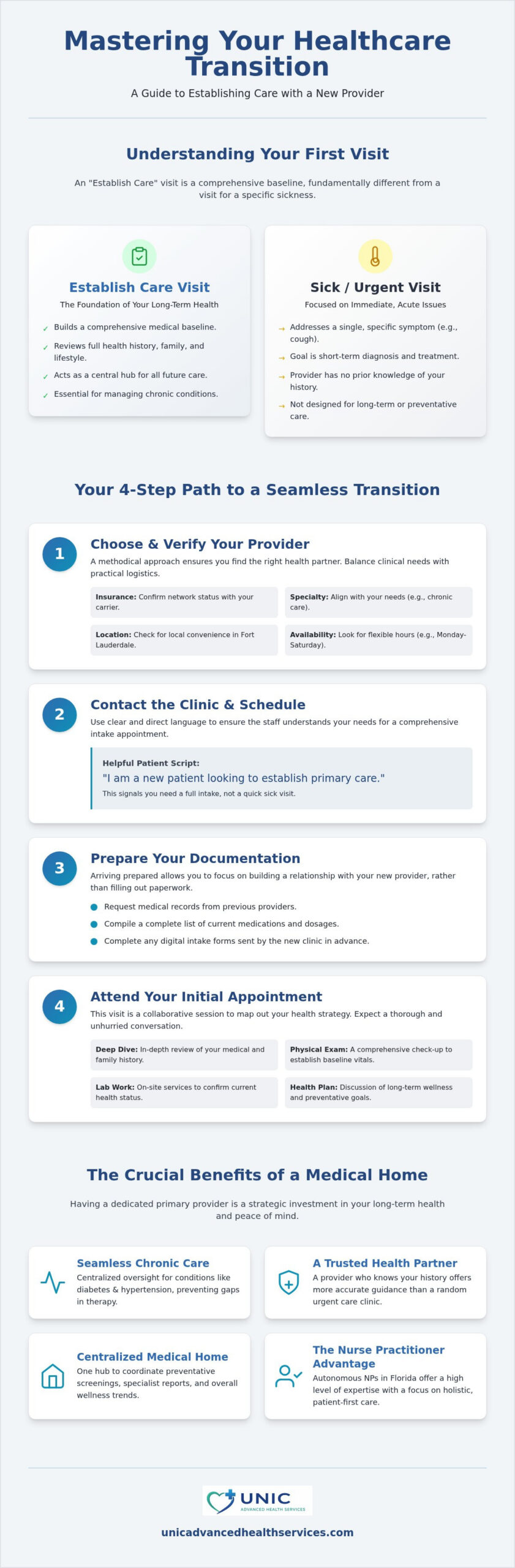
An “Establish Care” visit is a comprehensive intake appointment designed to build your medical baseline. Unlike a standard sick visit, which focuses on a single acute symptom like a persistent cough or a minor injury, this encounter allows your provider to review your entire health profile. Establishing care with a new doctor involves a deep dive into your family history, past surgical procedures, and current lifestyle factors. This baseline serves as a vital reference point for every future visit. It makes it much easier for your provider to spot subtle deviations in your lab results or physical health over time.
This visit serves as the foundation for your primary care medical home. A medical home acts as a central hub for your long-term health strategy. It coordinates your preventative screenings and monitors your overall wellness trends. When you have a dedicated provider who knows your history, they can offer more accurate guidance than an urgent care clinician who is seeing you for the first time during a crisis. Proactively scheduling this appointment ensures you have a trusted partner ready to assist before an urgent medical need arises.
Why Establishing Care is Crucial for Chronic Disease Management
For patients managing diabetes, hypertension, or obesity, the initial visit is a clinical necessity. Your primary provider serves as the overseer of your treatment plan, ensuring that specialist reports from cardiologists or endocrinologists are integrated into one cohesive record. This centralized oversight prevents conflicting treatments and ensures your long-term prescriptions are transitioned without gaps in therapy. Utilizing on-site lab services during this transition helps confirm your current status and ensures your medication dosages remain accurate. Having a single point of contact simplifies the refill process and keeps your health goals on track.
Doctor vs. Nurse Practitioner: Choosing Your Health Partner in Florida
Within Florida’s healthcare environment, patients have the unique option to work with Autonomous Nurse Practitioners. These professionals are licensed to practice independently, providing a high level of clinical expertise with a focus on holistic wellness. Many patients find that the NP-led model offers a significant advantage in face-to-face time. At Unic Advanced Health Services, our autonomous NP leadership prioritizes a supportive, patient-first perspective. This approach allows for a more personalized care experience where your concerns are heard and your health history is thoroughly evaluated. It combines modern efficiency with a traditional commitment to individualized attention.
How to Choose and Contact Your New Provider in Fort Lauderdale
Selecting a healthcare partner requires a methodical approach. While the process of establishing care with a new doctor may seem daunting, following a structured checklist ensures you find a reliable advocate for your health. First, verify insurance compatibility. Network status in Fort Lauderdale can change, so it’s best to confirm with your carrier before booking. Second, align the provider’s specialty with your specific needs. If you manage diabetes or hypertension, look for a clinic focused on chronic care management. Learning how to choose a new doctor involves balancing these clinical requirements with logistical convenience.
Flexibility is essential for busy professionals. Check for clinics that offer Monday through Saturday availability. Saturday appointments are particularly valuable for those who can’t step away from work during the week. Once you identify a candidate, use their online booking portal or make a direct call. Digital portals provide immediate confirmation. Calling allows you to gauge the clinic’s environment and ask clarifying questions about their services.
What to Say When You Call: A Patient Script
Establishing care with a new doctor is a strategic step that requires clear communication with the clinic staff. Many patients feel anxious when calling a medical office for the first time. To simplify the process, use this clear phrase: “I am a new patient looking to establish primary care.” This tells the staff you need a comprehensive intake rather than a quick sick visit. Clarify if you are seeking a standard wellness exam or a specific chronic care intake. Ask essential questions like, “Do you offer on-site lab work in Fort Lauderdale?” or “Are telehealth services available for follow-ups?” This ensures the clinic meets your expectations for long-term support.
Evaluating the Clinic During Your First Interaction
The administrative staff’s responsiveness often reflects the quality of care you’ll receive. Pay attention to their tone and willingness to help. An empathetic front-desk team suggests a patient-first clinical environment. Confirm how they handle medical record transfers from your previous provider. A well-organized clinic will have a clear, modern methodology for obtaining your history. If you value flexibility, ask about their telehealth options for future consultations. Choosing a provider who prioritizes transparency and communication sets the stage for a reliable health partnership.
If you’re ready to begin this journey, consider scheduling your initial consultation with a team that values your time and peace of mind.
Preparing Your Medical History and Documentation for a Seamless Transition
Establishing care with a new doctor is a proactive process that begins well before your scheduled appointment time. To ensure your initial consultation is productive, you must curate a personal health portfolio. This collection should include recent laboratory results, imaging reports, and consultation notes from any specialists you currently see. By organizing these documents, you allow your new provider to focus on clinical analysis rather than administrative data collection. Preparing for your first appointment involves active participation in your health narrative, ensuring no detail of your medical journey is overlooked.
Efficiency starts with early preparation. When you are establishing care with a new doctor, you should request your medical records from your previous provider at least two weeks in advance. Many clinics also provide a “New Patient Packet” containing digital forms. Completing these documents at home allows you to provide thoughtful, accurate answers about your history. You should also create a comprehensive inventory of all medications and supplements you take. Include the dosage, frequency, and the reason for the prescription. This transparency prevents potential drug interactions and helps your new provider maintain your therapeutic continuity.
The Essential Checklist for Your First Appointment
Arriving prepared reduces anxiety and ensures a smooth check-in process. Your first visit toolkit should include the following items:
- Valid photo identification and your most current insurance documentation.
- A chronological list of past surgeries, hospitalizations, and major diagnoses.
- Family medical history, specifically focusing on first-degree relatives like parents and siblings.
This information provides the clinical context necessary for accurate risk assessment and preventative screening recommendations.
How to Transfer Medical Records to a New Practice
Transferring your history requires navigating HIPAA release forms. While digital transfers are common, they often rely on legacy fax technology that can be slow or unreliable. Requesting physical copies or a secure digital download for your own records is often a more reliable strategy. Having these files on hand ensures your new provider has immediate access to your history during the intake. This is particularly vital for those seeking a chronic care management nurse practitioner Fort Lauderdale. Precise records of previous treatments, such as A1c levels or blood pressure trends, allow for a seamless transition into a specialized management plan without repeating unnecessary tests.
What to Expect During Your Initial ‘Establish Care’ Appointment
Your journey toward establishing care with a new doctor begins the moment you enter the clinic. The initial check-in process is designed to be methodical and transparent. During this time, the administrative staff will verify your demographics and insurance coverage to ensure your records are accurate from day one. Once the paperwork is complete, a medical assistant will guide you to a clinical area for your vitals. Measuring your blood pressure, heart rate, and weight establishes the first data points in your new medical record. These baseline metrics are essential for tracking your health progress over the coming months.
The heart of the visit is the provider consultation. This is a deep dive into your health history and future wellness objectives. Unlike a rushed urgent care visit, this time is dedicated to understanding your unique health narrative. Your provider will review the documentation you prepared, allowing for a focused discussion on your current well-being and any underlying concerns you wish to address.
The Clinical Interview: Building Your Health Narrative
When you are establishing care with a new doctor, the clinical interview provides the space to discuss lifestyle factors that influence your health. Your provider will ask about your diet, exercise habits, and current stress levels. This is the ideal time to mention any “red flag” symptoms you might have ignored, such as occasional joint pain or changes in sleep patterns. Together, you will set realistic 12-month health goals. This collaborative approach ensures your care plan aligns with your personal priorities and clinical needs.
Preventive Screenings and On-Site Diagnostics
A diagnostic baseline is often established during this first visit through blood work and other screenings. Many patients find that an annual physical exam Fort Lauderdale provides the perfect opportunity for these baseline tests. Standard screenings typically include cholesterol panels, A1C tests for diabetes, and evaluations of kidney function. At Unic Advanced Health Services, the convenience of on-site lab services means you won’t have to visit a separate facility for these tests. Having these results integrated into your initial visit allows for a more comprehensive evaluation and faster development of your management plan.
If you’re ready to secure a steady hand for your healthcare journey, book your initial consultation today to experience dedicated, expert guidance.
Navigating Chronic Care and Specialized Occupational Requirements
Establishing care with a new doctor is especially advantageous for professionals with specialized occupational requirements. When your primary provider manages both your general wellness and your mandatory certifications, you benefit from a unified clinical perspective. This intentional integration ensures that your daily health management supports your professional compliance. For instance, establishing care simplifies future DOT physical exam Fort Lauderdale visits. Because your medical history, vital trends, and medication lists are already verified and securely stored, the certification process becomes an efficient update rather than a stressful evaluation.
Our practice utilizes a co-management model to streamline your long-term health strategy. Your primary provider acts as a dedicated guide, coordinating with specialists to ensure every facet of your care is synchronized. This oversight is critical for patients managing multiple conditions, as it prevents fragmented treatment plans and medication conflicts. Following your comprehensive intake, you may utilize telehealth Fort Lauderdale services for routine follow-ups. This modern methodology allows you to maintain your clinical momentum with the same provider who knows your history, all from the convenience of your home or office.
Establishing Care for Commercial Drivers and Mariners
Commercial drivers and mariners operate under rigorous federal health standards. It’s vital that your primary provider possesses a thorough understanding of USCG boat captain physical Florida requirements. Proactively managing conditions like hypertension or diabetes ensures you remain compliant and ready for duty. The benefit of an occupational health exam Fort Lauderdale performed by your regular provider is the continuity of care. They can address minor health shifts before they impact your certification, acting as a reliable advocate for your career and well-being.
The Post-Visit Action Plan
Once your initial appointment concludes, the focus shifts to your post-visit action plan. Begin by reviewing your baseline lab results through the secure patient portal to understand your current health status. Confirm that your pharmacy information is updated to facilitate seamless prescription refills and chronic care management. Finally, work with the administrative staff to establish a consistent schedule for routine wellness checks. This structured progression ensures your health remains a priority and that you always have a steady hand guiding your medical journey. Establishing care with a new doctor isn’t just a single event; it’s the start of a reliable partnership designed for your longevity.
Securing Your Healthcare Foundation for 2026
Establishing care with a new doctor is the most significant step you can take toward proactive health management. By prioritizing a comprehensive intake visit, you ensure that your medical history is accurately documented and your wellness goals are clearly defined. A successful transition relies on early preparation of your health portfolio and a clear understanding of your clinical needs; whether you’re managing a chronic condition or maintaining occupational certifications for your career.
Our clinic offers a stable and supportive environment for your ongoing care. With expert autonomous nurse practitioner leadership and on-site lab services for immediate diagnostics, we provide the thoroughness your health deserves. We understand the demands of a professional schedule, which is why our convenient Fort Lauderdale location offers Saturday hours to accommodate your needs. Professional guidance and clinical excellence are essential components of a reliable medical home.
Schedule your appointment to establish care at Unic Advanced Health Services today. Taking this proactive step now ensures you have a dedicated advocate ready to support your long-term wellness and peace of mind. We look forward to becoming your trusted partner in health.
Frequently Asked Questions
What is the difference between an ‘Establish Care’ visit and an annual physical?
An establish care visit is a comprehensive intake appointment designed to build your medical baseline and integrate your history into a new system. An annual physical is a routine wellness exam for patients who already have an established relationship with their provider. The initial visit focuses more on clinical record coordination and long term strategy than a standard yearly checkup.
How do I tell my current doctor I am switching to a new provider?
You don’t need to provide a formal explanation or have a difficult conversation to change providers. Simply contact your current office to request a copy of your medical records or sign a release form for your new clinic. This administrative step ensures your health history moves with you. Most offices handle these transitions professionally as a standard part of patient care.
Will my insurance cover my first visit with a new primary care doctor?
Most insurance plans cover a new patient wellness visit, but you should verify your specific benefits before your appointment. While many preventative services are covered at no cost, an initial consultation may be billed differently than a standard follow up. Confirming coverage for establishing care with a new doctor with your carrier prevents unexpected out of pocket expenses during your transition.
Can I establish care with a new doctor through a telehealth appointment?
Telehealth is a valid and convenient option for your initial consultation and medical history review. It allows you to meet your provider and discuss your health goals from home; however, an in person visit may still be necessary for a physical exam or lab work. Many insurers have made these virtual primary care flexibilities permanent to improve patient access to essential services.
What should I do if my previous doctor’s office won’t release my records?
You have a legal right to access your medical records under HIPAA regulations. If an office is unresponsive, you can submit a formal written request or contact the Department of Health and Human Services. To avoid delays when establishing care with a new doctor, ask for physical copies or a digital download for your own files. This ensures your new provider has immediate access.
Do I need to bring my actual pill bottles to the first appointment?
Bringing your actual pill bottles is often the most accurate way to verify dosages and brand names with your new provider. If that isn’t possible, a printed list from your pharmacy or a detailed inventory of all supplements is a reliable alternative. Seeing the physical packaging helps the clinical team prevent potential drug interactions and ensures your medication management remains seamless.
How often should I see my primary care provider once care is established?
Most healthy adults should schedule a wellness exam at least once per year to maintain their health baseline. If you’re managing chronic conditions like hypertension or diabetes, your provider will likely recommend more frequent visits, such as every three to six months. Consistent monitoring allows your healthcare partner to adjust your treatment plan and catch potential issues before they become urgent.
Can I get my DOT or USCG physical done during my first primary care visit?
You can certainly integrate specialized occupational certifications into your initial intake appointment. Combining your general health baseline with a DOT or USCG physical is a highly efficient way to manage your wellness and professional compliance simultaneously. This unified approach ensures your primary provider has a complete understanding of the health standards required for your career and your long term well being.