
A single normal reading doesn’t tell the whole story about your health. A men’s health screening in Fort Lauderdale can include blood pressure and cholesterol checks, screening for diabetes and other chronic conditions, and preventive tests based on age and risk. The right mix depends on your health history and individual risk factors.
It’s understandable to want a clear sense of what to expect and where to turn. Preventive screening can help identify health concerns that may not cause noticeable symptoms, while regular follow-up helps track changes over time. Not every test is appropriate for every man, so age, family history, existing conditions, and lifestyle all matter.
This guide explains how blood pressure and cholesterol screening can inform cardiovascular risk, which preventive tests may be considered at different ages, and how chronic conditions such as diabetes and hypertension fit into ongoing care. It also outlines what to look for in a Fort Lauderdale provider so you can make informed choices about screening and follow-up.
Key Takeaways
- A blood pressure reading of 120 to 129 mm Hg systolic or 70 to 79 mm Hg diastolic is a reason to ask whether more frequent checks may be appropriate.
- For men without known coronary heart disease risk factors, cholesterol screening can begin at age 20 and repeat every 4 to 6 years.
- Age and personal risk help shape preventive screening choices, including colorectal cancer screening and discussions about prostate cancer testing.
- For men ages 35 and older who have overweight or obesity, screening for prediabetes and type 2 diabetes can support earlier detection.
- Regular follow-up can help connect screening results with practical care for ongoing conditions such as hypertension and diabetes.
Blood pressure and cholesterol screening
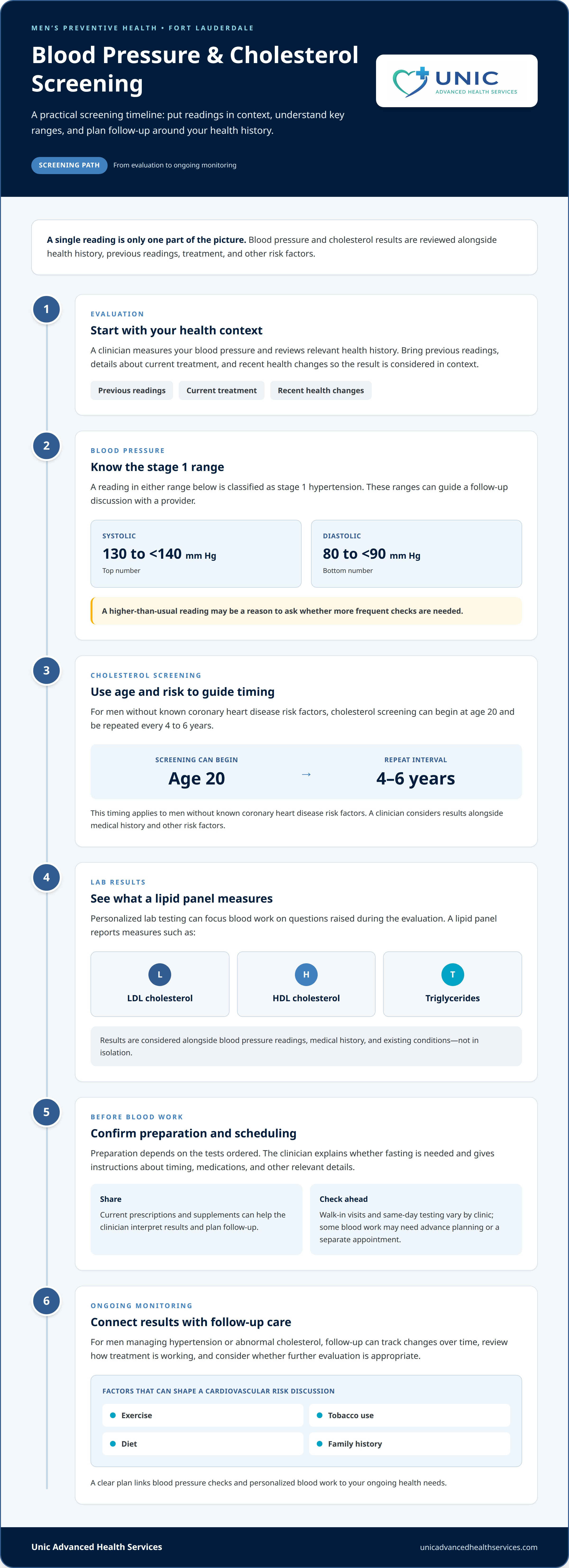
Blood pressure screening can flag a possible concern, even without symptoms. During an evaluation, a clinician measures your blood pressure and reviews relevant health history. Sharing previous readings, current treatment, and recent health changes helps put the result in context rather than relying on one measurement alone.
A higher-than-usual blood pressure reading may be a reason to ask a provider whether more frequent checks are needed. A systolic pressure from 130 to less than 140 mm Hg or a diastolic pressure from 80 to less than 90 mm Hg is classified as stage 1 hypertension. These ranges can guide follow-up discussions.
Cholesterol screening adds another view of cardiovascular risk. Men without known coronary heart disease risk factors can begin screening at age 20 and repeat it every 4 to 6 years. A clinician considers the results alongside medical history and other risk factors, rather than using a cholesterol result alone to determine next steps.
Personalized lab testing can focus blood work on questions raised during an evaluation. A lipid panel reports measures such as LDL cholesterol, HDL cholesterol, and triglycerides. The clinician can review these results alongside blood pressure readings and existing conditions, then discuss whether monitoring or treatment should be considered.
Preparation depends on the tests ordered. Before blood work, the clinician explains whether fasting is needed and provides instructions about timing, medications, and other relevant details. Share your current prescriptions and supplements during the evaluation, as this can help the clinician interpret results and plan follow-up.
Walk-in appointments and same-day testing vary by clinic, so don’t assume they’re available. Some blood work may require advance planning or a separate appointment, depending on the tests selected and the clinic’s process. Ask about scheduling and preparation when arranging an evaluation, especially if fasting may be required.
Exercise, tobacco use, diet, and family history can shape a discussion about cardiovascular risk. A clinician may also ask about symptoms such as erectile dysfunction, which can be relevant to a broader health evaluation. Sharing these details supports an individualized review of screening results and possible next steps.
For men managing hypertension or abnormal cholesterol, screening can track changes over time. Follow-up may include reviewing new readings, discussing how treatment is working, and deciding whether further evaluation is appropriate. A clear plan connects blood pressure checks and personalized blood work with your ongoing health needs.
Men’s preventive health screenings
A preventive appointment can bring age-based tests, vaccination needs, and personal health concerns into one review. The right plan depends on which screenings suit your history and risk.
Available Screening Services
Preventive screening may include a prostate-specific antigen (PSA) blood test discussion, HIV testing, and colorectal cancer screening options. Men ages 55 through 69 should discuss potential benefits and harms of PSA testing with a provider. Adults ages 15 to 65 should have a one-time HIV test. These recommendations help shape a primary care conversation, not a one-size-fits-all test list.
A primary care appointment can also review mental health, vaccination history, and conditions that affect screening choices. Adults should receive 2 doses of shingles vaccine at or after age 50, according to the Centers for Disease Control and Prevention. Bring up previous test results and current health concerns so the clinician can consider which preventive steps are relevant.
In Fort Lauderdale, ask what an appointment includes: a medical history review, preventive care discussion, and any planned tests or blood work. Annual physicals and preventive care can provide a setting to discuss screening priorities with a clinician.
Insurance Coverage
Does insurance cover preventive men’s health screenings in Florida? Coverage depends on the specific plan and how a service is classified. A preventive screening may be handled differently from testing ordered to evaluate symptoms or monitor a known condition.
Review your plan’s preventive-care benefits and any requirements for referrals, in-network clinicians, or laboratory services before an appointment. For example, ask whether a PSA discussion, blood test, or colorectal screening is considered preventive under your policy. The test and billing category matter, so general information cannot establish what an individual plan will cover.
Costs Without Insurance
How much does screening cost without insurance? There is no single cost for every visit because the total depends on the evaluation and tests selected. Pricing is provided after a quote request; costs may depend on the appointment, laboratory work, and specific screening tests.
A focused visit may involve different services from a broader preventive evaluation with blood work. Ask for a breakdown distinguishing the appointment from laboratory testing, and clarify whether follow-up to review results is included. Understanding the planned services can help you decide which screening needs to address first.
Preventive care also means revisiting decisions as your health needs change. A clinician can review your age, family history, previous results, and vaccination records, then discuss which screenings to prioritize. For example, someone considering a PSA test can weigh potential benefits and harms in a primary care discussion, and raise mental health concerns during the same appointment.
Heart and vascular risk monitoring
Heart and vascular risk monitoring brings measurements together with personal history. At a preventive visit, a clinician can review blood pressure readings, cholesterol results, weight, existing conditions, and family history. A personalized assessment helps identify which factors need follow-up and how to track them over time.
Resting heart rate is another measurement a clinician may consider. A resting rate between 60 and 100 beats per minute is a described range for men, while about 70 to 75 beats per minute is described as ideal. These figures are context, not a diagnosis. A doctor interprets a measurement alongside symptoms, health history, and the circumstances of the reading.
Patterns matter more than a single isolated reading. A clinician can compare current measurements with previous results, note changes, and determine whether follow-up is appropriate. If readings differ between appointments, for example, the clinician can consider the overall pattern and relevant health factors before discussing next steps.
Cholesterol results contribute to the broader picture of vascular health. A clinician can consider them alongside blood pressure, weight, and known health conditions. This combined view supports a discussion about preventive care, possible monitoring, and whether treatment should be considered in light of your circumstances.
Symptoms also belong in the conversation. Tell the clinician what changes you’ve noticed, when they occur, and whether they affect daily activities or exercise. This context helps guide the review of screening results. Symptoms don’t replace measurements, but they can help determine which concerns need attention during an evaluation.
Weight and exercise habits can make a risk review more personal. A clinician may ask about changes in weight, usual activity, and barriers to exercise. These details can support a practical conversation about health goals and follow-up. The focus is on understanding your circumstances, not judging a single measurement.
Bring relevant information to your appointment, such as previous cholesterol results, a list of current medicines, and known family history. The clinician can connect those details with current readings and existing conditions. This makes the review more useful and helps explain what the results mean for your ongoing preventive care.
If you’re managing a condition that affects vascular health, consistent follow-up can clarify whether your care plan needs review. At each visit, the clinician can discuss updated measurements, symptoms, treatment, and changes in exercise or weight. A personalized plan connects these details to monitoring priorities and supports informed decisions about next steps.
Age-based health screenings
Age helps organize preventive care, but screening choices also reflect personal risk. In the United States, men ages 45 to 75 should be screened for colorectal cancer, according to the U.S. Preventive Services Task Force. A men’s health screening in Fort Lauderdale can include a discussion of which age-related screenings fit your history and current concerns.
Colorectal screening has several options, including colonoscopy every 10 years, a fecal occult blood or fecal immunochemical stool test every year, stool DNA testing every 1 to 3 years, and CT colonography every 5 years. The method and interval differ, so discussing your preferences and health history can help clarify which option to consider.
Lung cancer screening criteria combine age with smoking history. Men ages 50 to 80 with at least a 20 pack-year history should receive annual low-dose CT screening if they currently smoke or quit within the past 15 years. A clinician can review those details and explain how they relate to your screening plan.
Bone health can also shape preventive discussions. Men ages 50 to 69 with osteoporosis risk factors should discuss screening with a provider. Sharing relevant health history can help frame that conversation. For example, a patient concerned about bone health can raise the concern during a clinic visit and discuss whether screening is appropriate.
Eye exam intervals vary with age. Men ages 40 to 54 should have an eye exam every 2 to 4 years. Men ages 55 to 64 should have one every 1 to 3 years. These intervals offer planning guidance, while a change in vision is a practical reason to raise eye health during an appointment.
Testosterone levels in men decline at an average rate of 1.6% each year starting in their mid-30s. This average does not describe every individual. If you have symptoms or questions about testosterone, discuss them with a clinician, who can consider them alongside your overall health and determine whether evaluation is relevant.
These age ranges show why screening plans benefit from periodic review. Smoking history affects whether low-dose CT criteria apply, while osteoporosis risk shapes bone-screening discussions. During a men’s health screening in Fort Lauderdale, age, lifestyle, and personal history can help guide which recommended screenings to discuss.
Before a clinic visit, gather previous screening dates and relevant health history. This information helps the clinician identify completed tests and discuss what may be due next. Knowing when you last had colorectal screening, for example, can make a discussion of available methods and intervals more specific.
Chronic disease screening and management
Chronic disease screening can identify concerns before symptoms become the reason for an evaluation. In the United States, men ages 35 and older who have overweight or obesity should be screened for prediabetes and type 2 diabetes. A clinician can use health history and screening results to discuss whether follow-up is needed.
Repeat screening has a defined interval for this group. Men with overweight or obesity should repeat prediabetes and type 2 diabetes screening every 3 years if they remain overweight or have obesity. This gives patients and clinicians a point for revisiting results, especially when weight or other health circumstances change.
Hepatitis C screening is another preventive consideration. Adults ages 18 to 79 should have a one-time hepatitis C test. Including this in a comprehensive health review can help identify whether the test remains relevant, alongside diabetes screening and other health issues discussed during an appointment.
Screening is only one part of chronic disease care. During an evaluation, a clinician can review test results, existing diagnoses, medications, and concerns such as new symptoms or difficulties with treatment. A patient with diabetes, for example, can discuss how the condition fits into daily routines and which follow-up questions matter most.
Ongoing management connects results with a practical care plan. A clinician may track health information over time, review how current treatment is going, and discuss whether the plan needs adjustment. Keeping previous results and a current medication list handy can make conversations more focused and clarify outstanding concerns.
Chronic conditions can affect more than one area of health. A comprehensive review considers how diagnosed conditions, screening findings, and reported health concerns fit together, rather than viewing each result alone. If you have both diabetes and hypertension, for example, the clinician can discuss both within the same care conversation.
For men who need continued support with diabetes, hypertension, or obesity, chronic condition management can provide a setting for reviewing health changes and next steps. A focused evaluation can connect screening with ongoing care and address questions about treatment. Discuss chronic condition management as part of a plan for ongoing follow-up.
Unic Advanced Health Services
Unic Advanced Health Services connects screening concerns with ongoing chronic condition management in Fort Lauderdale. If results raise questions about diabetes, hypertension, or obesity, the clinic can support a discussion of health changes and follow-up. Telehealth Services offer a remote option for care conversations, while DOT Physical Examination and U.S. Coast Guard (USCG) Boat Captain Physical address specific occupational needs.
For general screening questions, bring your health history, previous results, and current concerns to your visit. These details help guide a focused conversation about what needs attention and how chronic conditions fit into your care. Unic Advanced Health Services provides primary care support for interpreting health concerns and managing ongoing conditions.
Contact Unic Advanced Health Services to discuss your health concerns and care needs.
Make preventive care part of your next step
A screening visit can be the start of an ongoing approach to your health, not a one-time checklist. For men’s health screening in Fort Lauderdale, bring your questions and relevant health history to discuss what needs attention now and what follow-up makes sense. A clear plan can help you stay engaged as your health needs change.
Unic Advanced Health Services provides Chronic Condition Management for ongoing health concerns. The practice also offers DOT Physical Examination and U.S. Coast Guard (USCG) Boat Captain Physical services for occupational needs. These services address different situations, so the right next step depends on why you’re seeking care.
If you’re ready to discuss your screening or ongoing care needs, contact Unic Advanced Health Services. A thoughtful conversation can help you move forward with greater clarity and confidence.
Frequently Asked Questions
How do I find the right doctor or location?
Choose a Fort Lauderdale primary care practice that can address preventive screening and ongoing health concerns in one setting. Look for care that includes a health history review, lab testing when appropriate, and follow-up for chronic conditions. Unic Advanced Health Services provides annual physicals and preventive care, along with chronic condition management. Bring previous test results and your medication list to make the first discussion more specific.
What happens at an annual physical?
An annual physical gives you time to review your health history, current concerns, and preventive care needs with a clinician. The visit may include screening discussions and blood work when appropriate. Raise any health changes, share past test results, and discuss questions that need follow-up. If testing is planned, ask whether preparation is needed for those specific tests.
What screenings should men ask about?
Ask which screenings suit your age, medical history, and risk factors. Topics can include blood pressure, cholesterol, diabetes, colorectal cancer, prostate cancer, HIV, and hepatitis C. Vaccination history also belongs in a preventive-care discussion. Aim to leave knowing which screenings are relevant now, which need follow-up, and when to revisit the plan.
Which clinics and hospitals in Fort Lauderdale offer men’s health screenings?
Unic Advanced Health Services offers preventive care, annual physicals, and on-site lab services in Fort Lauderdale. These services support discussions about screening needs and related blood work. The right setting depends on your needs: routine prevention and ongoing primary care differ from emergency or hospital services. For screening questions or chronic condition support, a primary care appointment is a practical starting point.
What tests are included in a comprehensive men’s health screening for men?
There isn’t one fixed set of tests for every man. A screening plan may include blood pressure measurement, cholesterol or diabetes blood work, and discussions about age-based cancer screening. The clinician considers personal history, symptoms, and risk factors to determine what belongs in an evaluation. For instance, if a condition runs in your family, raise that when discussing screening options.
What age-based screening guidelines apply to men for prostate cancer, colorectal cancer, and heart disease?
Men ages 55 through 69 should discuss the potential benefits and harms of PSA testing with a provider. Men ages 45 to 75 should be screened for colorectal cancer, according to the U.S. Preventive Services Task Force. For heart risk, cholesterol screening can begin at age 20 and repeat every 4 to 6 years when there are no known coronary heart disease risk factors.
How do I schedule a men’s health screening in Fort Lauderdale, and is a referral required?
To schedule with Unic Advanced Health Services, call (954) 767-0228 or use the online booking partner on the practice’s website. Referral needs can depend on your insurance plan and the type of visit, so clarify this with your plan before scheduling. Have your insurance information, medication list, and relevant health records ready to support an efficient appointment.
What are the benefits, risks, and limitations of PSA testing and other men’s health screenings?
Screening can help identify health concerns that may otherwise go unnoticed, but tests also have limitations and may lead to further evaluation. PSA testing is a personal decision for men ages 55 through 69, who should discuss potential benefits and harms with a provider. The value of any screening depends on how its results fit your health history and what follow-up decisions may follow.