
Feeling healthy is reassuring, but it doesn’t replace preventive screening. Many people reach 40 and ask, “what screenings do I need at age 40?” Discuss blood pressure, diabetes, and mental health checks with a healthcare professional, along with whether your personal risk makes lung cancer screening relevant. In the United States, adults should begin screening for type 2 diabetes or prediabetes at age 35 and repeat it at least every 3 years. Routine low-dose CT lung cancer screening generally applies to adults aged 50–80 with a significant smoking history.
It’s understandable to wonder whether screening is necessary when you feel well. Some conditions can develop without obvious symptoms, and a preventive visit lets you review your health history, family history, and risk factors. A useful appointment starts with a clear question: “what screenings do I need at age 40?”
This article explains what to discuss, including blood pressure, diabetes, lung cancer, depression, and alcohol misuse screening. It also covers how an annual physical can bring your health history and preventive care needs together, helping you plan an informed next step.
Key Takeaways
- Use a preventive visit to review blood pressure, health history, and personal risk factors, even when you feel well.
- For average-risk adults, colorectal cancer screening starts at age 45, so discuss when and which screening approach may fit your needs.
- Consider lung cancer screening in light of your smoking history and overall risk, rather than age alone.
- Bring up depression, alcohol use, and weight as part of a routine health discussion; these checks can support your broader well-being.
- Ask how diabetes screening fits your health history and how often follow-up testing may be appropriate.
1. Blood pressure screening
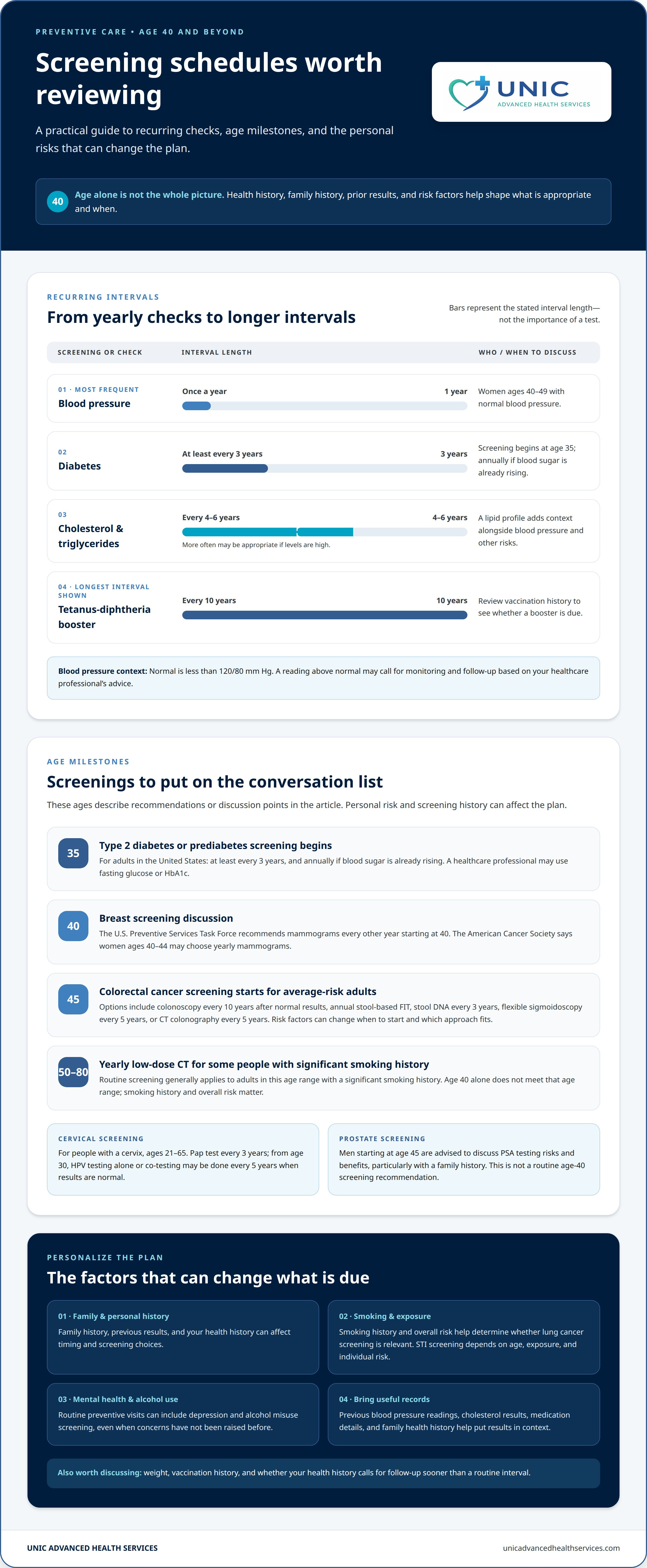
At 40, blood pressure screening helps identify readings that may need follow-up, even when you feel well. In the United States, normal blood pressure is less than 120/80 mm Hg. For women ages 40 to 49 with normal blood pressure, screening is recommended once a year. If a reading is above normal, follow your healthcare provider’s advice about monitoring and next steps.
A screening visit usually starts with a blood pressure measurement using a cuff. Share any history of high readings, hypertension treatment, or relevant risk factors, such as a family history of cardiovascular disease. This context helps guide decisions about follow-up. One reading is useful information, but your care plan should also account for your health history and previous results.
Cholesterol and triglycerides are also worth discussing during a preventive visit. In their 40s, adults may have these levels rechecked every 4–6 years, or more often if levels are already high. A lipid profile gives the healthcare professional information to consider alongside blood pressure and other risk factors. Ask how your past results, medications, and family history affect the timing of your next test.
Blood pressure, cholesterol, and blood sugar checks offer different information about disease risk. In the United States, all adults should begin screening for type 2 diabetes or prediabetes at age 35. Screening is recommended at least every 3 years, and annually if blood sugar is already rising. A healthcare professional may use fasting glucose or HbA1c testing to assess blood sugar. The results can inform follow-up and treatment discussions.
Screening for sexually transmitted infections depends on age, exposure, and individual risk. Adults in the United States should receive HIV screening during routine exams, while people at increased risk of sexually transmitted infections should receive prevention counseling. Discuss relevant exposures and testing needs confidentially during your visit.
Preventive care also includes keeping vaccinations current. Adults in the United States should receive a tetanus-diphtheria booster every 10 years, according to the Centers for Disease Control and Prevention. Reviewing your vaccination history alongside blood pressure and laboratory results can help identify which preventive steps are due.
Bring previous blood pressure readings, cholesterol results, medication details, and family health history to your appointment. These details help create a practical screening plan instead of treating each result in isolation. If you manage hypertension or diabetes, regular follow-up can also help track changes and determine whether your current treatment approach remains appropriate.
2. What is the recommended lung cancer screening age?
Routine yearly low-dose CT lung cancer screening generally applies to adults aged 50–80 with a significant smoking history. Age 40 alone does not meet that age range, although screening may apply to high-risk people in their 40s, especially long-term smokers. Smoking history and overall risk help determine whether this screening is relevant.
For adults at average risk, colorectal cancer screening starts at age 45. A colonoscopy with normal results is usually repeated every 10 years. Other options include an annual stool-based FIT test, a stool DNA test every 3 years, flexible sigmoidoscopy every 5 years, or CT colonography every 5 years. A family history or other risk factors can affect which approach is appropriate and when screening begins.
At 40, breast cancer screening is also a discussion to have. The U.S. Preventive Services Task Force recommends mammograms every other year starting at age 40. The American Cancer Society says women ages 40 to 44 may choose yearly mammograms, then advises yearly screening for women ages 45 to 54. These recommendations differ, so personal risk and preferences matter when planning screening.
Cervical cancer screening applies to people with a cervix from age 21 through age 65. A Pap test may be done every 3 years. For people with normal results, HPV testing alone or co-testing may be done every 5 years starting at age 30. A co-test combines a Pap test with an HPV test. Previous results and personal health history help shape the schedule.
Prostate cancer screening is a separate, individualized conversation. Men starting at age 45 are advised to discuss the risks and benefits of prostate-specific antigen testing with a healthcare professional, particularly when family history is a factor. Men who choose testing may consider a PSA blood test every 2 years from age 50 to age 69. This is not a routine age-40 screening recommendation.
Screening plans should reflect more than age alone. Relevant factors can include smoking history, family history, previous results, and a person’s health. Weight and lifestyle changes can be part of a broader cancer-risk discussion, but they do not replace recommended screening tests. A preventive visit can help organize these decisions and identify which screenings are due. Discuss preventive health screening as part of a comprehensive review of your health history.
3. Alcohol misuse, depression, and obesity screening
Routine preventive visits can include screening for depression and alcohol misuse. These conversations matter at 40 because symptoms may affect sleep, relationships, work, and physical health. Nearly 20% of adults aged 40 struggle with depression at some point. A screening conversation can help identify concerns that deserve a closer assessment, even when someone has not sought help before.
Depression screening looks for signs such as persistent low mood, reduced interest, or changes in sleep and energy. A positive result is not a diagnosis on its own. The next step is a fuller assessment of symptoms, how long they have lasted, their effect on daily life, and relevant health history. Describe changes that feel unusual for you, such as losing interest in familiar activities, to give the healthcare professional useful context.
Alcohol misuse screening is another part of routine care. A healthcare professional may ask about your drinking patterns and whether alcohol affects your health, responsibilities, or relationships. Answering honestly helps distinguish occasional use from a pattern that may need attention. If screening raises a concern, follow-up can explore the pattern and discuss support or treatment options suited to you.
Weight may be considered as part of a broader health assessment, alongside blood pressure, blood sugar, medications, and personal history. A number on the scale alone does not explain your health. A nonjudgmental conversation can help identify relevant concerns and set practical goals. For example, weight change alongside rising blood sugar may be useful context for preventive care.
These checks address different needs. Depression screening focuses on mood and daily functioning; alcohol screening considers drinking and its effects; weight assessment puts weight in the context of overall health. A screening result indicates whether further conversation may help. It does not mean you have a disease or need the same treatment as someone else.
Age also determines other preventive discussions, but not every screening is a mental health check. For example, cervical cancer screening has its own schedule, starting at age 21. Keeping these topics distinct helps ensure a discussion about depression or alcohol does not replace other preventive care. A visit can review which concerns are current and how they relate to your health history.
Before your appointment, think of examples that can help describe changes, such as difficulty sleeping, low mood, reduced interest, or alcohol affecting daily routines. You do not need to identify the cause. Clear examples help the healthcare professional understand your symptoms, assess whether further evaluation is appropriate, and discuss next steps respectfully.
4. Diabetes screening
At 40, type 2 diabetes and prediabetes screening belongs in routine preventive care. In the United States, all adults should begin screening at age 35. Screening is recommended at least every 3 years, with yearly testing if blood sugar is already rising. This schedule can identify changes before symptoms become noticeable and gives a healthcare professional a basis for discussing follow-up.
Testing may include fasting glucose, fasting insulin, or HbA1c, which reflects blood sugar over time. These tests measure different aspects of glucose regulation, so the medical history and previous results help guide which test is used. A healthcare professional may review a result alongside weight, blood pressure, family history, and other risk factors rather than interpreting one number in isolation.
Some adults may need screening earlier or more often than the general schedule. For example, the research recommendations include screening earlier at any age for people who are overweight or obese and have an additional diabetes risk factor. A history of rising blood sugar also changes the interval: screening may become yearly instead of every 3 years. The relevant recommendation depends on the person’s health profile and prior results.
Prediabetes means blood sugar is above the normal range but not in the diabetes range. It signals that follow-up matters, rather than establishing a diagnosis of diabetes. The supplied U.S. screening facts state that men with prediabetes should be screened for type 2 diabetes every year. For adults with rising results, yearly testing can track whether blood sugar is changing and support timely care discussions.
Diabetes screening also relates to cardiovascular health. Blood sugar results can be considered alongside cholesterol and blood pressure when assessing risk factors associated with heart disease. This broader view helps shape a preventive plan, including whether additional monitoring or treatment discussions are appropriate. Interpret each reading in light of your medical history, rather than treating it as a complete picture on its own.
For a useful appointment, bring prior glucose or HbA1c results, current medications, and relevant family history. Mention any previous prediabetes diagnosis or changes in blood sugar, since these details can affect whether the next test is due in 3 years or yearly. If an initial result is outside the expected range, follow-up testing and a discussion of the result can clarify the next step.
Age 40 is also a good time to establish a clear record of results. Keeping the test date, result, and planned follow-up together helps compare changes across visits. That record can support decisions about monitoring frequency and treatment, especially when blood sugar is rising or other risk factors are present.
5. Annual physical exams and baseline health history
A physical at 40 can connect screening results with your overall health history. Adults in their 30s, 40s, and 50s should have a general checkup every 1 to 3 years, with yearly visits preferred for consistency. Most adults should have a preventive exam annually, or more often when managing chronic conditions. This creates a regular opportunity to review changes and organize follow-up.
A yearly checkup typically brings several parts of preventive care together: medical history, vital signs, lab testing, medication review, lifestyle counseling, and screening recommendations. Keeping a baseline record helps you compare new results with previous ones. For example, changes in blood pressure or glucose can be considered alongside medication use, family history, and other health information.
Family history can influence which screenings deserve attention and when. A history of heart disease or a heart attack in close relatives may inform a discussion about cardiovascular risk. In their 40s, adults may have a calculator estimate their 10-year risk of a heart attack or stroke. That estimate can help guide medication decisions alongside cholesterol results and other risk factors.
Preparing for a visit is practical and straightforward. Review your current medications, known diagnoses, previous test results, and significant family health conditions. Mention changes in sleep, activity, tobacco use, or alcohol use, as these details can shape lifestyle counseling. Adults should receive counseling about tobacco use and tobacco-related disease at every exam.
Annual exams can also help identify gaps between recommended screenings and completed tests. The healthcare professional can review which tests are due, note previous results, and discuss follow-up. A lab result that differs from your earlier baseline may call for monitoring or further evaluation. Screening does not replace care for new symptoms, which need timely assessment of their own.
Use the visit to agree on a clear plan: which screenings are relevant, when follow-up is due, and which results need discussion. Keep dates and outcomes in your medical record so future visits can compare them. Consistent documentation makes it easier to spot trends instead of treating each test as an isolated event.
For a structured review of your health history and preventive needs, schedule an annual physical. A yearly visit can bring screening recommendations, lifestyle concerns, and chronic condition follow-up into one focused conversation.
Unic Advanced Health Services
Unic Advanced Health Services in Fort Lauderdale can help you organize preventive care and discuss which screenings fit your health history. Annual physicals and preventive care offer an opportunity to review screening priorities, and on-site lab services support testing when appropriate. If you manage diabetes, hypertension, or another chronic condition, chronic condition management can support ongoing follow-up. Telehealth services offer another way to discuss your care needs.
Bring previous results, your medication list, and family health history to make the discussion more focused. To discuss your screening needs or ongoing care, contact Unic Advanced Health Services in Fort Lauderdale.
Make your next health step personal
Turning 40 can be a useful point to build a preventive care plan that reflects your health priorities, history, and questions. If you’re deciding what screenings you need at age 40, focus on a clear conversation about which checks matter to you and how to keep track of next steps. A plan can evolve as your health and circumstances change.
Unic Advanced Health Services supports ongoing care through chronic condition management. The practice also offers DOT Physical Examination and U.S. Coast Guard (USCG) Boat Captain Physical services for people with those specific needs. These services serve different purposes, so choose care based on the question you want answered.
Take the next step at a pace that feels manageable. Contact Unic Advanced Health Services to discuss your care needs and move forward with a thoughtful plan for your health.
Frequently Asked Questions
Are screenings really necessary if I feel healthy?
Yes, preventive screenings can identify risk or early changes before symptoms appear. For example, blood pressure and blood sugar may need assessment even when you feel well. A routine visit also gives you a chance to discuss family history, medications, and lifestyle factors that may affect which checks are useful. Screening is not a diagnosis; an unusual result may lead to further evaluation and a discussion of next steps.
Does insurance usually cover preventive health screenings?
Coverage depends on the screening, your insurance plan, and whether the service meets that plan’s preventive-care criteria. In the United States, colorectal cancer screening for adults aged 45 to 75 typically qualifies as an insurance-covered preventive service. Unic Advanced Health Services accepts most major insurance plans, but coverage can vary by plan and service. Review your benefits before a visit so you understand how a specific screening may be handled.
How do health screenings change over time for adults in Fort Lauderdale?
Screening recommendations change with age, health history, and risk factors. For adults in Fort Lauderdale, preventive care at 40 may include blood pressure, diabetes, and mental health checks. Later recommendations may add screenings or change their timing. Family history, previous results, smoking history, and new symptoms can also affect what a person discusses during a visit with a healthcare professional.
How often should adults in their 30s, 40s, and 50s get a checkup?
Adults in their 30s, 40s, and 50s should have a general checkup every 1 to 3 years, with yearly visits preferred for consistency. People managing chronic conditions may need more frequent preventive visits. For example, a person with changing blood sugar or hypertension may need follow-up shaped by recent results and treatment. Regular appointments also help keep screening dates, medication changes, and health history in one record.
What Is Included in a Yearly Medical Check Up?
A yearly medical checkup typically reviews medical history, vital signs, medications, and lifestyle, alongside relevant lab testing and preventive screening recommendations. The discussion can be tailored to your needs. For example, someone with a family history of heart disease may discuss cardiovascular risk, while a person managing diabetes may review monitoring and treatment. Bring previous test results and a current medication list to make your appointment more focused.
What is the recommended lung cancer screening age?
Yearly low-dose CT screening may be appropriate for adults aged 50–80 with a significant smoking history. Age 40 alone does not meet that age range. However, screening may apply to high-risk people in their 40s, especially long-term smokers. A discussion should consider smoking history and individual risk rather than age alone. A low-dose CT scan is a screening test, not a general check for every adult.
What screenings are included in women’s health screening by age?
At 40, women can discuss mammograms, cervical screening, blood pressure, diabetes, and other checks based on their history. The U.S. Preventive Services Task Force recommends mammograms every other year starting at age 40. Cervical screening applies to people with a cervix from age 21 through 65; Pap and HPV testing schedules depend on the test and prior results. Family history can affect which additional discussions are relevant.
What preventive health screenings are recommended for adults at age 40 in the United States?
Common topics include blood pressure, cholesterol and triglycerides, diabetes, depression, alcohol misuse, and cancer screening appropriate to your age and risk. Adults should begin type 2 diabetes or prediabetes screening at age 35, with testing at least every 3 years. At 40, discuss mammography if applicable, cervical screening if you have a cervix, and lung screening if smoking history places you at risk. Personal history helps prioritize the conversation.