
Insurance may cover diabetes testing, but coverage depends on your plan and the reason for the test. For blood sugar testing in Fort Lauderdale, review your benefits to understand what applies; paying directly is another option. Medicare generally pays 80% of the cost of covered diabetes testing supplies, which are separate from the test itself.
It’s reasonable to want a clear picture of coverage before scheduling, especially when you’re arranging testing for the first time or keeping up with ongoing care. This guide explains how insurance and self-pay work, what blood glucose and A1C testing can measure, and what to expect when arranging a local appointment.
You’ll also learn how blood sugar monitoring differs from laboratory testing and what can shape an appropriate monitoring plan. This can help you understand your options and prepare to discuss testing and ongoing diabetes care.
Key Takeaways
- Review your plan’s benefits for diabetes testing and supplies, since coverage can depend on the test and its purpose.
- Understand the difference between a lab test and home monitoring so you can discuss which approach fits your care needs.
- The American Diabetes Association lists a before-meal blood glucose target of 80-130 mg/dL; individual targets can vary.
- For a fasting test, follow the instructions provided for your appointment and clarify whether fasting is required.
- Ongoing diabetes care can include monitoring and chronic condition management, not just a single test.
Same-day diabetes test appointments in Fort Lauderdale
A same-day appointment and a same-day result are different things. A glucose test measures blood glucose, while an A1C test reflects a longer-term measure.
For blood sugar testing in Fort Lauderdale, ask whether the visit includes a point-in-time glucose measurement, an A1C test, or both. The test type affects preparation and how results are interpreted.
To understand how Medicare screening and coverage policies can affect diabetes testing, watch this video from the American Medical Association:
Self-Pay Testing Prices
Self-pay cost depends on which test is performed and where it is processed. A glucose test and an A1C test are different services, so compare the test name and what the charge covers. Ask whether the listed amount includes sample collection and result interpretation. No dollar amount is provided here; the test selected and the setting determine the expense.
Some Fort Lauderdale patients report being seen within 5-10 minutes after arriving early. That describes the wait to be seen, not the time required for results. Ask about the appointment process, then plan separately for result delivery and follow-up.
Appointment and Doctor’s Order Requirements
Requirements for appointments and orders vary by testing location. A clinician may order a test for screening, diabetes follow-up, or evaluation of a specific concern. Before choosing where to go, find out which glucose test is needed and whether an order is part of your care plan.
Same-day scheduling does not mean a test can be done without an order. Bring any order you’ve received, along with your insurance details and medication list. This helps the medical team connect the test with your health concerns and care needs.
Normal and prediabetes results depend on the kind of test used, such as fasting glucose or A1C. The result should be read against the reference range for that test, rather than compared across different test types.
Result timing also depends on whether the test is performed and read at the appointment or sent for laboratory processing. A reported 5-10-minute arrival wait is not a result-time estimate. Ask how results will be delivered and who will explain what they mean.
Continue taking prescribed insulin and other diabetes medication as directed. Skipping doses can make blood sugar levels erratic. For self-management support, discuss how to track readings, take medication, and plan follow-up with a healthcare professional. Keep a written record of test dates, results, medications, and questions.
Diabetes screening can identify concerns that need clinical attention, and preventive care supports regular health reviews. Seek urgent medical help for severe symptoms such as confusion, fainting, or inability to stay awake. A glucose result is only one part of an assessment, not a substitute for urgent care when someone is seriously unwell.
Blood sugar monitoring
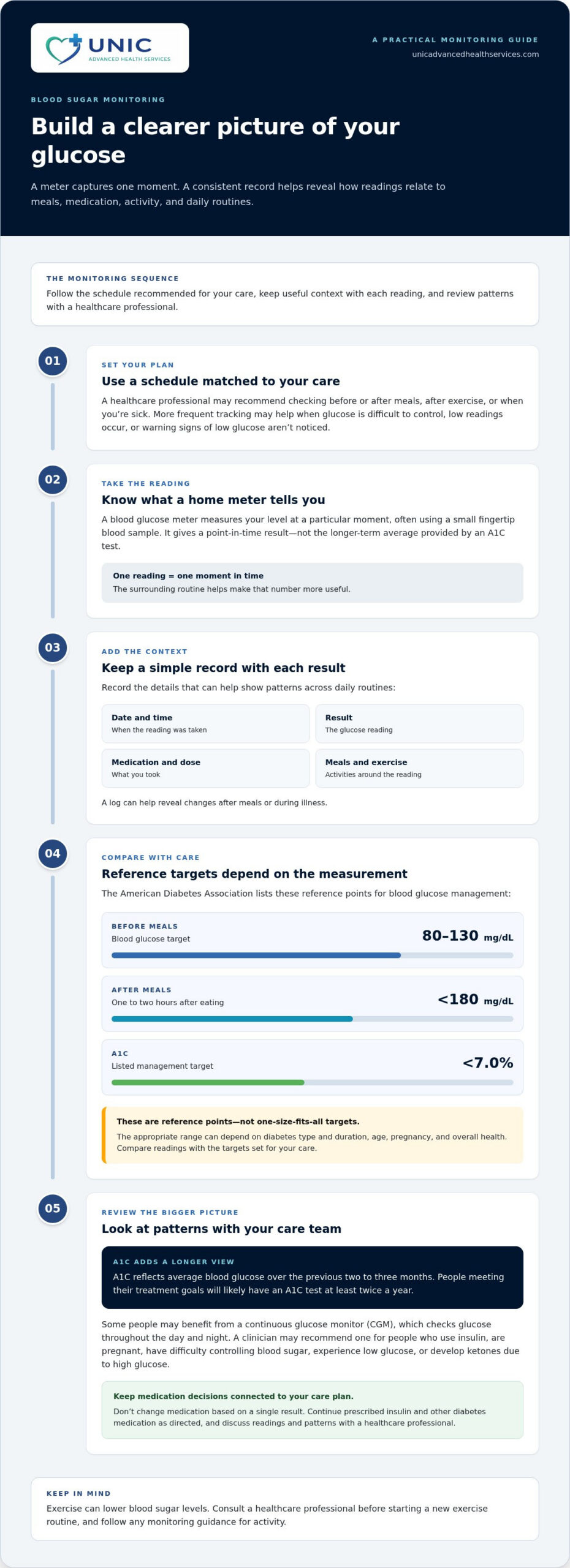
Monitoring helps show how glucose changes across daily routines, meals, medication, and activity. A home meter and an A1C blood test provide different kinds of information, so their results serve different purposes.
A blood glucose meter measures your level at a particular moment, often using a small fingertip blood sample. Record the date, time, result, medication and dose, meals, and exercise. A log can reveal patterns, such as readings that change after meals or during illness.
Follow the monitoring schedule recommended for your care. A healthcare professional may suggest testing before or after meals, after exercise, or when you’re sick. More frequent tracking may help if blood sugar is difficult to control, low readings occur, or you don’t notice warning signs of low glucose.
- Before meals: The American Diabetes Association lists a blood glucose target of 80-130 mg/dL.
- After meals: A listed target is less than 180 mg/dL one to two hours after eating.
- A1C: A target of less than 7.0% is listed for blood glucose management.
These figures are reference points, not a target that applies to everyone. The appropriate range can depend on diabetes type and duration, age, pregnancy, and overall health. Compare your readings with the targets set for your care, and don’t change medication based on a single result.
An A1C test measures sugar-coated hemoglobin protein in the blood. It reflects average blood glucose over the previous two to three months, unlike a meter reading that captures one moment. People meeting their treatment goals will likely have an A1C test at least twice a year. The result helps assess longer-term patterns alongside daily readings.
Some people may benefit from a continuous glucose monitor (CGM), which checks glucose levels throughout the day and night. A clinician may recommend one for people who use insulin, are pregnant, have difficulty controlling blood sugar, experience low glucose, or develop ketones due to high glucose. A clinician can help choose a device and explain how to use it.
Exercise can lower blood sugar levels. If you have diabetes, consult a healthcare professional before starting a new exercise routine, and follow any monitoring guidance for activity. For support connecting readings with medication and daily habits, chronic condition management can help structure ongoing care.
Local clinics and laboratory locations
In Fort Lauderdale, the right setting depends on whether you need a test alone or medical assessment alongside it. A laboratory visit focuses on collecting a sample and processing the requested blood test. A clinic visit can connect testing with symptoms, treatment history, and follow-up planning. Start by identifying the reason for testing: screening, diabetes monitoring, or assessment of a new concern.
Before choosing a location, clarify the test name and how the result will reach you. A glucose test measures blood sugar at a specific time. An A1C test provides a longer-term measure. If a doctor ordered testing, bring the order and confirm that the location can perform the named test. If testing is part of a clinical visit, bring your medication list and relevant health history.
Use these steps to organize a local appointment:
- Write down the test requested and the reason, such as screening or ongoing diabetes care.
- Check the location’s appointment process and whether it accepts walk-ins or scheduled visits.
- Ask how results are delivered, who reviews them, and how follow-up connects to treatment.
- Bring identification, insurance information, the doctor’s order, and a list of current medications.
These details help distinguish a sample collection site from a setting that also supports medical interpretation. A laboratory report gives a result, while a clinician considers it alongside symptoms, health history, and other findings. For example, a reading taken during illness may need to be considered in light of your care plan. Keep copies of previous results to track changes over time.
Location also affects how the visit is handled. Confirm the address, appointment time, and any preparation instructions before leaving. If fasting is required for your test, follow the instructions you were given. Don’t assume all glucose tests require the same preparation. Clinics and laboratories may also handle scheduling and result delivery differently.
When comparing Fort Lauderdale locations, consider the full testing process, not just proximity. Check whether the site can perform the requested blood test, how results are communicated, and where to discuss symptoms or treatment questions. A clinic that connects testing with medical follow-up may be useful when results need interpretation or ongoing diabetes care is part of your plan.
Fasting blood sugar testing
Blood sugar testing can use a laboratory glucose test, an A1C blood test, or home monitoring. A fasting glucose test measures blood glucose after following preparation instructions for the test.
Fasting Glucose Tests
A fasting glucose test measures blood glucose under the preparation conditions set for that specific test. Follow the ordering provider’s instructions, including when to stop eating and whether you may drink water. Don’t change prescribed insulin or other diabetes medication on your own. If the instructions conflict with your medication schedule, contact the provider managing your care before testing.
Available Blood Sugar Test Types
A laboratory glucose test measures blood sugar at the time of collection. An A1C blood test measures sugar-coated hemoglobin and reflects average blood glucose over the previous two to three months. A portable meter measures glucose from a small blood sample, often from a fingertip. A continuous glucose monitor tracks glucose levels throughout the day and night.
Choose the test based on the question being addressed. A single glucose measurement gives information about that point in time, while A1C helps assess longer-term patterns. Home devices support ongoing monitoring, but they don’t replace a laboratory test when a provider orders one. Bring the reason for testing and any prior results to your appointment.
Preparation matters. Read the test instructions before your appointment and note the time of your last meal if requested. Tell the provider which medicines you take and about any recent changes to your routine. If you have diabetes, take prescribed medication as directed. Skipping doses can make blood sugar levels erratic, so don’t stop medication simply to prepare for testing.
After collection, keep the result with its test name and date. A fasting glucose result and an A1C result describe different measures, so don’t compare them as if they were interchangeable. A provider interprets the result alongside your health history, symptoms, and treatment plan. Ask how the result will be communicated and what follow-up steps apply.
For ongoing care, record home readings with the date, time, medication and dose, meals, and exercise. This record can reveal patterns that a single blood test may not capture. Share it at follow-up, especially if readings change during illness, after exercise, or alongside new symptoms. A meter and a continuous glucose monitor measure glucose differently, so use the device recommended for your care.
Insurance and self-pay options
Insurance coverage for diabetes testing depends on the plan, test, and reason for care. Patients can compare their benefits with self-pay before arranging a blood test. Start by identifying whether the order is for a glucose test, an A1C test, or diabetes testing supplies. These are distinct items, and plan benefits can treat them differently.
Review your plan’s coverage language for diagnostic testing, preventive screening, laboratory services, and supplies. The reason for the test matters: screening without symptoms and testing to investigate a medical concern may follow different benefit rules. The ordering physician’s documentation and the type of test help determine how a claim is classified. Keep the test order with any coverage explanation.
Medicare generally pays 80% of the cost of covered diabetes testing supplies. That figure applies to covered supplies, not automatically to every blood test or appointment. A glucose meter, test strips, and laboratory testing are different categories. Identify what the plan covers before comparing an insurance claim with direct payment.
For self-pay, the amount depends on the specific test and the setting where it is performed. A single glucose measurement and an A1C test answer different questions, so compare the exact test included in the quoted service. Also distinguish a laboratory test from reusable monitoring equipment and recurring supplies. No single price applies across these different items.
Use this preparation list before scheduling:
- Find the plan’s benefit details for the exact test or supply.
- Note whether the physician ordered testing for screening, diagnosis, or ongoing care.
- Ask how the claim classifies the service and what patient cost-sharing applies.
- For self-pay, request the charge for the specific test and clarify what it includes.
- Keep receipts, test orders, and insurance explanations with your health records.
Patients managing diabetes should also consider how monitoring supplies fit their routine. A home meter measures glucose levels at one moment, while a laboratory A1C reflects a longer period. Insurance benefits for supplies do not establish coverage for every related test. Separate each item when reviewing benefits, especially if a care plan includes both laboratory testing and home monitoring.
If a result leads to follow-up, keep the physician’s instructions and coverage documents available. This helps distinguish the medical need for a test from the plan’s payment rules. For example, an A1C order and a request for replacement test strips involve different services. Organized records make it easier to understand what was billed and what care step comes next.
Unic Advanced Health Services: DOT Physical Examination
Unic Advanced Health Services provides on-site lab services and chronic condition management for patients addressing diabetes and ongoing blood sugar concerns. If you need care beyond a single result, these services can connect testing with follow-up and continued management. Telehealth services offer another way to discuss care needs.
The DOT Physical Examination for Driver is a separate service for people who need that examination, not a diabetes test. For diabetes-related care, consider Manage Chronic Conditions or On-Site Lab Services. A healthcare professional can interpret results alongside your health history and treatment needs.
For care that includes blood sugar testing or diabetes follow-up, contact Unic Advanced Health Services to discuss your next step.
Make Your Next Step Part of Ongoing Care
A test is most useful when it helps shape a clear plan for what happens next. Before your appointment, write down the question you need answered, bring your current medication list and recent readings, and note any changes in your routine or symptoms. This helps focus the medical conversation on your needs rather than treating one result in isolation.
If you’re arranging blood sugar testing in Fort Lauderdale, consider what follow-up you may need after the results arrive: a discussion of the findings, guidance on monitoring, or support managing diabetes over time. Write down questions about how testing fits into your existing care plan. This preparation gives you a practical starting point for discussing next steps with a healthcare professional.
Unic Advanced Health Services offers Chronic Condition Management for patients seeking support with ongoing health needs. To discuss a next step that fits your situation, contact Unic Advanced Health Services. A focused conversation can help you move forward with greater clarity and confidence in your care decisions.
Frequently Asked Questions
Is a diabetes test covered by my insurance?
Insurance may cover diabetes testing, but benefits depend on your plan and the reason for the test. Testing ordered to investigate a health concern may be handled differently from preventive screening. Review your policy’s laboratory testing and screening benefits, and note the test named on the order. If you have Medicare, covered testing supplies are a separate category from laboratory tests and appointments.
Where can I get a blood sugar test in Fort Lauderdale?
Unic Advanced Health Services in Fort Lauderdale offers on-site lab services, including blood work for diabetes monitoring. The practice also provides chronic condition management, so patients can discuss how testing fits into ongoing care. Bring your medication list and any previous results to help provide useful context. Appointments are scheduled by calling (954) 767-0228.
How much does a blood glucose test cost in Fort Lauderdale without insurance?
Self-pay charges depend on the specific test and the setting where it’s performed. A single glucose test differs from an A1C test, and the service may include sample collection or clinical review. Ask for the charge for the exact test ordered and clarify what it covers before scheduling. For services at Unic Advanced Health Services, pricing depends on the case and is provided after a quote request.
Does insurance cover blood sugar testing in Fort Lauderdale?
Coverage varies by insurance plan, test type, and medical reason. Medicare generally pays 80% of the cost of covered diabetes testing supplies, but that does not mean every glucose test or appointment is covered at that rate. Separate laboratory testing from home supplies when reviewing benefits. For example, a test strip claim and a laboratory blood test may fall under different plan benefits.
Which Fort Lauderdale clinics offer walk-in or same-day blood sugar testing?
Unic Advanced Health Services offers on-site lab services in Fort Lauderdale, with appointments scheduled by phone at (954) 767-0228. The practice’s appointment process is the clearest way to arrange a visit for testing. Have the requested test name and any clinician’s order ready when scheduling. This helps connect the appointment with the correct testing and the care question you want addressed.
How should I prepare for a fasting blood glucose test?
Follow the preparation instructions for your specific test, since not every glucose test requires fasting. If fasting is requested, note when you last ate and follow the instructions about food and drinks. Continue prescribed diabetes medication as directed, and don’t skip doses to prepare. If fasting instructions conflict with your medication schedule, contact the clinician managing your diabetes for guidance before the test.
Where can I get an HbA1c test in Fort Lauderdale, and how does it compare with a glucose test?
Unic Advanced Health Services offers on-site lab services in Fort Lauderdale for blood work used in diabetes monitoring. An HbA1c test reflects average blood glucose over the previous two to three months, while a glucose test measures the level at the time of testing. The tests answer different questions, so the clinician’s order and your monitoring plan help determine which is appropriate.