Nearly half of U.S. adults have hypertension, so everyday food choices matter to many people. A diet for hypertension management can follow the DASH pattern, which emphasizes fruits, vegetables, whole grains, and other heart-healthy foods while limiting sodium. The standard DASH plan sets a sodium limit of 2,300 milligrams per day, according to the National Heart, Lung, and Blood Institute.
It’s understandable to want clear guidance when high blood pressure raises questions about what to eat and what to change first. Heart-healthy eating can support blood pressure management, especially when it fits your health needs and daily routine.
This article explains what DASH includes, how food journaling and dietitian support can help make eating patterns easier to understand, and how lifestyle measures fit alongside nutrition. You’ll also learn how to build sustainable habits and why monitoring blood pressure remains an important part of managing hypertension.
Key Takeaways
- Learn how the DASH pattern balances produce, whole grains, and other heart-supportive foods with lower sodium choices.
- Understand what blood pressure readings can indicate and how categories help frame the conversation about hypertension.
- Use a food journal to notice eating patterns and identify practical changes that fit your routine.
- See how activity, alcohol choices, and other daily habits can complement heart-healthy eating.
- Explore how chronic condition management and telehealth services can support ongoing hypertension care.
What is High Blood Pressure?
Blood pressure describes the force of blood moving through the arteries. Nearly half of U.S. adults have hypertension, making food choices relevant for many households. A diet for hypertension management focuses on a sustainable eating pattern, not one “superfood.” DASH is one structured approach, with food groups and sodium guidance that help shape daily meals.
DASH stands for Dietary Approaches to Stop Hypertension. Developed by health professionals at the National Institutes of Health in the late 1990s, it emphasizes fruits, vegetables, whole grains, and lower-sodium foods. Its goal is to support blood pressure management through an overall pattern, rather than relying on a single nutrient.
For a practical overview of foods and nutrients, watch this video:
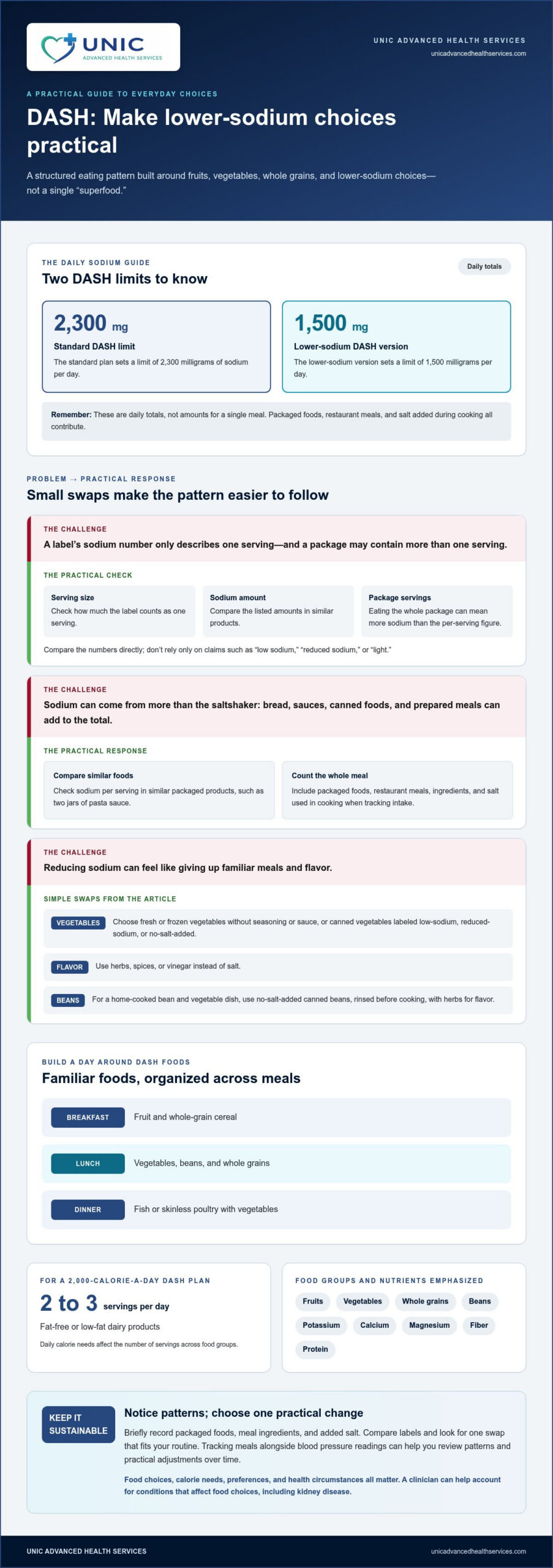
For a 2,000-calorie-a-day DASH diet, the National Heart, Lung, and Blood Institute recommends 2 to 3 servings of fat-free or low-fat dairy products per day. Daily calorie needs affect the number of servings across food groups. The plan also favors foods containing potassium, calcium, magnesium, fiber, and protein.
DASH meals can bring these food groups together in familiar combinations:
- Fruit and whole-grain cereal at breakfast.
- Vegetables, beans, and whole grains at lunch.
- Fish or skinless poultry with vegetables at dinner.
These examples show how to organize meals across the day. The DASH plan also recommends limiting saturated and trans fats, added sugars, and sodium. Read Nutrition Facts Labels to compare sodium in similar packaged foods. Herbs, spices, and vinegar add flavor without relying on salt.
DASH is one of several dietary approaches. OmniHeart and Mediterranean-style eating are also recognized patterns, but they are not identical plans. Mediterranean-style meals commonly feature vegetables, fruit, whole grains, legumes, and unsaturated plant oils. OmniHeart is another named eating pattern with a different emphasis. Compare the food choices in each plan and consider which pattern fits your routine.
DASH offers a structured approach to eating for blood pressure, but the right pattern depends on your calorie needs, preferences, and health circumstances. Produce can provide potassium, a nutrient emphasized in DASH. A clinician can help account for conditions that affect food choices, including kidney disease, when you discuss nutrition changes.
Diet changes may influence blood pressure over time, but the pace depends on starting readings, food choices, and consistency. Track readings under comparable conditions; classification uses two readings 5 minutes apart, with a confirmation reading in the opposite arm.
Pairing an eating pattern with consistent tracking makes changes easier to evaluate. Record meals, snacks, and packaged-food labels, and track blood pressure readings to see trends. Together, these details can help identify adjustments that are practical to maintain.
What is the DASH Diet?
The DASH eating plan combines lower-sodium choices with a balanced variety of foods. Food labels, serving sizes, and cooking habits all affect daily sodium intake.
Finding Sodium on Food Labels
The sodium amount on a Nutrition Facts Label applies to one serving. Check the serving size, then compare sodium amounts across similar products. A package may contain multiple servings, so eating the whole package can provide more sodium than the per-serving amount shown. Don’t rely only on claims such as “low sodium,” “reduced sodium,” or “light.” Compare the listed amounts directly.
Choosing Lower-Sodium Foods
Lower-sodium choices replace higher-sodium ingredients while keeping the meal’s main foods and flavors. Choose fresh or frozen vegetables without seasoning or sauce, or look for canned vegetables labeled low-sodium, reduced-sodium, or no-salt-added. At home, use herbs, spices, or vinegar instead of salt. These swaps can reduce sodium without removing vegetables, beans, or whole grains from a DASH-style meal.
Daily Sodium Limit
The standard DASH diet limits sodium to 2,300 milligrams (mg) per day, according to the National Heart, Lung, and Blood Institute. Its lower-sodium version limits intake to 1,500 milligrams (mg) per day. These are daily totals, not amounts for a single meal. Packaged foods, restaurant meals, and salt added during cooking all contribute, so tracking them together gives a clearer picture of intake.
Reducing sodium means considering the whole meal, not just the saltshaker. Bread, sauces, canned foods, and prepared meals can contribute sodium too. For example, compare the sodium per serving in two jars of pasta sauce, then consider how much you usually use. The listed amount helps you compare products, while serving size keeps the comparison meaningful.
The DASH diet also emphasizes foods lower in saturated fat, including fruits, vegetables, whole grains, beans, and low-fat dairy. Reducing sodium complements these choices; it doesn’t mean replacing every familiar meal. For example, make a home-cooked bean and vegetable dish with no-salt-added canned beans, rinsed before cooking, and herbs for flavor.
Small, repeatable changes can reveal where sodium enters your diet. Briefly record packaged foods, meal ingredients, and added salt, then look for one practical swap. Comparing labels on your next grocery trip is a concrete first step. Over time, these observations can help make lower-sodium eating more consistent.
What are the benefits of heart-healthy eating?
A heart-healthy eating pattern can support blood pressure management and overall nutrition. Meals built around vegetables, whole grains, fruit, beans, and lower-fat foods offer practical options. Blood pressure readings help show how your levels compare with healthy categories, providing useful context for discussing next steps.
In the United States, blood pressure classification uses systolic and diastolic readings. The systolic number measures pressure as the heart beats; the diastolic number measures pressure between beats. The categories below use millimeters of mercury (mm HG):
- Normal: systolic below 120 and diastolic below 80.
- Elevated: systolic 120-129 and diastolic below 80.
- Stage 1 hypertension: systolic 130-139 or diastolic 80-89.
- Stage 2 hypertension: systolic at least 140 or diastolic at least 90.
Either number can place a reading in a higher category. For example, a systolic reading of 132 falls in stage 1, even if the diastolic number is below 80. A food pattern cannot replace measurement; regular readings help show whether blood pressure is changing over time.
Heart-healthy eating also matters because high blood pressure is related to kidney disease. A pattern that includes vegetables, whole grains, legumes, and lower-sodium foods supports a thoughtful approach to cardiovascular health. These foods can replace some highly processed choices while adding variety and useful nutrients. One practical example is having vegetables at lunch and beans or whole grains at dinner.
Caffeine affects people differently. To understand your own pattern, record caffeinated drinks alongside blood pressure readings. Note when you had coffee or tea and when you took the measurement, then look for a repeated relationship. This gives you a clearer basis for discussing caffeine and your readings with a healthcare professional.
Alcohol intake is another part of the overall picture. The guidance in this article recommends no more than one drink daily for women and no more than two drinks daily for men. It also advises people who choose to drink to limit intake to one or fewer drinks per day and not drink every day. Because these statements differ, discuss alcohol choices in the context of your health and blood pressure readings.
Heart disease risk involves more than one food or reading. Pairing a varied eating pattern with blood pressure tracking can make factors affecting your health easier to see. Record meals, caffeine, alcohol, and readings together; these details can help identify patterns to discuss during care.
Food journaling and dietitian support
Fruits, vegetables, whole grains, beans, and lower-fat dairy are useful heart-healthy choices. A food journal can reveal how meals, sodium, and portions fit into your routine.
Keeping a Food Journal
A food journal records what you eat and drink, along with details such as portions and meal timing. Include packaged-food labels, restaurant meals, and snacks to spot patterns that memory may miss. A dietitian can review your record, explain how food choices relate to blood pressure, and help adapt meal ideas to your preferences, budget, and health needs.
Keep entries simple and consistent. For example, note oatmeal with fruit at breakfast, a sandwich at lunch, and the label details of a packaged snack. Write down questions about ingredients or serving sizes for your next nutrition discussion. This record can help you identify manageable changes instead of trying to alter every meal at once.
Daily and Weekly Food-Group Servings
Food-group servings offer a framework for balancing meals across the day and week. For a 2,000-calorie-a-day DASH pattern, targets include 4 to 5 servings of vegetables and 4 to 5 servings of fruit daily. The plan also includes 6 to 8 grain servings daily and 2 to 3 servings of fat-free or low-fat dairy daily.
Weekly choices matter, too. DASH includes 4 to 5 servings of nuts, seeds, and dried beans or peas each week. The appropriate number of servings depends on daily calorie needs, so a journal can show how your actual meals compare with the pattern.
Foods that support heart health include produce, whole grains, legumes, nuts, fish, and low-fat dairy. These choices provide a range of nutrients and can replace foods higher in sodium, saturated fat, or added sugars. The American Heart Association Heart-Check mark criteria cover saturated fat, trans fat, sodium, and other nutrition requirements for single servings intended for healthy people over age 2. It can be one label detail to notice while comparing packaged foods.
Affordable options can still fit a balanced eating pattern. Consider frozen vegetables without seasoning or sauce, canned vegetables labeled low-sodium or no-salt-added, and canned fruit packed in water or its own juice. Dried or canned fruit without added sugars is another practical option. These choices can make fruits and vegetables accessible when fresh items are inconvenient or costly.
A dietitian can help you interpret journal patterns alongside health concerns such as cholesterol or hypertension. Bring notes about your meals, food preferences, and shopping constraints to guide the discussion. The goal is a realistic eating pattern with specific substitutions and serving choices you can maintain over time.
Lifestyle measures for hypertension prevention
Food choices are one part of prevention; daily routines matter too. DASH stands for Dietary Approaches to Stop Hypertension, and its principles extend beyond meals. A steady approach includes movement, thoughtful alcohol choices, and attention to sodium. These habits work together rather than relying on one food or a single change.
Regular physical activity is a practical part of hypertension management. Aim for moderate activity for 30-45 minutes on most days, as recommended in the research guidance. A brisk walk, cycling, or active gardening can fit this goal. Choose movement that suits your routine, then track it alongside blood pressure readings to see how habits develop.
Food choices can support this routine. DASH emphasizes fruits and vegetables, whole grains, legumes, and fat-free or low-fat dairy. It also limits saturated and trans fats, fatty or processed meats, and foods with added sugar. For example, replace a processed-meat sandwich with beans or skinless poultry, whole-grain bread, and vegetables.
Produce provides potassium, which can help the body remove extra fluid and sodium. Kidney disease can affect how the body handles nutrients, so potassium-rich foods may not suit everyone. Mention kidney health when reviewing food choices with a healthcare professional, especially before making major dietary changes.
Alcohol is another routine to consider. People who choose to drink are advised to limit intake to one or fewer drinks per day and avoid drinking every day. This is a planning guideline, not a reason to start drinking. Briefly recording drinks can help you see how alcohol fits into your weekly habits.
Changing how you season food can reduce reliance on salt. Use herbs, spices, vinegar, or other low-sodium seasonings instead of added salt. Check packaged-food labels and compare sodium per serving, particularly for sauces, canned foods, and prepared meals. These steps help make sodium reduction consistent at home and when choosing groceries.
Heart-healthy habits are easier to evaluate when tracked together. Record physical activity, meals, alcohol, and blood pressure readings in one journal. A short walk after work and a home-cooked meal make concrete entries. Reviewing the pattern can help you identify realistic adjustments and topics to discuss during preventive care.
For support connecting preventive care with ongoing blood pressure goals, schedule an annual physical to review your health and lifestyle habits.
Unic Advanced Health Services: DOT Physical Examination
Unic Advanced Health Services provides DOT Physical Examinations for commercial drivers who need this examination. For ongoing blood pressure support, its Chronic Condition Management offering can help patients address hypertension alongside their care needs. Telehealth Services provide another way to access care remotely.
Consider Manage Chronic Conditions when you want help tracking hypertension, discussing food and lifestyle changes, and reviewing your health over time. A DOT Physical Examination for Driver serves a different purpose: it is for commercial drivers seeking that specific examination, not a substitute for ongoing hypertension care. Choose the service that matches the need you want addressed.
Contact Unic Advanced Health Services to discuss Manage Chronic Conditions or schedule a DOT Physical Examination for Driver.
Make Your Next Health Step Sustainable
Choose one manageable change, then build it into your usual routine. A meal note, a grocery substitution, or a regular time to review your blood pressure can turn good intentions into choices you can revisit. Bring questions and observations to a healthcare visit so the conversation reflects your habits, preferences, and health priorities.
A diet for hypertension management is most useful when it fits your life and works alongside appropriate medical care. If you’re unsure which change to prioritize, discuss your readings and food patterns with a healthcare professional. Unic Advanced Health Services in Fort Lauderdale provides Manage Chronic Conditions for people seeking support with ongoing health concerns.
Contact Unic Advanced Health Services to discuss your care needs and possible next steps. Progress can begin with one thoughtful choice, and steady support can help you keep moving forward.
Frequently Asked Questions
What is Hypertension?
Hypertension means blood pressure is persistently higher than the healthy range. A reading has two numbers: systolic pressure during a heartbeat and diastolic pressure between beats. Normal is below 120 systolic and below 80 diastolic; stage 1 hypertension is 130-139 systolic or 80-89 diastolic. One elevated reading alone doesn’t show the pattern, so consider readings over time with a healthcare professional.
What is the DASH diet for managing high blood pressure?
DASH, or Dietary Approaches to Stop Hypertension, is an eating pattern designed to support blood pressure management. It emphasizes fruits, vegetables, whole grains, legumes, nuts, and low-fat dairy, while limiting sodium and foods high in saturated fat or added sugar. For example, pair beans and vegetables with a whole grain. Serving targets depend on daily calorie needs, so the plan can be adapted to your routine.
How much sodium should adults with hypertension consume daily?
The standard DASH diet limits sodium to 2,300 milligrams per day, according to the National Heart, Lung, and Blood Institute. Its lower-sodium version sets a limit of 1,500 milligrams per day. Sodium adds up across packaged foods, restaurant meals, and salt used in cooking, so look at the whole day’s intake rather than judging one meal. Individual health needs and food patterns inform which target is appropriate.
Which foods and drinks should people with hypertension limit or avoid?
Limit foods high in sodium, saturated or trans fats, added sugars, and heavily processed meats. Examples include salty packaged snacks, processed deli meats, sugary drinks, and meals with rich sauces. DASH also advises limiting full-fat dairy and tropical oils such as coconut and palm oils. People who choose to drink alcohol are advised to keep intake to one or fewer drinks daily and avoid drinking every day.
How much potassium should people with high blood pressure get, and from which foods?
Adults have an adequate potassium intake of at least 3,400 milligrams per day. Foods that contribute include fruits, vegetables, beans, peas, and other legumes. For practical meals, add beans to a grain bowl or include fruit with breakfast. Potassium needs can vary with health conditions and medications, so people with kidney disease should discuss potassium-rich foods with a healthcare professional before substantially changing their intake.
How can someone follow a low-sodium diet when grocery shopping and eating out?
At the store, compare sodium per serving on Nutrition Facts Labels, then check how many servings you’ll actually eat. Choose low-sodium, reduced-sodium, or no-salt-added options when available. For restaurant meals, ask for sauces or dressings on the side and choose simpler dishes with identifiable ingredients. At home, season food with herbs, spices, or vinegar instead of adding salt.
Can weight loss and portion control improve blood pressure?
Weight management and portion awareness can support a broader blood pressure care plan. Start by noticing portions of calorie-dense foods and balancing meals with vegetables, whole grains, and beans. A food journal can show how portions and frequent snacks fit into your day. Focus on changes you can maintain rather than restrictive short-term rules, and use blood pressure readings to follow your overall health pattern.
How much exercise is recommended alongside a hypertension diet?
Moderate physical activity for 30-45 minutes on most days is recommended as part of hypertension management. Brisk walking, cycling, or active gardening can count when the effort feels moderate. Choose a routine that fits your schedule, then record activity alongside meals and blood pressure readings. This makes it easier to notice patterns and discuss realistic adjustments during a healthcare visit.