
If you’re searching for “managing seasonal allergies Fort Lauderdale,” you may be looking for answers to symptoms that return each fall. Avoiding the outdoors isn’t the only option. Warm, humid weather can support year-round exposure to pollen and mold, while the mix of triggers shifts through the seasons. In late September 2026, ragweed pollen is moderate locally, and mold remains a concern.
Sneezing, congestion, itchy eyes, or a runny nose can interrupt sleep, outdoor plans, and daily routines. It can also be hard to tell whether allergies are the cause. Symptom patterns can offer useful clues, but they can’t confirm a diagnosis on their own.
This guide covers common local allergy patterns, practical ways to reduce exposure, and how to compare symptom-relief options safely. It also explains when persistent or unclear symptoms may call for an in-person primary care assessment or a telehealth discussion, when clinically appropriate. Use it as a stepwise guide for making informed choices without guessing at the cause.
Key Takeaways
- Recurring sneezing, congestion, or itchy eyes may suggest allergic rhinitis, but symptoms alone can’t confirm the cause.
- For managing seasonal allergies Fort Lauderdale, track when symptoms occur and consider both outdoor exposures and indoor dampness.
- Compare trigger reduction, saline rinses, antihistamines, and nasal corticosteroids. Ask a clinician or pharmacist about safe use for your needs.
- Keep a brief diary of symptoms, possible exposures, and self-care steps to help assess what may be working.
- Seek clinical guidance for persistent, worsening, unclear, or disruptive symptoms. Severe breathing difficulty requires urgent emergency care.
Managing Seasonal Allergies in Fort Lauderdale: Recognize the Pattern
Recurring sneezing, congestion, or itchy eyes can disrupt sleep and everyday plans. If symptoms return in certain conditions or after particular exposures, tracking the pattern may help you decide what to discuss or try next. When managing seasonal allergies Fort Lauderdale, start by noting what happens and when, rather than assuming you already know the cause.
Seasonal allergic rhinitis, often called hay fever, is an immune response to airborne allergens that can cause nose and eye symptoms. A recurring pattern may suggest allergies, but it can’t confirm them. Read more about allergic rhinitis (seasonal allergies) for an overview of the condition.
This video offers general information about seasonal allergies in Florida:
Which symptoms commonly occur with seasonal allergies?
Symptoms may include repeated sneezing, a stuffy or runny nose, and itchy, watery eyes. You may have only some of these. If exposure continues, symptoms can recur or linger rather than disappearing quickly. Note when symptoms begin, how long they last, and what seems to make them better or worse. Fever, significant pain, or an illness that is getting worse deserves clinical advice, since these signs may point to something other than allergies.
How can allergies differ from a cold?
Colds and allergies can both cause congestion and a runny nose, so symptoms alone may not distinguish them. Itchy eyes or symptoms that repeatedly follow a particular exposure can be useful clues, but they aren’t proof. A cold may change over time, while recurring symptoms can follow a repeated exposure pattern. Individual experiences vary.
A recurring, exposure-linked pattern may suggest allergies, but only a clinical assessment can help determine whether allergies or another condition is responsible.
Pay attention if symptoms are persistent, severe, unusual, or interfering with daily activities. A primary care consultation can help assess unclear symptoms and discuss appropriate next steps. Telehealth may be a first discussion when clinically appropriate, though a remote conversation can’t be assumed to provide a diagnosis or resolve every concern.
Why Fort Lauderdale Allergy Triggers Can Be Difficult to Avoid
In Fort Lauderdale, exposure can come from more than one direction. Airborne pollen may vary with plants, weather, and time outdoors, while damp indoor areas can be a possible source of mold exposure. Florida’s allergy patterns can extend across seasons, as described in this overview of year-round allergy seasons in Florida. That doesn’t mean everyone reacts to the same triggers or has symptoms at the same time.
Allergy triggers and symptom timing differ from person to person, so a pattern that fits one household may not fit another. Surrounding plants, recent weather, building conditions, and individual sensitivities can affect what someone encounters and how they feel. When managing seasonal allergies Fort Lauderdale, observing your own routine and surroundings is more useful than assuming there’s one fixed local allergy season.
How pollen exposure may affect outdoor routines
Notice whether symptoms change after activities such as yard work, walking, or spending time near trees and grassy areas. Compare your observations with current pollen information from reputable local weather or health sources. Levels can change, so older reports may not reflect current conditions. After spending time outside, changing clothes when you come indoors may help limit pollen carried into your home. Record the activity, date, and symptoms to see whether the pattern repeats.
Humidity, indoor dampness, and possible mold exposure
Fort Lauderdale’s humid conditions are useful context, but humidity alone doesn’t establish the cause of anyone’s symptoms or confirm mold in a home. Persistent dampness, leaks, or visible moisture can contribute to indoor mold exposure. Check for moisture sources and address them where possible. If you have concerns about a building or suspected mold, consult qualified professionals rather than trying to diagnose the problem based on symptoms alone.
Conditions can also differ from room to room. A damp bathroom, a poorly ventilated area, or water damage may create different conditions from a dry, well-maintained space. Keep track of where and when symptoms occur, but avoid making major changes based only on a hunch. Those observations can help focus a conversation with a healthcare professional.
If symptoms persist or their cause remains unclear, a primary care consultation can help assess your concerns and discuss appropriate next steps. Unic Advanced Health Services provides primary care and telehealth in Fort Lauderdale. A telehealth discussion may be a starting point when clinically appropriate. Learn more about primary care services.
Which Seasonal Allergy Relief Options Should You Consider?
Relief may involve reducing exposure, easing nasal irritation, or using medication. These approaches serve different purposes, and an option that suits one person may not be appropriate for another. When managing seasonal allergies Fort Lauderdale, consider your main symptoms, other medicines, and health conditions before choosing a product.
Over-the-counter availability doesn’t mean a treatment is right for everyone. Read the product label and ask a pharmacist or clinician if you’re unsure about precautions, interactions, or safe use. Don’t exceed label directions or combine products without checking whether they contain overlapping ingredients.
How to compare common over-the-counter options
Use this comparison as a starting point, not a personal treatment plan. Follow product instructions, and seek professional advice if you have questions about suitability.
| Option | Purpose | General considerations and when to ask |
|---|---|---|
| Trigger reduction | May limit contact with suspected allergens. | Track exposures and try practical changes, such as changing clothes after time outdoors. Ask a clinician if symptoms continue despite reasonable steps. |
| Saline rinse | Can help flush mucus and irritants from the nasal passages. | Use a commercially prepared product or follow safe water and device instructions carefully. Ask a pharmacist or clinician if you’re unsure how to prepare or use a rinse. |
| Oral antihistamine | May ease symptoms such as sneezing, itching, or a runny nose. | Some products can cause drowsiness. Check warnings about driving, other medicines, and health conditions with a pharmacist or clinician. |
| Intranasal corticosteroid | May reduce inflammation and nasal symptoms. | Use according to the label. Technique and consistent use may matter. Ask a professional about precautions, side effects, or whether it fits your situation. |
These categories aren’t interchangeable, and none is universally best. Consider which symptoms are most troublesome, review the label, and ask a pharmacist or clinician before starting a product if you take other medicines, have ongoing health conditions, or are uncertain about its warnings.
When home care may not be enough
If symptoms keep disturbing sleep or daily activities, or persist despite self-care, seek individualized clinical guidance rather than repeatedly switching products. Allergies can resemble other conditions, and a clinician can help assess the pattern and discuss next steps. A primary care consultation, including telehealth when clinically appropriate, may be a place to begin.
Persistent, worsening, or disruptive symptoms are a reason to seek clinical advice, especially when the cause isn’t clear.
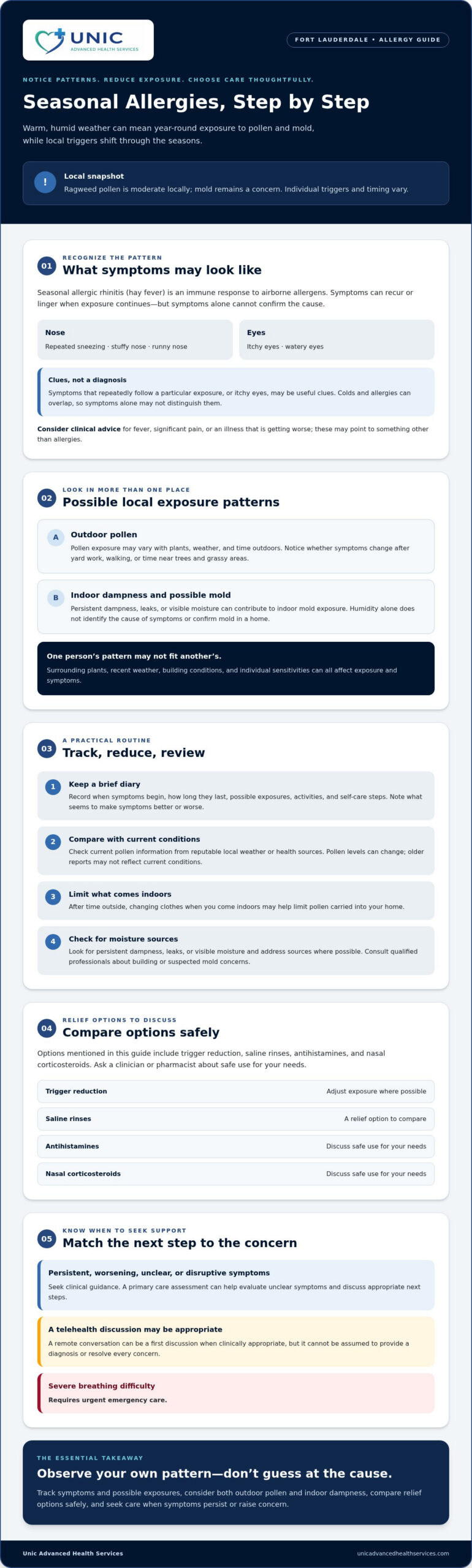
How to Manage Allergy Symptoms Day to Day in Fort Lauderdale
A steady routine can help you notice possible triggers, make practical adjustments, and assess whether your approach is helping. These steps don’t guarantee symptom prevention, but they can give you clearer information for deciding what to do next.
A simple routine for reducing everyday exposure
- 1. Observe. Check current pollen information from a reputable local source before outdoor activities. Note whether symptoms change after spending time outside or in a particular indoor space.
- 2. Reduce exposure where practical. If pollen seems to be a trigger, consider adjusting outdoor plans based on current reports. After coming inside, change clothes and wash your hands and face to remove some particles you may have picked up.
- 3. Keep indoor spaces dry. Address leaks or persistent moisture and keep an eye on areas that remain damp. For visible moisture or building concerns, consult qualified professionals rather than trying to diagnose a mold problem yourself.
- 4. Use suitable self-care and reassess. Follow product labels if you choose an over-the-counter option, and ask a pharmacist or clinician if you’re unsure whether it’s appropriate. Review your notes to see whether symptoms and possible exposures appear connected.
Small changes may help limit exposure, but they can’t remove every trigger or confirm what’s causing symptoms. Adapt the routine to your home, activities, and comfort.
Track symptoms to make next steps clearer
A brief diary can turn a vague impression into a more useful record. Keep it simple with a phone note or calendar. Include:
- When symptoms start, how severe they feel, and how long they last.
- Possible exposures, such as outdoor activities, pollen reports, or time in a damp area.
- Self-care measures or medicines tried, and whether symptoms changed.
- Effects on sleep, work, exercise, or other daily activities.
Look for patterns over time, but treat them as clues, not a diagnosis. Sharing this record with a clinician can clarify the timeline, show what you’ve tried, and help determine appropriate next steps. If you’re unsure whether a virtual appointment may suit your situation, learn about telehealth care in Fort Lauderdale. For persistent or unclear symptoms, you can also contact a primary care practice to discuss an assessment. Telehealth may be appropriate as an initial conversation depending on your concerns.
When to Seek Medical Care for Seasonal Allergies in Fort Lauderdale
Self-care may be a reasonable first step for mild symptoms, but it shouldn’t replace an assessment when symptoms are persistent, worsening, unclear, or interfering with sleep and daily activities. When managing seasonal allergies Fort Lauderdale, remember that symptoms resembling allergies can have other causes. A clinician can review your concerns and help determine appropriate next steps.
Severe breathing difficulty or another emergency symptom requires urgent emergency care. Don’t wait for a routine appointment or a telehealth discussion in an emergency.
What to expect from a primary care discussion
A primary care clinician may ask when symptoms began, how they’ve changed, what exposures you’ve noticed, and what self-care or medicines you’ve tried. They may also review your health history and current medicines. This conversation can guide a discussion of suitable management options or whether a referral is appropriate. It doesn’t guarantee a particular diagnosis, test, or treatment.
Your broader health history can also provide useful context, including other conditions and preventive care needs. For more on this topic, see annual preventive care in Fort Lauderdale.
Unic Advanced Health Services provides primary care and telehealth in Fort Lauderdale. The practice is not an allergy specialty clinic, and this discussion should not be taken as a promise of allergy testing or a specific outcome.
How to choose an in-person or telehealth appointment
The right visit format depends on your symptoms and clinical judgment. A virtual visit may be a suitable first discussion for some concerns, while others may require an in-person assessment. Contact the clinic to confirm current availability and ask whether telehealth is appropriate for your situation. If symptoms are persistent or unclear, a primary care conversation can help you review what you’ve noticed and clarify possible next steps.
Take the Next Step Toward More Manageable Allergy Symptoms
Managing seasonal allergies Fort Lauderdale starts with noticing symptom patterns, making practical adjustments to limit exposure, and choosing self-care thoughtfully. A brief record of symptoms, possible triggers, and what you’ve tried can make decisions clearer. It can also give a clinician useful context if symptoms persist, worsen, or disrupt daily life.
Allergy-like symptoms don’t always have the same cause, and persistent or unclear concerns deserve an individualized assessment. Unic Advanced Health Services provides primary care and telehealth in Fort Lauderdale, with care led by an experienced autonomous nurse practitioner. A primary care discussion can help review your symptoms and health history and consider appropriate next steps. Telehealth may suit an initial discussion when clinically appropriate, but the right visit format depends on your situation.
If you’re ready to discuss ongoing symptoms and clarify what to do next, contact Unic Advanced Health Services. Bring your symptom notes and questions to help make the conversation focused on your concerns.
Frequently Asked Questions
What are the common symptoms of seasonal allergies?
Common symptoms include sneezing, a runny or congested nose, and itchy or watery eyes. You may have only some of these symptoms, and their intensity can vary. Repeated exposure to a trigger may cause symptoms to return or linger. Fever, significant pain, or worsening illness is less typical of uncomplicated allergies and should prompt clinical advice, especially if you’re unsure what’s causing your symptoms.
When is allergy season in Fort Lauderdale?
There isn’t one allergy season that applies to everyone in Fort Lauderdale. Tree pollen, including oak, is more prominent from February through May; Bahia grass pollen season runs from April through October; and ragweed typically occurs from August through November. Mold spores can be present year-round, with a peak from June through September. Personal symptoms depend on exposure and sensitivity, so check current local pollen information rather than relying only on a calendar.
Can humidity in Fort Lauderdale make allergies worse?
Humidity doesn’t automatically cause allergy symptoms, but persistent indoor dampness can contribute to mold exposure, and humid conditions can support dust mites. The effect depends on the building, moisture conditions, and individual sensitivities. Look for leaks or areas that stay damp, and address moisture concerns appropriately. Visible moisture doesn’t establish that mold is causing your symptoms. Consult qualified building professionals about suspected property issues and a healthcare provider about persistent symptoms.
How can I manage seasonal allergy symptoms at home?
For managing seasonal allergies Fort Lauderdale, keep a brief record of symptoms and possible exposures, check current local pollen reports, and adjust outdoor plans when practical. After outdoor activities, changing clothes and washing your hands and face may help reduce particles you bring inside. Keep indoor areas dry and address leaks. If using an over-the-counter medicine or nasal rinse, follow its instructions and ask a pharmacist or clinician about precautions.
How can I tell if I have allergies or a cold?
Allergies and colds can both cause a runny or congested nose, so symptoms alone may not provide a clear answer. Itchy eyes or symptoms that repeatedly follow a particular exposure can suggest allergies, but they don’t confirm them. Consider how symptoms start, change, and recur, and note whether you have fever, significant pain, or worsening illness. Seek clinical advice if symptoms are unclear or aren’t improving.
When should I see a healthcare provider for seasonal allergies?
Arrange a clinical assessment if symptoms persist, worsen, remain unclear, or interfere with sleep and daily activities. A primary care clinician can review your symptom timeline, health history, and medicines, then discuss appropriate next steps. Severe breathing difficulty or another emergency symptom requires urgent emergency care, not a routine appointment. You don’t need to be certain that allergies are the cause before seeking advice about ongoing or disruptive symptoms.
Can telehealth help with seasonal allergy symptoms?
A telehealth visit may be a suitable first discussion for some seasonal allergy concerns, depending on your symptoms and clinical judgment. A clinician can review your reported symptoms, health history, and medicines, then discuss possible next steps. A virtual visit can’t be assumed to confirm a diagnosis or resolve every concern. Unic Advanced Health Services provides primary care and telehealth in Fort Lauderdale, but isn’t an allergy specialty clinic.