Imagine sitting in the exam room, heart racing, knowing your entire career depends on the next twenty minutes. For many professional drivers, the fear of losing their commercial license due to a sudden medical disqualification is a heavy burden. This stress often leads to white-coat hypertension, where anxiety causes a temporary blood pressure spike right when you need a calm reading. Understanding exactly what to expect at DOT physical appointments can turn that uncertainty into a manageable checklist, helping you arrive at the clinic feeling prepared rather than pressured.
We recognize that your health is your most valuable asset on the road. This guide explains the 2026 FMCSA standards, including the shift toward the National Registry II electronic reporting system and the current temporary waiver for paper certificates. We will walk you through the essential clinical benchmarks for vision, hearing, and blood pressure, while outlining the specific medical history documentation required for a smooth visit. By following this comprehensive walkthrough, you can find a respectful medical examiner in Fort Lauderdale and secure your certification with confidence and ease.
Key Takeaways
- Learn why 2026 FMCSA standards prioritize the consistent management of chronic conditions over single-day clinical readings.
- Identify the specific benchmarks for vision and hearing tests, including the forced whisper requirement, to ensure you meet federal safety criteria.
- Understand exactly what to expect at DOT physical appointments regarding physical preparation, such as stabilizing blood pressure and ensuring a clear urinalysis sample.
- Discover the critical documentation and medical history disclosures required on Form MCSA-5875 to prevent processing delays.
- Recognize the efficiency of selecting an examiner in Fort Lauderdale who utilizes on-site lab services for immediate and streamlined certification results.
Understanding the DOT Physical Standards in 2026
A DOT physical is more than just a bureaucratic hurdle; it’s a vital safety check regulated by the FMCSA. Its primary purpose is to verify that drivers can safely operate large vehicles without endangering themselves or others. If you’re wondering what to expect at DOT physical exams in 2026, you’ll find that the focus has shifted significantly toward chronic disease management. Examiners now look at your health history with a long-term perspective, ensuring conditions like diabetes or hypertension are consistently controlled rather than just managed for a single day. This proactive approach helps you maintain your livelihood while keeping the roads safe for everyone.
This requirement applies to anyone holding a Commercial driver’s license (CDL) who operates a vehicle with a gross weight rating of 10,001 pounds or more. It also covers those transporting hazardous materials that require placarding. The ultimate goal of the visit is to secure a Medical Examiner’s Certificate (MEC), which serves as your legal proof of fitness for up to 24 months. Because the FMCSA now utilizes the National Registry II system, your results are often transmitted to the state licensing agency within one calendar day, making the process faster and more transparent than in previous years.
To better understand the examination process and ease any nerves, watch this helpful walkthrough of the clinical steps:
The Role of the Certified Medical Examiner
Your examination must be conducted by a professional listed on the FMCSA National Registry. These certified examiners have undergone specific training to understand the unique physical demands of commercial driving. Many drivers prefer seeing an autonomous nurse practitioner for these evaluations. This choice often leads to a more personalized, patient-first experience where the provider acts as a steady hand, balancing strict public safety requirements with a genuine respect for your career needs. They don’t just check boxes; they act as a healthcare partner who understands the South Florida driving environment and the specific challenges you face on the road.
Validity and Renewal Cycles
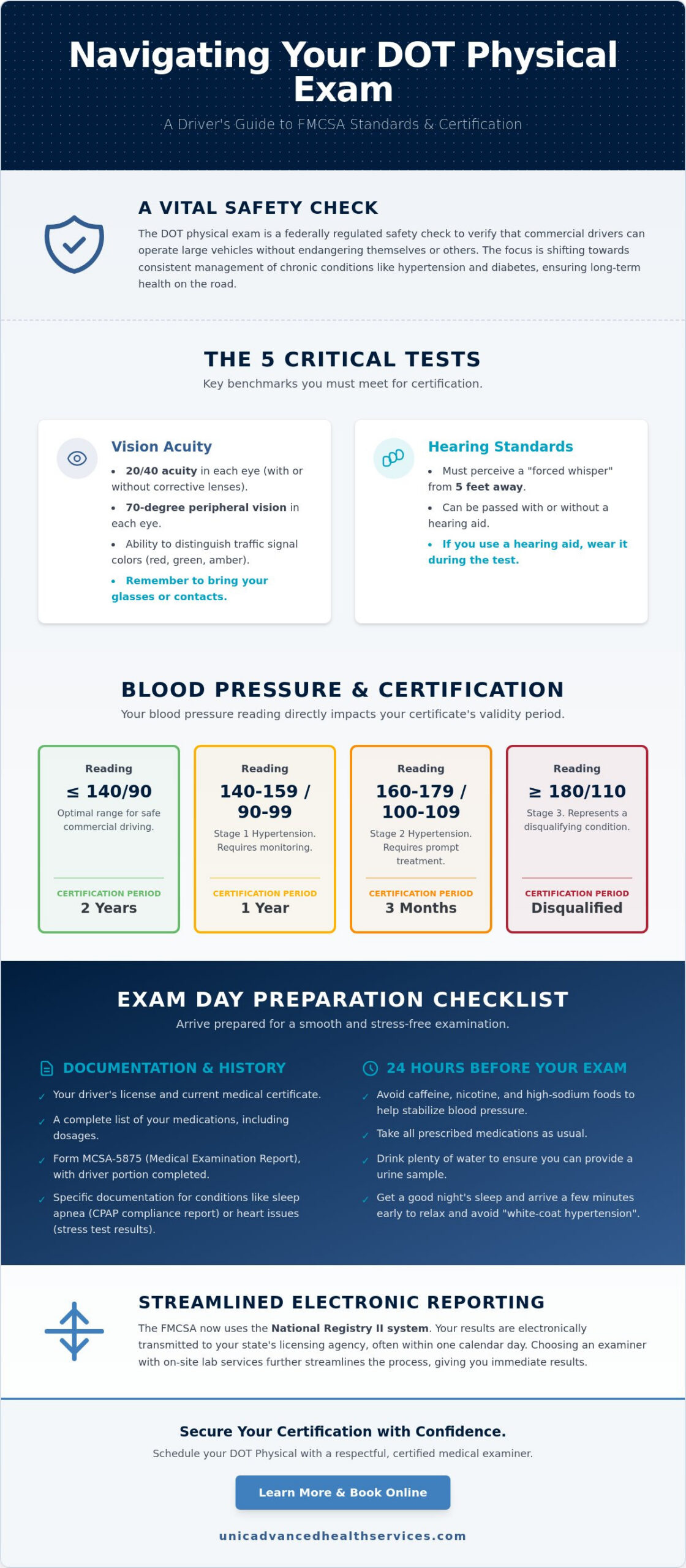
While a standard certificate lasts for two years, not everyone receives a full 24-month renewal. If you have conditions that require closer monitoring, such as high blood pressure or sleep apnea, you might receive a certificate valid for only three months or one year. For instance, maintaining blood pressure at or below 140/90 mmHg is the benchmark for a full two-year certification. Understanding what to expect at DOT physical renewal cycles helps you stay ahead of the curve. It’s critical to track these dates closely. In the 2026 regulatory environment, the move toward electronic records means your status is updated almost instantly, making it more vital than ever to renew before your current certificate expires.
The 5 Critical Tests During Your Medical Examination
The clinical portion of your visit is a standardized assessment designed to ensure you can handle the physical rigors of the road. During a DOT physical examination, the examiner performs five specific tests to screen for conditions that could interfere with safe driving. These benchmarks aren’t meant to be traps; they’re essential tools that help confirm your body is functioning within safe parameters. Understanding what to expect at DOT physical appointments helps remove the mystery from these procedures and lets you focus on your health.
Vision and Hearing Benchmarks
Drivers must meet specific sensory standards to maintain their certification. For vision, you need at least 20/40 acuity in each eye, with or without corrective lenses. The examiner also checks for a 70-degree field of peripheral vision in each eye and the ability to distinguish traffic signal colors. If you wear glasses or contacts, make sure to bring them to your appointment. The hearing test typically uses a “forced whisper” method, where you must perceive a whispered voice from a distance of five feet. If you use a hearing aid, you’re permitted to wear it during the exam, provided it helps you meet the federal standard. In cases where the whisper test is inconclusive, an audiometry exam may be used to measure precise decibel loss.
Blood pressure and pulse readings are equally critical. To qualify for a full two-year certificate, your blood pressure must be at or below 140/90 mmHg. If your readings are higher, you might receive a shorter certification period while you work with a provider to manage the condition. A thorough understanding of the DOT physical blood pressure requirements for 2026, including the specific Stage 1 and Stage 2 hypertension tiers, can help you address potential disqualifiers before they become a problem. Familiarizing yourself with the most common reasons drivers fail DOT physical exams can help you address potential disqualifiers before they become a problem. If you have concerns about your current readings, scheduling a DOT Physical Examination with an experienced provider can help you create a management plan before your certification expires.
The Truth About the DOT Urine Test
There’s often confusion about the urinalysis performed during this visit. It’s vital to clarify that this specific test is a clinical screen for kidney function and glucose levels, not a drug test. The examiner checks for three specific markers: protein, blood, and glucose. High glucose levels may indicate undiagnosed or poorly managed diabetes, while protein or blood could suggest underlying kidney issues. Because the test measures the concentration of these markers, staying well-hydrated before you arrive at the clinic is a simple but effective strategy to ensure an accurate sample.
Finally, the examiner conducts a comprehensive physical examination. This is a head-to-toe clinical assessment where the provider checks your heart, lungs, abdomen, and spine. They’ll look for signs of respiratory distress, neurological issues, or physical deformities that could affect your ability to operate a commercial vehicle. This thorough check ensures that every major body system is prepared for the demands of long-haul driving.
Required Documentation and Medical History Disclosure
Preparation serves as the most effective remedy for the stress of a clinical visit. When drivers ask what to expect at DOT physical appointments, they often overlook the importance of administrative readiness. Understanding what to expect at DOT physical exams ensures you don’t arrive with missing paperwork that could delay your certification. You are required to complete the Driver Health History section of the FMCSA Form MCSA-5875 before your clinical evaluation begins. This document is a legal statement of your medical background. It requires full transparency regarding a history of heart disease, epilepsy, respiratory issues, or neurological disorders. Providing an accurate account ensures the examiner can assess your fitness with all the necessary facts in hand.
Specialist Reports for Chronic Conditions
For drivers managing long-term health issues, the examination requires specific documentation from your treating specialists. These “clearance letters” provide the certified medical examiner with the clinical evidence needed to issue a certificate. If you manage diabetes, you must bring your most recent A1C results, typically from within the last six months. Drivers diagnosed with obstructive sleep apnea must provide a 90-day CPAP compliance report. This data proves you are receiving restorative sleep and remain alert behind the wheel. If you have a history of cardiac events, expect to present recent stress test results or a formal clearance letter from your cardiologist to confirm your heart can handle the physical demands of the job.
Medication Management on the Road
Transparency regarding your current medications is a non-negotiable part of the process. You must list every prescription, over-the-counter medication, and herbal supplement you currently use. The examiner carefully reviews these substances to identify potential side effects like drowsiness or impaired reaction times. Some medications are strictly prohibited by federal law; others may require a specific medical waiver. Engaging in proactive chronic care management with a specialized provider can help you navigate these complexities well before your exam date. This collaborative approach ensures your treatment plan aligns with FMCSA safety standards, protecting both your health and your CDL eligibility. The examiner’s role is to act as a steady guide, helping you understand how your medications might impact your performance on the road.
Practical Tips to Prepare Your Body for the Exam
Physical preparation is the foundation of a successful certification. While the clinical standards are fixed, your daily habits in the 24 hours leading up to your appointment can significantly influence your vitals. Knowing what to expect at DOT physical appointments helps you make small adjustments that ensure your body reflects its true health status rather than a temporary spike caused by stress or diet. If you are ready to secure your medical card, you can schedule your DOT physical examination with our team today.
Managing your blood pressure starts with what you consume. For at least 24 hours before your visit, avoid stimulants like caffeine and nicotine, as these substances can cause temporary but significant increases in your readings. Similarly, steer clear of high-sodium meals like fast food or processed snacks. Excessive salt leads to water retention and elevated pressure. Instead, focus on lean proteins and fresh vegetables. It is also vital to take your usual medications, such as blood pressure or diabetes pills, exactly as prescribed. Skipping a dose out of fear that it might “interfere” with the test is a common mistake that often leads to disqualification. Reviewing the full FMCSA blood pressure tiers and certification thresholds before your appointment can help you understand exactly where your readings need to fall for a full two-year certificate.
Hydration is particularly critical in the South Florida climate. The intense heat in Fort Lauderdale can lead to rapid dehydration, which may concentrate your urine sample or cause an irregular pulse. Drink plenty of water throughout the day to ensure a clear urinalysis and stable vitals. Combine this with a good night’s sleep. Rest directly impacts your heart rate and cognitive function, both of which are assessed during the physical examination.
The “Day-Of” Success Checklist
Your comfort level on the day of the exam can influence your physiological responses. Follow these simple steps to ensure a smooth process:
- Wear loose clothing: Choose comfortable attire that allows the examiner to easily check your pulse and perform the physical assessment.
- Bring your aids: If you use glasses, contact lenses, or hearing aids, ensure they are with you and functioning properly.
- Arrive early: Rushing to an appointment is a guaranteed way to spike your heart rate. Aim to arrive 15 minutes early to settle in and complete any remaining paperwork.
Managing White-Coat Hypertension
Many professional drivers experience white-coat hypertension, a condition where blood pressure rises simply because they are in a clinical setting. This anxiety is often rooted in the fear of losing one’s livelihood. We recognize this challenge and prioritize a supportive, low-stress environment in our Fort Lauderdale office. Our staff is trained to help you feel at ease from the moment you walk in. If your initial blood pressure reading is higher than the 140/90 mmHg threshold, we utilize a professional re-test protocol. This allows you to sit quietly and practice deep breathing for several minutes before we take a second reading. This patient-first approach ensures that temporary stress doesn’t stand in the way of your career.
Completing Your DOT Physical in Fort Lauderdale
Selecting a local clinic involves more than just finding the nearest office. In South Florida, environmental factors like intense heat and high humidity can impact your physiological readings, particularly hydration levels and heart rate. When you consider what to expect at DOT physical visits in Fort Lauderdale, it is beneficial to choose a provider who understands these regional challenges. We provide a steady hand in a climate that can sometimes make maintaining stable vitals difficult. Our facility utilizes on-site lab services to deliver immediate results, ensuring that your clinical screens are processed efficiently so you can return to the road without unnecessary delays.
Many professional drivers find it efficient to integrate their mandatory certification with annual physical exams. This collaborative approach allows us to look beyond the immediate requirements of the FMCSA and focus on your total health. By addressing long-term wellness goals during your certification visit, you create a proactive strategy for maintaining your CDL eligibility for years to come. This comprehensive oversight is a hallmark of a modern healthcare partnership that values your time and your livelihood.
Why Choose Unic Advanced Health Services?
Our practice is led by Marc Joseph, an autonomous nurse practitioner who prioritizes a patient-first perspective. He understands that for a professional driver, a medical exam isn’t just a checkup; it’s a critical career milestone. You’ll find a respectful atmosphere where your concerns are heard and your health is managed with clinical seriousness. We offer convenient Saturday hours at our Fort Lauderdale location to accommodate the demanding schedules of the transportation industry. For professionals who work across different sectors, we also offer a streamlined process for those who require a USCG physical, providing a single, reliable point of care for all your certification needs.
After the Exam: Staying Compliant
The process of staying compliant has become more digital and methodical in 2026. Once you have successfully completed your evaluation, we handle the essential task of transmitting your results to the FMCSA National Registry. Under current regulations, this electronic submission typically occurs by the next calendar day. While the digital record is the official proof of your status, we provide you with a paper Medical Examiner’s Certificate (MEC) to keep as a backup. We recommend retaining this paper copy for at least 60 days while the state driver licensing agency (SDLA) updates your record.
Understanding what to expect at DOT physical follow-ups is just as important as the exam itself. We assist our patients by setting automated reminders for their next renewal date, ensuring you never face a last-minute rush. Our team remains a dedicated partner for your ongoing occupational health needs, offering guidance on managing chronic conditions and maintaining the high standards required for commercial driving. Booking your appointment is the first step toward a stress-free certification and a healthier career on the road.
Securing Your Career with Clinical Confidence
Navigating the federal health requirements for your commercial license doesn’t have to be a source of anxiety. By understanding the 2026 standards and preparing your body and paperwork in advance, you can approach your appointment with total clarity. You now know that the clinical tests focus on your long-term wellness and that proper hydration and stress management are your best tools for success. Each step of the process is designed to ensure you remain a safe, capable professional on the road.
When you know exactly what to expect at DOT physical exams, the process becomes a routine part of your professional maintenance rather than a hurdle to overcome. Our clinic provides a supportive environment designed to help you succeed. Led by Marc Joseph, an autonomous nurse practitioner on the FMCSA National Registry, we offer the expert guidance and personalized care you deserve. We also offer Saturday appointments to fit your busy driving schedule, ensuring you don’t have to sacrifice time on the road for your health.
Schedule Your Fort Lauderdale DOT Physical Today and take the next step in your professional journey. Your health and your livelihood are in steady hands. We look forward to being your partner in safety and wellness.
Frequently Asked Questions
How long does a DOT physical exam usually take?
A standard examination typically takes between 30 and 45 minutes to complete. This timeframe includes the initial review of your medical history, the five clinical tests, and the physical assessment by the examiner. Arriving early to complete your FMCSA paperwork ensures the process remains efficient. If you have complex chronic conditions, the review might take slightly longer to ensure all specialist reports are thoroughly evaluated for safety.
Can I fail a DOT physical for taking blood pressure medication?
You won’t fail the exam for taking blood pressure medication. The FMCSA recognizes that consistent management of hypertension is essential for long-term road safety. As long as your prescribed treatment keeps your blood pressure at or below the 140/90 mmHg threshold, you can secure your medical certification. It’s vital to continue your medication schedule as directed by your doctor on the day of your appointment to ensure stable readings.
What are the most common reasons drivers fail their DOT exam?
High blood pressure and vision impairment are the most frequent reasons for disqualification or short-term certification. Other common issues include poorly managed diabetes or a history of heart conditions without the required specialist clearance letters. Understanding what to expect at DOT physical appointments allows you to address these health benchmarks proactively. This preparation ensures you arrive with the necessary data to prove your conditions are under professional control. For a detailed breakdown, review the full list of reasons drivers fail DOT physical exams and how to address each one before your appointment.
Do I need to bring a urine sample to the appointment?
You do not need to bring a sample with you; we collect a fresh sample at the clinic during your visit. This urinalysis is a clinical screen used to detect protein, blood, and glucose levels which might indicate underlying kidney issues or diabetes. It isn’t used for a drug screening. We recommend drinking plenty of water before your appointment to ensure you can provide an adequate sample without delay.
Is a DOT physical the same as a drug test?
No, a DOT physical is not a drug test. While both procedures require a urine sample, the physical exam focuses on your physiological health and clinical markers like kidney function. Drug screenings are separate tests that check for controlled substances and are usually mandated by your employer rather than the FMCSA health exam. However, you must still disclose all medications you’re currently taking to ensure they don’t cause side effects like drowsiness.
What happens if I have a medical condition like diabetes or sleep apnea?
Drivers with chronic conditions like diabetes or sleep apnea can pass the exam if they provide evidence of consistent management. For diabetes, this involves bringing your most recent A1C results. For sleep apnea, you must provide a 90-day CPAP compliance report from your machine. These documents act as proof that your condition is stable and doesn’t pose a risk to public safety while you’re operating a commercial vehicle.
How much does a DOT physical cost in Fort Lauderdale?
The cost of a DOT physical can vary based on the provider and the complexity of your medical history review. While we don’t provide specific pricing here, drivers in Fort Lauderdale should check with their clinic regarding any additional fees for on-site lab services or specialist clearance processing. Choosing a provider who offers comprehensive services can often be more cost-effective than visiting multiple locations for lab work and your physical.
Can I get a DOT physical on a Saturday in Fort Lauderdale?
Yes, you can schedule a DOT physical on a Saturday at our Fort Lauderdale office. We understand that professional drivers often have demanding schedules that make weekday visits difficult. Our weekend hours provide a convenient option for maintaining your FMCSA compliance without interrupting your work week. This flexibility is part of our commitment to providing accessible, patient-first care for the local South Florida transportation community.